Gubbio, Italy: The Medieval Town I Fell in Love With
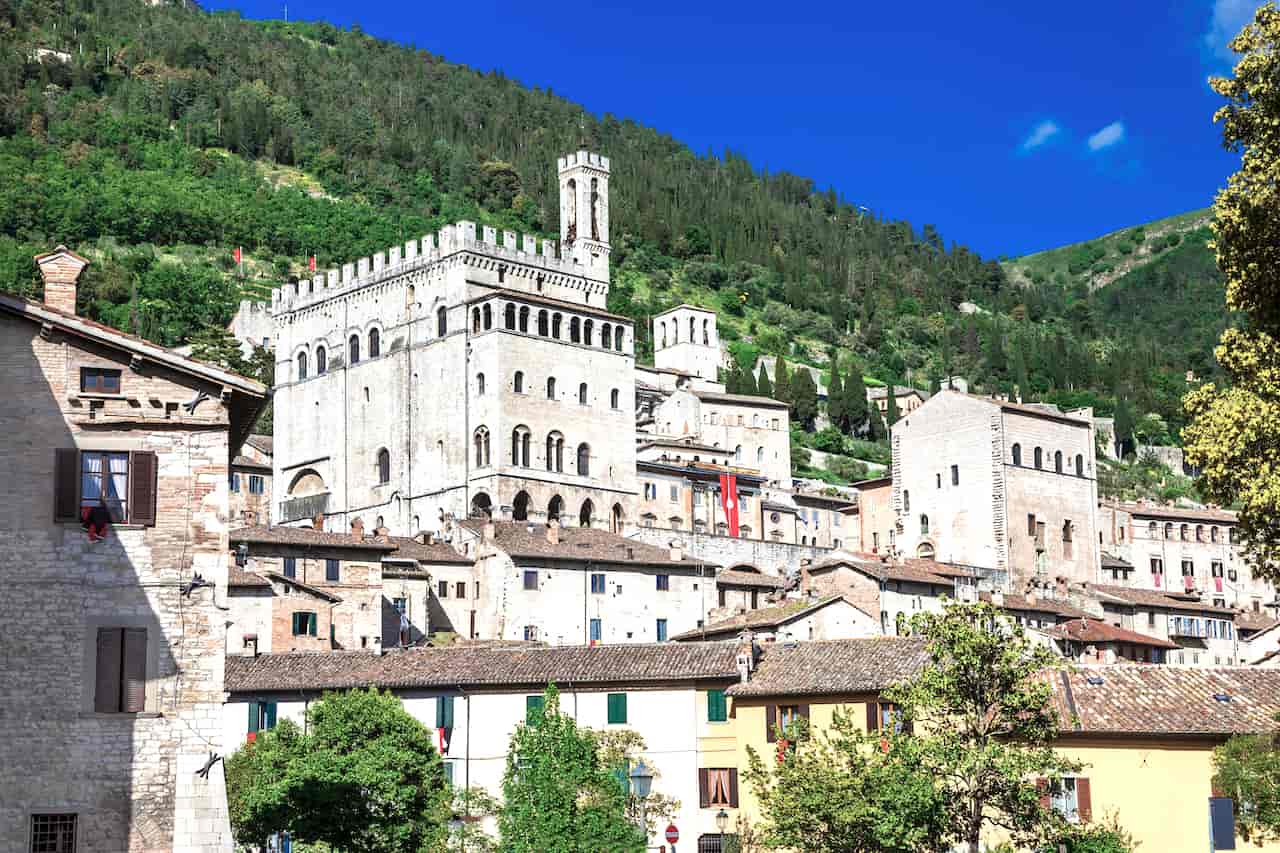
I didn’t expect to fall for Gubbio. I was deep into my Umbria road trip, winding through green hills and following the signs more than any plan, when a stone town appeared, climbing up the slope of a mountain. Within an hour of wandering its steep medieval lanes, I knew this was the stop I’d talk about long after I got home.
Gubbio, Italy is one of Umbria’s most atmospheric hill towns, known for its medieval architecture, Palazzo dei Consoli, Roman theater, ceramics, the Wolf of Gubbio and the spectacular Corsa dei Ceri. This guide covers the best things to do in Gubbio, where to eat, where to stay, and the practical details I wish I’d known before arriving.
Gubbio at a Glance
| Where is Gubbio? | Northern Umbria, central Italy, at the foot of Mount Ingino |
| Distance | About 40 km from Perugia and about 50 km from Assisi |
| Best for | Medieval history, ceramics, truffles, festivals, quiet Umbrian charm |
| How long to stay | 1 full day minimum, 2 days to enjoy it slowly |
| Best time to visit | Spring and autumn (May and late October–November for events) |
| Getting there | Car or bus; the nearest rail connection is at Fossato di Vico/Gubbio |
| Nearest airports | Perugia (PEG), about 45 km; Ancona (AOI), about 90 km |
Where Is Gubbio?
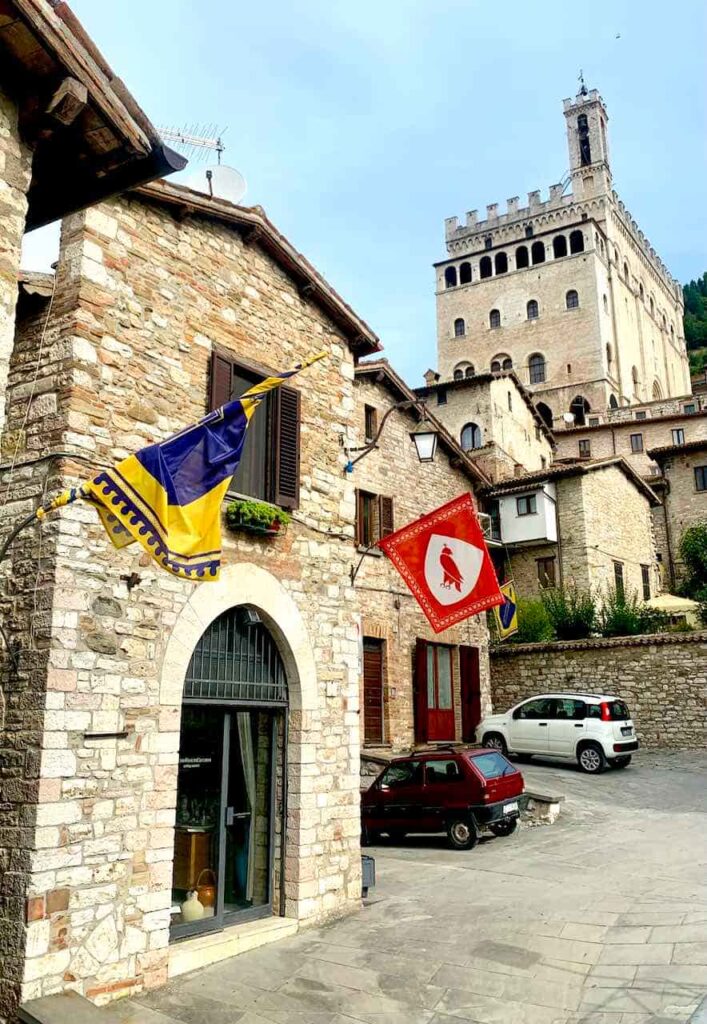
Gubbio Umbria sits in the northern part of the region, in the province of Perugia, tucked against the slopes of Mount Ingino. It’s roughly a 35–45 minute drive from Perugia, which makes it an easy day trip, though I’d argue it deserves a night. The town rewards people who linger, especially once the day-trippers leave and the stone lanes go quiet.
If you’re building a bigger route, Gubbio pairs beautifully with Assisi (see my guide to things to do in Assisi) and fits naturally into my Umbria road trip itinerary.
A Short History of Gubbio
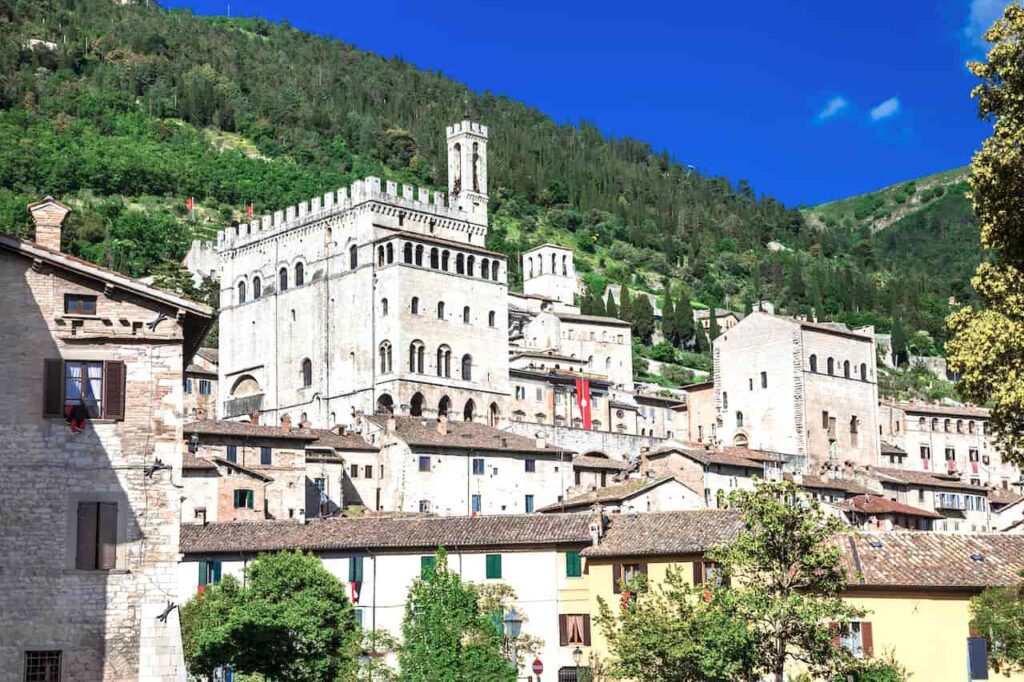
Gubbio’s story is long, and you feel it as you walk. The town was founded by the ancient Umbrians, with roots going back to around the 5th century BC. The Romans arrived in the 3rd century BC and turned it into a prosperous settlement, and their theater is still here today.
After Rome’s fall, Gubbio grew into a proud medieval town. It flourished in the Middle Ages, and later came under the Montefeltro family, which is why so much of what you see now, from the stone palaces to the tight lanes, is medieval. It feels less like a museum and more like a town that never stopped being itself.
Things to Do in Gubbio, Italy
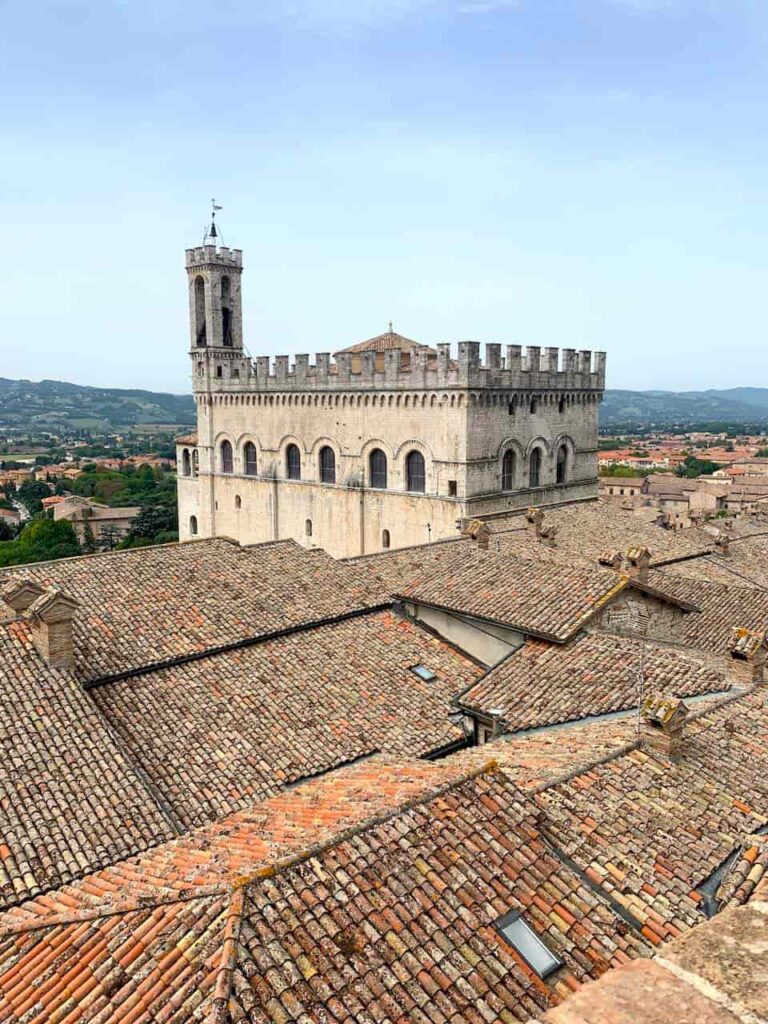
Whether you have one day or a long weekend, these are the places and experiences I’d put at the top of your list
1. Piazza Grande

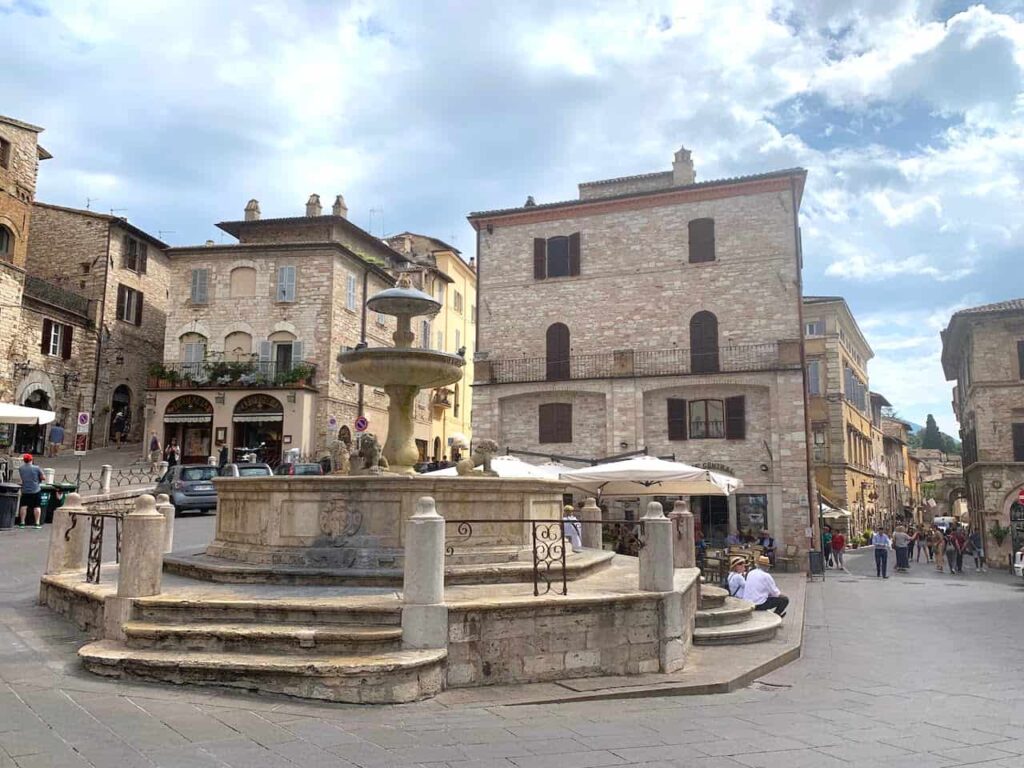
Piazza Grande is the heartbeat of Gubbio, and it’s the place I’d tell anyone to see first if they only have an hour. This wide medieval square sits on a terrace above the town, surrounded by stone buildings that have watched over local life for centuries. It never feels staged. On a quiet afternoon you’ll find locals crossing with shopping bags and visitors leaning on the edge to take in the rooftops and hills beyond. Stand in the middle and turn slowly, and you’ll see why the town feels like a time capsule.
The square is also the stage for Gubbio’s biggest events, including the start of the Corsa dei Ceri each May 15, when the whole place fills with color and noise.
Pro tip: Come back after dinner, when the crowds thin and the buildings look their best.
2. Palazzo dei Consoli (Palace of the Consuls)

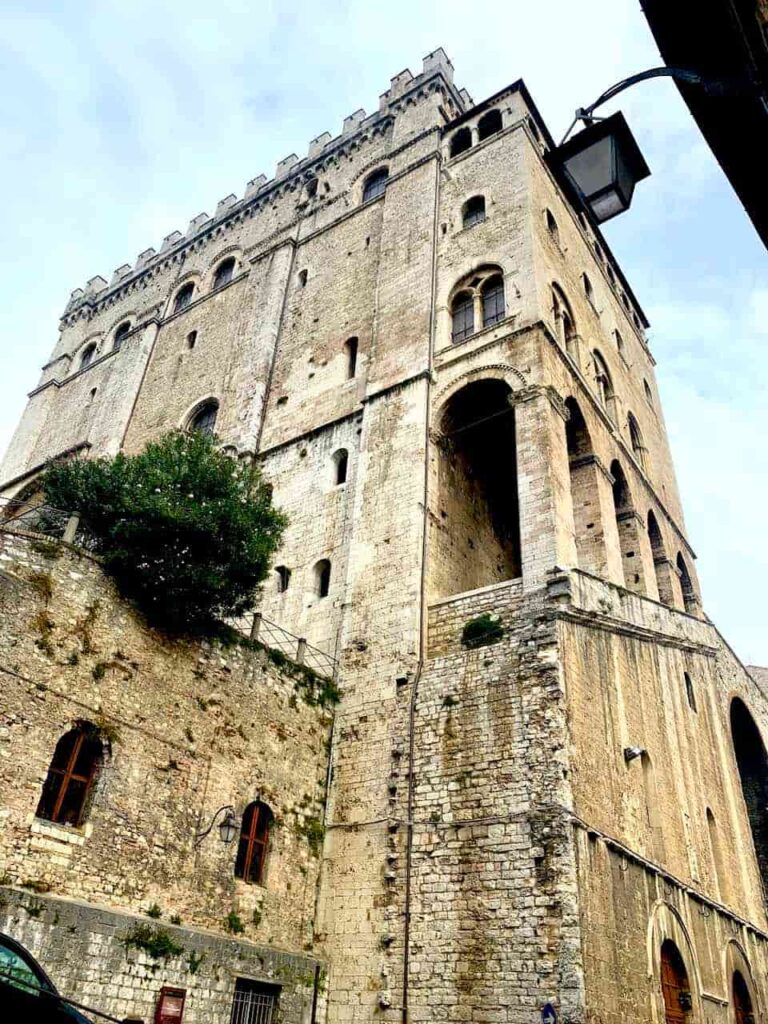
Palazzo dei Consoli is a powerful reminder of how proud and wealthy medieval Gubbio once was.
Built between 1332 and 1349, Palazzo dei Consoli was at the heart of medieval Gubbio’s civic life. Today it houses the Civic Museum, including the famous Iguvine Tablets—seven bronze tablets containing the most important surviving written text in the Umbrian language. That alone makes the museum worth visiting, but I also enjoyed the building itself. The enormous Gothic façade dominates Piazza Grande, and from the upper levels you get a wonderful sense of how the town is arranged on the hillside.
Even if archaeology isn’t usually your thing, seeing the Iguvine Tablets up close is genuinely special. They give you a connection to a culture that would otherwise be much harder to understand.
Admission: The current standard admission is €8 for the tariff valid from September 26, 2026, through April 25, 2027; check the museum’s official site before visiting because prices and opening hours can change.
Pro tip: Don’t skip the upper floors, where you get a panoramic view over the rooftops and hills that shows just how commanding this place was.
3. Roman Theater (Teatro Romano)

The theater dates to the late Republican period, with construction beginning in the 1st century BC. It sits in the archaeological area of Guastuglia below the historic center, where other remains of Roman Gubbio have also been uncovered.
Parts of the original structure are still visible, including the impressive curved form of the theater and surviving arches. What I found most striking was the setting: you can stand among Roman ruins with the medieval town rising behind them.
It’s a wonderful place to pause and think about how many different versions of Gubbio have existed on this same landscape.
Pro tip: Walk around the whole site slowly, and visit near sunset when the stone glows warm in the fading light.
4. Gubbio Cathedral (Duomo)

Gubbio Cathedral, dedicated to Saints Mariano and Giacomo, dates mainly to the 13th and 14th centuries. Inside, the predominantly Gothic space is surprisingly restrained compared with some of Italy’s grander churches.
I especially enjoyed taking time to look at the paintings and surviving traces of older decoration. The cathedral doesn’t overwhelm you, and that’s exactly its charm. It invites you to slow down, sit for a few minutes, and let the noise of the day fall away.
It’s also conveniently located near Palazzo Ducale and the upper part of the historic center, so it’s easy to include in the same walk.
5. Diocesan Museum (Museo Diocesano)

The Diocesan Museum is right next to the cathedral, so it makes sense to visit the two together. It’s housed in the Palazzo del Capitolo dei Canonici and contains sacred objects and artwork connected with Gubbio’s religious history.
The unexpected star is the enormous Botte dei Canonici, a historic wooden wine barrel. It’s the kind of object that makes the past feel surprisingly tangible. You stop thinking only about churches and paintings and start imagining how people actually lived and worked in Gubbio centuries ago.
Pro tip: Pair the museum with your cathedral visit so you’re not backtracking uphill.
6. Church of St. John the Baptist (Chiesa di San Giovanni Battista)
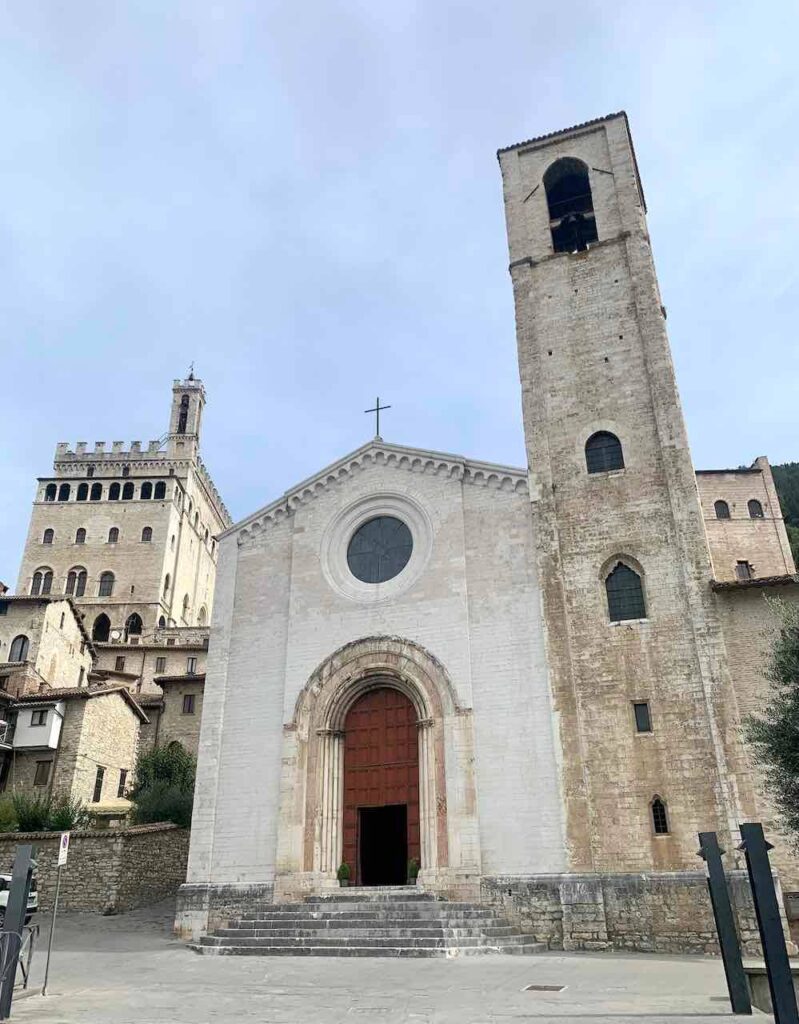
The Church of St. John the Baptist was a quiet retreat during my time in Gubbio, and I loved that it felt calmer than the big-name attractions.
It served as Gubbio’s first cathedral, and inside you’ll find paintings and frescoes that reward a slow look. There’s also a relic said to be a finger of Saint John the Baptist, which adds a touch of mystery to the visit. What stayed with me most were the views from the church steps, where the surrounding hills and valleys open up in a soft, green sweep. It’s an easy place to catch your breath, especially after climbing Gubbio’s steeper streets.
7. Church of St. Francis (Chiesa di San Francesco)
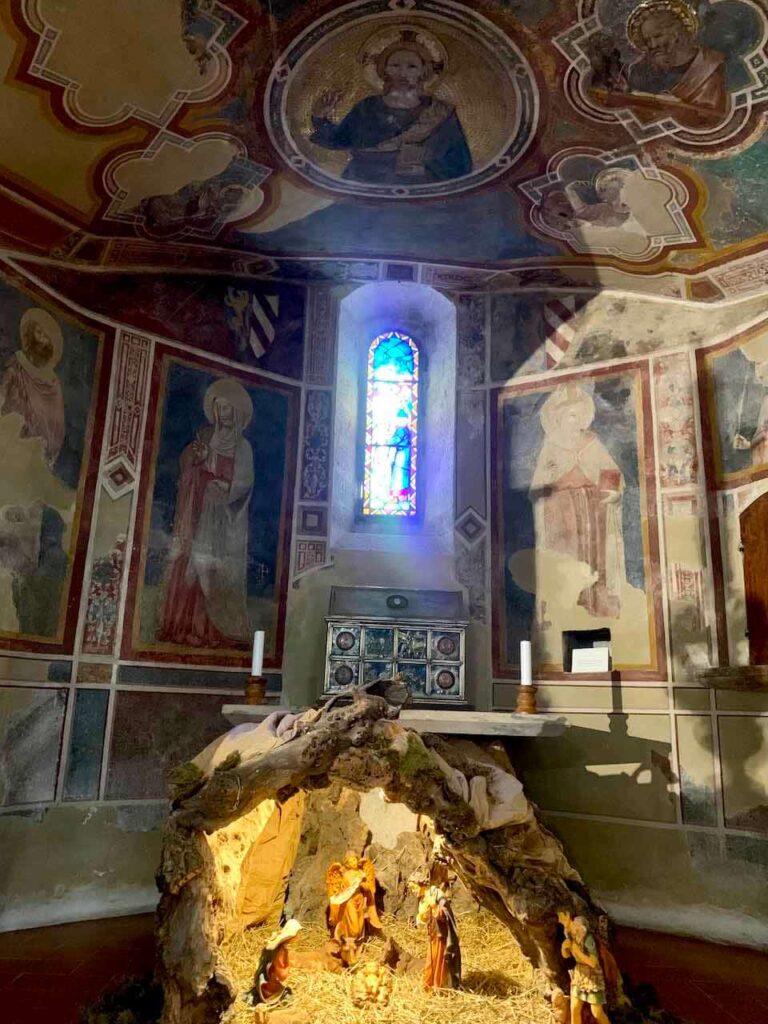
The Church of St. Francis was one of the most memorable stops for me in Gubbio.
It stands on land connected with the Spadalonga family, who are traditionally associated with clothing Saint Francis after he abandoned his former life of wealth. That connection gives the church particular significance for anyone following the story of Francis through Umbria.
Inside, you’ll find important medieval frescoes, including scenes connected with the Virgin Mary and other religious subjects. The colors are still surprisingly vivid in places, and the atmosphere is peaceful.
I liked this church because it feels connected to the town rather than separated from it. You can step inside after walking the busy streets and suddenly find yourself somewhere quiet.
Pro tip: Spend extra time in the apse, where some of the most delicate frescoes are found.
8. The Wolf of Gubbio
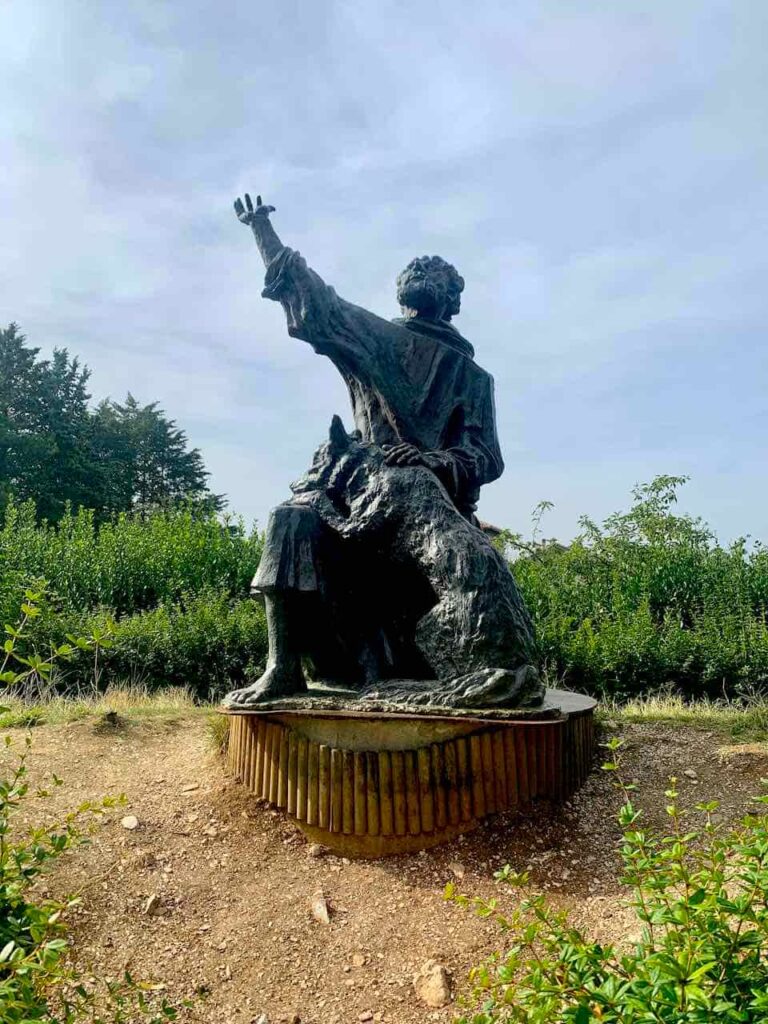
The legend of the Wolf of Gubbio is one of the best-known stories associated with Saint Francis, and it’s one reason many people first hear of the town.
According to tradition, a fierce wolf terrorized Gubbio’s residents until Francis approached it and made peace with the animal. The story has survived as a tale of compassion and coexistence, whether you see it primarily as history, parable, or folklore.
You’ll find a statue recalling Francis and the wolf near the Church of St. Francis, making it a natural pause while exploring this part of town.
For me, the story becomes more interesting when you’re actually standing in Gubbio. It stops being something you’ve simply read about and becomes part of the landscape around you.
9. Fountain of the Madmen (Fonte dei Matti)

The Fountain of the Madmen is the playful side of Gubbio, and it’s one of those stops that makes you smile.
Found in Piazza del Bargello, the fountain comes with a local tradition: walk around it three times and let its water touch you, and you symbolically earn a “license of madness.”
The ritual is linked to the local tradition of the Ceri and dates to the 19th century. Whether you take the ritual seriously or simply enjoy the joke, it’s a fun contrast to Gubbio’s more solemn churches and museums.
I didn’t complete the ritual myself, but I couldn’t resist a photo beside the fountain. It’s also a good reminder that Gubbio isn’t only solemn history and frescoes—the town has a sense of humor too.
Pro tip: This is a quick stop, so fit it naturally into your walk through the historic center.
10. Ducal Palace (Palazzo Ducale)
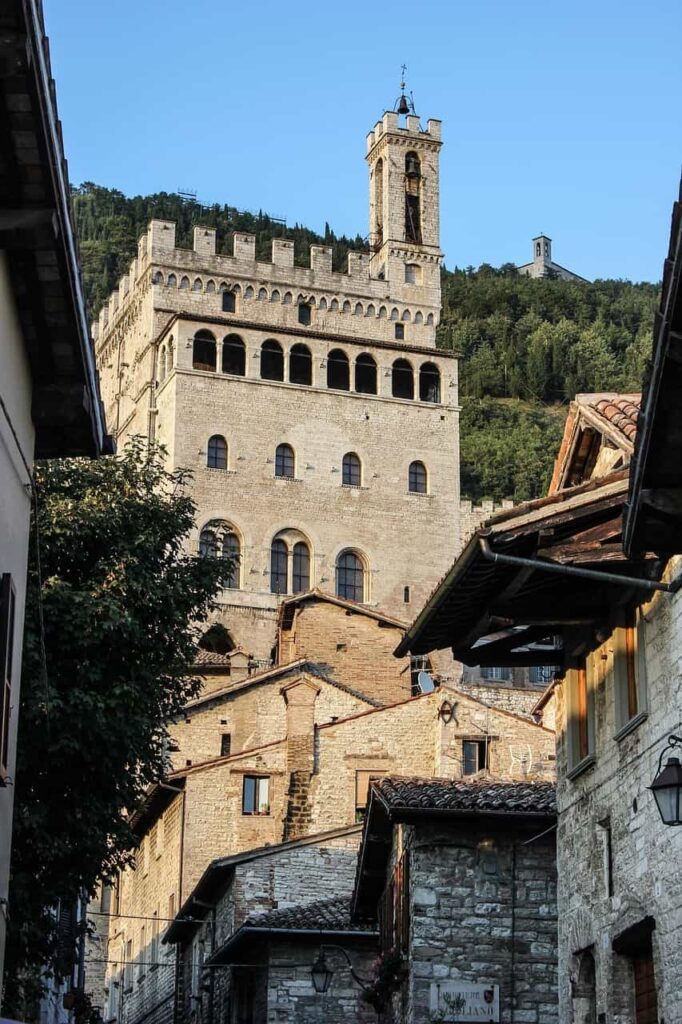
The Ducal Palace is one of Gubbio’s most impressive buildings, and it shows another side of the town’s history: the elegance of the Renaissance.
Federico da Montefeltro commissioned the palace in the 15th century, and its refined architecture stands out against the sturdier medieval stone around it. Inside, you’ll find historic rooms, paintings, and furnishings, along with a reconstruction of Federico’s famous studiolo.
The original studiolo is now preserved at the Metropolitan Museum of Art in New York, while the Gubbio palace contains a modern reconstruction made by local craftsmen. I think that makes the visit even more interesting because it connects Gubbio directly with the wider Renaissance world.
Pro tip: Don’t rush through the courtyard. The proportions and details are some of the loveliest parts of the palace.
11. Ride the Funivia Colle Eletto (Cable Car)

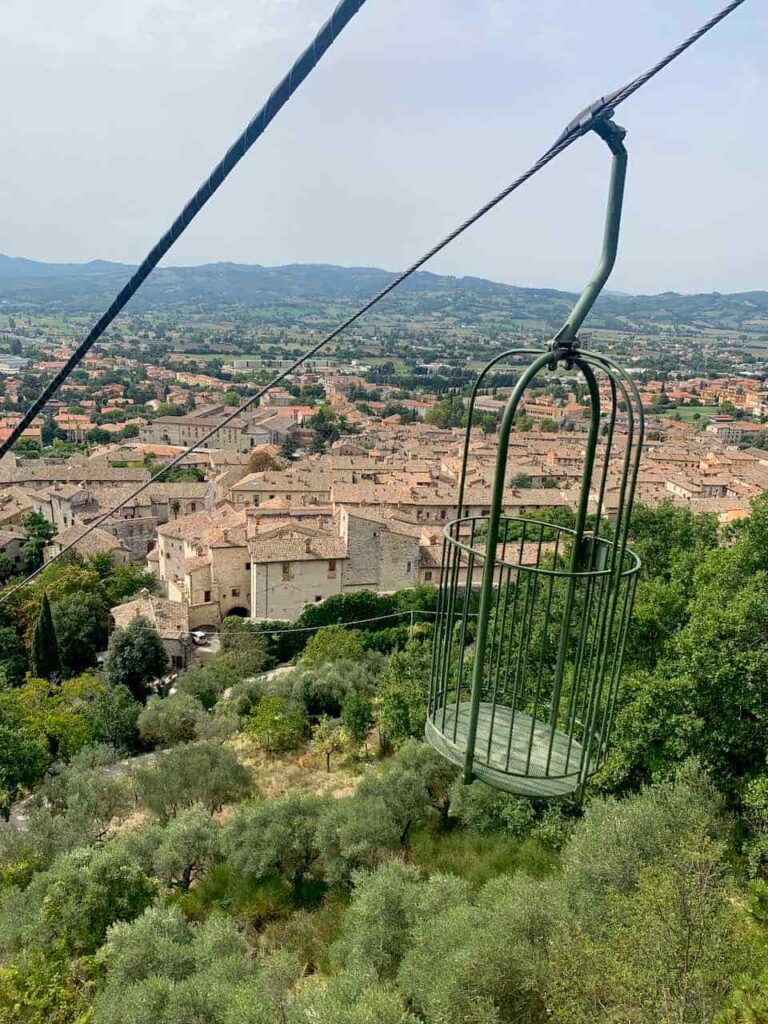
Gubbio’s cable car is one of the quirkiest rides I’ve come across in Italy. The open, cage-like cabins carry visitors from the town up Mount Ingino to the area of the Basilica of Sant’Ubaldo.
The ride gives you sweeping views over rooftops, towers, and the surrounding countryside as you climb. It’s a small thrill and also a practical way to reach the basilica without making the entire ascent on foot.
The experience is particularly memorable if you’re not used to open-air cable cars. If you’re nervous about heights, focus on the horizon rather than looking directly down.
Pro tip: If the weather is clear, try to go when the light is softer. The views across Gubbio and the surrounding countryside are beautiful.
12. Basilica of St. Ubaldo
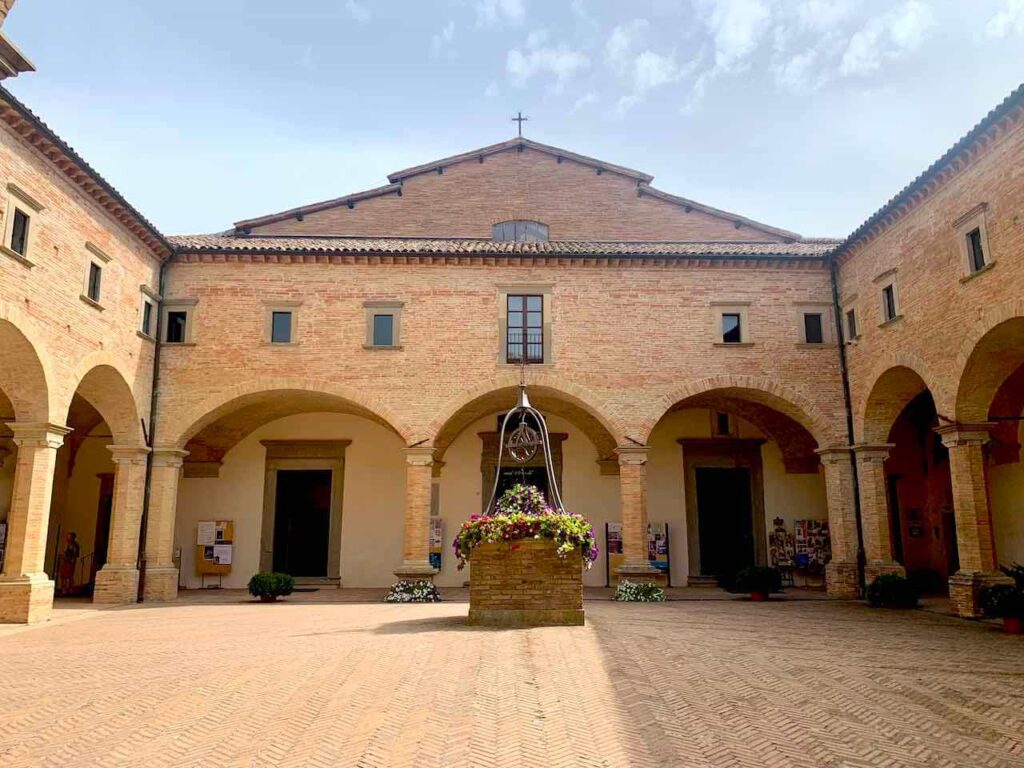
At the top of Mount Ingino, the Basilica of St. Ubaldo honors Gubbio’s patron saint.
The basilica contains the remains of Sant’Ubaldo and is also closely connected with the Corsa dei Ceri. The three Ceri are kept here outside the main festival procession, which means you can see an important part of Gubbio’s tradition even if you visit at another time of year.
The basilica itself is worth seeing for its contrast between the relatively simple exterior and the richly decorated interior. The complex also includes a historic cloister with frescoes.
Beyond its religious importance, this is simply a beautiful place to pause and look back toward Gubbio.
Pro tip: Take the cable car up, then consider walking back down if you have the time and energy. The change in perspective is worth it.
13. Mount Ingino Viewpoint
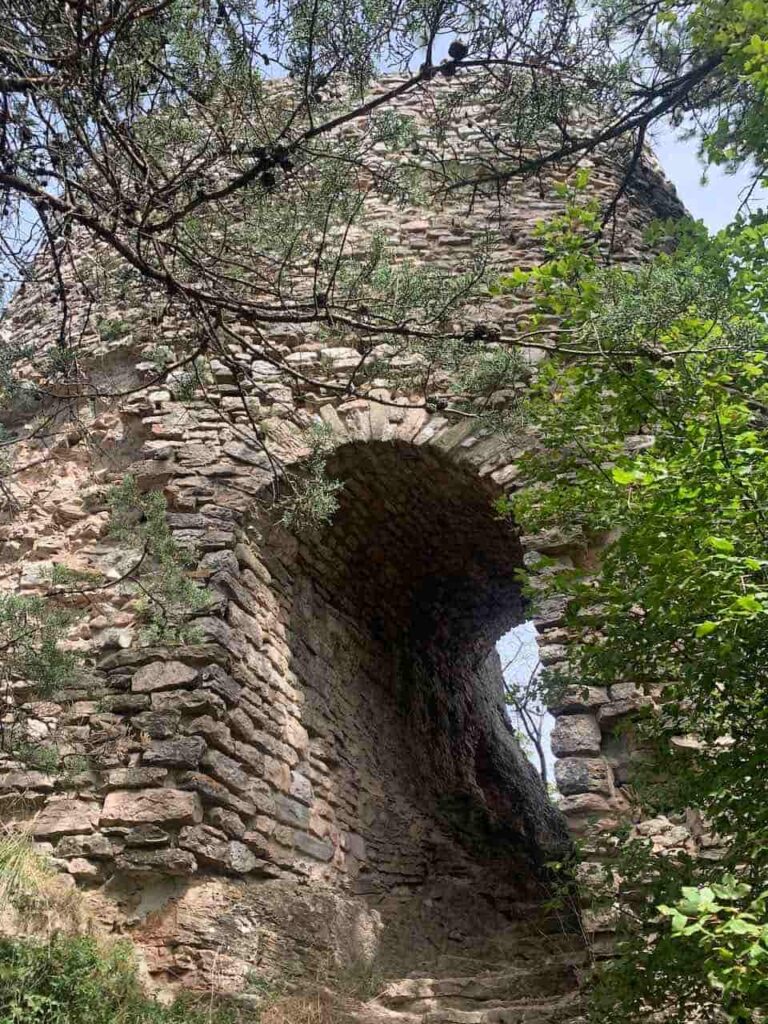
Once you’ve reached Mount Ingino, give yourself time to look beyond the basilica. The higher slopes open up views across Gubbio, the valley, and the surrounding Apennine landscape.
I like coming to viewpoints like this because they help you understand how a town fits into its landscape. From above, you can clearly see how Gubbio hugs the mountainside.
It’s also a lovely place for photographs, particularly on a clear day when the countryside stretches into the distance.
Pro tip: Bring water and comfortable shoes, and save the viewpoint for a time when the weather is clear and the light is soft.
14. Gubbio’s Ceramics

Gubbio pottery is one of the town’s distinctive crafts, with a history going back centuries. Gubbio became particularly famous for its lustre ceramics, a tradition strongly associated with the Renaissance master Giorgio Andreoli, known as Mastro Giorgio.
Browsing the workshops and shops is one of my favorite things to do in Gubbio, particularly if you like bringing home something made locally rather than a generic souvenir.
Most ceramic shops are concentrated around the historic center, particularly around Piazza Grande and Via dei Consoli.
Some places to look for include:
- Ceramiche Biagioli – La Mastro Giorgio (Piazza Grande 3): a family workshop making handmade majolica with Renaissance-inspired patterns.
- Rampini Ceramiche (Via dei Consoli 52): a family studio founded in 1954, known for its Rinascimento pattern.
- Maioliche Leo Grilli (Via dei Consoli): traditional majolica in the old town.
You’ll also find woodwork, leather, wrought iron, truffle products, cheese, honey and pasta in Gubbio’s shops.
Pro tip: Ask about the painter and workshop, and check the base for a maker’s mark. Buying directly from a workshop is a lovely way to bring home a genuinely local piece
See Gubbio Your Way: Tours Worth Booking
If you’d like a guide to bring the history alive, or want to save your legs on the hills, these are good options:
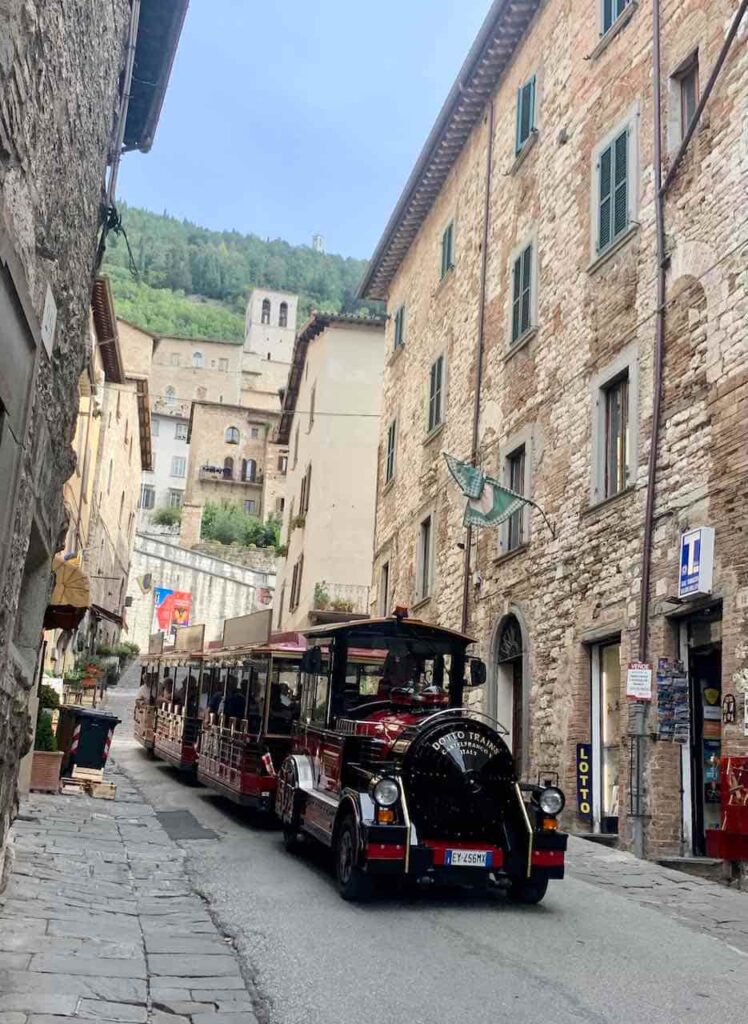
- Gubbio panoramic train tour with audio guide is an easy way to see the town if you’d rather not tackle every slope.
- Gubbio old town guided walking tour with Piazza Grande is ideal for the history and stories behind the streets.
- Private walking tour with truffle tasting is about three hours, covering the main sights plus a food tasting.
- Umbria truffle hunting tour with lunch and wine is a great pick if you want an outdoor, hands-on taste of Umbria.
There’s also the small Gubbio Express, a tourist train that can be useful if you want an easier overview of the town or are traveling with someone who finds the steep streets difficult.
Gubbio Festivals Worth Planning Around
Gubbio has several events that can completely change the atmosphere of a visit. If you want to experience the town when its traditions are at their most visible, these are the dates to know.
Corsa dei Ceri (Festival of the Candles)
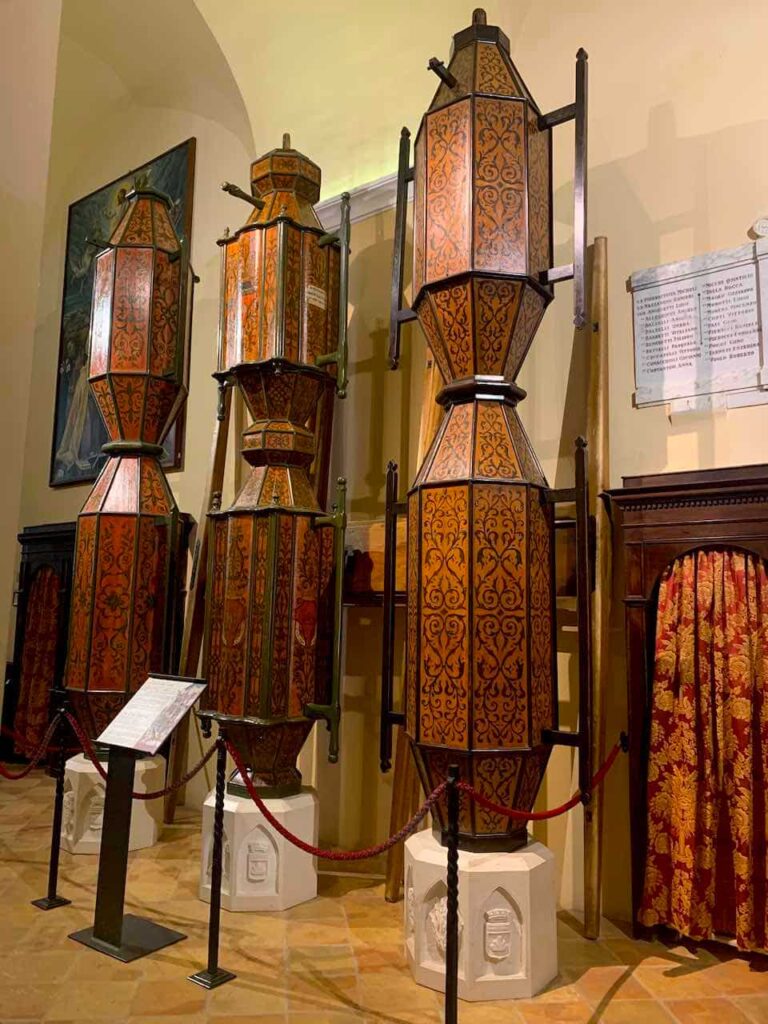
If your dates line up, the Corsa dei Ceri is one of the most extraordinary reasons to visit Gubbio. It takes place every year on May 15, the eve of the feast of Sant’Ubaldo.
Three teams carry enormous wooden Ceri through the streets of Gubbio and then race uphill toward the Basilica of Sant’Ubaldo on Mount Ingino. Each Cero is associated with a saint: Sant’Ubaldo, San Giorgio or Sant’Antonio Abate.
The ceremony begins with the spectacular alzata in Piazza Grande around noon, followed later in the day by the race. The atmosphere is intense, emotional and deeply local. It feels less like a performance put on for visitors and more like a tradition in which the whole town participates.
Pro tip: Book your hotel well in advance, arrive early, and expect significant crowds and temporary changes to traffic and access around the historic center.
Palio della Balestra (Crossbow Palio)
The Palio della Balestra is another reason to plan a trip around Gubbio’s calendar.
Held every year on the last Sunday in May, the traditional crossbow competition takes place in Piazza Grande and pits the Balestrieri of Gubbio against those of Sansepolcro.
Competitors shoot at a target called the tasso from a distance of 36 meters. Medieval costumes, flag throwers, drums and the historic procession turn the event into much more than a sporting competition.
It’s one of those occasions when Gubbio’s medieval history feels very much alive.
Pro tip: If you’re visiting for the Palio, reserve accommodation early and check the town’s event information before traveling..
Gubbio Land of Truffles (Autumn Food Festival)
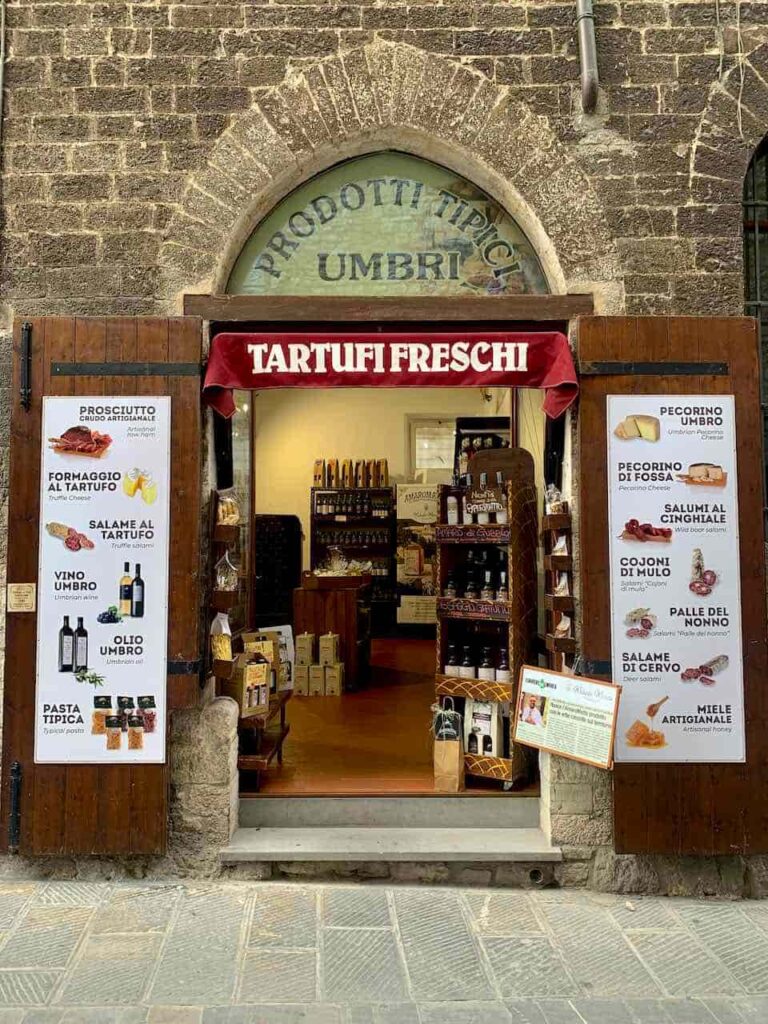
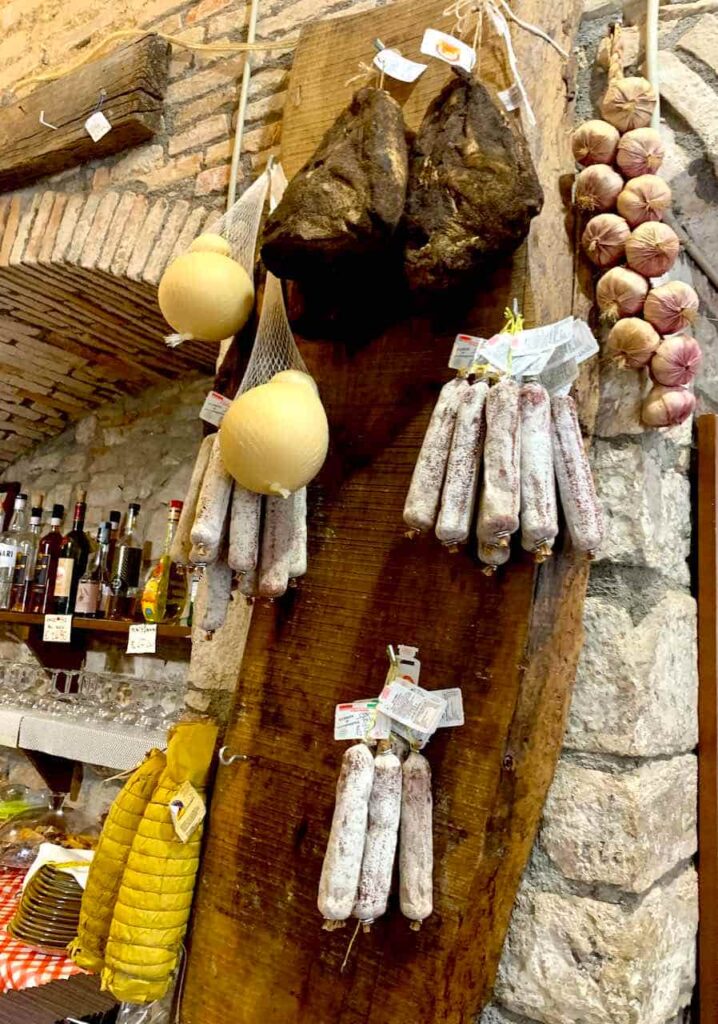
Autumn is a particularly good time to visit if food is part of your reason for coming to Umbria. Gubbio hosts its annual white-truffle and regional food events during the autumn season, with dates varying from year to year.
The focus is on local truffles and other Umbrian products, including cheeses, cured meats, olive oil, honey, sweets and wine. Restaurants and food shops also lean into seasonal ingredients, making this a particularly enjoyable time to eat your way through the town.
Autumn brings another advantage: the softer light and cooler temperatures are perfect for slow walks through the historic center between meals.
Pro tip: if you want to go deeper, book the Umbria truffle hunting tour with lunch and wine and see how the hunt works.
What to Eat in Gubbio

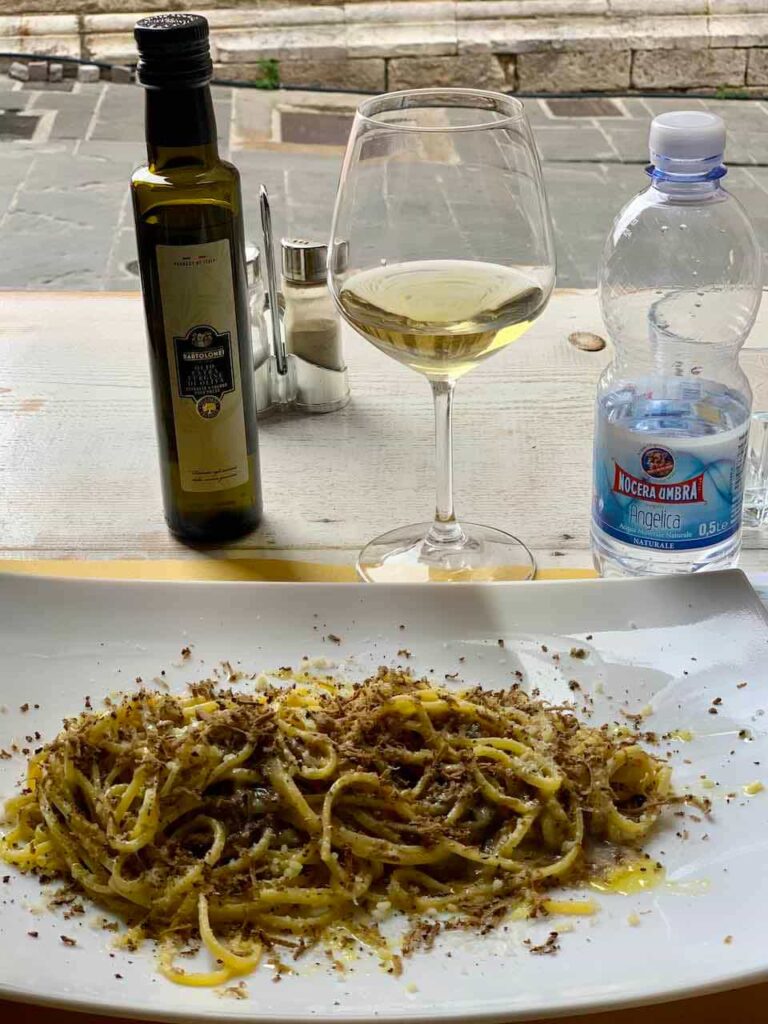
Umbrian food is earthy and seasonal, and Gubbio is a fine place to try it. Look for:
- Truffles, in pasta, on bruschetta, or in local products
- Strangozzi, a hand-rolled pasta (also called umbricelli), often served with black truffle
- Crescia di Gubbio, a local flatbread
- Cured meats such as boar prosciutto and deer salami
Where to Eat in Gubbio
For an authentic meal near Piazza Grande, try Bottega Del Tartufo, a traditional osteria on Via dei Consoli.
Want to learn to cook it yourself? This cooking class at a local’s home is a lovely way to take Umbria home with you.
Where to Stay in Gubbio
If you can, stay inside the historic center so you can wander in the quiet evening and early morning. Hotels in Gubbio range from historic palazzo-style properties to small B&Bs. One well-located option is Boson Palace, a 4-star hotel in the heart of the old town.
Pro tip: Book early if you’re visiting around the Corsa dei Ceri or other major events, as accommodation fills up fast.
How to Get to Gubbio
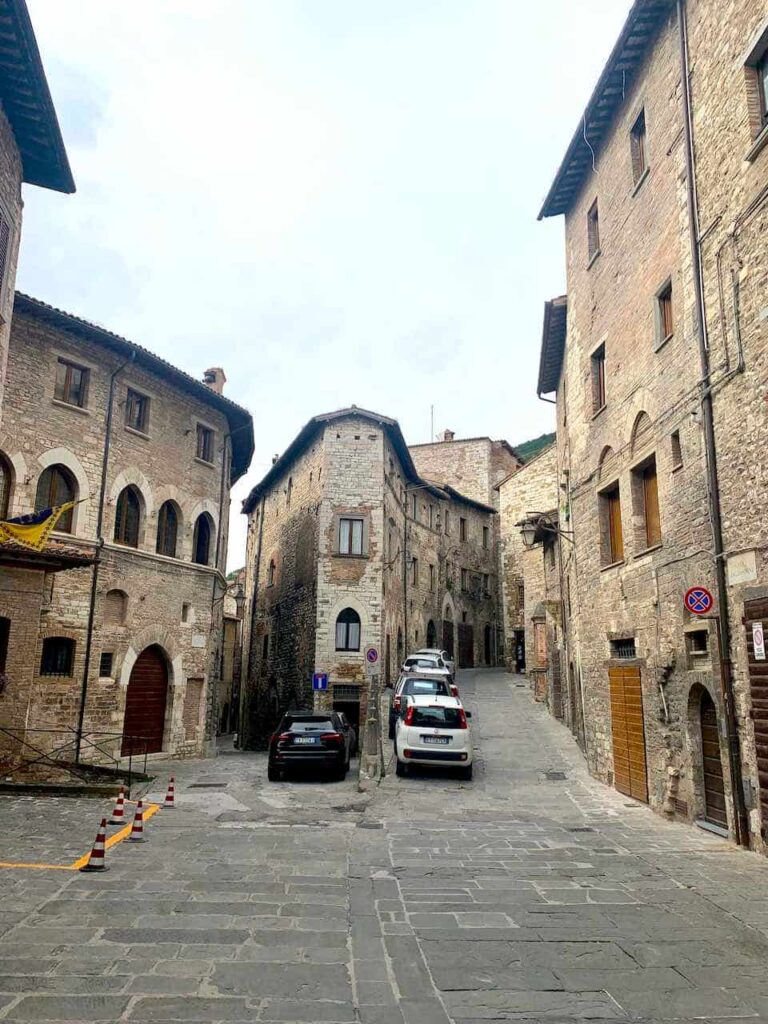
By Car
Gubbio is about 40 km from Perugia (roughly 30–40 minutes) and about 50 km from Assisi. Umbria is easiest to explore by car, and Gubbio is a natural stop on a road trip. You can compare rental cars at Perugia Airport.
There are several options near the historic center. Parcheggio Santa Lucia is a free public car park close to the center.
By Bus
Regional buses connect Gubbio with nearby towns. There is no train station in Gubbio.
By Air
Perugia San Francesco d’Assisi Airport (PEG) is closest, about 45 km away. Ancona Falconara (AOI) is about 90 km away.
Getting Around Gubbio
Gubbio is walkable, but it is definitely hilly. The historic center is compact, but you’ll encounter steep streets and plenty of uphill walking. Wear comfortable shoes and make use of the public elevators when you want to save your legs.
The Funivia Colle Eletto is also useful for reaching Mount Ingino and the Basilica of Sant’Ubaldo without making the entire climb on foot.
If you’re arriving by train, the nearest station is Fossato di Vico/Gubbio, about 18 km away, with bus connections into Gubbio.
How Long Do You Need in Gubbio?
I’d allow at least one full day in Gubbio.
One day gives you enough time to explore Piazza Grande, Palazzo dei Consoli, the cathedral, Church of San Francesco, the Roman Theater and several of the smaller historic sights.
If you have two days, you can slow down and add Mount Ingino, the Basilica of Sant’Ubaldo, ceramics shopping, a longer meal and some of the local food experiences.
For me, Gubbio is one of those places where an overnight stay makes sense. The town feels different once the day-trippers leave and the stone streets become quiet.
When to Visit Gubbio
Spring and autumn are the top seasons for visiting Gubbio, with milder weather making it easier to walk the steep streets.
Time your trip for May if you want to experience the Corsa dei Ceri on May 15 and the Palio della Balestra later in the month, on the last Sunday of May.
Autumn is particularly appealing if you’re interested in truffles and Umbrian food events, although festival dates vary from year to year.
Whenever you visit, check event dates and local opening information before you travel, particularly if you’re planning your trip around a festival.
Gubbio FAQ
Where is Gubbio?
Gubbio is a medieval town in northern Umbria, central Italy, about 45 km northeast of Perugia at the foot of Mount Ingino.
Is Gubbio worth visiting?
Yes. Gubbio combines Roman ruins, medieval architecture, the legend of the Wolf of Gubbio, ceramics, truffles and dramatic festivals, with far fewer crowds than Assisi or Perugia.
How many days do you need in Gubbio?
One full day covers the main highlights. Two days lets you enjoy the cable car, a tasting, ceramics shopping and the quiet evenings.
What is Gubbio famous for?
Gubbio is famous for its medieval old town, the Palazzo dei Consoli, the Iguvine Tablets, the Wolf of Gubbio legend, the Corsa dei Ceri, majolica ceramics and truffles.
What are the best things to do in Gubbio?
Top things to do in Gubbio include the Roman Theater, Piazza Grande, Palazzo dei Consoli, the cable car to Basilica of St. Ubaldo, the Church of St. Francis, and shopping for ceramics.
Is there a train to Gubbio?
Gubbio does not have a railway station in the historic town. The nearest rail connection is Fossato di Vico/Gubbio, about 18 km away, with bus connections into town.
Is Gubbio walkable?
Yes, but it’s hilly. The historic center is compact, but wear comfortable shoes and use the public elevators if needed.
What food is Gubbio known for?
Truffles, strangozzi pasta, crescia flatbread, and local cured meats like boar prosciutto.
What is the best time to visit Gubbio?
Spring and autumn. May for festivals, and late October to November for truffle season.
Is Gubbio Worth Adding to Your Umbria Trip?
For me, absolutely. Gubbio is the kind of place that slows you down: a coffee on Via dei Consoli, a slow climb to the fortress, a plate of truffle pasta, a ceramic plate to carry home.
That was what stayed with me after my visit. Gubbio isn’t a town I remember only for one famous monument. I remember the stone streets, the hills, the quiet moments between sights and the feeling of discovering a place that still feels deeply connected to itself.
If you’re planning an Umbria road trip, I’d make room for Gubbio.
Planning more of Umbria? Continue with:
- Umbria road trip itinerary
- Things to do in Assisi
- Best towns in Umbria
- Best things to do in Umbria
- Visiting the Basilica of St. Rita of Cascia in Cascia, Italy
- Full Umbria travel guide