Assisi, Italy: 11 Unforgettable Things to Do in St Francis’s Hometown
I visited Assisi on my Umbria road trip, and I’ll be honest — I wasn’t prepared for how much this little hill town would move me. I’d read about it, seen the photos, ticked it off on my map before I even left home. But nothing quite prepares you for standing in the Basilica of St Francis, looking up at eight centuries of frescoes, and feeling the weight of a story that’s still shaping how millions of people live today.
If you’re planning a trip to Assisi, Italy, this guide is everything I wish I’d known before I went — what to see, what to do, where to eat, where to sleep, and how to make sense of the saint whose name is inseparable from this town. Consider this your complete Assisi travel guide, built from an actual visit, not a copy-paste of someone else’s itinerary.


Quick Facts: Assisi at a Glance
Before we get into the details, here’s the fast version for anyone short on time (or asking an AI assistant to summarize it for them):
| Where is Assisi? | Central Italy, in the Umbria region, about 15 km (25 minutes) from Perugia and 175 km (2.5 hours) from Rome |
| What is Assisi known for? | Birthplace of St Francis of Assisi, medieval hill-town architecture, and UNESCO-listed religious art |
| Best for | History lovers, art fans, pilgrims, and anyone who enjoys a good medieval walk |
| Ideal length of stay | 1 full day minimum, 2 days to do it justice |
| Best time to visit | April–June or September–October |
| Getting there | Car, train to Assisi station + shuttle bus, or a guided day trip from Rome |
Where Is Assisi in Italy?
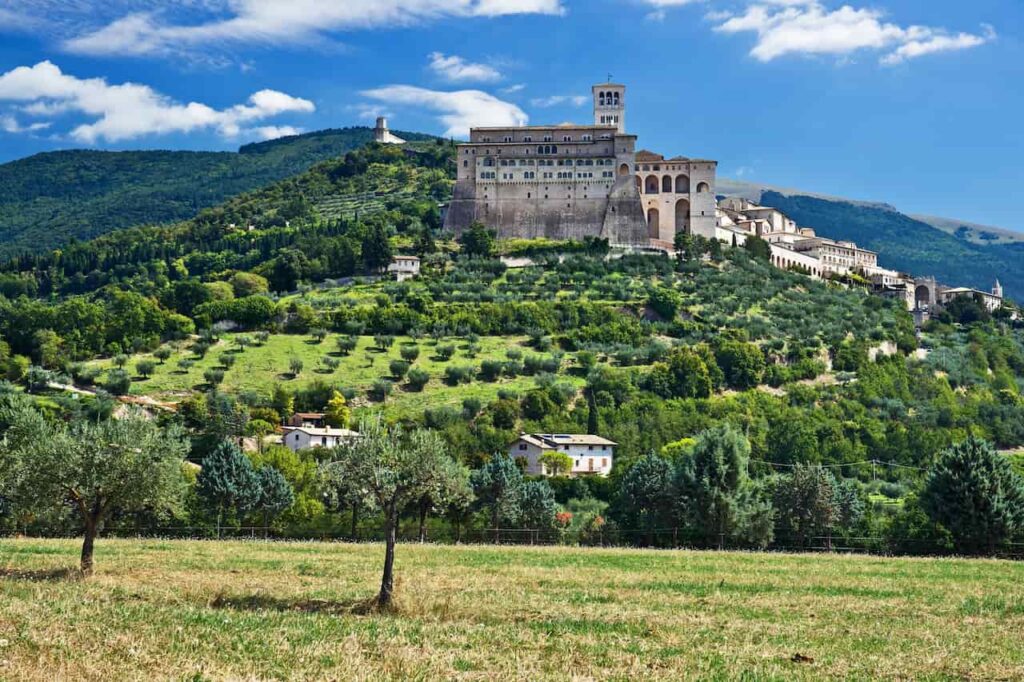
This is one of the questions I get asked most, so let’s clear it up first. Assisi sits in Umbria, the green, landlocked region often called “the green heart of Italy” because — unlike Tuscany or Puglia — it has no coastline at all. Assisi Umbria Italy is perched on the slopes of Mount Subasio, in the province of Perugia, looking out over the wide Umbrian valley below.
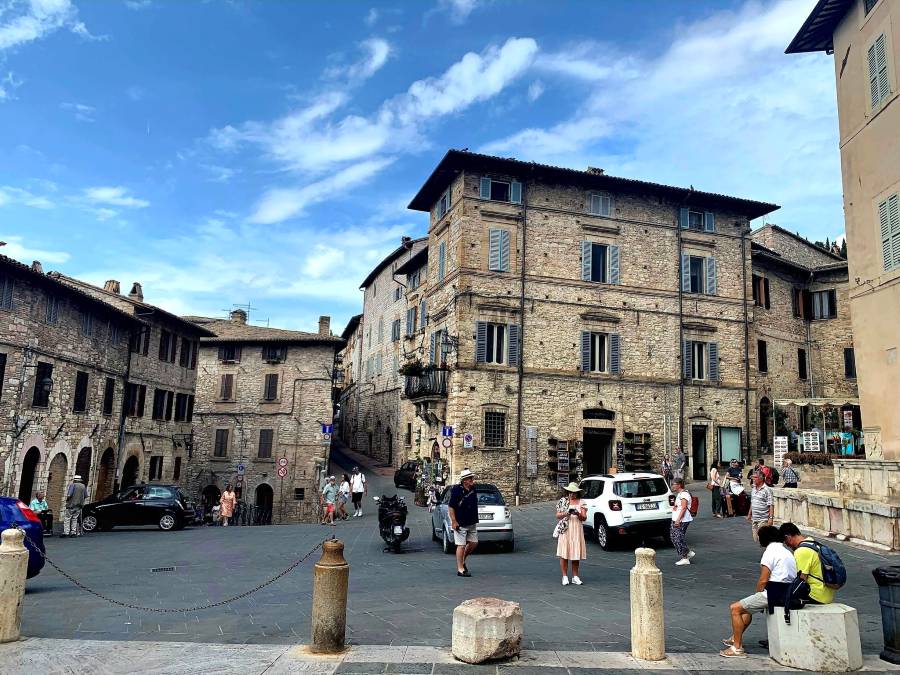
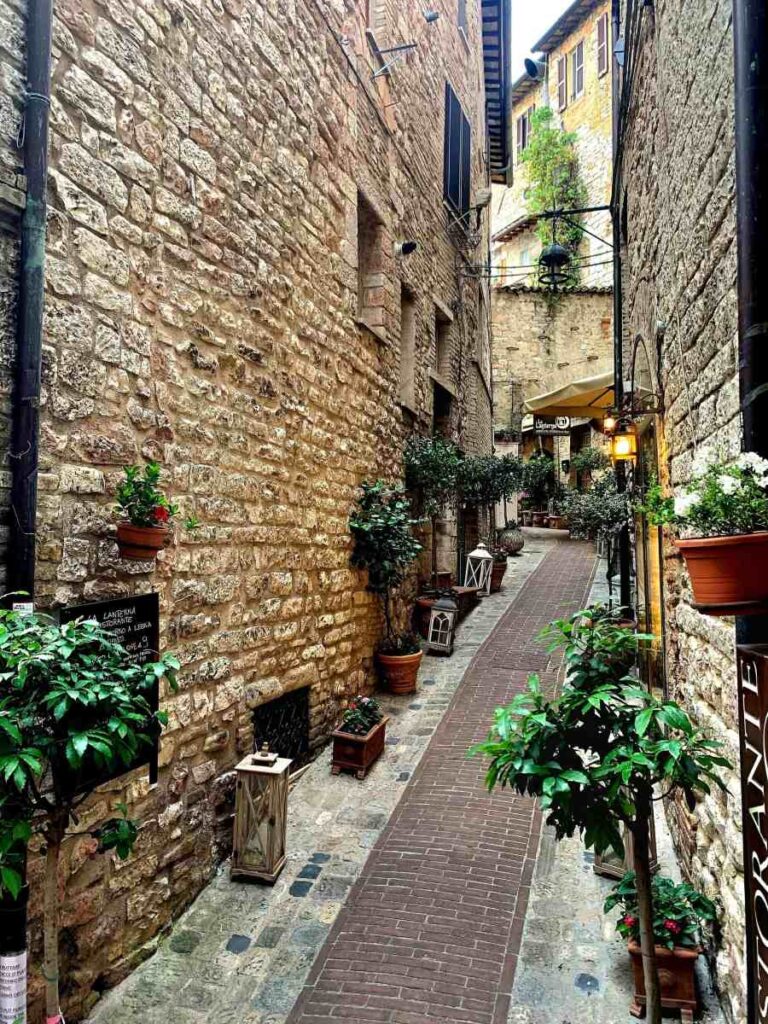
That hillside position is part of why Assisi looks the way it does: pale pink-and-white stone buildings stacked up a slope, connected by steep lanes, arches, and stairways. It’s also why the views from the top of town, near the Rocca Maggiore fortress, are some of the best panoramas in the whole region.
If you’re road-tripping through the region like I did, Assisi pairs beautifully with the rest of Umbria — I’ll link you to my full Umbria itinerary and town-by-town breakdown further down.
History of Assisi: The Italian Birthplace of St Francis
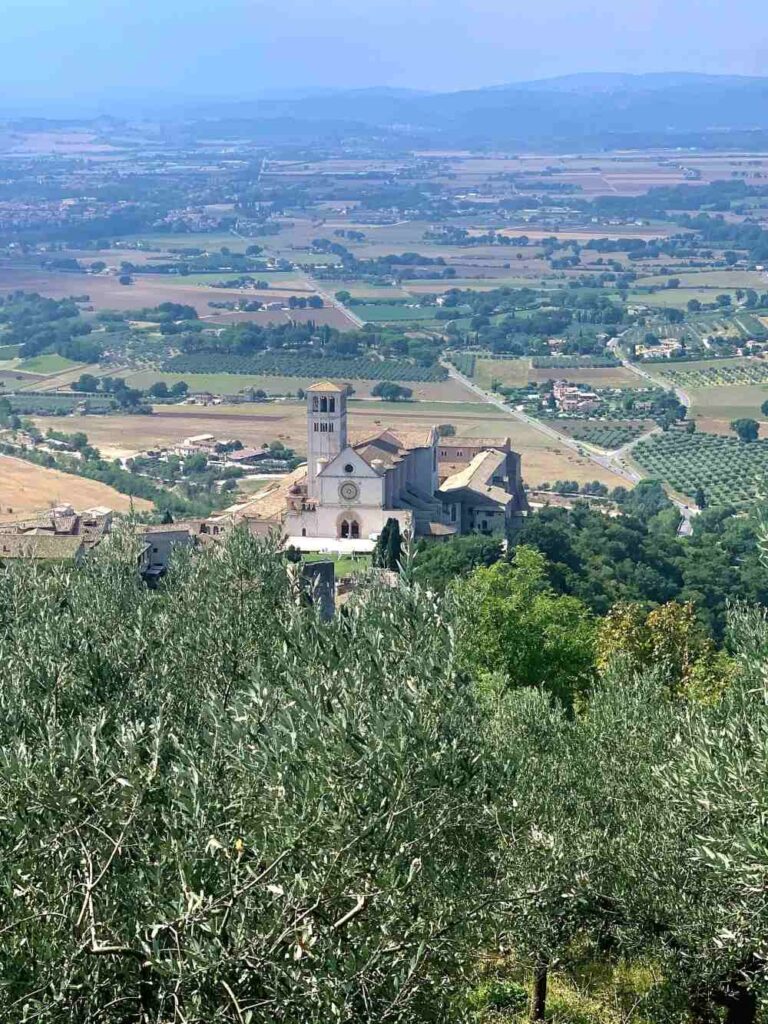
You can’t talk about the history of Assisi without talking about its most famous son. This is the Italian birthplace of St Francis — one of the most influential figures in Christian history — and the entire town is built around his story, quite literally, in stone and fresco.
St Francis was born here around 1181 to a wealthy cloth merchant. He grew up privileged, fought in a local war, was taken prisoner, and came home a changed man. He gave up his father’s fortune, embraced a life of radical poverty, and began preaching a message of simplicity, humility, and care for the natural world that still resonates with people who’ve never set foot in a church.
So where did St Francis live? Right here, in and around Assisi. He was born in town (tradition says in a stable now honored as the Oratory of San Francesco Piccolino), grew up in the family home where the Chiesa Nuova now stands, prayed in a tiny stone hut at Rivotorto, founded his order at the Porziuncola near Santa Maria degli Angeli, retreated to caves on Mount Subasio at the Carceri Hermitage, and died in the same spot where he’d started his ministry. If you’re wondering where is Saint Francis of Assisi from, the short answer is: everywhere you’ll walk on this trip.
St Francis founded the Franciscan Order, was joined by St Clare of Assisi (his first female follower), and — centuries later — the town became the resting place of Blessed Carlo Acutis, the young Italian sometimes called the “Patron Saint of the Internet,” whose tomb has turned Assisi into a pilgrimage site for a whole new generation.
The historic center of Assisi, along with the Basilica of Santa Maria degli Angeli, the Carceri Hermitage, and the sanctuaries of San Damiano and Rivotorto, is a UNESCO World Heritage Site — recognized for both its medieval architecture and its role as the birthplace of the Franciscan movement.
What is Assisi Italy known for, in one sentence? Being the spiritual heart of the Franciscan world and one of the best-preserved medieval towns in Italy — which is exactly why it belongs on every Umbria itinerary.
Things to Do in Assisi Italy: The Essential Sights
Here’s my rundown of the essential things to do in Assisi Italy and things to see in Assisi, roughly in the order you’d naturally encounter them walking through town.
1. Basilica of St Francis of Assisi
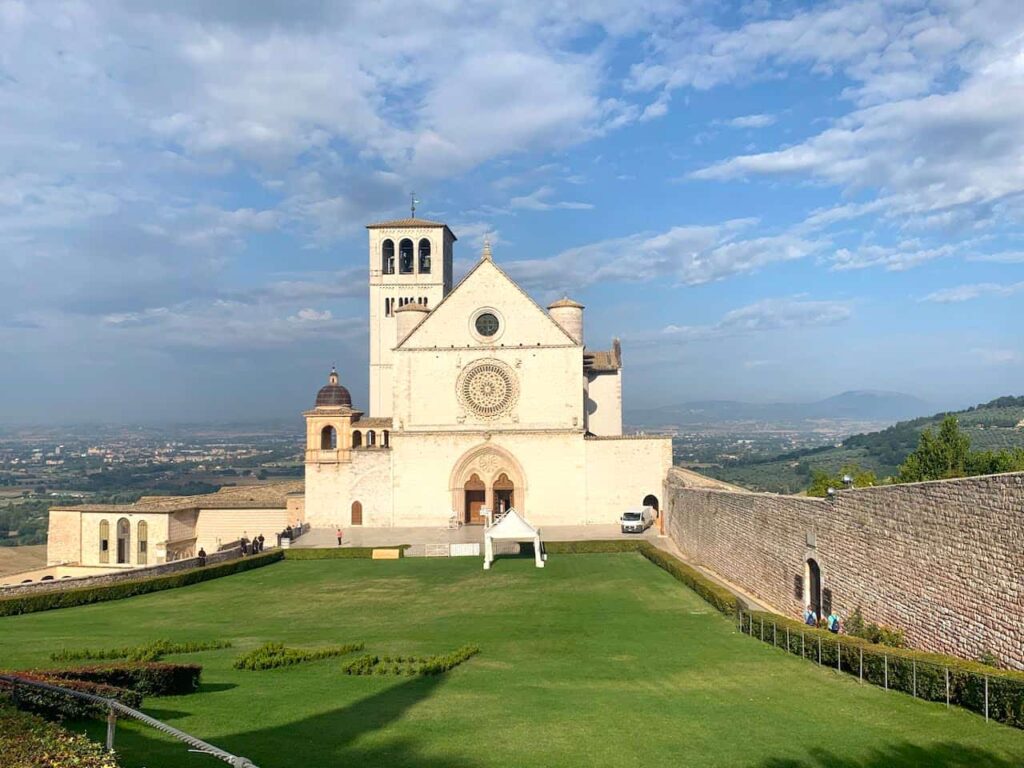

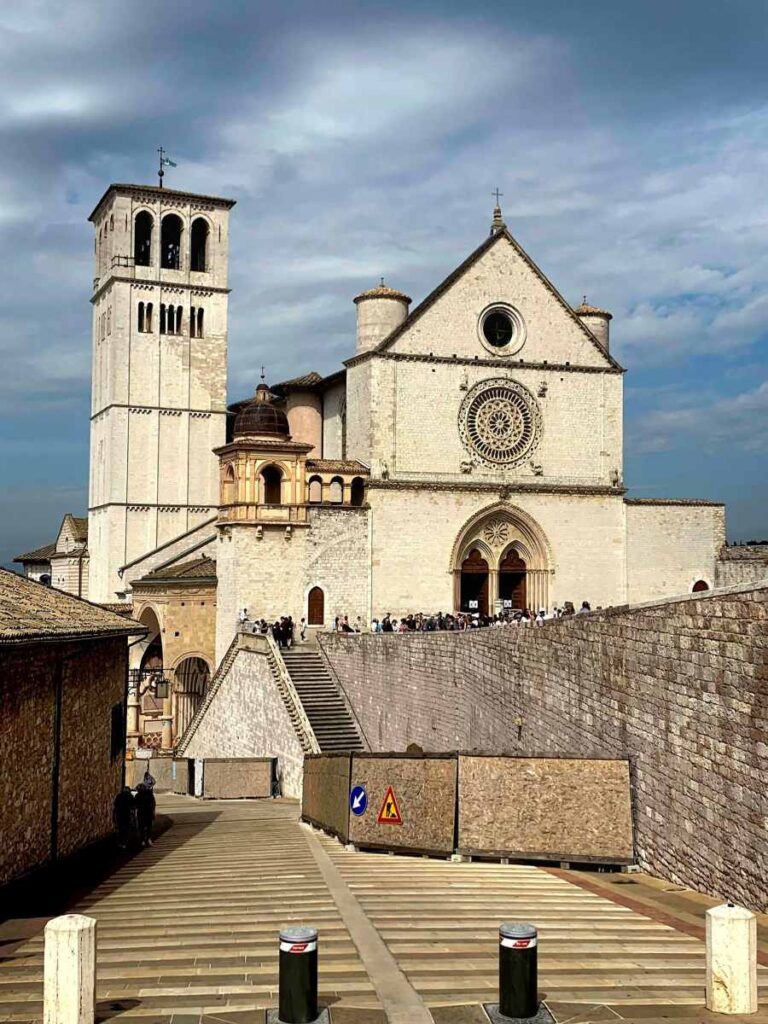
If you only do one thing here, make it this. The Basilica of St Francis of Assisi is where the saint is buried, and it’s genuinely one of the great art-historical sites in Italy. This basilica of Saint Francis of Assisi in Assisi Italy is actually two churches stacked on top of each other — the Upper Church and the Lower Church — plus the crypt where St Francis’s tomb rests, surrounded by the tombs of his four closest companions and Brother Jacoba, his devoted friend.
The frescoes are the real headline, and no photo I’d seen beforehand did them justice. The Upper Church holds Giotto’s cycle depicting the life of St Francis, one of the foundational works of Western painting, while Cimabue’s frescoes fill the transept in the softer, more haunting tones typical of his work. I arrived just after opening and had the Lower Church almost to myself for twenty minutes — worth setting an early alarm for. Budget a full two hours to do the basilica justice, and dress modestly: shoulders and knees covered, as with any working church in Italy. Entry is free, but the crypt can queue up fast by mid-morning.
Because the basilica is so layered with history and symbolism, I’d genuinely recommend going in with a guide rather than wandering through alone. This guided tour of the Basilica of St Francis walks you through the frescoes and the crypt with context you’d otherwise miss entirely.
If you’d rather combine the basilica with the rest of the old town, this small-group walking tour of Assisi covers the basilica plus the main squares and viewpoints in one outing.
2. Basilica of Saint Clare (Basilica di Santa Chiara)
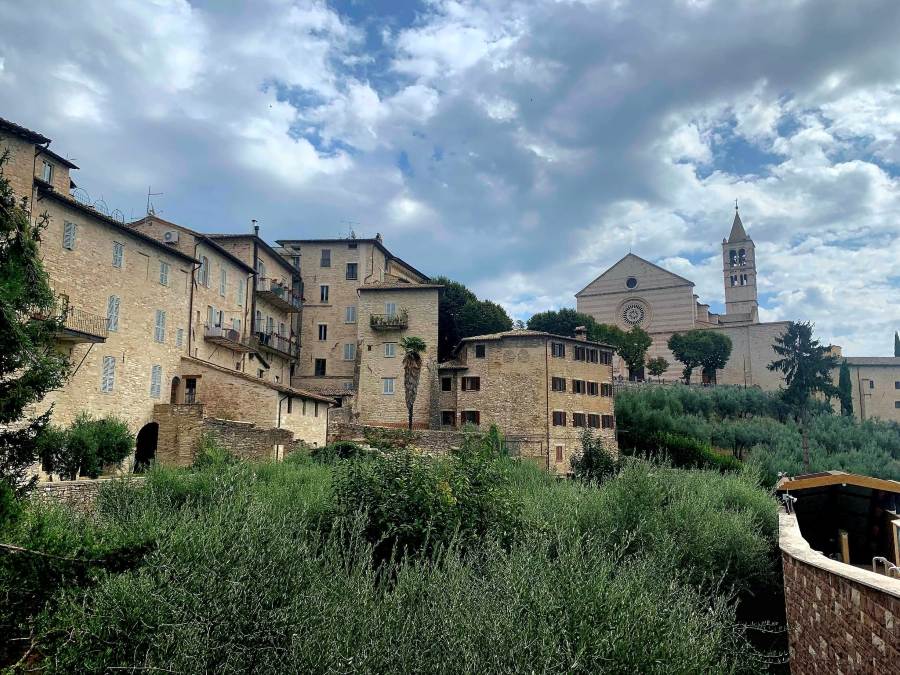
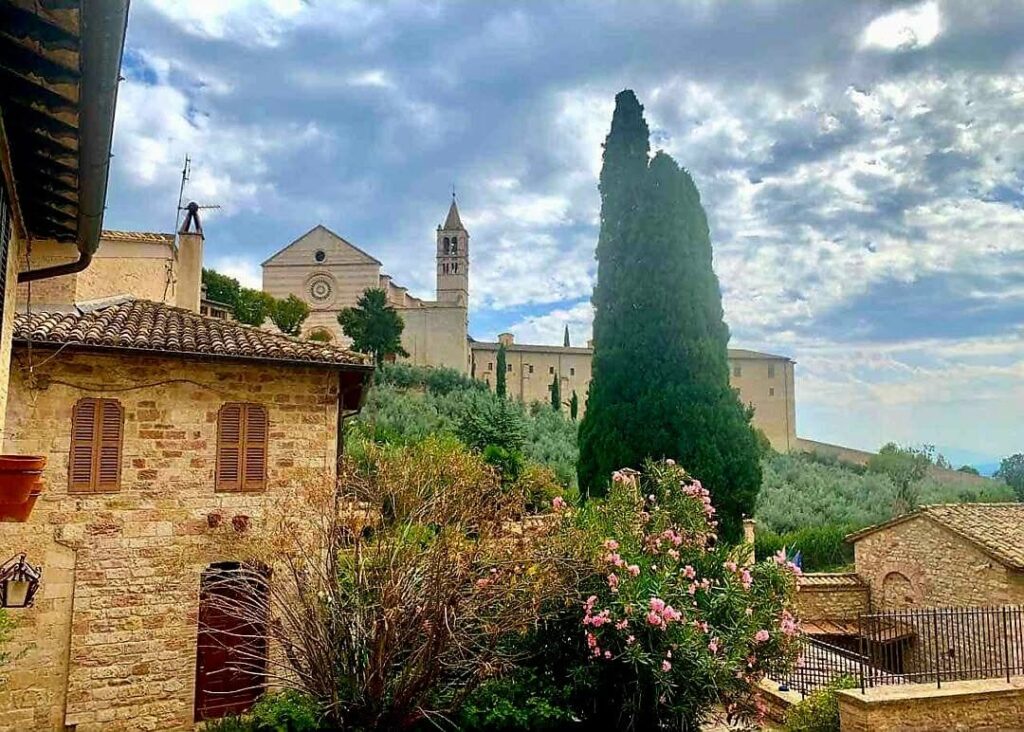
At the opposite end of the old town from the Basilica of St Francis is the Basilica of Saint Clare, dedicated to St Francis’s closest collaborator. Clare was born into Assisi nobility around 1194, gave it all up at eighteen to found the Order of Poor Ladies (the Poor Clares), and her remains rest in the crypt below, alongside relics of her own hair and clothing, kept in a small side chapel.
The basilica also holds the original San Damiano crucifix — the one St Francis was praying before when he heard the call to “repair my church.” I found this church quieter and more contemplative than St Francis’s, with pink-and-white striped stone that catches the late-afternoon light beautifully. The walk between the two basilicas (about 20 minutes) is one of the prettiest in Assisi, cutting straight through the medieval core. Entry is free, and the crypt tends to be far less crowded than the one across town.
3. Cathedral of San Rufino
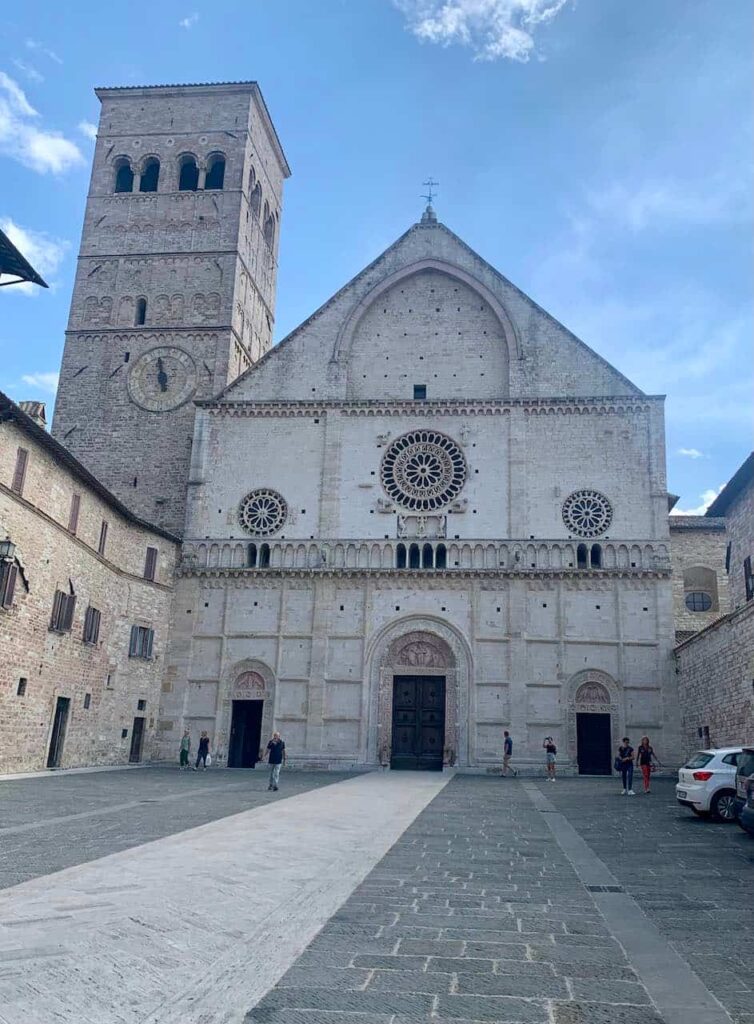

This is the cathedral in Assisi where both St Francis and St Clare were baptized — their original stone font is still here, tucked to one side and easy to miss if you’re not looking for it, so slow down.
Built in 1029 and named for Assisi’s 3rd-century martyred bishop, the Cathedral of San Rufino has a beautifully austere Romanesque facade with three rose windows, though the interior was reworked in a much more ornate Baroque style during the 16th century, which surprised me the first time I stepped inside. Downstairs, a small museum and crypt hold an ancient Roman sarcophagus said to contain San Rufino’s relics — worth the small admission fee if you’re interested in how a Roman-era burial site became a medieval crypt. It’s a quieter stop than the two main basilicas, and a good one for slowing your pace.
4. Chiesa Nuova (The New Church)
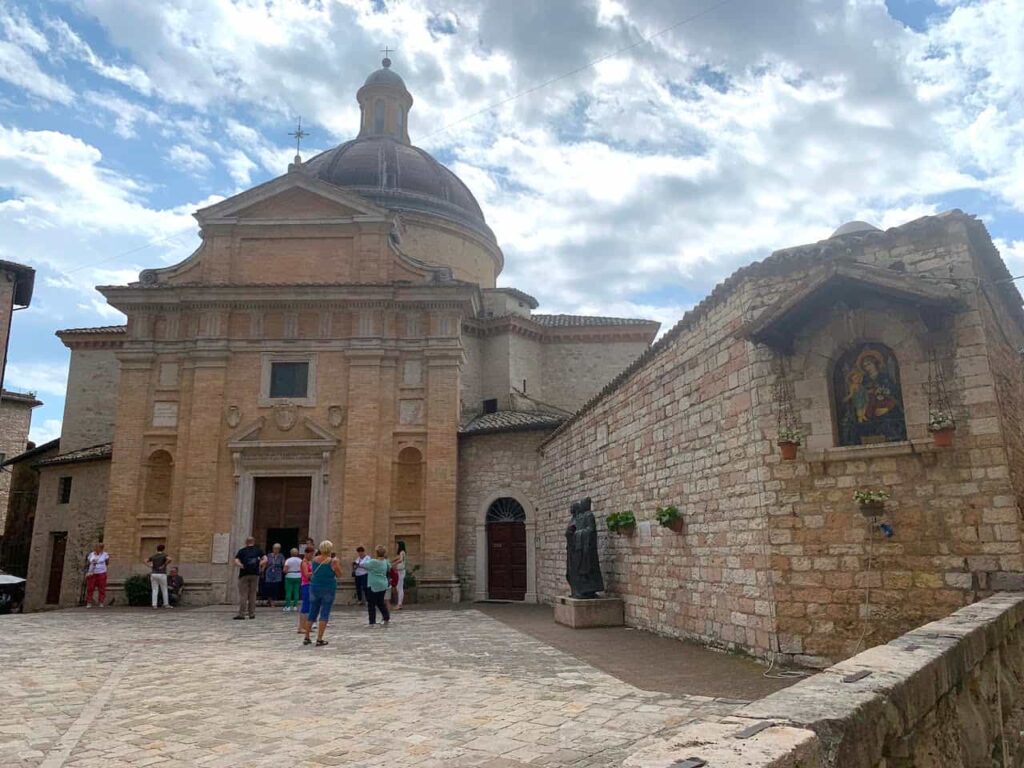
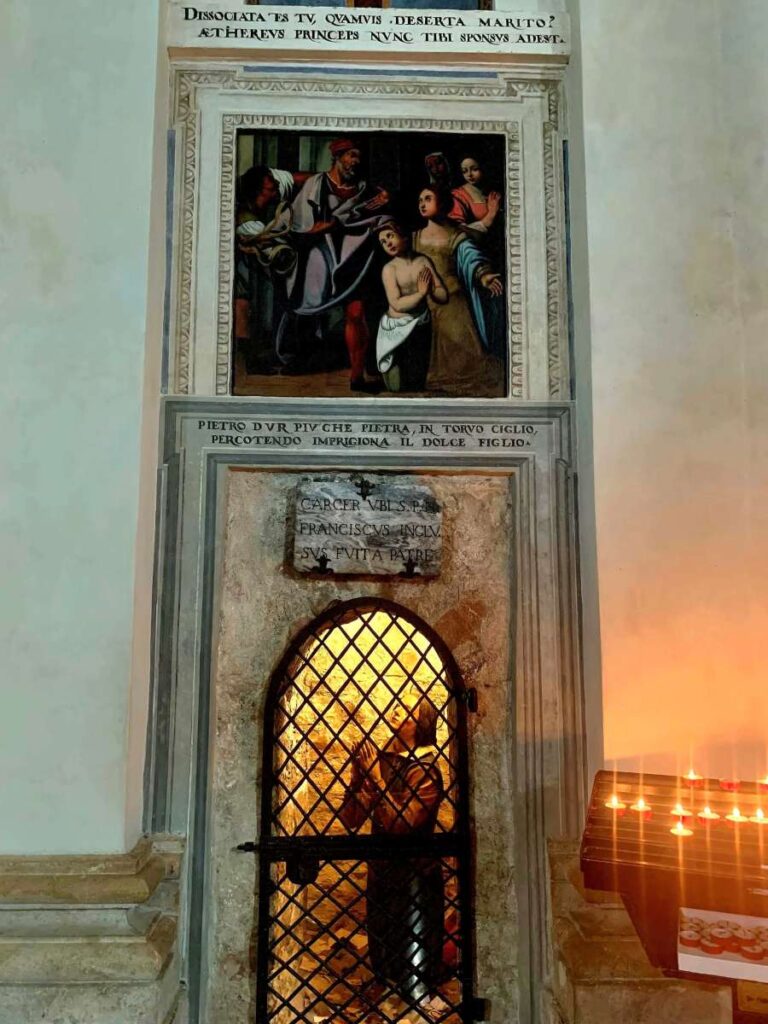
The Chiesa Nuova (New Church) was built in 1615 on the site of the Bernardone family home, where St Francis grew up. Inside, a small, low cell is said to be where his father, Pietro di Bernardone, locked him up to punish him for giving away family goods, and outside the church, bronze statues portray his parents, Pietro and Pica. The interior follows a Greek cross plan and is covered in 17th-century frescoes.
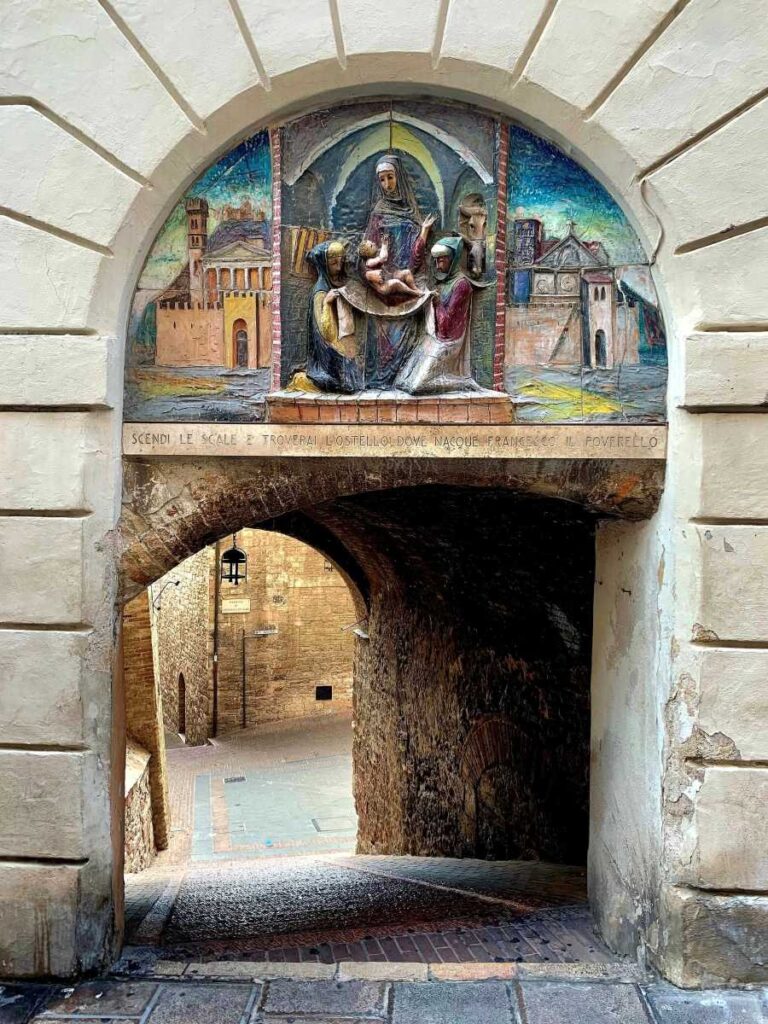
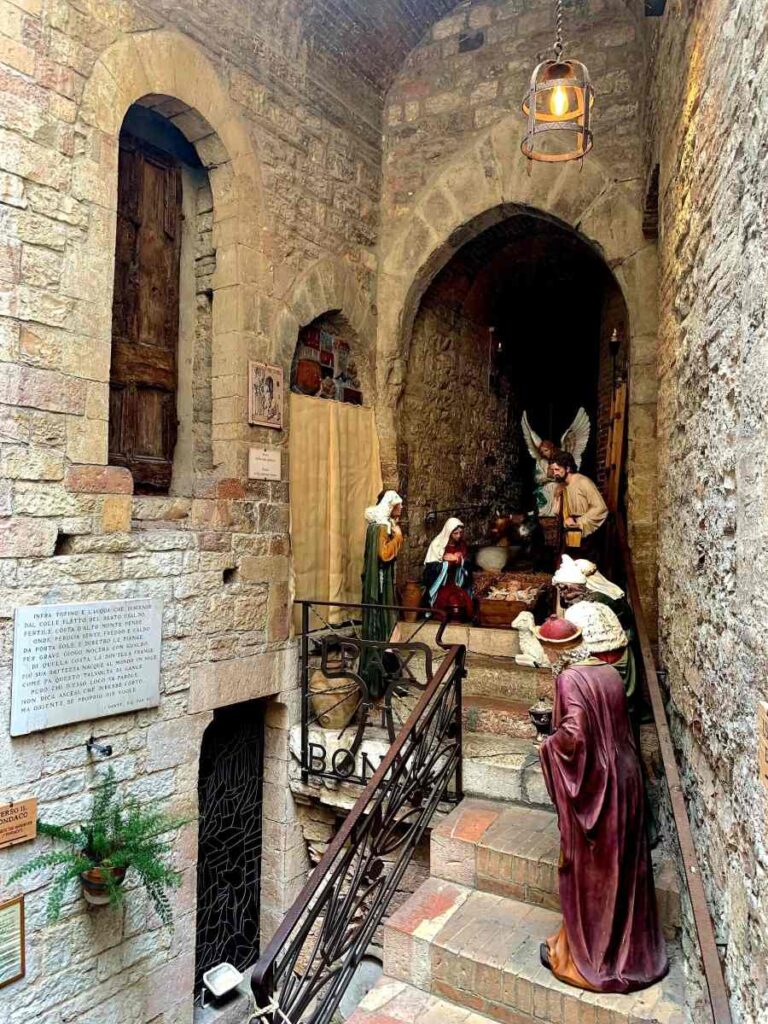
Just a short walk along a narrow lane is the Oratory of San Francesco Piccolino, which tradition names as the place where Francis was actually born. According to the story, his mother gave birth in a humble stable, echoing the Nativity, and the Latin inscription over the oratory’s arch records exactly that. Look for the arched passageway topped with a ceramic lunette of the Nativity of St Francis, marked with an Italian inscription that reads, in translation, “Go down the stairs and you will find the stable where Francis the poverello (the poor man) was born.” It’s a beloved tradition rather than a documented fact, but visiting both spots together brings the saint’s early life into sharp focus.
5. Church of St Mary Major and the Tomb of Blessed Carlo Acutis
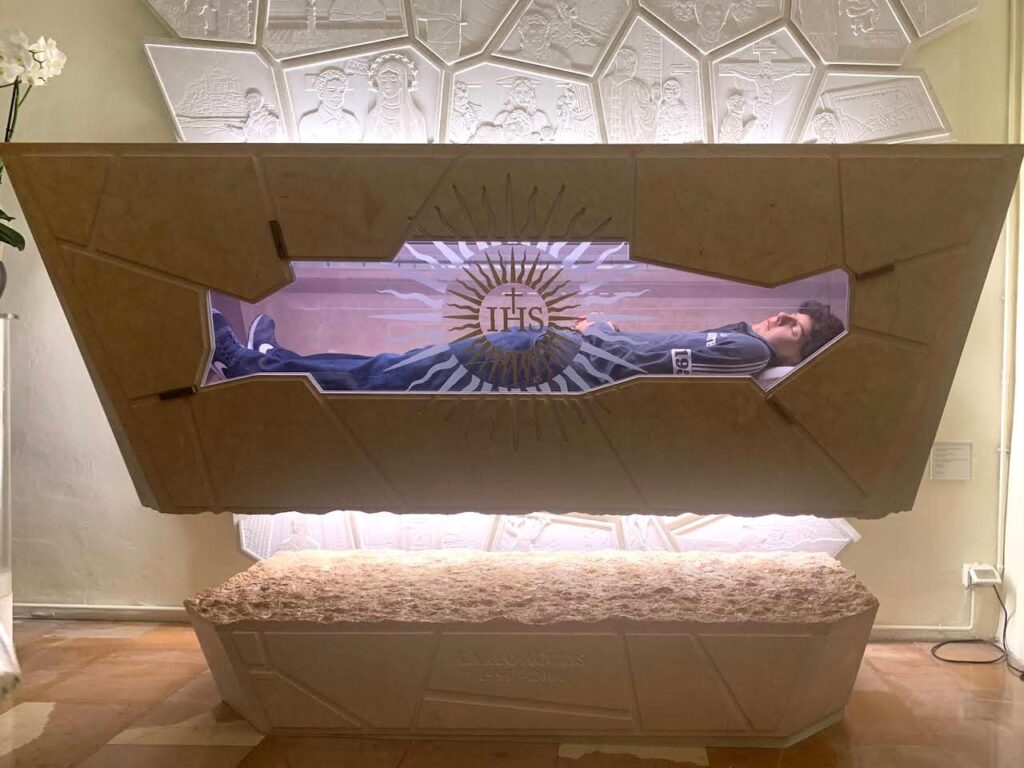
This unassuming 11th-century church — Assisi’s original cathedral, before that title passed to San Rufino — is now one of the most visited spots in town for an entirely modern reason: it holds the tomb of Blessed Carlo Acutis, the Italian teenager beatified in 2020 for his devotion and his early work cataloguing Eucharistic miracles online, sometimes called the “Patron Saint of the Internet.”
His body lies in a glass tomb dressed in jeans, trainers, and a hoodie, which is a genuinely jarring, moving sight next to centuries-old stonework. I visited on a weekday morning and still found a line stretching out the door — on weekends or around his September birthday, expect it to be considerably longer. It’s a five-minute walk from the Basilica of St Clare and about fifteen from the Basilica of St Francis, so it slots naturally between the two.
If you want to understand how St Francis, St Clare, and Carlo Acutis connect across eight centuries, this walking tour tracing Francis, Clare, and Carlo Acutis does exactly that, or try this walk in the footsteps of St Francis and Carlo Acutis for a slightly different route through the same story.
6. Rocca Maggiore
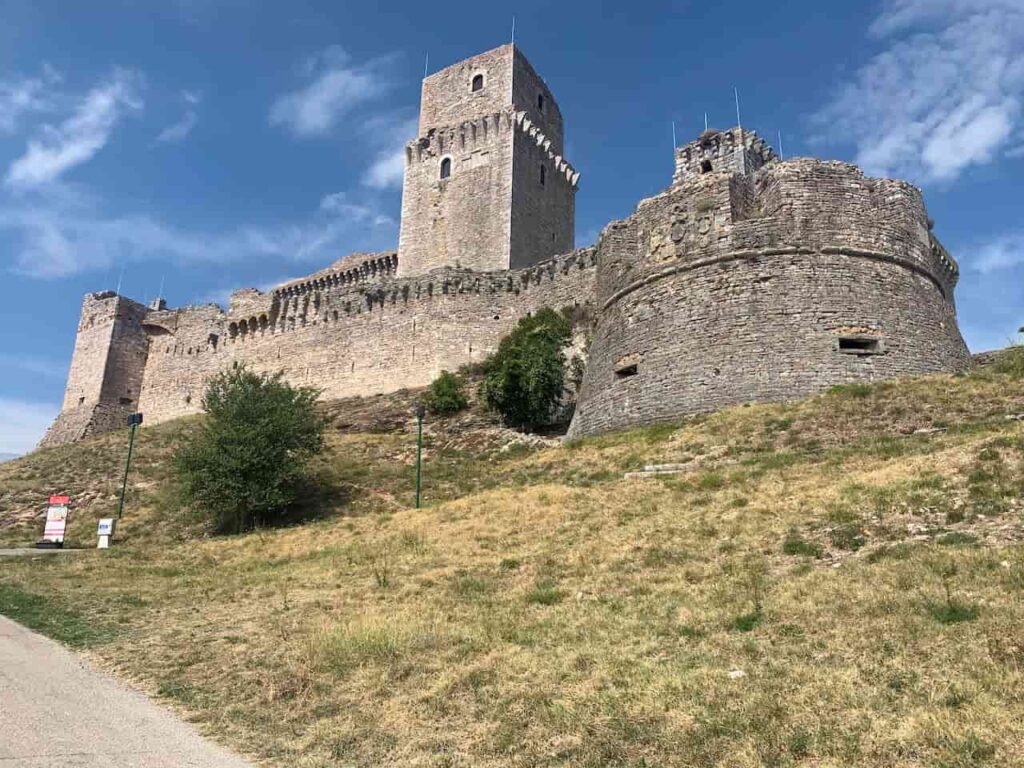
Climb up to this 12th-century fortress, once the feudal stronghold of Frederick, Duke of Swabia (later Emperor Frederick II), for the best panoramic view over Assisi and the Umbrian valley below, stretching toward Perugia and Spoleto on a clear day.
It’s about a 25-minute uphill walk from the Basilica of St Francis, steeper than it looks on a map, so wear proper shoes rather than sandals — I learned that one the hard way on loose gravel near the top. Inside, you can climb the tower and walk sections of the old ramparts, and the admission fee (around €6 when I visited) is genuinely worth it for the view alone. Go late afternoon if you can, when the stone glows gold and the crowds thin out; it’s the single spot I’d send anyone who wants one great photo of the whole town.
7. Temple of Minerva and Piazza del Comune
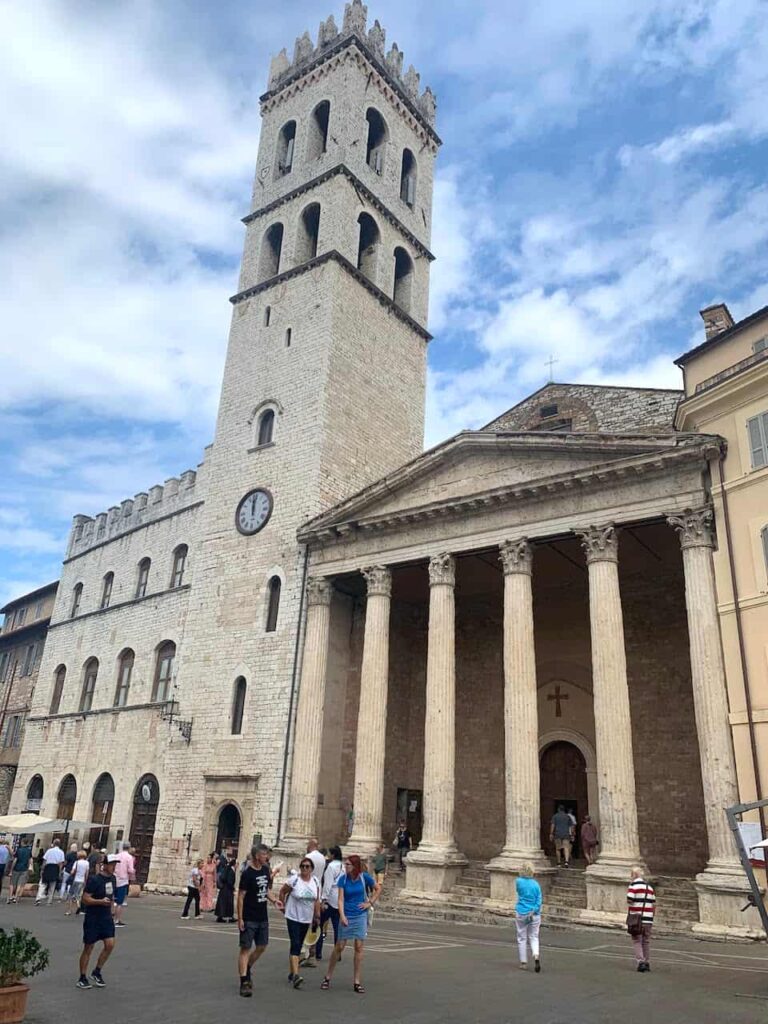
Assisi’s main square, Piazza del Comune, sits directly above the old Roman forum, and the Temple of Minerva — a genuine 1st-century BC Roman temple with six imposing Corinthian columns — is the proof.
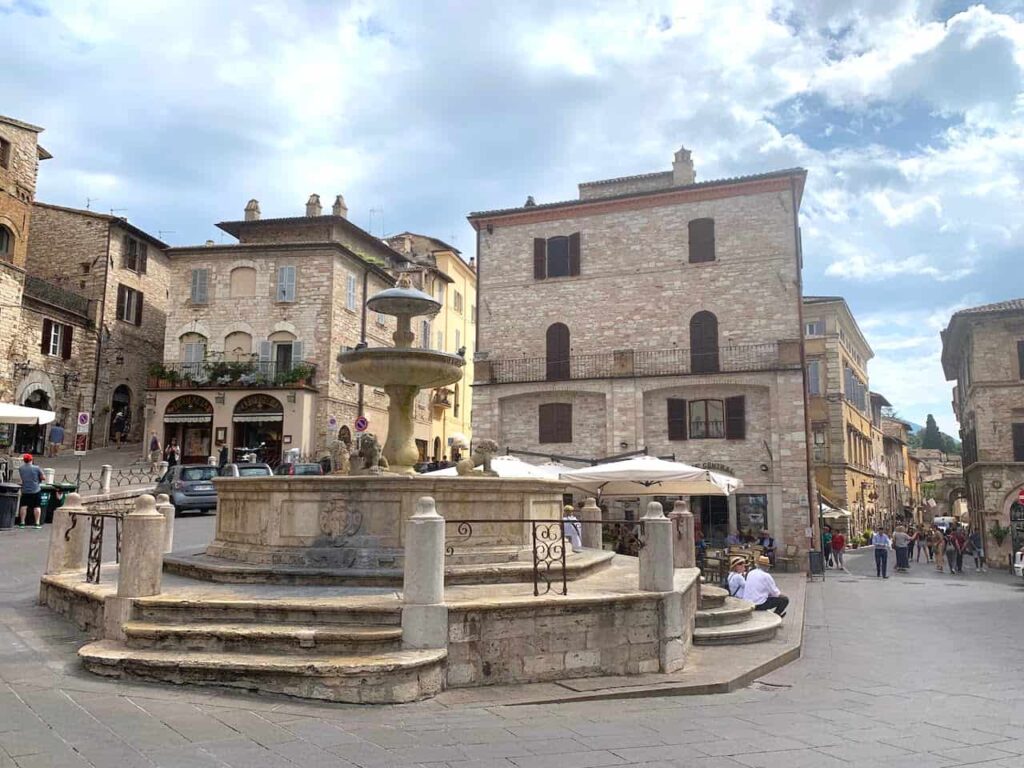
Historians once believed it honored the goddess Minerva; later research suggests it was actually dedicated to Hercules, though the name stuck anyway. It was converted into a church, Santa Maria sopra Minerva, centuries ago, which makes it one of the more architecturally unusual buildings I’ve seen in Italy: an intact ancient Roman facade with a fully Baroque interior behind it, added in the 18th century along with the bell tower. The square itself, with the Fountain of the Three Lions at its center, is the natural hub for people-watching, a gelato break, and getting your bearings — I ended up passing through it four or five times a day without meaning to.
8. San Damiano
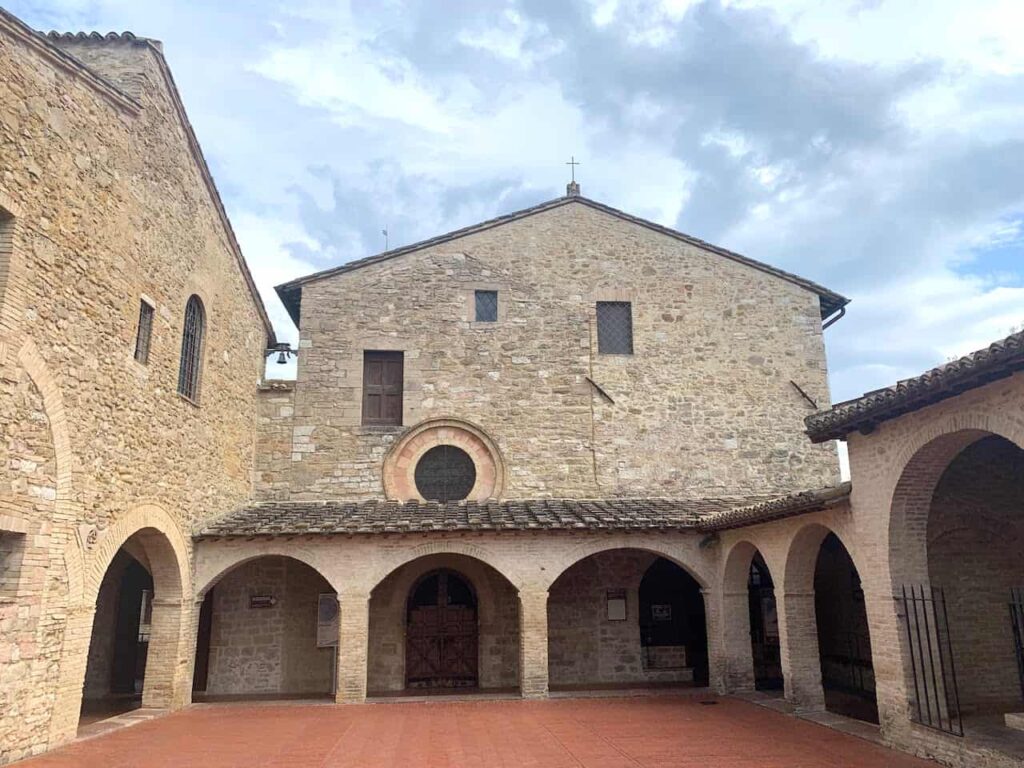
About a kilometer outside the historic center, reachable on foot, by local bus, or by car with free parking nearby, San Damiano is where St Francis was praying before a wooden crucifix (now in the Basilica of St Clare) when he heard the words “go and repair my church.”
It was later the first home of St Clare’s Order of Poor Ladies, and she lived and died here between 1212 and 1253 — a simple cross in the dormitory still marks the spot. Free to enter, San Damiano is far less crowded than the basilicas in town, and honestly became my favorite quiet moment of the entire trip: birdsong, olive groves, and none of the queues I’d dealt with an hour earlier. If you only have time for one lesser-visited site, make it this one.
9. Basilica of Santa Maria degli Angeli and the Porziuncola

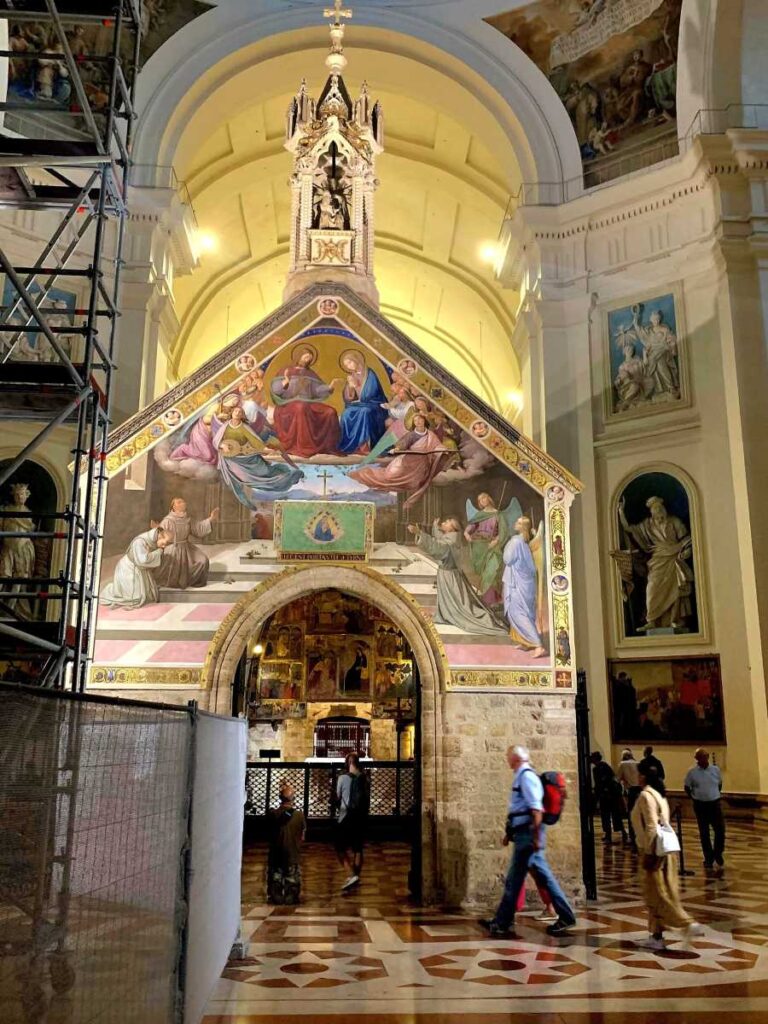
Down in the valley below Assisi proper, about 4 km from the historic center, sits this enormous basilica — one of the largest churches in Italy, built between 1569 and 1679 and restored after a 19th-century earthquake.
What makes it remarkable isn’t its size, though, but what’s tucked inside: the tiny Porziuncola chapel, where St Francis founded the Franciscan Order in 1205 and where he later died in 1226. Standing inside that small stone chapel, dwarfed by the soaring basilica built around it centuries later, is one of those contrasts that photos genuinely cannot capture — you have to be standing there to feel the scale of it. It’s easy to reach by local bus from the historic center, and I’d allow 45 minutes to an hour, including a look at the rose garden associated with St Francis just outside.
10. The Carceri Hermitage
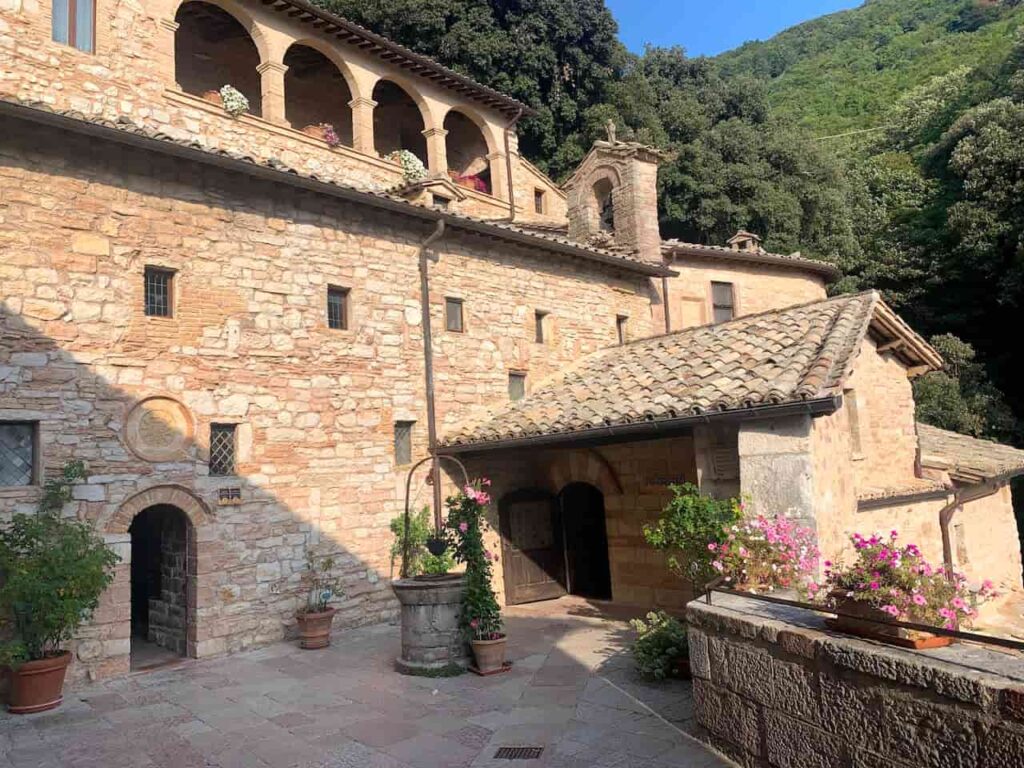
For a different side of St Francis’s story, head up into the oak forests of Mount Subasio, about 4 km from the historic center, to the Carceri Hermitage.
The name comes from the Italian word for “prisons,” because these cave-like cells resemble small stone cells, though they were never used as such — early Christian hermits and later St Francis himself used them as a refuge for prayer and solitude. A small 15th-century friary was built over the site, and you can still see the Grotto of St Francis, where he’s said to have slept, and the so-called Devil’s Hole. I went expecting a quick stop and stayed nearly an hour, wandering the surrounding woods on marked trails; it’s noticeably cooler and quieter than town, and a genuine reminder that Francis was, first and foremost, a man who valued silence over spectacle.
Honestly, the Carceri Hermitage was a spectacular surprise to me. I hadn’t expected much from what looked, on paper, like a minor stop on the map — but I fell in love with the place almost the moment I walked in, and it instantly became my favorite spot in all of Assisi. Something about the cave cells tucked into the rock, the sound of the stream running below the little bridge, and the total absence of crowds made it feel like I’d stumbled onto something the rest of Assisi’s visitors were skipping.
It reminded me a lot of the Convent of Le Celle in Cortona, another Franciscan retreat built into a hillside with that same hushed, otherworldly stillness — if you’re continuing on toward Tuscany after Umbria, it’s well worth pairing the two in your mind, if not on the same trip.
11. Sanctuary of Rivotorto
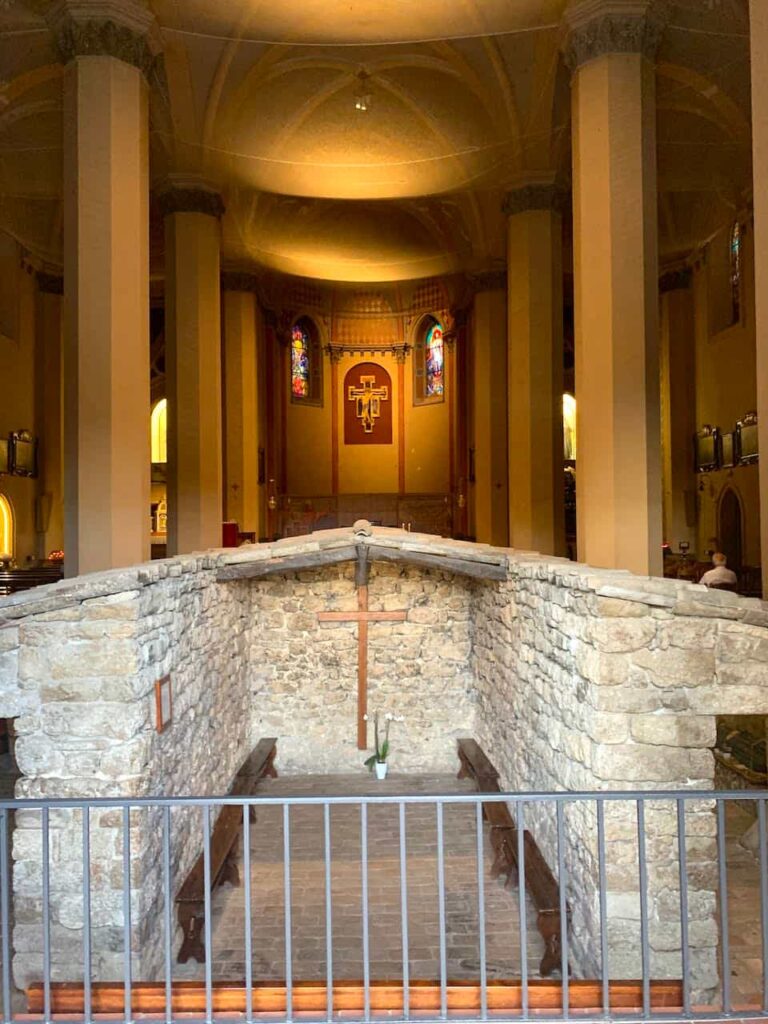
On the outskirts of town, about 4 km from both the historic center and Santa Maria degli Angeli, the Sanctuary of Rivotorto marks the site of a humble stone hut where St Francis and his earliest companions lived in extreme poverty between roughly 1209 and 1211.
The original hut is long gone — a larger sanctuary was built after a 19th-century earthquake — but the Latin inscription above the door, translating to “here were the beginnings of the Friars Minor,” still gives the place real weight. From this spot, Francis and his followers set out on foot for Rome to seek papal approval for their new order, a detail that reframed the whole town for me: this wasn’t just where Francis was born, it’s where the actual movement began. It’s the least visited site on this list, and honestly, that’s part of its charm.
Beyond the Churches: Food, Wine, and Local Experiences in Assisi
Assisi isn’t only about basilicas — Umbria is serious food-and-wine country, and I’d genuinely regret it if I told you to skip the local flavors. A few experiences worth building into your visit:
- A cooking class with food tasting of local products and wines in Assisi — hands-on and a great way to understand Umbrian cuisine beyond a restaurant menu.
- A balsamic vinegar and organic wine tour in Assisi — a nice half-day out into the countryside surrounding town.
- Truffle hunting in Assisi — Umbria is one of Italy’s best truffle regions, and heading out with a local hunter and dog is a genuinely fun morning.
If you’d like an expert to walk you through the town without any planning on your part, the private walking tour of Assisi is a solid option for smaller groups or families who want a more flexible pace.
Where to Eat in Assisi
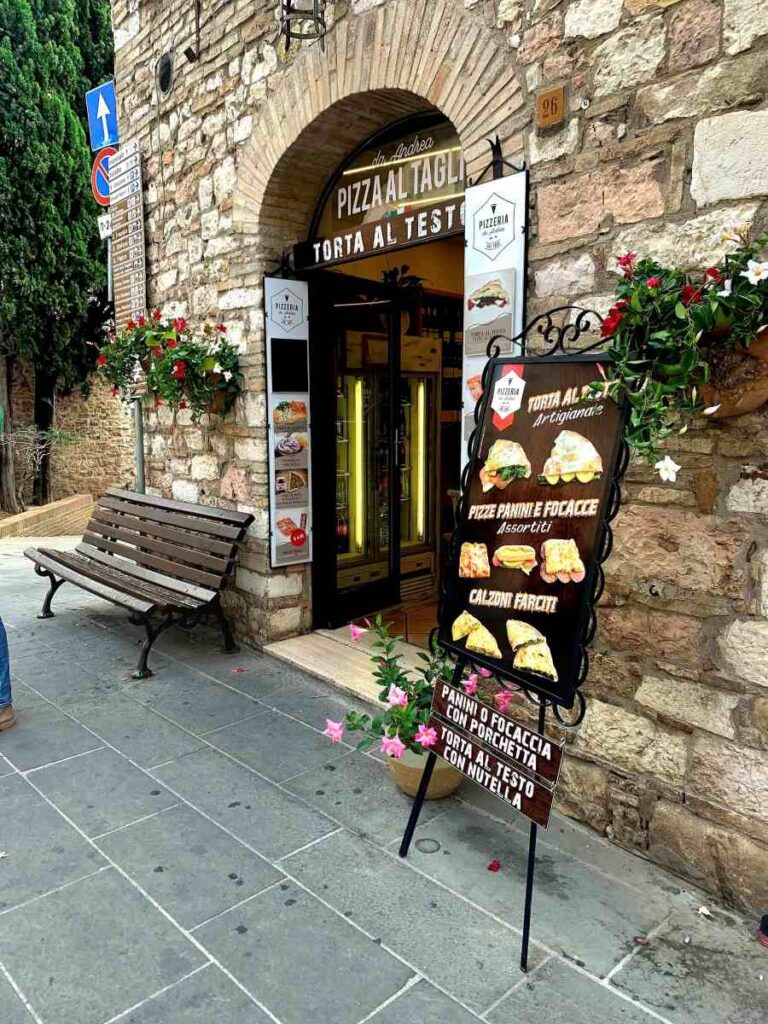
For where to eat in Assisi, the good news is that Umbrian cooking is hearty, honest, and built around ingredients from the surrounding hills — truffles, pecorino, cured meats, olive oil, and lentils from nearby Castelluccio. A few names that keep coming up among locals and long-time visitors alike:
- Osteria La Piazzetta dell’Erba – a small, well-loved spot near Piazza del Comune known for a modern take on Umbrian classics like truffle-dusted cacio e pepe. Reservations are a good idea, especially in summer.
- Trattoria Pallotta – a classic, family-run trattoria in the historic center serving straightforward Umbrian dishes at fair prices.
- Trattoria Degli Umbri – right on Piazza del Comune, leaning into homestyle regional cooking in a characteristic vaulted-ceiling dining room.
- Le Terrazze di Properzio – come for the sweeping valley views from the terrace as much as the food.
- La Locanda del Cardinale – a more atmospheric choice, with dining rooms set among genuine Roman ruins below street level.
A quick practical tip: many Assisi restaurants close their kitchens between lunch and dinner (roughly 3–7 pm), so plan meal times accordingly, and book ahead for dinner if you’re visiting in peak season.
Where to Stay in Assisi: Assisi Hotels for Every Budget

For where to stay in Assisi, the historic center itself is the best base — you can walk to nearly every sight on this list, and there’s something special about wandering Assisi’s lanes after the day-trippers have gone home. Some well-reviewed Assisi hotels across different budgets:
- Nun Assisi Relais & Spa Museum – a striking design hotel built inside a former convent, for travelers who want a five-star experience with a spa.
- Hotel Umbra – a reliable, well-located mid-range choice in the historic center with a lovely garden and rooftop terrace.
- Hotel Sorella Luna – a comfortable boutique option with a terrace and warm hospitality, popular with families.
- Hotel Monastero Sant’Andrea – set in a former monastery, a peaceful and atmospheric mid-range pick.
- Giotto Hotel & Spa – close to the Basilica of St Francis, with spa facilities if you want to unwind after a day of hill-climbing.
Whatever your budget, book Assisi hotels well ahead if you’re visiting around Easter, the Calendimaggio festival in May, or the Feast of St Francis in early October — rooms in the historic center fill up fast.
Day Trips to Assisi from Rome
If you’re based in Rome and don’t have time for a full Umbria road trip, Assisi still makes a doable — if long — day trip. A couple of options that also bundle in nearby highlights:
- Assisi and Orvieto day trip from Rome — pairs Assisi with the dramatic cliff-top town of Orvieto in one day.
- Rome day tour to Assisi, Civita di Bagnoregio, and Orvieto — a fuller day covering three of central Italy’s most photogenic hill towns.
Honestly, though, if you can spare more than a day, I’d encourage you to see Assisi as part of a wider Umbria trip rather than a rushed day out from Rome. There’s simply too much good stuff nearby to skip.
Frequently Asked Questions About Visiting Assisi
Where is Assisi located in Italy?
Assisi is in the Umbria region of central Italy, in the province of Perugia, about 175 km north of Rome and 15 km from the city of Perugia.
What is Assisi Italy known for?
Assisi is best known as the birthplace and home of St Francis of Assisi, founder of the Franciscan Order, as well as for its UNESCO-listed medieval architecture and Giotto’s fresco cycles in the Basilica of St Francis.
Where did St Francis live?
St Francis was born and lived in Assisi, spending time at the Oratory of San Francesco Piccolino (his traditional birthplace), the Chiesa Nuova (built on the site of his family home), the Sanctuary of Rivotorto, the Porziuncola at Santa Maria degli Angeli, and the Carceri Hermitage on Mount Subasio, before dying in the Porziuncola in 1226.
Is Assisi worth visiting?
Yes — even travelers with no religious interest tend to find Assisi worthwhile for its art, architecture, medieval streets, and views over the Umbrian countryside.
How many days do you need in Assisi?
One full day covers the main basilicas and squares, but two days lets you add San Damiano, the Carceri Hermitage, and a slower pace through town without rushing.
What is the best time to visit Assisi?
Late spring (April–June) and early fall (September–October) bring mild weather and thinner crowds than the height of summer.
Is Assisi walkable?
Very much so — the historic center is compact and pedestrian-friendly, though it’s built on a hillside, so expect some genuinely steep climbs between sights.
How do you get to Assisi?
By car (easiest for exploring the wider Umbria region), by train to Assisi station followed by a short shuttle bus into the historic center, or via a guided day trip from Rome or Perugia.
More Umbria Travel Guides
Assisi was just one stop on my Umbria road trip, and this green, hilltop-studded region has a lot more worth seeing. Here’s where I’d point you next:
- 🔗 My full Umbria road trip itinerary
- 🔗 Things to Do in Gubbio, Italy
- 🔗 The Best Towns in Umbria
- 🔗 The Best Things to Do in Umbria
- 🔗 Visiting the Basilica of St Rita of Cascia in Cascia, Italy
- 🔗 Full Umbria Travel Guide
Assisi has a way of staying with you long after you’ve left — I still think about the quiet of San Damiano and the light coming through the windows of the Upper Basilica. Whatever draws you to visit Assisi, whether it’s the art, the history, or St Francis himself, I hope this guide helps you make the most of it.