Cortona Italy Travel Guide (2026): Best Things to Do, Restaurants & Hidden Gems
I’ll be honest — Cortona had been on my bucket list long before I ever set foot in Tuscany. The moment I watched André Rieu’s Romantic Paradise concert filmed against Cortona’s golden stone walls, with the rolling Val di Chiana stretching out below, I knew I had to go. That concert captured something words can barely do justice: the feeling that this small hilltop town exists in a world slightly more beautiful than our own. When I finally visited Cortona during a road trip through southern Tuscany — the same trip that took me through Arezzo, Montepulciano, Pienza, and the Val d’Orcia — it didn’t disappoint. If anything, it exceeded every expectation.
This guide covers everything you need to plan the perfect visit to Cortona, Italy — from the top attractions and best restaurants to practical tips, day trips, and hidden gems only locals know about.
- If you’re continuing your journey, don’t miss my Montepulciano Italy Travel Guide.
- For Renaissance charm and Val d’Orcia views, see my Pienza Italy Travel Guide.
- For the iconic Tuscan landscapes, read my Val d’Orcia Tuscany Travel Guide.

Best Things to Do in Cortona (Quick Summary)
If you only have a short time in Cortona, here are the absolute must-see highlights:
- 🌄 Enjoy panoramic views from Piazza Garibaldi over the Val di Chiana
- 🏛️ Explore Piazza della Repubblica, the historic heart of the town
- 🎨 Visit the MAEC Museum to see Etruscan artifacts and the Tabula Cortonensis
- ⛪ Discover the Duomo and nearby Diocesan Museum with Fra Angelico’s Annunciation
- 🏰 Walk up to the Basilica of Santa Margherita for incredible views and history
- 🌿 Visit the Girifalco Fortress, the highest viewpoint in Cortona
- 🍷 End the day with local wine and Tuscan cuisine in a traditional osteria
Before You Visit Cortona, Italy (Essential Guide)

What Is Cortona Famous For?
Cortona, Tuscany is one of those rare places famous for several things at once. Most people know it as the setting of Frances Mayes’ beloved memoir Under the Tuscan Sun, which turned this ancient Etruscan hill town into a bucket-list destination. But Cortona has layers. It’s celebrated for its extraordinary Etruscan heritage — one of the most important Etruscan sites in Italy — and its Renaissance art collection, including works by Fra Angelico and Luca Signorelli, both native sons. The town is equally known for its sweeping panoramic views over the Val di Chiana, its perfectly preserved medieval streets, and an authentic, unspoiled character that somehow survives its well-deserved fame.
Is Cortona Worth Visiting?
Absolutely, without question. Cortona is one of those Tuscan towns that rewards slow travel — the kind of place where you wander without a plan and keep stumbling onto something magical. It’s less touristed than Siena or San Gimignano, which means you’ll find a more genuine slice of Tuscan life. The combination of Etruscan history, Renaissance art, breathtaking scenery, excellent local food and wine, and that ineffable bella vita atmosphere makes Cortona Italy, a destination worth building an entire trip around. Whether you have four hours or four days, you’ll leave wanting more.
Where Is Cortona Italy?
Cortona sits in southeastern Tuscany, perched dramatically on a hillside overlooking the broad, flat Val di Chiana valley, not far from the Umbrian border. It falls within the province of Arezzo. Geographically, it’s beautifully positioned between major Tuscan and Umbrian destinations — roughly equidistant between Florence and Rome — which makes it an ideal base for exploring the wider region. The nearest large lake is Lake Trasimeno in Umbria, visible from Cortona’s higher vantage points on clear days.
How to Get to Cortona

Getting to Cortona requires a little planning, but it’s very manageable:
- By Train: The closest train station is Camucia-Cortona, located in the valley about 3 km from the old town. It’s served by regional trains from Florence (about 1.5–2 hours) and Rome (about 2 hours via Terontola). From the station, take a local bus or taxi up to the historic center.
- By Car: The most flexible option. Cortona is accessible from the A1 motorway (exit Valdichiana or Bettolle-Sinalunga). Driving lets you explore the surrounding countryside at your own pace — essential if you’re doing a southern Tuscany road trip.
- By Bus: LFI buses connect Cortona with Arezzo (about 1 hour), which has good rail connections to Florence and Rome.
- From Florence: About 1.5–2 hours by car or train. Many visitors choose a guided day tour from Florence (see the Day Tours section below).
If you’re starting your trip in Florence, check my 2 Days in Florence itinerary. Or explore more options in my Best Day Trips from Florence guide. - From Rome: About 2.5 hours by car or a combination of train and bus.
How Much Time to Visit Cortona?
At a minimum, give yourself a full day in Cortona — but two days is ideal if you want to see the highlights at a relaxed pace and explore beyond the main piazzas. Three or more days is perfect if you’re using Cortona as a base for day trips to Arezzo, Montepulciano, Pienza, and the Val d’Orcia. The old town is compact, but the steep streets, the museums, cooking classes, and nearby day trips can easily fill a long weekend.
Best Time to Visit Cortona
The sweet spot for visiting Cortona Tuscany is late spring (May–June) and early autumn (September–October). During these months, the weather is warm but not stifling, the countryside is lush or golden, and the crowds are manageable. Summer (July–August) is lively but hot and busier, though the long evenings are magnificent. Winter is quiet and atmospheric — the town takes on a misty, medieval feel — but some restaurants and attractions may have reduced hours. One unmissable annual event: the Archidado Joust in late May/early June, a spectacular medieval pageant that turns the whole town into a living history lesson.
Is Cortona a Good Base for Exploring Tuscany?

Yes, Cortona makes an excellent base — particularly for exploring southern Tuscany and the Umbrian border region. Within an easy drive, you have:
- Arezzo — 30 km (about 40 minutes)
- Lake Trasimeno — 20 km (about 25 minutes)
- Montepulciano — 30 km (about 40 minutes)
- Pienza — 50 km (about 1 hour)
- Val d’Orcia — 50–70 km (about 1–1.5 hours)
- Siena — 80 km (about 1.5 hours)
- Assisi — 70 km (about 1 hour)
The accommodation scene in Cortona, from boutique hotels to agriturismo farmhouses, is also excellent, which makes it easy to use the town as your home base.
- For a deeper dive, see my Arezzo Italy Travel Guide.
- Planning to visit? Read my detailed Montepulciano Travel Guide.
- Combine it with a stop in Pienza — here’s my Pienza Travel Guide.
- Explore the surrounding countryside with my Val d’Orcia Travel Guide.
Getting Around Cortona & Travel Tips
Getting Around Cortona
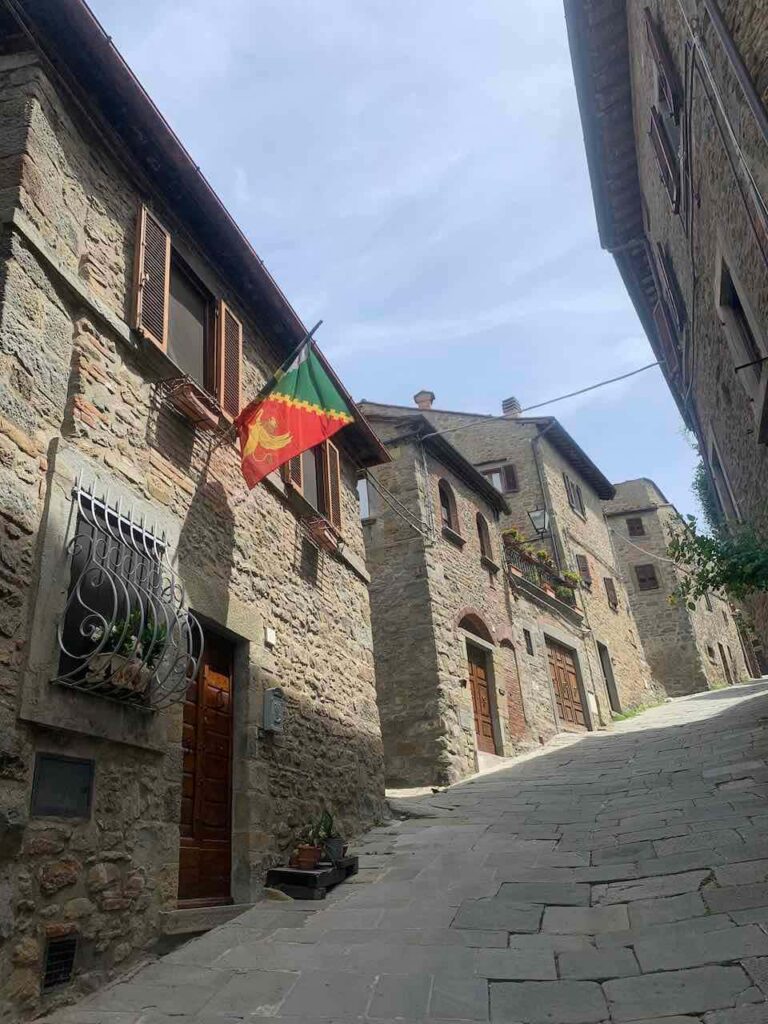
The historic center of Cortona is entirely pedestrianized and, frankly, entirely walkable — though “walkable” here means steep. The town climbs the hillside in a series of stone-paved lanes and stairways. Most of the main sights are clustered around Piazza della Repubblica and Piazza Signorelli. Only, the Basilica of Santa Margherita and the Girifalco Fortress are higher up the hill. The town is small enough that you can walk from one end to the other in about 20–25 minutes (more if you’re huffing up the steeper sections). There’s a minibus (the ZTL electric shuttle) that runs from the lower parking areas up into the center — very handy if your legs are tired or you’re visiting with elderly family members.
Where to Park When Visiting Cortona?
The historic center is a ZTL (Limited Traffic Zone), so you’ll need to leave your car outside. The main parking areas are:
- Piazzale del Mercato — Large free parking area at the foot of the town, connected to the center by shuttle bus and on foot. Most convenient for most visitors.
- Via Gino Severini — Closer to the upper parts of town, with additional spaces.
- Along Via Roma / lower approaches — Some additional paid and free spots.
Arrive early in peak season to secure a spot — by mid-morning in summer, the lots can fill up. The shuttle bus runs frequently and saves your legs for the actual sightseeing.
Tips for Visiting Cortona
A few things I wish I’d known before visiting Cortona Italy:
- Wear proper walking shoes. The cobblestones are beautiful and absolutely unforgiving. Skip the heels.
- Visit early or late. The light on the Val di Chiana is extraordinary at golden hour, and the streets are gloriously quiet before 9 am.
- Carry cash. Many smaller shops, trattorias, and market stalls prefer it.
- Most museums are closed on Mondays. Plan your museum days accordingly.
- Book restaurants in advance in summer, especially for dinner on weekends.
- The upper town (near Santa Margherita and the Fortress) is dramatically quieter and more atmospheric than the main piazzas — worth the climb.
- Pick up a Cortona Museum Card (MAEC) if you’re planning to visit multiple museums — it saves money and time at the ticket desk. It costs about €12,00.
Where to Stay in Cortona, Italy
Cortona has a lovely range of accommodation options, from atmospheric hotels in the historic center to stunning agriturismo properties in the surrounding countryside.
In town:
- Hotel San Michele — A beautifully restored Renaissance palazzo in the heart of Cortona, with elegant rooms and a frescoed breakfast salon. One of the most atmospheric places to stay in Cortona, Tuscany.
- Hotel Italia — Great value central option with comfortable rooms and a friendly family atmosphere, steps from Piazza della Repubblica.
Outside town (countryside/agriturismo):
- Il Falconiere — A luxurious Relais & Châteaux property in a 17th-century villa just outside Cortona, complete with a Michelin-starred restaurant, spa, and vineyard. If the budget allows, this is the dream option.
- Villa di Piazzano — A stunning 15th-century villa with a pool and beautiful gardens, perfect for a romantic stay.
- Agriturismo options — The surrounding hills are dotted with agriturismi offering farm stays with homemade breakfasts, olive oil, and wine. Search on platforms like Agriturismo.it for the most authentic options.
Where to Eat and Drink in Cortona (Best Restaurants in Cortona Italy)

Cortona takes its food seriously, and the local cuisine leans into the rich, earthy flavors of southern Tuscany — aged Chianina beef, hand-rolled pasta, truffles, local pecorino, and wines from the Cortona DOC zone (particularly Syrah, which thrives unexpectedly well here). To better understand the regional cuisine, read my Traditional Food in Tuscany guide covering must-try dishes like ribollita, pici, and bistecca alla Fiorentina.
Here are some of the best restaurants in Cortona Italy:
- Osteria del Teatro — One of the best restaurants in Cortona by consensus, this elegant osteria serves sophisticated Tuscan cuisine in a beautiful stone-vaulted dining room. Reservations are essential. Try the homemade pasta and the local bistecca.
- Trattoria Dardano — A beloved locals’ trattoria on Via Dardano serving generous portions of simple, soulful Tuscan food at very fair prices. The ribollita and pappardelle al cinghiale (wild boar pasta) are outstanding.
- La Bucaccia — Atmospheric and rustic, set in a medieval cellar, with a focus on traditional Cortona dishes, including a wonderful selection of local cheeses and cured meats.
- Tonino — Perhaps the most famous restaurant in Cortona, with a long legacy and spectacular terrace views. Good for a special occasion lunch with the Val di Chiana spread out below.
- Bar degli Artisti / Caffè degli Artisti — The go-to spot for morning coffee, fresh pastries, and a glass of local wine in the late afternoon. A genuine gathering place for Cortonese of all ages.
- Gelateria Snoopy — Don’t leave without stopping here. The artisan gelato is exceptional — try the crema di Cortona if it’s on offer.
For wine, keep an eye out for Cortona DOC Syrah — it’s a local revelation, full-bodied and aromatic, unlike anything you’d expect from Tuscany. Wineries near Cortona, like the Tenimenti Luigi d’Alessandro, Stefano Amerighi Vignaiolo in Cortona, and Avignonesi Winery Fattoria Le Capezzine (between Cortona and Montepulciano), all produce excellent bottles.
Best Things to Do in Cortona, Italy (17 Experiences)
🏛️ Historic & Cultural Sites
1. Cortona Duomo and Piazza del Duomo: A Step Back in Time
Tucked below Piazza della Repubblica, the Cortona Cathedral (Duomo di Santa Maria Assunta) sits on a beautifully proportioned piazza that feels a world away from the busier squares above. The cathedral’s origins date to the early Christian era, though most of what you see reflects Renaissance and Baroque modifications. Inside, the simple stone interior houses notable works attributed to Luca Signorelli and Pietro da Cortona — both native sons who became giants of Italian art. The atmosphere is hushed and contemplative, a welcome contrast to the lively piazzas above. Piazza del Duomo itself is a terraced, peaceful space with lovely valley views.
Opening hours: Generally open daily, 8 am–12:30 pm and 3 pm–7 pm (hours vary seasonally; check locally).
Tickets: Free entry.
Pro tip: Visit Piazza del Duomo in the late afternoon when the light falls across the cathedral’s facade — the golden stone practically glows.
2. St. Francis and the Church of San Francesco
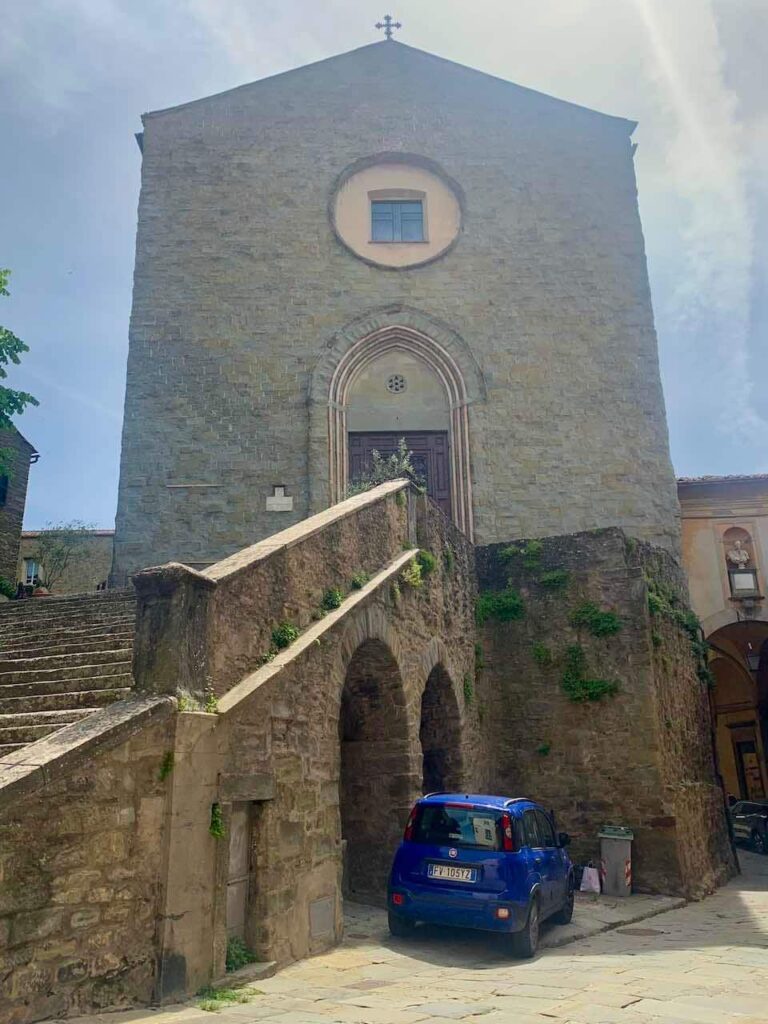
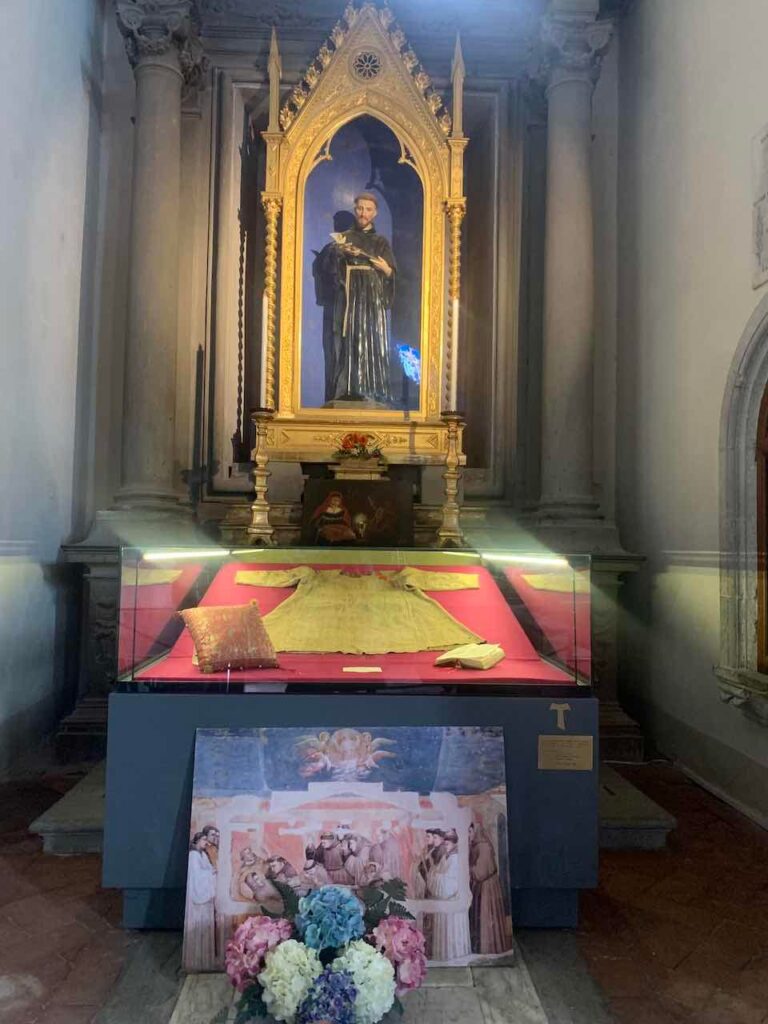
The Church of San Francesco is one of Cortona’s most historically significant stops. Built in the 13th century, it was the second church ever founded by St. Francis of Assisi, established by his companion Brother Elias of Cortona, a native son buried here alongside a relic claimed to be a fragment of the Holy Cross from Constantinople. The church also preserves a tunic once worn by St. Francis himself. The interior is simple and stripped of baroque excess, retaining an early Franciscan austerity that feels completely authentic. Look for a notable ivory diptych and an Annunciation by Pietro da Cortona. Tucked on a quiet upper-town street, it’s easily missed — which is exactly why you should seek it out.
Opening hours: Typically open mornings and late afternoons; hours vary. Check locally.
Tickets: Free entry.
Pro tip: Combine the Church of San Francesco with a walk up to the Basilica of Santa Margherita — the two make a natural pairing for a half-morning of spiritual and architectural exploration.
3. Explore the Diocesan Museum: Art and History in One Place

Directly opposite the Duomo, the Museo Diocesano di Cortona (also known as the Museo della Diocesi) houses one of the finest small art collections in Tuscany — a genuinely world-class gathering of sacred art. The highlight that stops visitors in their tracks is Fra Angelico’s luminous Annunciation (c. 1430), considered one of the greatest paintings of the early Renaissance and a work of almost unbearable tenderness and spiritual clarity. The same Fra Angelico painted this for a church in Cortona, and seeing it here — in the town for which it was made — is deeply moving. The collection also includes a magnificent Deposition by Luca Signorelli, Etruscan relics, and medieval goldsmithing.
Opening hours: Generally April–October, Tuesday–Sunday 10 am–7 pm; November–March, Tuesday–Sunday 10 am–5 pm.
Tickets: Around €5–€8; combined tickets available with MAEC.
Pro tip: Don’t rush through the Fra Angelico room. Give the Annunciation the time it deserves — it rewards slow looking.
4. Museums and Ancient Artifacts: Museo Etrusco and Tabula Cortonensis
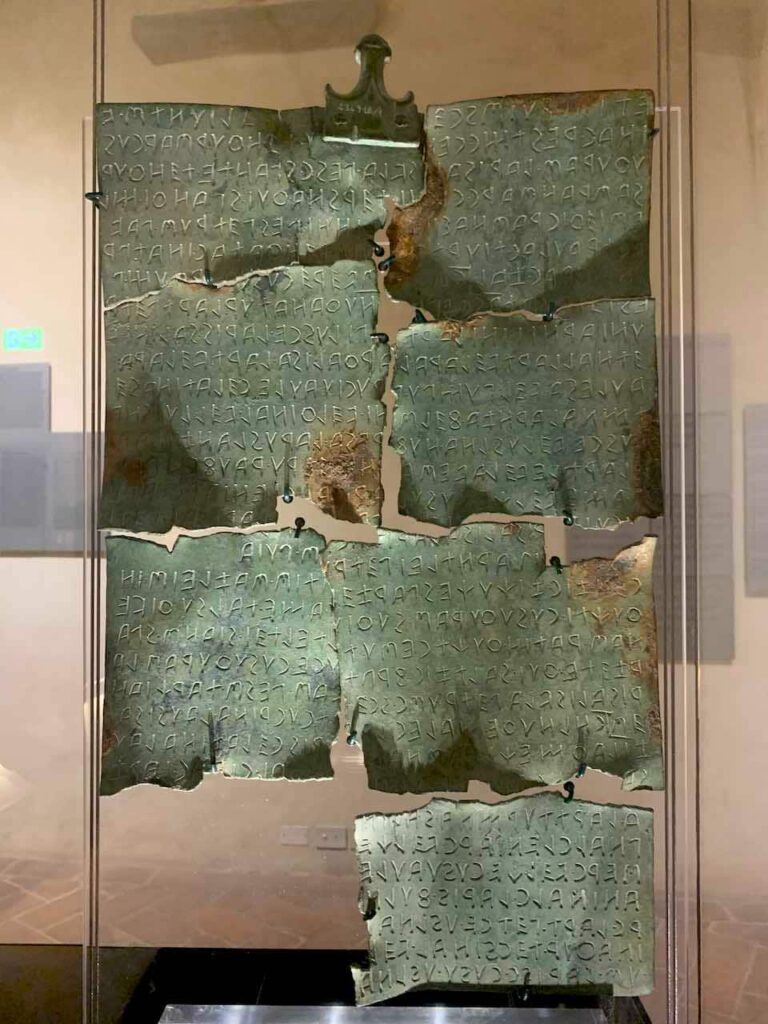
Cortona was one of the twelve great city-states of the Etruscan League, and the MAEC (Museo dell’Accademia Etrusca e della Città di Cortona) in Piazza Signorelli is where that heritage lives on. The collection spans Etruscan bronzes, jewelry, urns, and ceramics, alongside Egyptian artifacts and Renaissance paintings by Signorelli. The star of the show is the Tabula Cortonensis — a bronze tablet from the 3rd or 2nd century BC bearing one of the longest known Etruscan texts. It’s one of the most important archaeological finds in Italy. Don’t miss the extraordinary 5th-century BC bronze lamp (lucerna), a masterpiece of Etruscan metalwork.
Opening hours: Generally Tuesday–Sunday, 10 am–7 pm (summer); reduced hours in winter. Closed Mondays.
Tickets: Around €10 for adults; combined tickets available.
Pro tip: Download the museum’s audio guide app before you visit — it adds enormous context to the Etruscan collection and makes the Tabula Cortonensis come alive.
🌄 Best Views & Scenic Spots
5. Start with the Views at Piazza Garibaldi
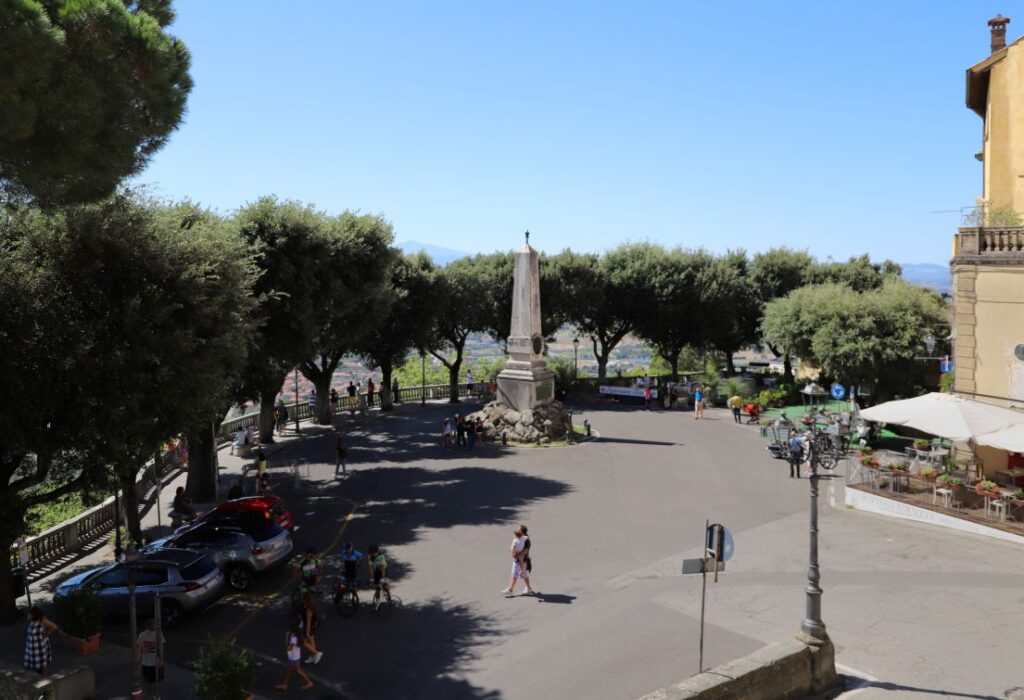
Every great visit to Cortona should begin exactly here. Piazza Garibaldi is a tree-shaded belvedere just inside the main gate, and it offers what many consider the finest view in all of southern Tuscany — the vast sweep of the Val di Chiana stretching south and east, Lake Trasimeno glimmering in the distance on clear days, and a patchwork of olive groves, vineyards, and medieval farmhouses covering every slope. It’s the view that André Rieu filmed for his Romantic Paradise concert, and standing here, you’ll immediately understand why. There’s something almost overwhelming about the beauty of it — the kind of panorama that makes you stop talking and just breathe.
Pro tip: Piazza Garibaldi is the terminus for the electric minibus from the lower parking areas. Get off here, take in the view, then walk into town — you’ll be oriented and already in love with Cortona before you’ve seen anything else.
6. Girifalco Fortress: A Piece of History and Panoramic Views
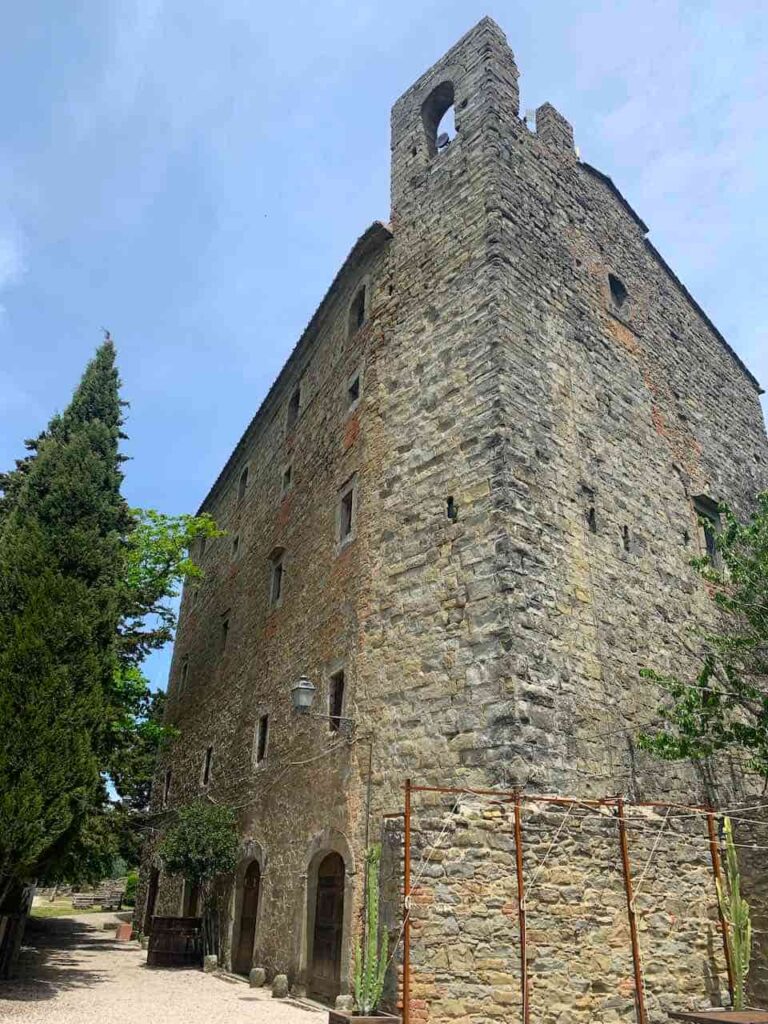
At the very top of Cortona’s hill stands the Fortezza del Girifalco — a mighty Medici-era fortress guarding the town since the 16th century, built on even older Etruscan and medieval foundations. The Girifalco offers the highest, most sweeping views in all of Cortona: on a clear day, you can see the Val di Chiana, Val d’Orcia, Monte Amiata, and Lake Trasimeno simultaneously. The interior hosts rotating exhibitions and cultural events throughout the year. The walk up from the Basilica of Santa Margherita is steep but short, and the combination of history and panorama makes it one of Cortona’s most rewarding experiences.
Opening hours: Mid-March to October, daily 10 am–7 pm (summer); weekends only in shoulder season. Check locally.
Tickets: Around €3–€5.
Pro tip: Pack water and snacks — there’s nothing at the top, and you’ll want to linger for the views longer than you planned.
7. Basilica of Santa Margherita: A Sanctuary with Stunning Views
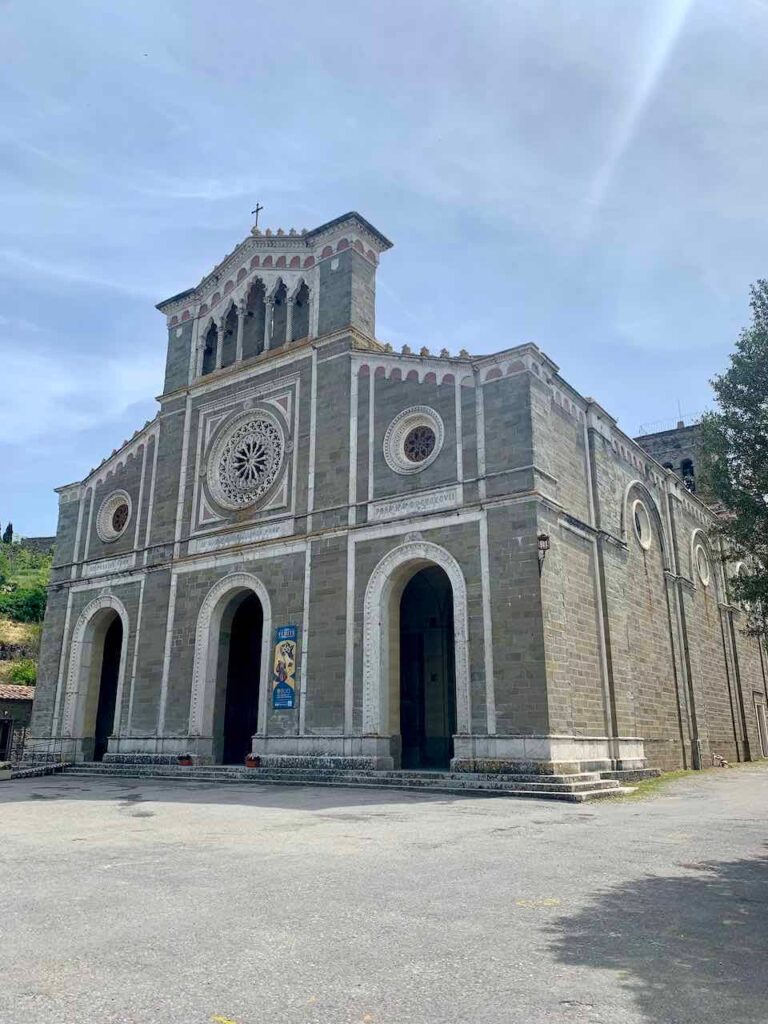
Climbing to the Basilica of Santa Margherita feels like a pilgrimage in the most literal sense. The church is dedicated to St. Margaret of Cortona, a 13th-century penitent whose extraordinary life — abandoned noblewoman, unwed mother, mystic, and finally patron saint — is one of the most compelling in Italian hagiography. The neo-Gothic basilica houses Margaret’s incorrupt body in a splendid silver reliquary. But equally compelling are the views: from this elevated position, Cortona spreads below against the vast Val di Chiana — one of the most dramatic viewpoints in Tuscany. The walk up from Piazza della Repubblica follows a cypress-lined path marked by the Stations of the Cross.
Opening hours: Generally 9 am–noon and 3 pm–6 pm daily (hours vary).
Tickets: Free entry.
Pro tip: Walk up rather than taking the road — the cypress path is beautiful and atmospheric. Allow 20–25 minutes for the ascent.
🚶 Historic Streets & Atmosphere
8. Stroll the Cobblestone Via Nazionale
Via Nazionale — the only flat street in Cortona, locals joke — is the town’s main artery, lined with boutiques, cafés, ceramics shops, and artisan workshops. It’s perfect for a slow, distracted wander. But to truly understand Cortona’s history and hidden gems, consider a guided walking tour. The Cortona Private Guided Tour and the Cortona Private Walking Tour Under the Tuscan Sun offer expert-led explorations bringing the history, legends, and Under the Tuscan Sun filming locations to life. The Cortona Private Walking Tour is ideal for groups or families wanting a more personalized experience. These tours run 2–3 hours and uncover the hidden laneways, medieval courtyards, and scenic viewpoints that most independent visitors miss entirely.
Pro tip: Via Nazionale gets busy by late morning in summer. Walk it early, then duck into the side streets — the real character of Cortona lives in the quieter vicoli (alleyways) branching off the main drag.
9. Discover the Heart of Cortona: Piazza della Repubblica

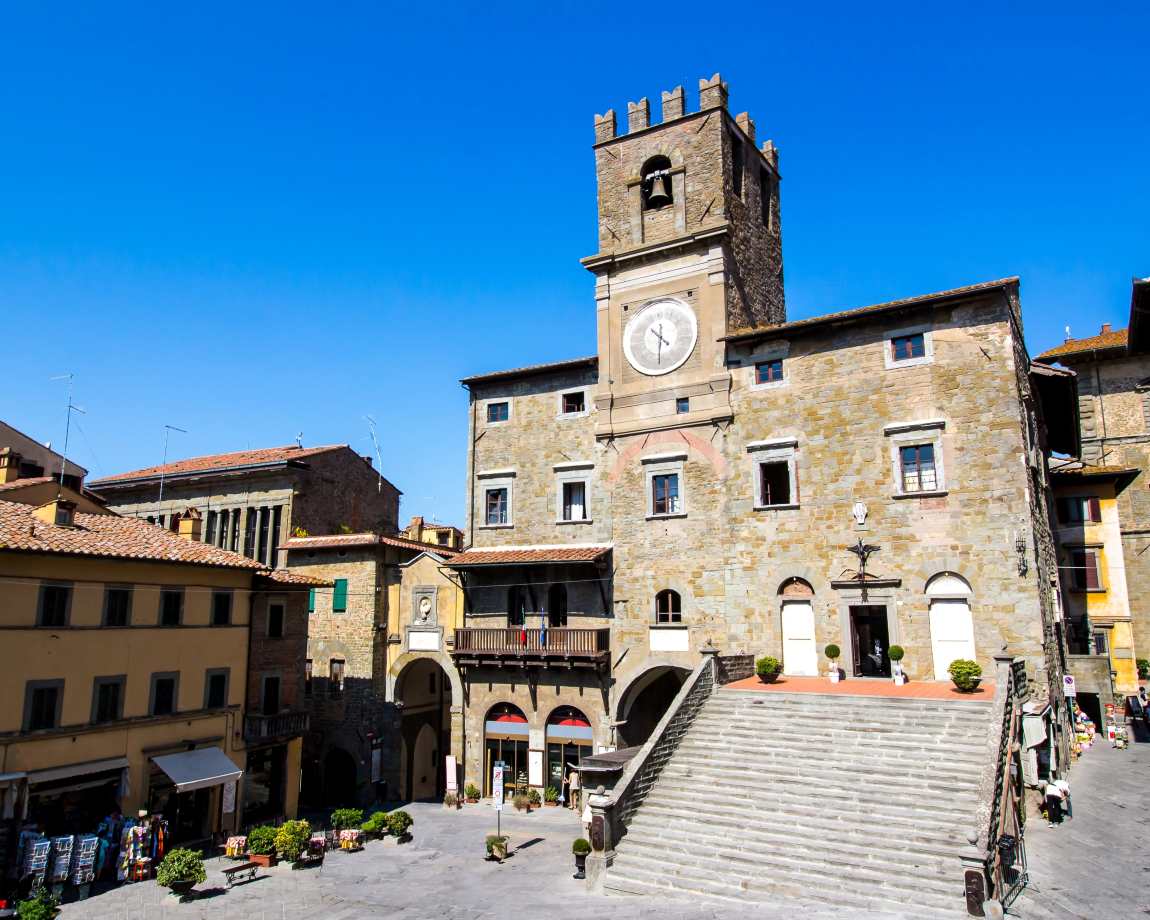
Piazza della Repubblica is the social and civic heart of Cortona — the kind of piazza that makes you understand why Italians invented the evening passeggiata. Dominated by the Palazzo Comunale with its clock tower and external staircase, the square is framed by stone buildings that seem to have grown organically from the hillside. Cafés spill onto the cobblestones, locals argue over newspapers, and pigeons strut around as if they own the place. The palazzo’s tower is occasionally open for rooftop views — check locally for times. Adjacent Piazza Signorelli houses the Teatro Signorelli and the Museo dell’Accademia Etrusca. Together, the two squares capture Cortona as a living, breathing community.
Pro tip: Visit around 7pm when the passeggiata is in full swing. Pull up a chair with a Campari spritz and watch the show.
🏺 Hidden Gems & Spiritual Sites
10. Visit the Convent of Le Celle: A Tranquil Escape
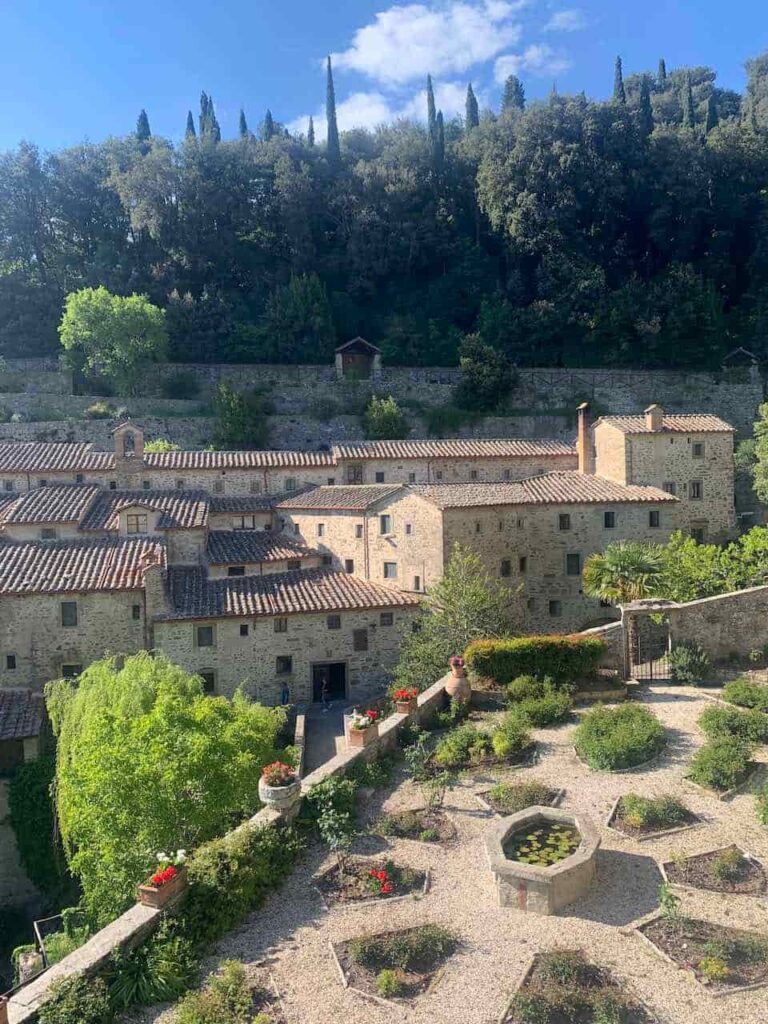
About 2.5 km from Cortona, tucked into a wooded gorge at the base of the hill, the Convento delle Celle is one of the most peaceful places in the region. Founded by St. Francis of Assisi in the early 13th century, Le Celle is a working Franciscan friary built directly into a mountain stream’s rocky gorge. Medieval stone buildings cling to the rock face, connected by narrow bridges, with the sound of rushing water constant throughout. Francis’s original tiny cell — where he prayed and slept — is preserved and open to visitors. This is a living spiritual community, not a conventional tourist attraction; respectful silence is expected.
Opening hours: Open daily during daylight hours; no fixed schedule. Monastic hospitality, so be respectful.
Tickets: Free entry; donations welcome.
Pro tip: Drive or take a taxi — it’s a long, steep walk from town. Visit early in the morning for the most peaceful experience, before any tourist groups arrive.
11. Take in the View from Villa Bramasole: A Film Lover’s Dream
For fans of Under the Tuscan Sun, Villa Bramasole — the honey-colored farmhouse that Frances Mayes purchased, restored, and wrote about so memorably — is a place of genuine pilgrimage. The real villa sits on the slopes below Cortona’s historic center, surrounded by olive groves and cypresses, and looking very much as it appeared in both the memoir and the 2003 film starring Diane Lane. The villa is private property and not open to visitors, but you can admire it from the lane outside — and the setting is so quintessentially Tuscan that even a glimpse feels worthwhile. Many guided walking tours of Cortona include a pass by Villa Bramasole and provide the literary and cinematic context that makes the experience richer.
Opening hours: Viewable from the lane outside at any time; private property, do not enter. Tickets: Free (viewing from outside only).
Pro tip: The Cortona Private Walking Tour Under the Tuscan Sun (on Viator) specifically covers the film locations and Mayes’ haunts around town — excellent for fans of the book and film.
Food & Cultural Experiences
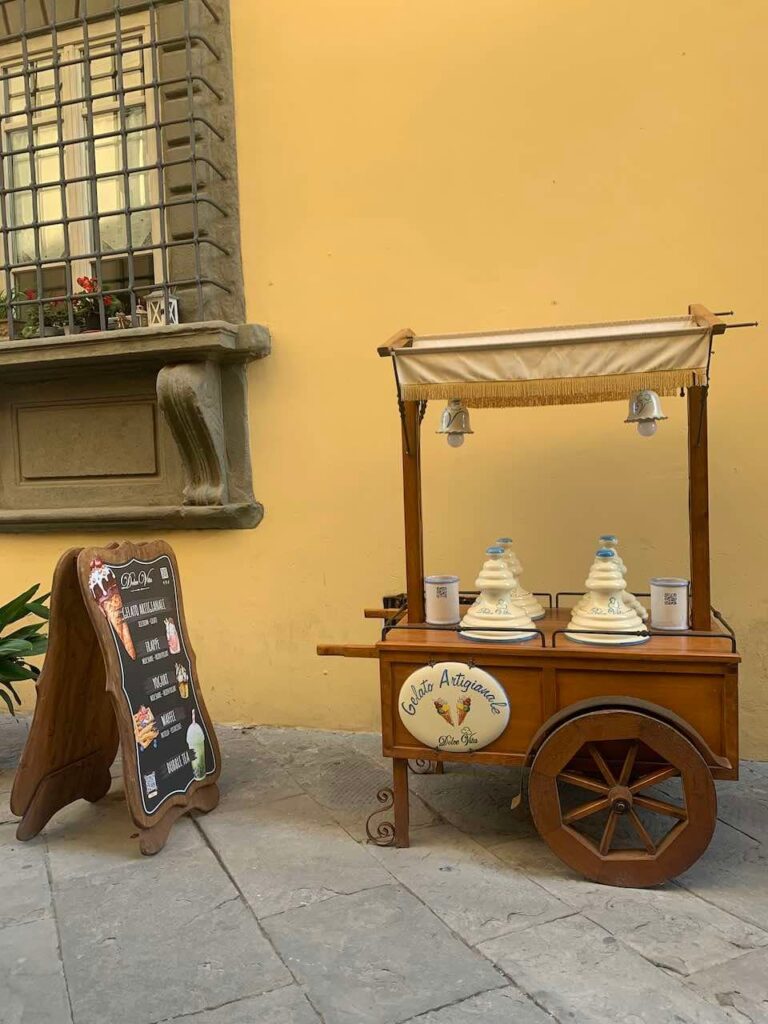
12. Sample the Local Flavors: Wine and Cuisine
Cortona sits in the heart of one of Tuscany’s most rewarding culinary landscapes. The Val di Chiana is famous for Chianina beef — ancient white cattle producing some of Italy’s finest bistecca. Local pasta traditions lean toward hand-rolled pappardelle and tagliatelle with wild boar or hare ragù, while truffles appear seasonally in everything from crostini to elaborate pasta dishes. The local Cortona DOC wines are worth seeking out — particularly the Syrah, which thrives in the clay-rich soils of the Val di Chiana, producing richly aromatic, full-bodied bottles that regularly surprise wine lovers. Don’t overlook the local olive oil either — Cortona’s hillside groves produce a peppery, grassy extra virgin that’s superb.
Pro tip: Cortona’s Saturday market in Piazza Signorelli is an excellent place to buy local products — pecorino, cured meats, seasonal vegetables, and local wine at very fair prices.
13. Take a Cooking Class: Learn to Make Pasta and Pizza Like a Local
There’s no better souvenir of Tuscany than the ability to recreate its food at home. The Cooking Class at Villa Toscana near Cortona offers a beautiful immersive experience at a working Tuscan estate — you’ll learn to make fresh pasta from scratch, traditional sauces, and local specialties while surrounded by vineyards and olive groves, then sit down to eat everything you’ve made with wine from the estate. For something more in-town, the Cortona: Pasta and Pizza Cooking Class is a fantastic option — a hands-on session with a local chef teaching you the secrets of hand-rolled pasta and proper pizza dough, in a convivial atmosphere that’s as much about the fun as the food.
Booking: Advance booking for both classes is strongly recommended in the summer.
Pro tip: Book a morning class — that way you can eat your creations for lunch and spend the afternoon exploring the town with a satisfied stomach.
14. Do Wine Tasting in Cortona
The Cortona wine scene is more exciting than its modest fame might suggest. The local DOC designation covers a range of varieties — Syrah, Sangiovese, Grechetto, and more. For a convivial, unhurried introduction to the local bottles, the Cortona: Wine Tasting with Tuscan Specialties in a Local Wine Shop is a superb choice — a guided tasting led by a knowledgeable local sommelier in one of Cortona’s historic wine shops, paired with a selection of local cheeses, cured meats, and crostini. You’ll taste at least four to six wines and leave with a solid understanding of what makes Cortona DOC wines distinctive. It’s a relaxed, sociable experience that doubles as both education and an aperitivo hour.
Booking: Available via Viator; check for seasonal scheduling.
Pro tip: If you want to visit local wineries in the surrounding countryside, look into estate visits at Tenimenti Luigi d’Alessandro or Stefano Amerighi — both produce exceptional Cortona Syrah and welcome visitors by appointment.
15. Attend the Archidado Joust: A Step Back in Time
If your visit to Cortona Tuscany falls in late May or early June, the Archidado Joust (Giostra dell’Archidado) is one of the most spectacular medieval festivals in all of Tuscany — and one that remains genuinely local and authentic rather than staged purely for tourists. The event commemorates a famous crossbow competition held in 1397 to celebrate the marriage of a local nobleman, and it takes place over several days with archery competitions, medieval processions, period costumes, music, flag-throwing, and the actual joust. The town’s various neighborhoods (rioni) compete fiercely, and the atmosphere is electric — locals take the competition seriously, and watching the parade of costumed participants march through Cortona’s medieval streets is an experience you won’t easily forget.
Dates: Late May–early June (exact dates vary annually; check the Comune di Cortona website). Tickets: Some events are free, others are ticketed; check the full program here.
Pro tip: Book accommodation well in advance if your visit coincides with the Archidado — it’s a popular event, and Cortona’s hotels fill up quickly.
16. Shopping in Cortona: A Treasure Hunt for Unique Finds
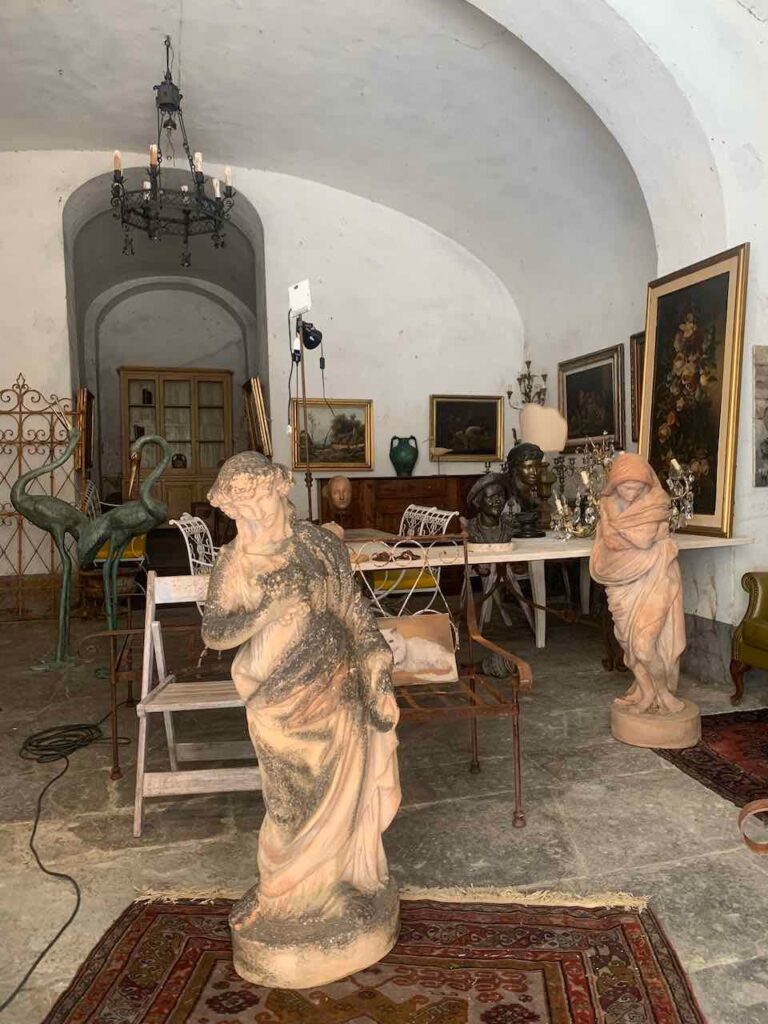
Cortona is an excellent place for shopping — not for mass-produced souvenirs, but for genuine artisan goods that reflect the region’s craft traditions. Via Nazionale and the surrounding streets are lined with shops selling:
- Ceramics — Tuscan maiolica and hand-painted pottery, often made locally or in nearby workshops.
- Linen and textiles — Cortona has a tradition of fine linen production; look for tablecloths, napkins, and runners in natural fibers.
- Local food products — Extra virgin olive oil, truffle products, local wines, aged pecorino, and jarred preserves make wonderful gifts.
- Antiques and vintage — Several shops sell antique prints, books, and objects that make distinctive souvenirs.
- Leather goods — Handmade bags, belts, and wallets from Tuscan leather, some made in small ateliers just outside town.
Pro tip: The antiques market, called Cortonantiquaria, that is held in the Piazza Signorelli area at the end of August and the beginning of September every year, is a great hunting ground. And don’t overlook the small local cooperative shops for the most authentic food products at the best prices.
17. Explore Val di Chiana on an E-Bike
The Val di Chiana — the broad, vineyard-covered valley visible from every high point in Cortona — is simply magnificent when experienced at cycling pace. The Val di Chiana E-Bike Tour with Optional Wine Lunch is one of the best ways to explore the landscape surrounding Cortona Italy: you’ll glide through olive groves, past Etruscan tomb mounds (tumuli), through working farms and vineyard estates, with the electric assist making the rolling terrain entirely manageable even for non-athletes. The optional wine lunch at a local estate turns the excursion into a full-day experience that combines exercise, history, scenery, and some of the best food and wine in the region. Tours typically run 4–6 hours and cover 25–40 km depending on the route.
Booking: Available via Viator; suitable for most fitness levels thanks to e-bike assist. Pro tip: Go in spring (May–June) when the valley is green, and the wildflowers are out, or in autumn (September–October) for the harvest season atmosphere.
What to Do Near Cortona Italy
🏛️ Renaissance & Historic Towns
Arezzo (30 km away)

Arezzo is one of Tuscany’s most underrated cities, just 30 km from Cortona and perfect for a half-day trip. The city is famous for Piero della Francesca’s fresco cycle The Legend of the True Cross in the Basilica of San Francesco — one of the greatest Renaissance paintings in Italy. Arezzo’s Piazza Grande ranks among Tuscany’s most beautiful medieval squares, framed by loggias and ancient palazzi. The city also hosts one of Italy’s largest antiques fairs (Fiera Antiquaria) every first Sunday of the month. On my southern Tuscany road trip, Arezzo was my first stop before heading south to Cortona — wonderfully authentic, with deep artistic roots and excellent restaurants.
For a full itinerary and top sights, see my Arezzo Travel Guide.
Getting there: About 40 minutes by car; buses run from Cortona town.
Pro tip: Book the Piero della Francesca fresco visit in advance — entry is timed and limited to preserve the fragile frescoes.
Montepulciano (30 km away)

Montepulciano was one of the highlights of my southern Tuscany road trip, visited after Cortona before heading south to Pienza and the Val d’Orcia. This magnificent hilltop Renaissance town is famous above all for Vino Nobile di Montepulciano — one of Tuscany’s great red wines. The Piazza Grande at the summit is lined with extraordinary palaces and an unfinished Duomo, while the Torre del Marzocco offers spectacular views. Don’t miss Cantina Contucci — a functioning winery in vaulted cellars beneath the piazza where you can taste Vino Nobile straight from the barrel at very fair prices. Fun fact: the climactic scenes of New Moon were filmed here. For a deeper dive, read my full Montepulciano Travel Guide.
Getting there: About 40 minutes by car from Cortona. Pro tip: Combine Montepulciano with Pienza in a single day — they’re only 13 km apart and make a perfect pairing.
Pienza (50 km away)

Pienza is the most perfectly conceived town in Tuscany — a Renaissance utopia created by Pope Pius II, who transformed his 15th-century birthplace into a model city. The UNESCO-listed Piazza Pio II is surrounded by the cathedral, Palazzo Piccolomini, and town hall, all designed by Bernardo Rossellino in the 1460s. Pienza is also famous for Pecorino di Pienza — the aged sheep’s milk cheese sold in the town’s specialist shops. Don’t miss the Via dell’Amore behind the cathedral, which reveals one of Tuscany’s most breathtaking views: the unspoiled Val d’Orcia stretching to Monte Amiata. For everything you need to plan your visit, read my full Pienza Travel Guide.
Getting there: About 1 hour by car from Cortona; often combined with Montepulciano.
Pro tip: Buy your pecorino from the shops directly on the town walls — they often have the best aged varieties and are happy to let you taste before you buy.
🌄 Scenic Landscapes
Lake Trasimeno (20 km away)
Lake Trasimeno is the fourth-largest lake in Italy, sitting just across the Umbrian border from Cortona — visible from town on clear days and reachable in about 25 minutes by car. Beautiful, tranquil, and largely off the international tourism radar, the lake rewards a leisurely half-day. The lakeside towns of Castiglione del Lago, Passignano sul Trasimeno, and Tuoro sul Trasimeno offer medieval walls, fishing boats, and restaurants serving fresh perch and carp. A boat trip to Isola Maggiore — home to a small fishing community and a lovely walking trail — is a perfect afternoon excursion. The area also carries deep historical resonance: these shores witnessed Hannibal’s devastating ambush of a Roman army in 217 BC.
Getting there: About 25 minutes by car from Cortona. Pro tip: Go for a long lunch at one of the lakeside restaurants in Castiglione del Lago — the fish is fresh and excellent, and the setting is lovely.
Best Day Trips from Cortona, Italy
Day Trip to Cortona from Siena
Siena sits about 80 km from Cortona, making it a feasible day trip in either direction. For a beautifully structured experience combining Cortona with southern Tuscany’s wine country, consider the Private Art & Wine Tour in Cortona & Montepulciano, with Lunch & 2 Wine Tastings. This premium private tour covers both Cortona and Montepulciano in a single well-organized day — guided visits to the art and historic highlights of each town, a sit-down lunch at a local restaurant, and two wine tastings featuring Vino Nobile di Montepulciano and Cortona DOC wines. Local expertise, zero logistics stress, and excellent food and wine included.
If you’re visiting Siena as well, don’t miss my Things to Do in Siena Italy guide.
Booking: Available via Viator; private tour, flexible scheduling.
Pro tip: This tour also works perfectly as a standalone experience for visitors based in Cortona who want a structured and comprehensive day in the area.
Day Trip to Cortona from Florence
Florence is about 130 km north of Cortona, and the variety of day tour options from the city is excellent. Three standout choices:
- Florence: Cortona, Assisi and Perugia Full Day Trip — An ambitious, beautifully organized day that covers Cortona’s hilltop highlights before continuing into Umbria for Assisi and Perugia. Perfect for visitors who want to combine Tuscany and Umbria in a single efficient excursion.
- From Florence: Siena, Cortona, Montepulciano & Val D’Orcia — The ultimate southern Tuscany day trip, hitting the absolute greatest hits of the region in one sweeping journey. You’ll see Siena’s cathedral and Campo, stroll Cortona’s medieval streets, taste wine in Montepulciano, and drive through the otherworldly Val d’Orcia landscape. Ambitious but wonderfully well-curated.
- Montepulciano, Montalcino, Cortona – Small Group Day Trip — A wine-focused small group experience that pairs Cortona’s art and views with the great wine towns of Montepulciano (Vino Nobile) and Montalcino (Brunello). For wine lovers, this is the definitive southern Tuscany day.
Pro tip: All three are available on Viator. Small group tours fill quickly in summer — book at least 2–3 weeks in advance during peak season.
👉 Cortona Italy Itinerary Summary
Not sure how long to stay in Cortona? Here’s a quick guide to help you plan the perfect trip:
- 🗓️ 1 day in Cortona: Focus on the historic center, Piazza Garibaldi views, Duomo, and a relaxed lunch in town
- 🏡 2–3 days in Cortona: Ideal for a slower pace—explore museums, hidden streets, Santa Margherita, Girifalco Fortress, and enjoy sunset dinners
- 🚗 Best combo towns: Pair Cortona with Montepulciano, Pienza, Arezzo, or Lake Trasimeno for a complete southern Tuscany experience
📌 Cortona Italy FAQ (Travel Planning Guide)
Is Cortona worth visiting?
Yes — Cortona is absolutely worth visiting, especially if you’re looking for a quieter, more authentic Tuscan experience. The town combines Etruscan history, Renaissance art, excellent food and wine, and sweeping views over the Val di Chiana, all without the heavy crowds of more famous destinations like Siena or San Gimignano.
What is Cortona famous for?
Cortona is famous for its Etruscan heritage, Renaissance art, and stunning hilltop views over the Val di Chiana. It’s also widely known as the setting of Under the Tuscan Sun, which helped turn the town into an international travel destination while preserving its authentic, small-town Tuscan character.
How many days should you spend in Cortona?
You should spend at least one full day in Cortona, but two days is ideal to explore the town at a relaxed pace and visit nearby attractions. If you plan to use Cortona as a base for southern Tuscany, 3–4 days allows time for day trips to Montepulciano, Pienza, and Lake Trasimeno.
Can you visit Cortona as a day trip?
Yes — Cortona can easily be visited as a day trip, especially from Florence or Rome. The historic center is compact, and you can see the main highlights in a few hours. However, staying overnight is highly recommended to experience the town’s atmosphere in the quieter early morning and evening hours.
Do you need a car in Cortona?
You don’t need a car to explore Cortona itself, as the historic center is small and fully walkable. However, having a car is highly recommended if you plan to visit nearby destinations like Montepulciano, Pienza, or the Val d’Orcia, where public transport options are limited and less flexible.
Is Cortona better than Siena?
Cortona isn’t better than Siena — it’s different. Cortona is smaller, quieter, and more relaxed, with a strong local feel and fewer crowds. Siena is larger, more historic, and home to major landmarks like Piazza del Campo and the Duomo. Choose Cortona for atmosphere and views, Siena for history and iconic sights.
Cortona Travel Guide – Final Thoughts: Why You Should Visit Cortona
Cortona, Italy is the kind of place that refuses to leave you alone after you’ve visited. I still think about the morning light on Piazza Garibaldi, the Val di Chiana spread below as a Renaissance painting brought to life. I think about the Fra Angelico Annunciation in the Diocesan Museum — that almost impossibly tender painting, still exactly where it was made to be. I think about a glass of local Syrah at sunset and the distant shimmer of Lake Trasimeno.
It was a concert that first put Cortona on my radar — André Rieu’s music drifting over those ancient walls — but it’s the town itself that will keep me coming back. Cortona Tuscany is not a theme park version of Italy. It’s a real, living, breathing community that also happens to be one of the most beautiful places on earth. Whether you come for a day or a week, whether you’re chasing art, history, food, wine, or simply the particular quality of Tuscan light on old stone, Cortona Italy will give you something you didn’t know you were looking for.
Go. Climb the hill. Breathe in the view. Let Cortona do the rest.
🔗 More Tuscany Guides
If you’re planning your trip, you might also enjoy:
- 👉 Pienza Tuscany Travel Guide – Renaissance beauty and Val d’Orcia views
- 👉 Montepulciano Tuscany Travel Guide – wine, views, and hilltop charm
- 👉 Val d’Orcia Tuscany Travel Guide – iconic landscapes and scenic drives
- 👉 Arezzo Tuscany Travel Guide – art, history, and local Tuscan life
- 👉 Things to Do in Siena Italy – medieval streets and must-see landmarks
- 👉 Traditional Food in Tuscany – what to eat in the region
- 👉 2 Days in Florence Itinerary – the perfect city plan
- 👉 Best Day Trips from Florence – Tuscany and beyond