One Day in Venice: The Perfect 24-Hour Itinerary (2026)

Venice is unlike any other city on earth — and I mean that literally. The first time I stepped off the train at Santa Lucia Station and saw the Grand Canal shimmering in the morning light, I completely forgot what I had planned to do that day. I just stood there.
If you only have one day in Venice, the key is to stop trying to “conquer” it and start letting it unfold. This city rewards curiosity. The best moments often happen in the alleys you weren’t planning to walk down.
This one day in Venice itinerary is built around that philosophy — it covers the iconic sights you genuinely shouldn’t miss, while carving out time for the quieter neighborhoods that make Venice feel real. Whether it’s your first visit or a return trip, this guide will help you make the most of every hour of your 24 hours in Venice.
How to spend one day in Venice? The best way to spend one day in Venice is to arrive at St. Mark’s Square around 9:00 AM, explore the Basilica and Doge’s Palace through the morning, then head to the Rialto for lunch, and then spend the afternoon drifting through the quieter neighborhoods of Cannaregio and Dorsoduro. End the day watching the sunset from Punta della Dogana — one of the most beautiful views in Italy.

Is One Day in Venice Enough?
Short answer: yes — if you plan it right.
Venice is compact, but deceptively layered. You can walk from one end of the city to the other in about 45 minutes, but the narrow calli (alleys), hidden campi (squares), and endless canal crossings mean your sense of direction will vanish completely. That’s part of the charm.
One day is perfect for:
- First-time visitors who want to experience Venice’s highlights without feeling overwhelmed
- Travelers passing through on a wider Italy trip
- Anyone combining Venice with Florence, Rome, or the Dolomites
You won’t see everything — nobody does — but a well-planned one day Venice itinerary gives you a rich, meaningful experience of this extraordinary city.
If you’re planning more time here, check out my guide to the things to do in Venice for inspiration on building a longer Venice itinerary.
One Day in Venice Itinerary Overview
Here’s the shape of this 1 day in Venice plan:
Morning: Venice’s Greatest Hits
- St. Mark’s Square, Basilica & Doge’s Palace
- Bridge of Sighs
Midday: Rialto & Lunch
- Rialto Bridge & Market
- Cicchetti lunch with a Spritz
Afternoon: The Real Venice
- Grand Canal Vaporetto ride
- Cannaregio & the Jewish Ghetto
- Dorsoduro & Santa Maria della Salute
Evening: Sunset & Dinner
- Sunset at Punta della Dogana
- Canal-side dinner
The Perfect One Day in Venice Itinerary
Morning: Venice’s Greatest Hits
9:00–9:30 AM — Start at St. Mark’s Square

Piazza San Marco — St. Mark’s Square — is one of those places that lives up to every photograph you’ve ever seen of it. Napoleon famously called it “the drawing room of Europe,” and arriving early in the morning, with the golden light just hitting the basilica’s façade and barely a soul in sight, you’ll understand why.
Aim to arrive by 9:00 AM — the Basilica opens at 9:30 AM, so use the first half hour to walk the square while it’s still quiet, grab a coffee at one of the cafés just off the piazza (avoid the ones on the square — the prices are theatrical), and soak in the atmosphere before the tour groups arrive. By 11:00 AM it’s a different place entirely..
In and around the square, plan to visit:
- St. Mark’s Basilica — One of the most breathtaking churches in the world, covered in Byzantine mosaics and golden domes. Entry to the basilica itself is free, but the museum and terrace cost extra. Book online to skip the queue.
- Doge’s Palace (Palazzo Ducale) — The seat of Venetian power for centuries. Inside, you’ll find grand council chambers, Tintoretto’s enormous paintings, and the famous prison cells where Casanova once escaped. Allow at least 1.5–2 hours.
- St. Mark’s Campanile — The bell tower offers panoramic views across Venice, the lagoon, and on clear days, even the Alps. It’s an elevator ride to the top — no 463 steps required.
The Basilica opens at 9:30 AM (Mon–Sat; 2:00 PM on Sundays), so plan to enter as soon as the doors open. Allow about 3 hours if you visit all three sights. I highly recommend booking the St. Mark’s Basilica and Doge’s Palace Priority Entrance Tour in advance — it skips the queues and includes a guide who brings the history of the Republic of Venice to life in a way that a self-guided visit simply can’t match.
12:00 PM — Photograph the Bridge of Sighs

The Bridge of Sighs (Ponte dei Sospiri) connects the Doge’s Palace to the old prison. Legend has it that condemned prisoners would catch their last glimpse of Venice through its narrow stone windows — hence the name. It’s one of Venice’s most photographed landmarks, and for good reason.
Pro Tip: Walk a few steps from the St. Mark’s Square to the Ponte della Paglia (Straw Bridge) on the Riva degli Schiavoni. From here you get a clear, beautiful view of the Bridge of Sighs framed by the canal. This is the shot.
Midday: Rialto & Lunch

12:30 PM — Walk to the Rialto Area
From St. Mark’s, follow the Mercerie — Venice’s historic shopping route, a chain of narrow streets that begins at the Clock Tower and winds north toward the Rialto. It’s about a 15-minute walk, and one of the most pleasant in the city. You’ll cross tiny bridges, pass bakeries and mask shops, and start to get a feel for how Venice actually moves.
When you arrive at the Rialto Bridge, take a moment to lean on the parapet and watch the gondolas and water taxis pass below. The bridge dates back to 1591 and, for centuries, was the only crossing over the Grand Canal. The views in both directions are wonderful.
Just beside the bridge, the Rialto Market is one of Venice’s great daily rituals. The fish market (Pescheria) and produce market (Erberia) have been here since the 11th century. Even if you’re not buying anything, walking through it gives you a glimpse of the city that has nothing to do with tourism.
1:00 PM — Lunch Near Rialto

For lunch, I recommend Cantina Do Spade — one of Venice’s oldest bacari, tucked into a narrow alley just steps from the Rialto Market. It dates back to the 1400s and is said to have once been frequented by Casanova himself. The cicchetti are excellent, the wine is local and affordable, and the atmosphere is exactly what a Venetian lunch should feel like — standing at the bar, glass of ombra in hand, elbow-to-elbow with people who actually live here.
Alternatively, grab a seat in the small dining room at the back if you prefer a more relaxed sit-down meal.
Whatever you choose, don’t leave without trying at least some of these Venetian specialties:
- Cicchetti — small bites of bread topped with bacalà mantecato (creamy salt cod), anchovies, or cured meats. Venice’s version of tapas.
- Sarde in saor — sardines marinated in a sweet-and-sour sauce of onions, raisins, and pine nuts. It sounds unusual; it’s extraordinary.
- Seafood risotto — Venice sits in a lagoon. The seafood is exceptional, and the risotto here is creamy and deeply flavored.
- Spritz al Aperol — the drink of Venice. Order one. Order two.
For a deeper dive into what to eat and where to find it, check out my Venice food guide — it covers all the best dishes, markets, and local spots across the city.
Early Afternoon: Grand Canal & Hidden Venice
3:00 PM — Vaporetto Ride on the Grand Canal
The vaporetto is Venice’s waterbus — and Line 1 along the Grand Canal is, without question, the best budget sightseeing cruise in Europe. Buy a single ticket or a 24-hour travel card (€10,00), board at the Rialto stop, and find a seat at the front or back of the boat.
As you glide down the Grand Canal, you’ll pass:
- Ca’ d’Oro — a stunning 15th-century Gothic palace whose name means “House of Gold,” once covered in gilded decoration
- Palazzo Grassi — now one of Venice’s great contemporary art museums, owned by François Pinault
- Dozens of extraordinary palazzi lining the canal, their water-stained facades a testament to centuries of tides
The ride from Rialto to Santa Lucia Station takes about 35–40 minutes on Line 1. You can ride it in either direction — or hop off and back on as the mood takes you.
Optional: If budget allows and it’s your first visit, take a gondola ride or, even better, save it for the late afternoon or sunset hour — more on that below.
4:00 PM — Wander Cannaregio
Most day-trippers never make it here. Cannaregio is the large northern sestiere (district) of Venice, stretching from the train station toward the eastern edge of the city. It feels looser, quieter, and more genuinely inhabited than the tourist-heavy areas around St. Mark’s.
Walk the Fondamenta della Misericordia — a long canal-side walkway lined with local cafés and restaurants, popular with Venetians, especially in the evenings. Sit down for a coffee. Watch the boats pass. Let the city breathe.
From here, it’s a short walk to the Jewish Ghetto of Venice — the oldest Jewish ghetto in the world, established in 1516. The word “ghetto” itself comes from this neighborhood (from getto, the iron foundry that once stood here). The Campo del Ghetto Nuovo is a quiet, moving space, surrounded by tall buildings — the houses were built high because expansion outward was forbidden. You can visit independently or book a guided tour of the Ghetto for a richer understanding of the community that shaped Venice’s history.
Late Afternoon: Dorsoduro
5:30 PM — Cross to Dorsoduro

Take a traghetto (the gondola ferry that crosses the canal – it’s included in your 24-hour travel card) or walk back toward the Accademia Bridge to cross into Dorsoduro, Venice’s most elegant and artistic district. It’s home to some of the city’s best museums, a student population that keeps it lively, and the kind of unhurried atmosphere that makes you want to stay.
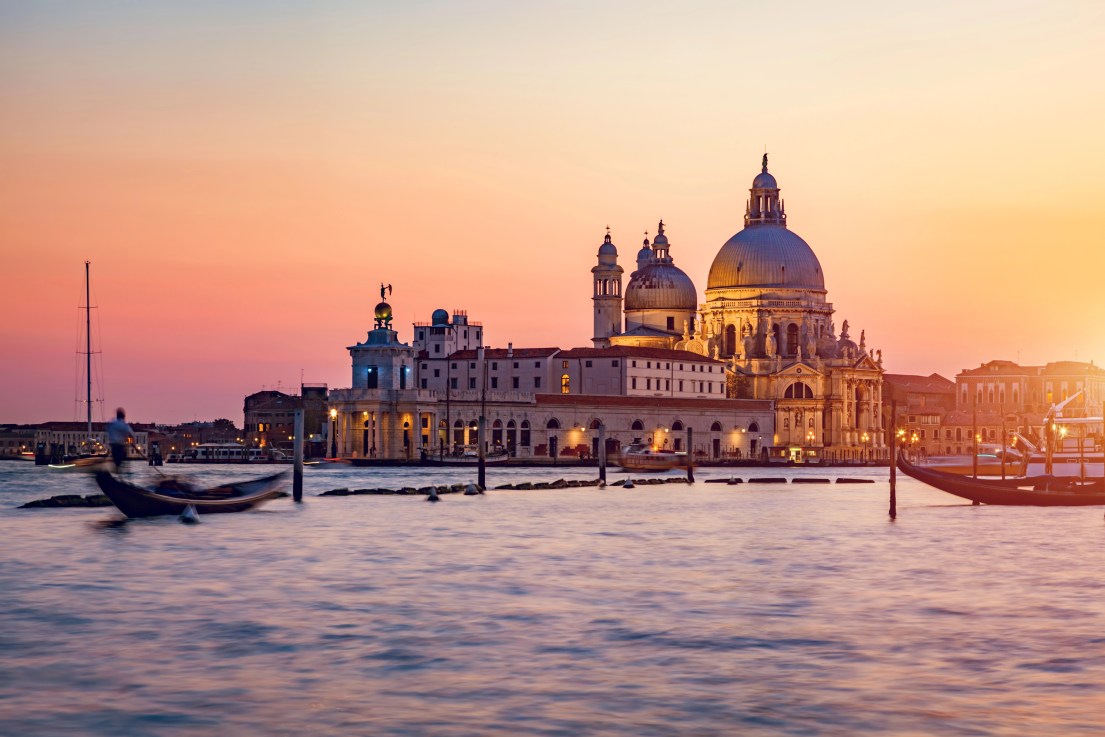
The first stop is the Basilica di Santa Maria della Salute — a magnificent 17th-century domed church built as a thanksgiving for Venice’s deliverance from plague. It sits right at the mouth of the Grand Canal, and its silhouette is one of the defining images of Venice. Step inside to see the beautiful octagonal interior and Titian’s dramatic ceiling paintings.
If you have time and energy for a museum, choose one:
- Gallerie dell’Accademia — Venice’s greatest art museum, with an extraordinary collection of Venetian paintings from the 14th to 18th centuries. Bellini, Carpaccio, Tintoretto, Veronese — all here. Plan 1.5–2 hours.
- Peggy Guggenheim Collection — one of Europe’s finest modern art museums, housed in Guggenheim’s unfinished palazzo right on the Grand Canal. Smaller, more manageable, and utterly wonderful. Plan 1–1.5 hours.
Choose one. Trying to rush through both will leave you exhausted and unable to enjoy either.
Sunset: Venice at Its Best
7:00–8:00 PM — Punta della Dogana

Walk to the very tip of Dorsoduro — Punta della Dogana — where the Grand Canal meets the Giudecca Canal and the waters open toward the lagoon. This is one of the finest viewpoints in Venice, and in the golden hour before sunset, it’s genuinely breathtaking.
Stand here and look across the water toward St. Mark’s Square and the Doge’s Palace. The light turns the buildings amber and rose. Boats pass. The city hums quietly behind you.
The waterfront promenade along the Zattere — the wide embankment facing the Giudecca island — is also beautiful at this hour, if you want to walk a little further.
Optional Splurge: If it’s your first visit and the budget allows, this is the moment for a 30-minute gondola ride. It’s expensive (around €80–100 for a standard ride), undeniably touristy, and completely, unreservedly worth it. The canals look different from the water. The gondolier knows passages through the city that you’d never find on foot. And at sunset, the light on the water is something you won’t forget.
Dinner: Eat Well, Eat Away from the Crowds
8:30 PM — Canal-Side Dinner in Dorsoduro or Cannaregio
The golden rule of eating well in Venice: walk at least five minutes away from St. Mark’s Square before sitting down anywhere.
For dinner, I recommend Osteria Enoteca Ai Artisti in Dorsoduro — a small, warm restaurant with an excellent wine list and simple, beautifully executed Venetian cooking. It’s canal-side, the service is attentive without being fussy, and the pasta with black squid-ink (spaghetti al nero di seppia) is one of the dishes I think about long after I’ve left.
Alternatively, head back to Cannaregio for the evening. The Fondamenta della Misericordia comes alive at dinner, with tables spilling out along the canal and a genuinely local crowd.
Whatever you order, look for:
- Fresh Adriatic seafood — grilled branzino, prawns, local clams
- Spaghetti al nero di seppia — black squid-ink pasta, rich and briny and deeply Venetian
- Tiramisu — invented in the Veneto region. Ordering it here isn’t just dessert; it’s due diligence.
After dinner, take your time wandering back through the illuminated calli. Venice at night is quieter, stranger, and more beautiful than Venice by day. Get deliberately lost. The city is small enough that you’ll always find your way back to the water.
For more ideas on where to eat across the city, my Venice food guide covers everything from morning pastries to late-night cicchetti stops.
Summary Route
St. Mark’s Square → St. Mark’s Basilica → Doge’s Palace → Bridge of Sighs → Rialto Bridge & Market → Lunch → Grand Canal Vaporetto → Cannaregio & Jewish Ghetto → Dorsoduro → Santa Maria della Salute → Punta della Dogana Sunset → Canal-side Dinner
This route covers Venice’s major landmarks while still giving you genuine time in the quieter neighborhoods that most visitors miss entirely.
Practical Tips for One Day in Venice
- Book major attractions in advance. The St. Mark’s Basilica and Doge’s Palace priority tour is worth every cent of the booking fee.
- Start early. St. Mark’s Square at 9:00 AM and St. Mark’s Square at 11:00 AM are completely different experiences. Early is transformative.
- Wear comfortable shoes. You’ll walk more than you expect, on uneven stone and across many bridges.
- Get a Vaporetto pass. A 24-hour travel card (€10,00) covers all your waterbus rides and is a much better value than individual tickets.
- Don’t eat directly on the main tourist routes. Walk one or two streets back from the major landmarks, and the food quality improves immediately, along with the prices.
- Let yourself get lost. Some of the best moments in Venice happen in the alleys you weren’t planning to walk down.
- Budget for the Venice Access Fee. If you’re visiting as a day-tripper (not staying overnight) on a weekend between April and July, you’ll need to pay a Venice Access Fee — €5 if booked at least four days in advance, or €10 for last-minute bookings. It’s a small contribution toward preserving the city and managing over-tourism, and well worth it. Book it in advance on the Venice Access Fee to save money and avoid any hassle.
Where to Stay in Venice
For a one-day itinerary, where you sleep the night before (or after) matters enormously. Staying close to the historic center saves precious time.
The best areas:
- San Marco / Castello: Central and convenient, closest to the major sights. Pricier, but worth it for a short visit. I recommend Hotel Rialto – centrally located and a scenic choice.
- Dorsoduro: Quieter and more local, with easy access to some of the city’s best restaurants and museums. Hotel Moresco, a highly rated boutique hotel with warm, welcoming service, is a great choice.
- Cannaregio: Good value relative to the rest of Venice, and a more authentic neighborhood feel. Hotel Ai Mori d’Oriente is a stylish, unique hotel known for excellent service.
My favorite place to stay for a one-day visit is the Ruzzini Palace Hotel — a 4-star hotel sitting just an 8-minute walk from St. Mark’s Square and a 7-minute walk from the Rialto Bridge. It’s the kind of place that feels genuinely Venetian: classic décor with Murano glass details and elegant frescoes, without the sterile feel of a chain hotel. After a full day on your feet crossing bridges and navigating calli, coming back to somewhere beautiful and well-located makes a real difference. You can check availability and book the Ruzzini Palace Hotel here.
For detailed recommendations by budget and neighborhood, check out my guide to the best places to stay in Venice.
Recommended Tours & Tickets for One Day in Venice
- St. Mark’s Basilica and Doge’s Palace Priority Entrance Tour — skip the queues and get the history in context
- Jewish Ghetto of Venice Guided Tour — one of Venice’s most historically significant and least-visited sites
- Gondola ride (book online in advance or at any official gondola stand) — expensive but iconic; best taken at sunset
Biggest Mistakes to Avoid in Venice
- Eating near St. Mark’s Square — the restaurants directly on the piazza are among the most expensive and least authentic in Italy. Walk away.
- Skipping the vaporetto ride — it’s the best way to see the Grand Canal and understand how the city is laid out.
- Trying to see too much — Venice rewards slowness. One neighborhood fully explored is worth more than five rushed.
- Going without advance bookings — queues at the Doge’s Palace can reach 90 minutes in peak season. Book online.
- Forgetting the Venice Access Fee — if you’re a day-tripper visiting on a weekend between April and July, the fee applies. Book it at least four days ahead to pay €5 instead of €10.
Final Thoughts on One Day in Venice
Every time I leave Venice, I feel like I’ve only just scratched the surface — and I’ve been more times than I can count. That’s the thing about this city. It doesn’t reveal itself all at once. It gives you a little each visit, and you keep coming back for more.
With this one day in Venice itinerary, you’ll see the icons: the golden basilica, the baroque domes, and the Grand Canal glittering in the afternoon light. But you’ll also walk through neighborhoods where the tourists haven’t reached, eat like someone who actually lives here, and watch the sun go down over a lagoon that has looked exactly like this for a thousand years.
One day in Venice may sound short. But in this city, a single day in Venice can feel like a whole other life.
Frequently Asked Questions: One Day in Venice
Is one day in Venice enough?
Yes, one day in Venice is enough to experience the main highlights — St. Mark’s Basilica, the Doge’s Palace, the Rialto Bridge, and a vaporetto ride on the Grand Canal. With good planning, you can also explore quieter neighborhoods like Cannaregio and Dorsoduro.
Is Venice walkable?
Entirely. Venice has no cars — everywhere you go, you walk (and occasionally take a boat). Most major sights are within 20–30 minutes of each other on foot.
When is the best time to visit Venice?
Spring (April–May) and autumn (September–October) offer the best combination of pleasant weather and manageable crowds. Summer is very hot and extremely busy; winter is atmospheric but can bring acqua alta (flooding).
How do I get around Venice?
On foot, primarily. For longer distances or to cross the Grand Canal, use the vaporetto (waterbus). A 24-hour travel card is the best value for a full day in the city.
Is Venice expensive?
It can be, but strategic choices make a big difference. Eating at bacari instead of tourist restaurants, using the vaporetto instead of water taxis, and booking tickets online in advance all help significantly.
What food should I try in Venice?
Don’t leave without trying cicchetti, sarde in saor, black squid-ink pasta, seafood risotto, and a Spritz. Venice’s food culture is distinct from the rest of Italy and genuinely wonderful.
Should I take a gondola in Venice?
If it’s your first visit and the budget allows, yes. Take it at sunset for the best experience. It’s a splurge, but it’s also one of the most memorable things you can do in the city.
🔗 More Italy Travel Guides
If you’re planning a wider Italian trip, you might also enjoy:
- 👉 Best Things to Do in Venice — the complete guide to Venice’s top attractions, hidden gems, and local experiences
- 👉 Venice Food Guide — what to eat, where to eat it, and which dishes are worth traveling for
- 👉 Best Places to Stay in Venice — recommendations by neighborhood and budget
- 👉 Best Day Trips from Venice — a companion guide to the top escapes from the city, with routes, tips, and itinerary ideas
- 👉 Best Things to Do in Florence — must-see attractions and hidden gems across the Renaissance city
- 👉 One Day in Florence Itinerary — how to make the most of 24 hours in Florence
- 👉 One Day in Rome Itinerary — a practical guide to Rome’s greatest hits in a single day
- 👉 Best Things to Do in Rome — the essential Rome bucket list, from the Colosseum to hidden neighborhoods