The Best Tuscany Road Trip Itinerary: Two Ways to Do It Right

If there’s one region in Italy that genuinely rewards the road-tripper, it’s Tuscany. I’ve driven it multiple times — and every time I come back, the landscape still manages to surprise me. There is something about rolling down a window on a back road south of Florence, the smell of wild herbs drifting in from the hillsides, a cypress-lined ridge coming into view around a bend — that makes every mile feel intentional. Tuscany is simply one of the most beautiful places on Earth, and the best way to understand that is from behind the wheel. If you’re still deciding where to focus your trip, I recommend reading my guide to the best places to visit in Tuscany.
This guide covers two complete Tuscany road trip itineraries, because not everyone travels the same way. The first is a one-base Tuscany road trip — you settle into a single central location in the Chianti countryside and explore everything from there, no daily packing and unpacking, no frantic hotel check-ins after a long day of sightseeing. It suits anyone who wants to combine genuine exploration with the pleasure of coming home each evening to the same familiar terrace and the same view over the hills.
The second is a loop Tuscany road trip — seven days of moving through Tuscany from Florence and back again, covering a completely different sweep of the region: the medieval hill towns of the center, the Renaissance towns of the east, and the extraordinary Val d’Orcia in the south. It suits anyone who wants to cover more ground and experience the region’s full variety, and it pairs especially well with a continuation to Rome.
Both itineraries are excellent. The question is which one fits your trip.

Why Tuscany Is Best Explored by Car
Before anything else, a word on transportation: rent a car. It is the single best decision you will make for a trip to Tuscany. Buses and trains connect the major cities well enough, but the real Tuscany — the version with the medieval hilltop villages, the winery back roads, the scenic drives through Chianti — is only accessible by road. The distances are manageable, the roads are beautiful, and having your own wheels means you can stop whenever a view demands it.
You can fly into Florence’s Peretola airport, Pisa’s Galileo Galilei airport, or Rome’s Fiumicino airport and drive north. All three have on-site car rental facilities, but booking a rental car online in advance is considerably cheaper than walking up to the desk on arrival.
ITINERARY ONE: One-Base Tuscany Road Trip Itinerary (Chianti Stay)
Best for: Travelers who prefer slower travel, fewer hotel changes, and a more relaxed pace while still seeing many of Tuscany’s highlights. Ideal for couples, first-time visitors, and anyone who wants to combine scenic drives, hill towns, wine country, and a few coastal days without constantly packing and unpacking.
The Best Base in Tuscany: Montaione (Chianti Countryside)
One of the most important decisions on any road trip is where to base yourself. On one of my very first road trips to Tuscany, I chose Montaione, a small, quiet town in the Chianti region — central Tuscany, and I’d recommend it without hesitation to anyone doing this kind of trip.
The reason is simple geography. Montaione sits almost perfectly at the center of the Florence-Pisa-Siena triangle — roughly one hour’s drive from all three cities. From here, you can reach virtually every stop on this itinerary without a brutal daily commute or the expense and hassle of changing accommodation every two nights.
Montaione distances at a glance:
- Florence: 22 mi (35 km) — 1 hour
- Siena: 47 mi (75 km) — 1 hour
- Pisa: 40 mi (64 km) — 1 hour
- San Gimignano: 13 mi (20 km) — 30 minutes
- Volterra: 19 mi (30 km) — 40 minutes
- Lucca: 38 mi (62 km) — 1 hour
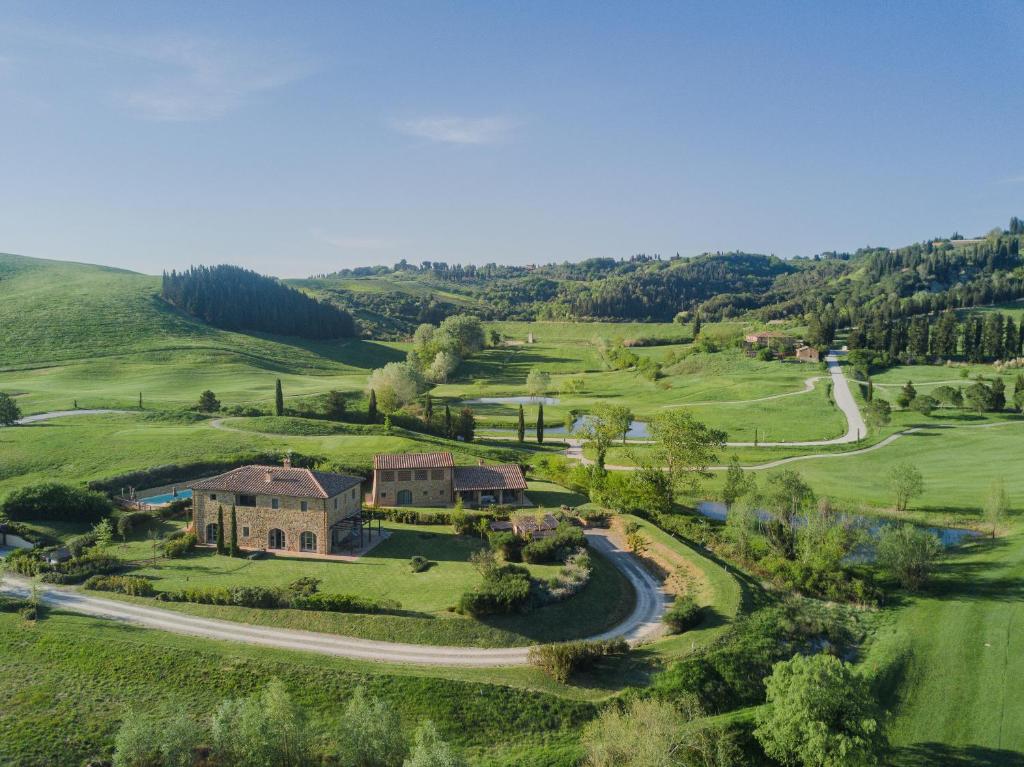
For accommodation, I recommend the 4-star Boccioleto Resort in Montaione, which is genuinely lovely: spacious apartments, a seasonal outdoor pool, excellent breakfasts on the terrace, and sweeping views over the Tuscan hills. It offers outstanding value for the quality. If you want something more upscale, Il Castelfalfi — a 5-star boutique retreat in the nearby medieval village of Castelfalfi in Montaione municipality, set on a 2,500-acre estate with vineyards, an olive grove, and a golf course — is one of the most spectacular places to stay in all of Tuscany.
For more options across the region — from agriturismi to luxury countryside estates — see my guide to the best places to stay in Tuscany.
Overview: One-Base Tuscany Road Trip (10 Days in Chianti)
- Day 1: Arrive in Montaione, settle in, explore the village and surroundings
- Day 2: Colle Val d’Elsa and Monteriggioni (both close and easy to combine)
- Day 3: Siena
- Day 4: Drive the Chiantigiana — Castellina, Panzano, Greve in Chianti
- Day 5: San Gimignano and Volterra
- Day 6: Lucca
- Day 7: Pisa and Livorno (coastal day, easy to combine)
- Day 8: Viareggio
- Day 9: Florence
- Day 10: Back home
This itinerary uses Montaione as a central base for most of the trip, making day trips easy and minimizing long driving days. The route naturally expands outward — first through the medieval towns and Chianti hills of central Tuscany, then west toward Lucca and the coast, before ending with Florence. It blends famous destinations like Siena and San Gimignano with quieter countryside drives and seaside stops, creating a balanced Tuscany experience that feels immersive rather than rushed.
Map of the One-Base Tuscany Road Trip
Day 1 — Arrive in Montaione and Settle into the Tuscan Countryside
Your road trip begins in Montaione, and the first day is deliberately gentle. This is a day for arriving, settling in, and letting the pace of Tuscany wash over you — not a day for ticking things off a list.
Montaione is a small medieval village perched on a hill between Florence, Siena, and Pisa, surrounded by rolling countryside that is quintessentially Tuscan without the crowds that come with the more famous destinations. It has a lovely historic center, a handful of good restaurants, and the kind of quiet, unhurried atmosphere that immediately tells you you’ve arrived somewhere worth being.
Spend the afternoon exploring the village on foot — the views from the top of the hill over the surrounding farmland are beautiful, especially in the late afternoon light. Find a restaurant for dinner, order the local pasta, open a bottle of something local, and get an early night. The road starts properly tomorrow.
Day 2 — Colle Val d’Elsa and Monteriggioni Medieval Villages
Two medieval gems, perfectly sized to combine into a single unhurried day — and both within easy reach of Montaione.
Both towns are close, the roads between them are straightforward, and neither place requires more than two to three hours. It’s the kind of day that teaches you how a Tuscany road trip actually works: you arrive, you park outside the walls, you walk in, you wander, you eat something, you drive on.
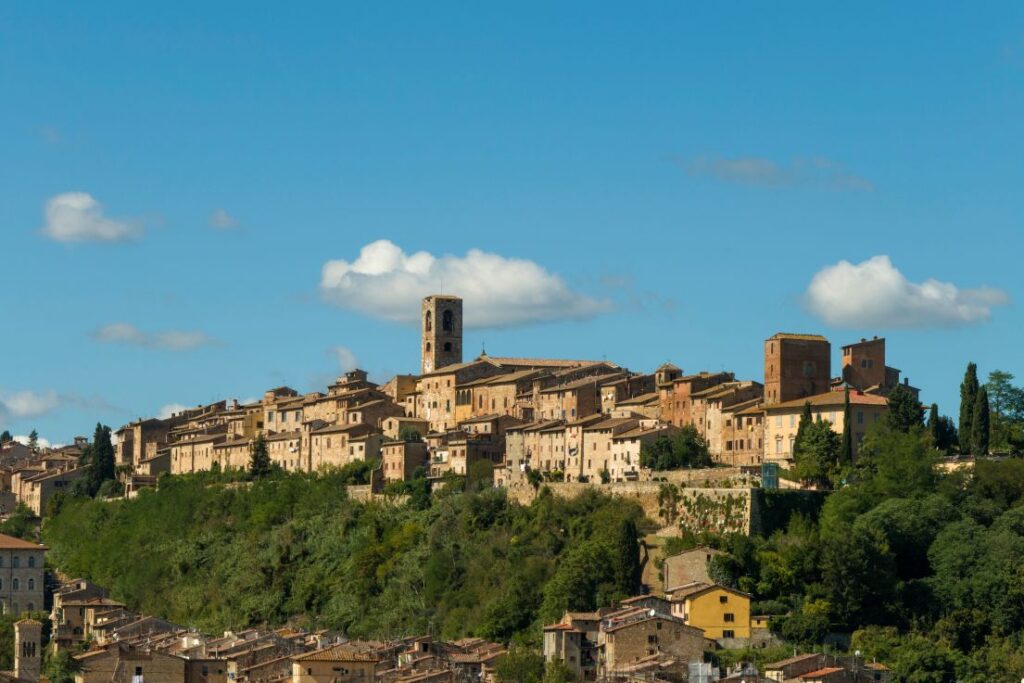
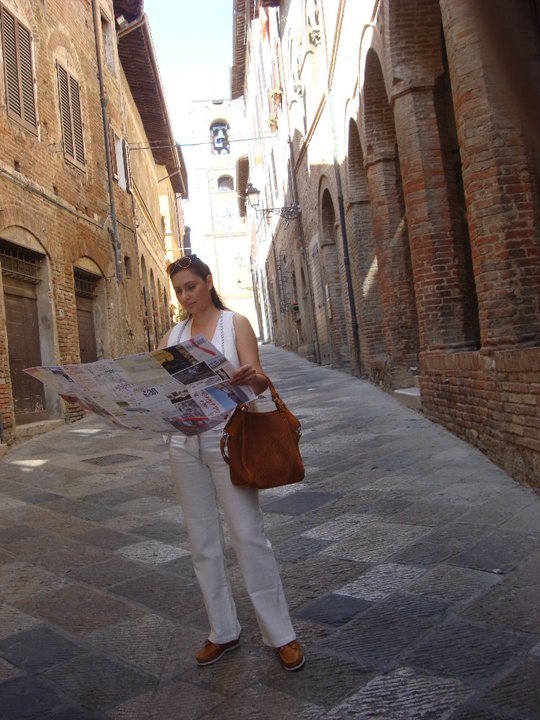
Colle Val d’Elsa is one of those places that most Tuscany visitors drive straight past, which is entirely their loss — the medieval upper town is beautifully preserved, genuinely uncrowded, and carries an outsized role in Italian architectural history as the birthplace of the man who designed Florence’s Duomo. Leave Montaione after breakfast. Colle Val d’Elsa is about 30 minutes south. Take the back roads south rather than the main road — the SR68 adds almost nothing in time but cuts through countryside that makes the destination feel earned. Park in the lower town and take the funicular up to Colle Alta; it saves the climb and costs almost nothing.

From Colle Val d’Elsa, drive about 15 minutes northwest to Monteriggioni. It is worth making even if you only have an hour — a perfectly circular-walled village so intact it looks almost staged, with fourteen towers still standing exactly as Dante described them in the Inferno. The practical advice here is timing: go in the late afternoon on your way back to Montaione rather than midday, when the coach parties are at their thickest. The same walls, the same towers — but in the evening light with half the people, it’s an entirely different experience.
Day 3 — Siena: Piazza del Campo, Duomo & Historic Center
Give Siena the full day it deserves — and if you can, give it two.

Why come? Siena is medieval, unapologetically dignified, and so uniquely beautiful — its fan-shaped Piazza del Campo is among the most beautiful squares in Europe, and the Gothic Cathedral is extraordinary in its scale and ambition. Give yourself a full day, and structure it loosely. The Campo in the morning before the heat builds, the Cathedral after lunch when the tour groups thin out, and the Torre del Mangia whenever the queue looks manageable — it moves faster than it appears. The neighborhoods away from the Campo are worth more of your time than most road trip itineraries suggest; they’re where the city stops performing for visitors and starts just being itself.
If you can stay into the evening — and from Montaione, there’s no reason you can’t, it’s an hour’s drive back — the city after dark is the version worth staying for. The Campo at 9 pm, the restaurants filling up, the whole place lit and alive: that’s Siena at its best, and it’s completely inaccessible to anyone who has to catch a tour bus back to Florence by six.
Pro tip: Park at one of the large car parks on the northern edge of the city (Parcheggio Il Campo or Parcheggio San Francesco are both well-signposted) and walk in from there. The historic center is ZTL — a restricted traffic zone — and the fines for accidentally driving into it are steep and arrive by post weeks later, when you’ve long forgotten the offence
If you want a deeper breakdown of the city’s highlights, neighborhoods, and food scene, see my full guide to the best things to do in Siena.
Day 4 — Chiantigiana Road Trip: Castellina, Panzano & Greve in Chianti
Today is a driving day in the best possible sense — a slow, wine-soaked meander along the SR222, the famous Chiantigiana road that winds through the heart of Chianti country between Siena and Florence.
Plan to leave Montaione mid-morning and not get back until early evening, having driven perhaps 80 kilometers in total and stopped four or five times.
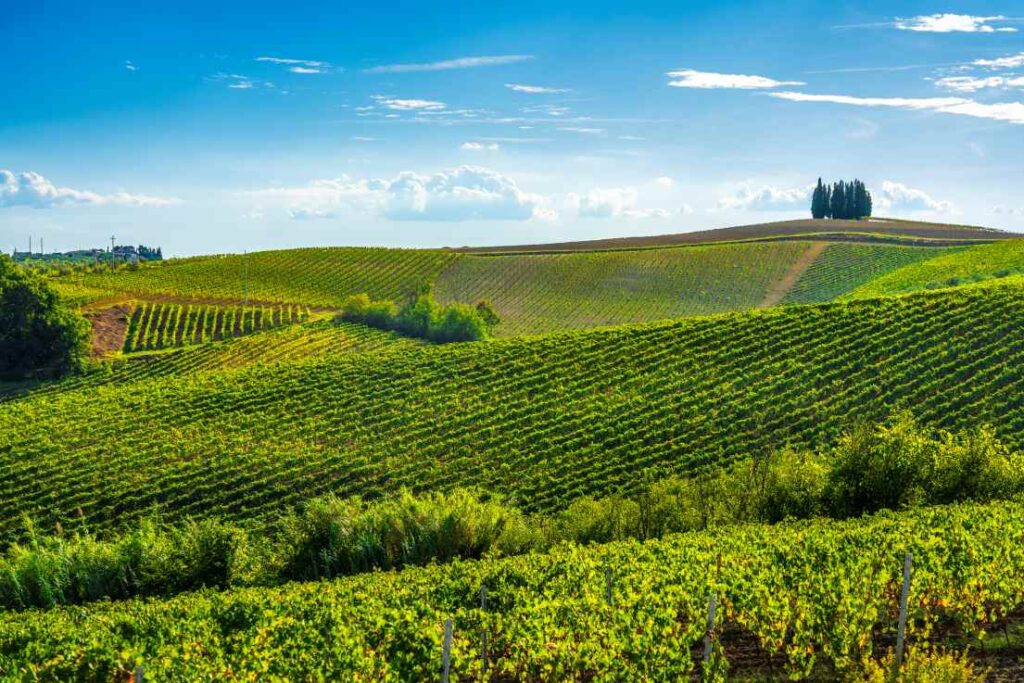
Chianti is the heartland of Tuscany that everyone pictures — vine-draped hillsides, ancient stone farmhouses, medieval castles above terracotta rooftops — and the Chiantigiana is the road that ties it all together, best savored slowly with no agenda beyond the next good view.
The routing matters. Drive north from Castellina in Chianti to Panzano to Greve — not the reverse — so that you’re moving roughly toward Florence and the scenery keeps improving as the day goes on.
Castellina is good for a coffee and a browse of the wine shops; Panzano is where you stop for lunch. Book Dario Cecchini’s Solociccia well in advance — it fills up weeks ahead in summer, and the set menu timing is fixed, so arriving late isn’t an option. Greve in Chianti works well as a late afternoon stop rather than a lunch destination — parking is easier after 3 pm, and the enotecas are quieter. Enoteca Falorni, in the cellars beneath the main square, is genuinely worth an hour of your time and a few euros in tasting fees. Buy wine here rather than at the roadside stands; the selection is better, and the prices are fairer.
Then take the back roads home to Montaione as the light falls across the vineyards and try not to stop too many more times.
Day 5 — San Gimignano and Volterra Hill Towns
Two of Tuscany’s most dramatically sited towns, and a day that will produce some of your best photographs of the entire trip.
The sequencing on this day matters more than people realize. San Gimignano first, Volterra second — not the other way around. San Gimignano gets crowded fast, and the window between the town waking up and the first tour buses arriving is narrow: roughly 8 am to 10 am in summer. If you’re at the gates when they open, you’ll have the lanes almost to yourself. By 11 am, that’s no longer true.

San Gimignano has the most dramatic skyline in Tuscany — fourteen medieval towers rising above the roofline, the remnants of a fierce building competition between noble families who once tried to outdo each other in height as a show of wealth and power, and from a distance on a clear morning, the silhouette looks like something from a fairy tale. From Montaione, it’s only 25 minutes — one of the real advantages of basing yourself here. Use the morning well: the light on the towers in the early hours is the version worth photographing, and the gelato queue at Gelateria Dondoli is shortest before the coaches arrive.
For a complete breakdown of towers, viewpoints, museums, and where to eat, see my guide to the best things to do in San Gimignano.
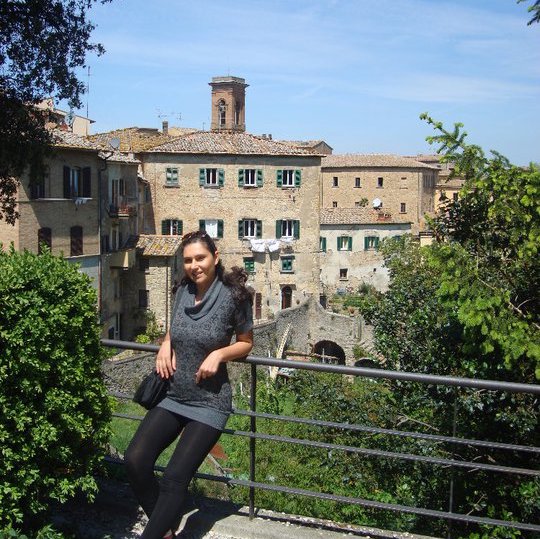
Drive west to Volterra in the early afternoon — about 30 minutes from San Gimignano. Perched on a high windswept ridge above deep ravine valleys, Volterra has a darker, more austere character than San Gimignano, and I find it all the more compelling for it. It also has one of the finest Etruscan collections in Italy and eerie eroded cliffs that have been slowly consuming the town’s edges for centuries. Give it the full afternoon. The drive back to Montaione takes 40 minutes, and the road through the hills at dusk is one of the better ones on this entire itinerary.
Day 6 — Lucca: Walled City and Historic Center
Lucca is the furthest day trip from Montaione on this itinerary — about an hour and ten minutes each way — which means it works best as a full day rather than a half one. Leave after breakfast and plan to be back after dinner; trying to squeeze it in as a quick afternoon stop wastes both the drive and the city.
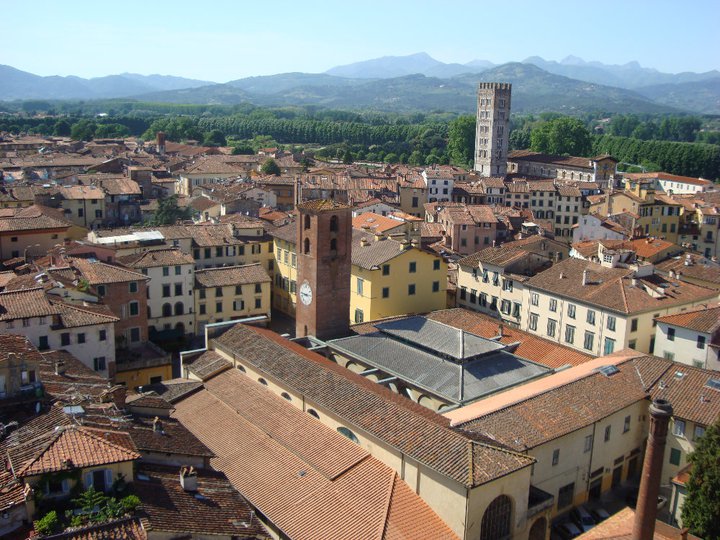
After the drama of hilltop towns and Chianti wine roads, Lucca offers something different: a beautifully preserved, wonderfully relaxed walled city with a gentle pace and a genuine local life that tourism hasn’t overwhelmed.
Hire bikes in the city for the circuit along the ramparts of the city walls— every guidebook says this, and every guidebook is right. I confirm it. It takes 30 minutes and reorients your understanding of the whole city. Spend the rest of the day on foot and without too much of a plan: Lucca rewards aimless wandering more than most Tuscan cities. Stay for dinner. The drive back to Montaione on a quiet evening through dark Tuscan countryside is a genuinely pleasant close to the day.
Pro tip: Park your car in the Mazzini Parking lot in Lucca. It is well-located, spacious, and well-priced for a full day.
Day 7 — Pisa and Livorno Coastal Day Trip
A coastal day, and a tale of two very different cities.
The key to making both work on the same day is not letting Pisa swallow the whole morning.

Start in Pisa. It is far more than its most famous resident — the Campo dei Miracoli, where the Tower, Cathedral, and Baptistery stand together on an open grassy square. The square is one of the great monumental groupings in the world, but the city’s lively university riverfront gives it a real energy that most day-trippers never discover. The Campo dei Miracoli genuinely doesn’t take as long as you’d think: an hour and a half to two hours covers it properly. What stretches the time is standing in queues you didn’t need to join. Book the Tower online before you leave Montaione, arrive early, and you’ll be back at the car by noon with the afternoon in Livorno intact.
Livorno is only 25 minutes down the coast and is about as different from Pisa as it’s possible to be — a working port with genuine grit, a layered multicultural history, and some of the finest seafood on the Tuscan coast, the kind of city that doesn’t appear in glossy travel brochures and is all the more interesting for it. Don’t eat in Pisa and arrive hungry. Trattoria Il Sottomarino near the port is the place to go for cacciucco — book a table if you can, or arrive at 12:30 before the lunch rush fills it. Allow an hour after lunch to walk the Venezia Nuova canal quarter before driving back.
Day 8 — Viareggio Beach and Tuscan Coast
After a week of medieval hill towns, wine roads, and Etruscan museums, today is a day to slow right down. Viareggio is a deliberate change of gear, and it works precisely because it asks nothing of you. No churches, no towers, no ticket queues.

Why come? Viareggio is the grande dame of the Tuscan coast — a proper seaside city with a faded Belle Époque glamour that I find rather wonderful — seafront promenade, grand hotels, striped beach cabins, excellent seafood restaurants, and a long sandy beach that is genuinely pleasant to spend a day on. Wander the promenade in the morning, swim in the afternoon, and find a good seafood restaurant for the evening — avoiding the tourist traps on the main seafront drag and heading instead to the backstreets near the port, where the locals eat, and the prices are considerably friendlier.
Viareggio is the kind of place that reminds you that Italians have been doing beach culture properly for a very long time. The drive from Montaione takes about an hour and twenty minutes. Go north on the Fi-Pi-Li and then up the coast road rather than the autostrada — it adds ten minutes but gets you at the seafront rather than the back of an industrial port. Park near the promenade and don’t move the car again until you’re ready to leave.
Day 9 — Florence: Renaissance Art and Historic Center
Save the best for last. Florence.
You arrive in Florence with a deeper frame of reference than you had nine days ago. That context is worth something. The bistecca tastes different when you’ve driven through the farms it came from. The Uffizi reads differently when you’ve spent a week in the landscapes that appear in the backgrounds of its paintings.
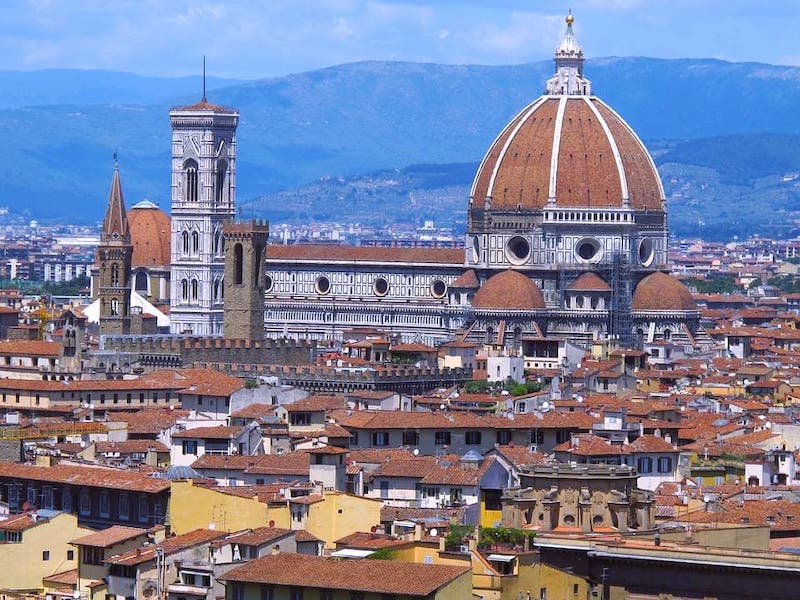
Why come? Florence is the birthplace of the Renaissance, and the evidence is everywhere — in the Duomo’s impossible dome, in the David’s extraordinary presence, in the Uffizi’s corridors lined with paintings that changed the course of art history.
Pick two or three things and do them properly. Book your Uffizi and Accademia tickets well in advance — the lines without reservations are genuinely brutal, and the time saved is better spent wandering the Oltrarno neighborhood on the south bank of the Arno. Pin Oltrarno on your Florence map — it is where the city is quieter, the restaurants are better value, and the locals actually live. Try a proper bistecca fiorentina at Santo Spirito Osteria – my favorite in Florence. Drink a Negroni in the late afternoon. Florence rewards those who slow down and pay attention — and after nine days on the road through Tuscany, you’ve earned the right to arrive here knowing exactly what you’re looking at.
Pro tip: Park at the Parcheggio del Piazzale or at a hotel garage if you have one — driving into central Florence is not recommended, and ZTL fines are a miserable end to a good trip. From the car park, Piazzale Michelangelo is a two-minute walk, which means your first act in Florence can be that view over the rooftops rather than a hunt for somewhere to leave the car.
👉 For more planning help, see my guides to the best things to do in Florence, must-try food in Florence, 1 day in Florence itinerary, 2 days in Florence itinerary, 3 days in Florence itinerary, and the best day trips from Florence.
Day 10 — Return Home from Tuscany
On day 10, your Tuscany road trip ends. It is time to fly back home.
One-Base Tuscany Road Trip: Distances and Driving Times
Here’s a quick overview of the key driving legs so you can plan your days with realistic expectations. Distances are approximate and driving times don’t include stops — which, on a Tuscany road trip, will be many.
| Day | Leg | Distance | Driving Time |
|---|---|---|---|
| Day 1 | Florence → Montaione | 45 mi (73 km) | 1 hr 10 min |
| Day 2 | Montaione → Colle Val d’Elsa | 18 mi (29 km) | 35 min |
| Day 2 | Colle Val d’Elsa → Monteriggioni | 7 mi (12 km) | 15 min |
| Day 2 | Monteriggioni → Montaione | 28 mi (45 km) | 50 min |
| Day 3 | Montaione → Siena | 37 mi (60 km) | 1 hr |
| Day 3 | Siena → Montaione | 37 mi (60 km) | 1 hr |
| Day 4 | Montaione → Castellina in Chianti | 24 mi (39 km) | 45 min |
| Day 4 | Castellina in Chianti → Panzano | 10 mi (16 km) | 20 min |
| Day 4 | Panzano → Greve in Chianti | 7 mi (11 km) | 15 min |
| Day 4 | Greve in Chianti → Montaione | 31 mi (50 km) | 1 hr |
| Day 5 | Montaione → San Gimignano | 12 mi (20 km) | 25 min |
| Day 5 | San Gimignano → Volterra | 18 mi (30 km) | 40 min |
| Day 5 | Volterra → Montaione | 19 mi (30 km) | 40 min |
| Day 6 | Montaione → Lucca | 38 mi (62 km) | 1 hr 10 min |
| Day 6 | Lucca → Montaione | 38 mi (62 km) | 1 hr 10 min |
| Day 7 | Montaione → Pisa | 34 mi (55 km) | 55 min |
| Day 7 | Pisa → Livorno | 15 mi (25 km) | 40 min |
| Day 7 | Livorno → Montaione | 43 mi (70 km) | 1 hr 10 min |
| Day 8 | Montaione → Viareggio | 48 mi (78 km) | 1 hr 20 min |
| Day 8 | Viareggio → Montaione | 48 mi (78 km) | 1 hr 20 min |
| Day 9 | Montaione → Florence | 45 mi (73 km) | 1 hr 10 min |
| Day 9 | Florence → Montaione | 45 mi (73 km) | 1 hr 10 min |
| Day 10 | Florence Airport | — | — |
ITINERARY TWO: 7-Day Tuscany Loop Road Trip Itinerary (Florence, Siena & Val d’Orcia)
Best for: Travelers with one week who want to keep moving, cover more of the region’s geography, and besides Chianti, experience southern Tuscany — Arezzo, Cortona, Val d’Orcia — which the one-base itinerary doesn’t reach. Also ideal if you’re continuing to Rome at the end.
This is a proper loop: you start and finish in Florence, driving south and east through a sweep of Tuscany that takes in medieval towers, Renaissance hill towns, Etruscan valleys, and the most iconic landscape in all of Italy. Pack light, move purposefully, and eat well at every stop. That’s all you need.
Overview: 7-Day Tuscany Loop Road Trip
- Day 1: Arrive in Florence, explore the historic center, Duomo, and Oltrarno
- Day 2: Florence — Uffizi, Accademia, Ponte Vecchio, Pitti Palace, and Piazzale Michelangelo
- Day 3: San Gimignano and Siena — medieval towers, Piazza del Campo, and Tuscan countryside drives
- Day 4: Arezzo and Cortona — Renaissance art, hilltop views, and quieter eastern Tuscany
- Day 5: Montepulciano — wine tastings, Renaissance streets, and Val d’Orcia views
- Day 6: Pienza, Bagno Vignoni, and the Val d’Orcia — cypress roads, thermal pools, and iconic landscapes
- Day 7: Return to Florence via Montalcino — or continue south to Rome
This Tuscany loop road trip follows a natural southbound arc from Florence through the heart of the region — beginning with Tuscany’s classic medieval cities before gradually moving east into quieter hill towns and the Val d’Orcia. The route balances major highlights like Siena and San Gimignano with less-visited gems such as Arezzo, Cortona, and Bagno Vignoni, while avoiding unnecessary backtracking. Overnight stops shift logically as you travel deeper into southern Tuscany, allowing you to experience the changing landscapes — from Chianti vineyards to the rolling cypress-lined hills of the Val d’Orcia — before looping back to Florence or continuing onward to Rome.
Map of the Tuscany Loop Road Trip Itinerary
Days 1–2 — Florence: Duomo, Uffizi & Renaissance Highlights
Starting a road trip in a city where you’re not yet driving is a better idea than it sounds. Florence without a car is actually easier — the ZTL zone covers most of the historic center, parking is expensive and limited, and the distances between major sights are all walkable. Use these first two days to orient yourself, get over any travel fatigue, and absorb the kind of density that the rest of the trip will be spent escaping.

Why start here? Florence is where the Renaissance happened and still shows on every corner — from Brunelleschi’s Duomo to the Uffizi’s masterpiece-lined corridors — and arriving here first gives you a cultural grounding that makes everything you see in the following days richer and more meaningful. Pick up the rental car on the morning of Day 3, not Day 1. Most major rental desks are near Santa Maria Novella station, and driving out of Florence in the early morning toward San Gimignano — rather than arriving and immediately dealing with Florentine traffic — is a much more pleasant start to the road portion of the trip.
For the two days on foot: book the Uffizi and Accademia before you travel. Not when you arrive, not the night before — before you travel. The lines without reservations in summer are genuinely brutal and will eat hours you’d rather spend elsewhere. With reservations, you walk in. That’s the difference.
Day 1 is for the big sights: the Uffizi Gallery for Botticelli and Raphael and a hundred other masterpieces; the Accademia for Michelangelo’s David (book the Uffizi and Accademia in before yu travel— not when you arrive, not the night before). The lines without reservations in summer are genuinely brutal and will eat hours you’d rather spend elsewhere. With reservations, you walk in. That’s the difference. ); the Duomo complex and, if you’ve booked ahead, the climb up the Cupola del Brunelleschi for the finest panoramic view in the city. End the evening in the Oltrarno neighborhood — Florence’s less tourist-heavy south bank — with a dinner at Osteria Santo Spirito, a casual, generous, and reliably wonderful spot in Piazza Santo Spirito.
Spend the first evening in the Oltrarno — the south bank of the Arno — where the restaurants are better value and the city is a little less concentrated. Osteria Santo Spirito on Piazza Santo Spirito is a reliable and generous choice.
Day 2 is for slowing down. The Pitti Palace and Boboli Gardens in the morning, and the afternoon is unstructured. Walk across the Ponte Vecchio. Sit in Piazza della Signoria and watch. Climb to Piazzale Michelangelo at golden hour — on foot, not by taxi, so the view feels earned. Florence rewards those who don’t try to cover it all, and you have a long week of driving ahead.
Where to stay: Hotel Lungarno, right on the Arno, has real character and a wonderful position. For something more atmospheric, Portrait Firenze in the Lungarno area is exceptional if you’re celebrating something.
If you’re extending your stay, my guides to a 1 day in Florence itinerary and 2 days in Florence itinerary will help you structure your time efficiently.
Day 3 — San Gimignano and Siena Medieval Cities
Day 3 of this Tuscany itinerary is one of the great driving days in Tuscany — a sweep south through the Chianti hills, with two of the region’s most celebrated towns as bookends.


Morning: San Gimignano. Pick up the car early and leave Florence before 8 am if you can. The SR222 south — the Chiantigiana — is the scenic choice and worth every extra minute: vineyard-covered hills, views that make you pull over, almost no traffic in the early morning. San Gimignano is about 1 hour from Florence and is worth every minute of the drive.
The fourteen medieval towers that define its skyline are the remnants of a fierce competition between noble families who built ever-higher as a show of power and wealth. From a distance, the silhouette is fairy-tale; up close, inside the walls, the narrow lanes and sun-soaked piazzas are equally enchanting. Arrive early — by mid-morning in summer, the tour buses arrive and the atmosphere changes. Before you leave, stop at Gelateria Dondoli on Piazza della Cisterna: this is the multiple-time world champion gelateria, and the difference between their gelato and everything else you’ll eat on this trip is immediately obvious.
You can also read my detailed guide to the best things to do in San Gimignano.

Afternoon: Siena. San Gimignano to Siena is a 40-minute drive southeast, and the contrast between the two towns couldn’t be more instructive about Tuscany’s range. Where San Gimignano is compact and immediately picturesque, Siena is a proper medieval city — sprawling, layered, and proud of its independence from Florence in a way that still defines its character today.
Siena is medieval, fiercely independent, and still organized around the ancient neighborhood rivalries of its contrade, with a fan-shaped Piazza del Campo that is among the most beautiful public spaces in Europe, a Gothic Cathedral extraordinary in its scale and ambition, and the Piccolomini Library inside it, painted wall-to-ceiling by Pinturicchio, is one of those rooms that stops conversation.
Where to stay in Siena: Grand Hotel Continental Siena occupies a 17th-century palazzo just steps from the Campo and is magnificently positioned. Stay at least one night — the city transforms after the day-trippers leave, and the evening atmosphere is something you don’t want to experience from a passing car.
Arrive in the early afternoon and don’t try to drive into the center. The ZTL is aggressively enforced, and the fines are significant. Park at your hotel’s parking and reach the historic center on foot.
Don’t miss: Torre del Mangia (climb it for the view over the Campo), the Baptistery of San Giovanni, and dinner at Antica Osteria da Divo — set in Etruscan-era caves beneath the city, it’s a bucket-list meal.
For a deeper dive into the city’s history, food, and major sights, see my guide to the best things to do in Siena.
Day 4 — Arezzo and Cortona Hill Towns of Eastern Tuscany
Day 4 turns east, toward two towns that represent a completely different side of Tuscany — less visited, more personal, and in their own way every bit as extraordinary as what’s come before.

Morning: Arezzo. From Siena, Arezzo is about an hour east on the A1 autostrada. It doesn’t announce its charms, but what charms they are: Piero della Francesca’s extraordinary fresco cycle in the Basilica of San Francesco, a soaring Gothic cathedral, a magnificent sloping main square, and some of the best bistecca in the region. The drive from Siena takes about an hour on the A1. Arezzo doesn’t need a full day; three to four hours covers it well if you go straight to what matters. The Piero della Francesca frescoes require a timed booking — sort this before you leave Siena, because slots fill up, particularly on weekends.
For museums, churches, viewpoints, and food recommendations, see my guide to the best things to do in Arezzo.

Afternoon: Cortona. Cortona is a 30-minute drive southeast from Arezzo, and the climb up through olive groves and medieval streets to this high Etruscan ridge-town is one of the great arrivals in Tuscany. The views from the upper terraces — stretching across the broad valley to Lake Trasimeno and the distant hills of Umbria — are simply stunning, and the town itself has an ancient, self-possessed character that Hollywood found irresistible (Frances Mayes’s Under the Tuscan Sun brought international attention, but Cortona has kept its soul intact).
Cortona’s Museo Diocesano is genuinely world-class, with works by Fra Angelico that would be headline attractions in a bigger city. Make the steep walk up to the Fortezza Medicea at the very top of the town — the panorama from up there, on a clear morning, is one of the great views in all of Italy.
Where to stay in Cortona: Il Falconiere, a 17th-century estate just below the town walls with a Michelin-starred restaurant and a gorgeous pool, is one of the finest hotels in southern Tuscany. If one night anywhere on this loop deserves an upgrade, this is it.
I recommend giving Cortona the late afternoon and evening. The light on the valley from the upper terraces in the hour before sunset is exceptional, and the town quietens considerably once the day-trippers have gone.
I also have a complete guide to the best things to do in Cortona if you want more ideas for your stay.
Days 5–6 — Montepulciano, Pienza & Val d’Orcia Countryside
These two days are the emotional heart of the loop — the part of Tuscany that you’ll be describing to people for years afterward. The Val d’Orcia, a UNESCO World Heritage landscape of sweeping hills, cypress-lined roads, and isolated Renaissance towns, is the most iconic landscape in Italy, and possibly one of the most beautiful places on Earth. Give it the time it deserves.

Day 5: Montepulciano. From Cortona, Montepulciano is about 40 minutes south. This pretty Renaissance hill town produces Vino Nobile di Montepulciano, one of Tuscany’s great reds. Its main street is lined with enotecas, graceful piazzas, and sweeping views across the Val d’Orcia that alone justify the drive.
Montepulciano is a hill town that climbs steeply — the main street runs almost entirely uphill from the lower gate to the piazza at the top, and walking it properly takes energy. Do it anyway: the wine shops are on this street, the views open up as you climb, and the sense of arrival at the top piazza is genuinely satisfying. Build in time for at least two or three tastings of Vino Nobile; the difference between producers is interesting enough to justify the comparison.
Before leaving, drive or walk down to the Tempio di San Biagio outside the town walls. Most visitors skip it because it requires a separate trip. Don’t skip it. It’s one of the most perfect Renaissance churches in Italy, and it’s almost always empty — the kind of experience that’s becoming rare in Tuscany.
Where to stay: Locanda di San Francesco, a boutique hotel set right on the beautiful Piazza di San Francesco, has terrace views over the Val d’Orcia that alone justify the booking.
For wineries, viewpoints, and practical tips, read my guide to the best things to do in Montepulciano.

Day 6: Pienza & the Val d’Orcia. Pienza is a 15-minute drive west from Montepulciano, and it’s one of those places that feels almost too beautiful to be real. A Renaissance “ideal city” commissioned by Pope Pius II in the 15th century and built on a hill above the valley — tiny, perfectly proportioned, famous for its pecorino cheese and views over the Val d’Orcia that rank among the most beautiful in Italy. You can walk end to end in about ten minutes. The cathedral, the Palazzo Piccolomini, and the main piazza are arranged with an elegance that feels more like a stage set than an actual town.
The town is small and fills quickly, but before 9 am on a weekday, it’s almost entirely yours. Buy the pecorino. Walk to the edge of the main piazza where the town drops away to the valley below. Take a photograph. Accept that the photograph won’t capture it. Stay anyway.
You can find more restaurants, viewpoints, and local experiences in my guide to the best things to do in Pienza.
From Pienza, spend the afternoon driving to the Val d’Orcia. Head toward Bagno Vignoni — a village whose central piazza is a steaming Renaissance thermal pool, one of the strangest and most beautiful things in Tuscany — and then south toward San Quirico d’Orcia. Pull over when the view of the cypress-lined road hits you. It will, somewhere around La Foce, and you’ll understand why this valley appears on the cover of every book about Tuscany. Let yourself be moved by it. This is what you came for.
Where to stay: Adler Thermae in Bagno Vignoni is one of the finest spa resorts in all of Tuscany — right in the village, with thermal pools and treatments that make an evening here feel like a complete reset. Book it. You’ve earned it by now.
For more villages, scenic drives, and hidden gems, see my guide to the best villages in Val d’Orcia, Italy.
Day 7 — Return to Florence or Continue to Rome
The final day of the loop is a driving day with options, and either direction offers a beautiful send-off.
Option A: Return to Florence. From the Val d’Orcia, Florence is about 1.5 to 2 hours north via the Via Cassia (SR2) through Siena, or slightly faster on the superstrada. If you have time before a flight or train, consider one more stop: Montalcino, perched above the valley producing Brunello di Montalcino — one of Italy’s greatest red wines — is only a 20-minute detour from the main road, and tasting in the medieval fortress that doubles as the town’s best wine shop is a fitting way to close out a week in Tuscany. Buy a bottle or two to take home. The prices at source are considerably friendlier than what you’ll pay elsewhere.
Option B: Continue to Rome. If your journey ends in Rome rather than Florence, the Val d’Orcia is perfectly positioned. Drive south on the SR2 through Acquapendente and Viterbo into Lazio, or pick up the A1 autostrada at Chiusi for a faster run down. Rome is roughly 2.5 to 3 hours from Pienza, depending on traffic, making this a very manageable final leg — arrive in time for an evening in the city, and Tuscany will feel like a dream you just woke up from in the best possible way.
Tuscany Loop Road Trip: Distances and Driving Times
| Day | Leg | Distance | Driving Time |
|---|---|---|---|
| Day 1 | Arrive in Florence | — | — |
| Day 2 | Florence | — | — |
| Day 3 | Florence → San Gimignano | 35 mi (56 km) | 1 hr 20 min |
| Day 3 | San Gimignano → Siena | 26 mi (42 km) | 45 min |
| Day 4 | Siena → Arezzo | 47 mi (76 km) | 1 hr 10 min |
| Day 4 | Arezzo → Cortona | 19 mi (31 km) | 35 min |
| Day 5 | Cortona → Montepulciano | 20 mi (32 km) | 40 min |
| Day 6 | Montepulciano → Pienza | 9 mi (15 km) | 20 min |
| Day 6 | Pienza → Bagno Vignoni | 9 mi (14 km) | 20 min |
| Day 6 | Bagno Vignoni → San Quirico d’Orcia | 5 mi (8 km) | 10 min |
| Day 7 | San Quirico d’Orcia → Montalcino | 10 mi (16 km) | 20 min |
| Day 7 | Montalcino → Florence | 75 mi (120 km) | 2 hr 15 min |
Which Tuscany Road Trip Itinerary Should You Choose?
Both itineraries cover the essential Tuscany — Florence, Siena, San Gimignano, medieval hilltop towns, great food and wine — but they do it in very different ways.
Choose the one-base itinerary if you have 10 days, want to include the Tuscan coast (Viareggio, Livorno), prefer the luxury of coming home to the same countryside base each evening, and want a more relaxed, unhurried pace through the Chianti heartland.
Choose the loop itinerary if you have exactly one week, want to see the full sweep of the region, including Arezzo, Cortona, and the Val d’Orcia, prefer the experience of moving through a landscape rather than returning to it, or are continuing to Rome at the end.
Either way: rent a car, book accommodation early, skip the tour buses, and don’t rush the meals. Tuscany is one of the great travel destinations in the world, and it absolutely repays the effort of doing it properly.
If you’re still planning your route, accommodation, or priorities, my guides to the best places to visit in Tuscany and the best places to stay in Tuscany can help you refine your itinerary even further.
Best Time to Visit Tuscany
May, June, September, and October are the sweet spots — warm enough to be comfortable outdoors, not so hot that you’re wilting through every afternoon, and meaningfully less crowded than July and August. September is particularly special: the harvest is beginning, the light turns extraordinary, and the whole region has a golden, settling-down quality unlike any other month.
April is also excellent — nature wakes up, the countryside turns vivid green, and prices haven’t yet reached their summer peak. Avoid the first two weeks of August if you can; it’s the peak of the Italian summer holiday season, and the main sights get genuinely overwhelming.
Practical Tips for Planning a Tuscany Road Trip
- Book accommodation early. The best agriturismi and small hotels in Chianti and Val d’Orcia fill up months in advance for summer. Don’t leave this until last.
- Queue-skip the big sights. Book Uffizi, and Accademia in Florence, Piero della Francesca’s frescoes in Arezzo, and the Leaning Tower of Pisa online well in advance. The time saved is considerable.
- Don’t skip the side roads. The SR222 Chiantigiana between Florence and Siena, and the SR2 through Val d’Orcia, are among the great scenic drives of Italy. Take them slowly.
- Eat local. Traditional Tuscan food is among the best food in Italy — bistecca fiorentina, hand-rolled pici pasta, ribollita, pecorino, truffles, and world-class wine. Leave room in your schedule for long lunches. If you want to know what to order beyond the obvious, see my guide to traditional food in Tuscany.
- The GPS doesn’t always know best. Some of the most scenic roads in Tuscany are not the fastest routes. Let yourself get a little lost. It’s almost always worth it.
Happy Tuscany trails! — and feel free to reach out with questions. Tuscany is endlessly worth exploring, and I genuinely never get tired of talking about it.
🔗 More Tuscany Guides
If you’re planning a trip through Tuscany, these detailed travel guides will help you explore the region more deeply:
👉 Things to Do in Val d’Orcia – villages, wineries, and scenic countryside
👉 Things to Do in Siena – medieval streets, landmarks, and local food
👉 Things to Do in San Gimignano – towers, viewpoints, and historic lanes
👉 Things to Do in Cortona – Etruscan history and Tuscan charm
👉 Things to Do in Arezzo – Renaissance art and antique markets
👉 Things to Do in Pienza – pecorino cheese and Val d’Orcia views
👉 Things to Do in Montepulciano – wine tasting and hilltop scenery
👉What to See in Tuscany – top cities, hill towns, and top attractions
👉 Where to Stay in Tuscany – villas, agriturismi, and hotels
👉 What to Eat in Tuscany – bistecca, pasta, truffles, and wine
My Go-To Car Rental Company: DISCOVER CAR
I always book rental cars online in advance. Booking a car rental in advance is more money- and time-wise than booking at the airport. I always use Discover Cars. They search international car rental companies and small local car rental agencies to find the best deal for you. Plus, there are no hidden costs, and they offer free cancellation. I always take their full coverage as they offer competitive rates. Check Their Car Rental Prices!
My Go-To Accommodation Platforms:
Booking.com (short stays) and Vrbo (longer stays)