
Padre Pio Shrine in Italy: Inside Italy’s Most Remarkable Pilgrimage Site

Of everywhere I stopped on my road trip through Puglia, San Giovanni Rotondo was one of the places that stayed with me the longest.
I had planned the visit from the beginning. It wasn’t an accidental detour or something I squeezed into the itinerary because I happened to be nearby. As a Catholic, I specifically wanted to see the place where Padre Pio spent most of his life, served as a priest, and where his remains are now kept.
I expected a religious pilgrimage site. What I didn’t expect was how different the experience would feel from the rest of my Puglia road trip.
San Giovanni Rotondo is in the hills of the Gargano peninsula, away from the whitewashed towns and coastal scenery that many visitors associate with Puglia. The focus here is different: prayer, pilgrimage, Padre Pio’s life, and the sanctuary built in his memory.
If you’re planning a visit, this guide covers what I wish I’d known beforehand — where the Padre Pio shrine is, where Padre Pio is buried, what to see, how to get there, where to stay, and how I’d plan the visit.
First-hand experience: I visited the Sanctuary of Saint Pio of Pietrelcina in person during my Puglia road trip, including the modern sanctuary, the crypt where Padre Pio’s remains are kept, the Church of Santa Maria delle Grazie, and visitor-accessible areas associated with Padre Pio’s life.
I also stayed in San Giovanni Rotondo and visited the sanctuary as part of a wider Puglia road trip by car. The practical recommendations in this guide — including how long I recommend allowing, what I would visit first, and how I would combine San Giovanni Rotondo with the rest of a Puglia itinerary — are based on that experience.
Quick Facts About the Padre Pio Shrine
| Official name | Sanctuary of Saint Pio of Pietrelcina |
| Location | San Giovanni Rotondo, Puglia, Italy |
| Padre Pio’s resting place | Crypt of the sanctuary |
| Architect of the new church | Renzo Piano |
| The most convenient major airport | Bari |
| Main railway connection | Foggia |
| My recommended way to arrive | By car, especially as part of a Puglia road trip |
| Where I stayed | Hotel Vittoria, a 5-minute walk from the sanctuary |
The sanctuary is in San Giovanni Rotondo, in the province of Foggia on the Gargano peninsula.
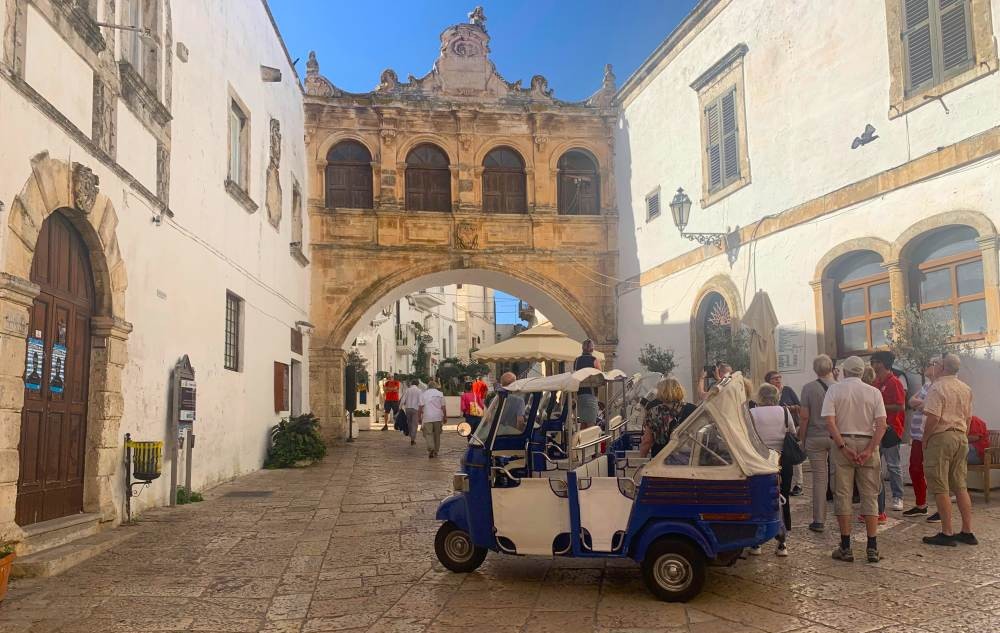
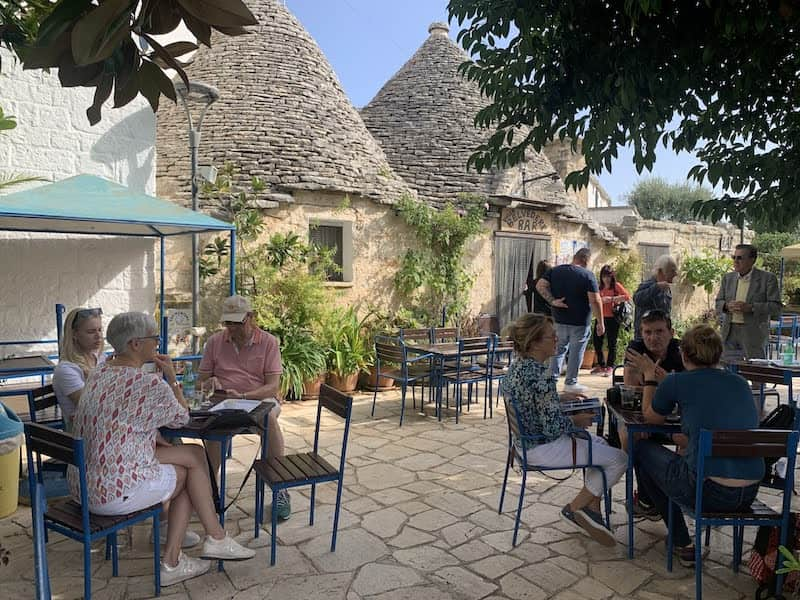
If you’re travelling through Puglia by car, it’s a very different experience from places such as Alberobello, Ostuni or Polignano a Mare. That contrast is part of what made the visit memorable for me.
Where Is the Padre Pio Shrine in Italy?

The Padre Pio shrine is in San Giovanni Rotondo, a town in the Gargano area of northern Puglia.
The town sits inland from the Adriatic coast, in the mountainous Gargano region. It is best known internationally because Padre Pio lived and worked here for most of his religious life.
The official name of the sanctuary is the Sanctuary of Saint Pio of Pietrelcina.
Padre Pio Shrine Address
The Sanctuary of Saint Pio of Pietrelcina is at Viale Padre Pio, San Giovanni Rotondo, in the province of Foggia, Puglia. The sanctuary complex is centered around the modern Church of Saint Pio, the older Church of Santa Maria delle Grazie, and the Capuchin friary associated with Padre Pio.
Address: Viale Padre Pio, San Giovanni Rotondo FG, Italy
Telephone: +39 0882 417500
The modern church is next to the older Church of Santa Maria delle Grazie and the Capuchin friary associated with Padre Pio.
That makes it possible to see several important places connected with his life in one visit rather than treating the modern sanctuary as a standalone attraction.
Who Was Padre Pio?
Padre Pio was born Francesco Forgione in Pietrelcina, near Benevento, on May 25, 1887. The Vatican’s official biography of Padre Pio provides further details about his life and ministry.
He entered the Capuchin novitiate at Morcone in 1903 and took the religious name Pio. He was ordained a priest in 1910.
In 1916, he was sent to the Capuchin friary at San Giovanni Rotondo, where he remained for the rest of his life, apart from periods away for health and other reasons.
He became known throughout Italy and internationally for his ministry as a priest and confessor, his devotion to prayer, his charitable work, and the stigmata he was believed to have received.
The Catholic Church officially recognized his sanctity. He was beatified by Pope John Paul II in 1999 and canonized as Saint Pio of Pietrelcina on June 16, 2002.
Pope John Paul II’s homily at Padre Pio’s canonization emphasized his prayer, ministry, suffering, and service, particularly his work as a confessor. You can read the full Vatican homily from the canonization on June 16, 2002.
What struck me most when learning about Padre Pio wasn’t simply the number of stories surrounding him. It was how central prayer, confession, Mass, and service to other people were to his life.
What Is Padre Pio Known For?
Padre Pio is particularly associated with the stigmata, the wounds corresponding to those of Christ’s Passion.
He was also known for his work as a confessor and spiritual director. Large numbers of people came to San Giovanni Rotondo seeking confession, prayer, and spiritual guidance.
His life also included an important charitable legacy.
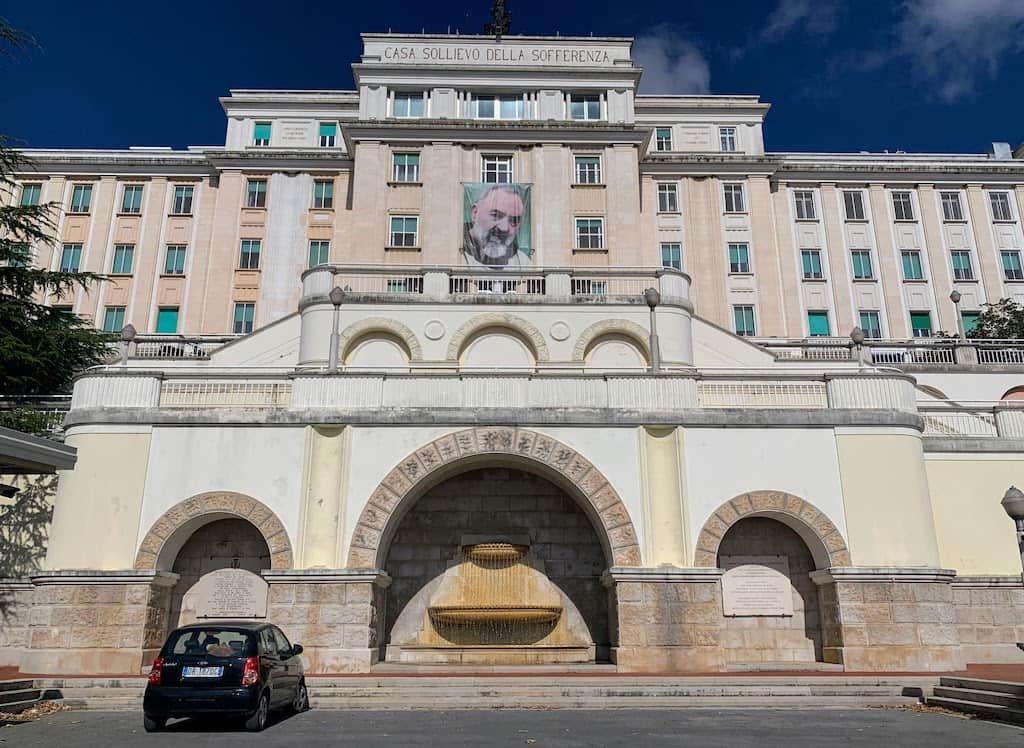
One of the most significant examples is the Casa Sollievo della Sofferenza, or Home for the Relief of Suffering, which Padre Pio founded in San Giovanni Rotondo. The hospital opened in 1956 and remains closely associated with his legacy. The Vatican describes it as an important expression of Padre Pio’s charitable work.
Stories about Padre Pio also include reported miracles and mystical experiences. These are an important part of his devotional tradition, but when describing them in a travel guide, I think it’s better to distinguish between what is historically documented and what is part of Catholic belief and testimony.
Where Is Padre Pio Buried? Inside the Crypt
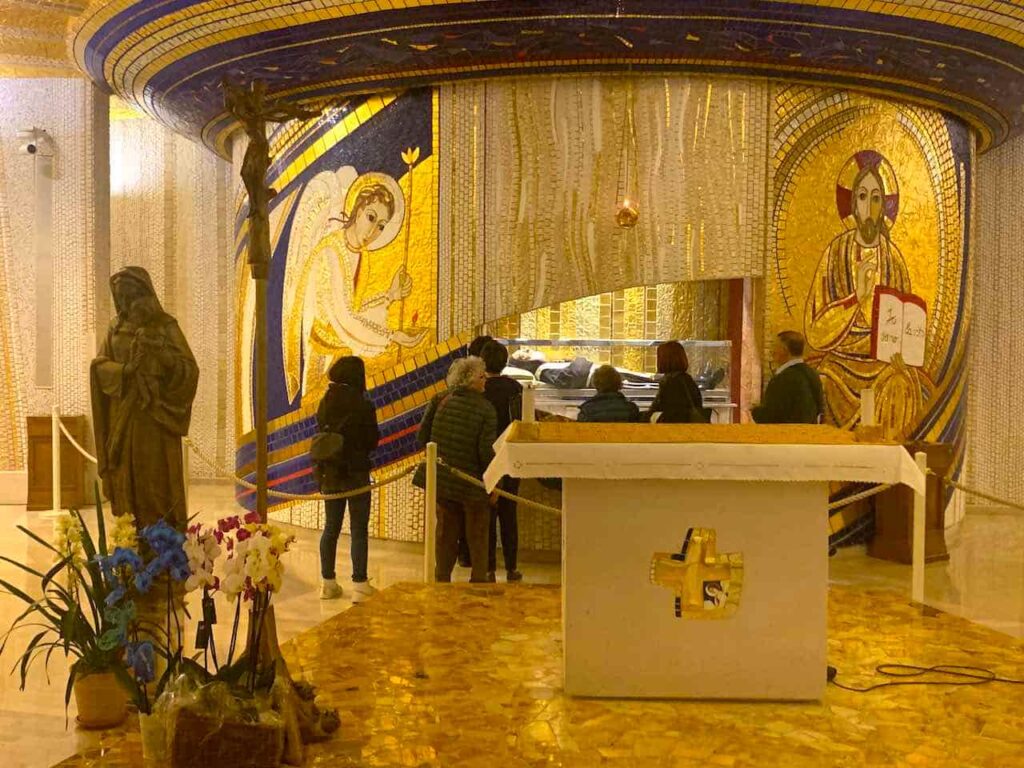
Padre Pio’s remains are kept in the crypt of the Sanctuary of Saint Pio of Pietrelcina in San Giovanni Rotondo, Puglia. The crypt is beneath the modern sanctuary and is one of the central places visited by pilgrims coming to San Giovanni Rotondo.
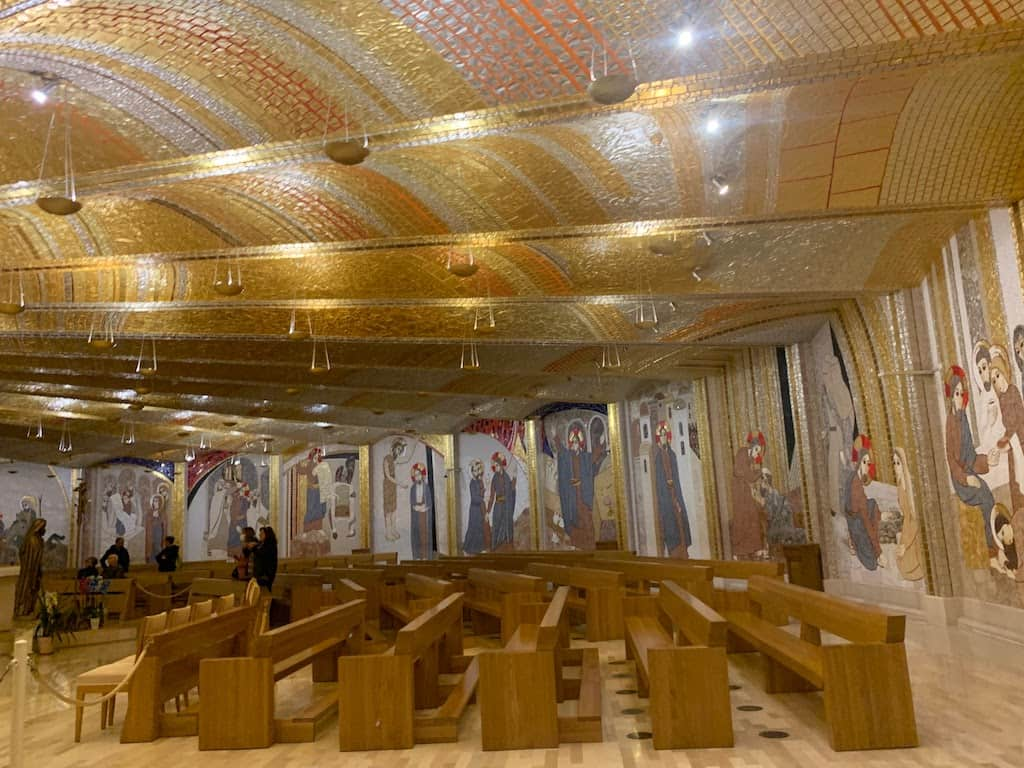
The crypt is richly decorated with mosaics and religious artwork, creating a very different atmosphere from the large, modern church above. The journey toward Padre Pio’s tomb is part of the experience rather than simply a corridor leading to a burial place.
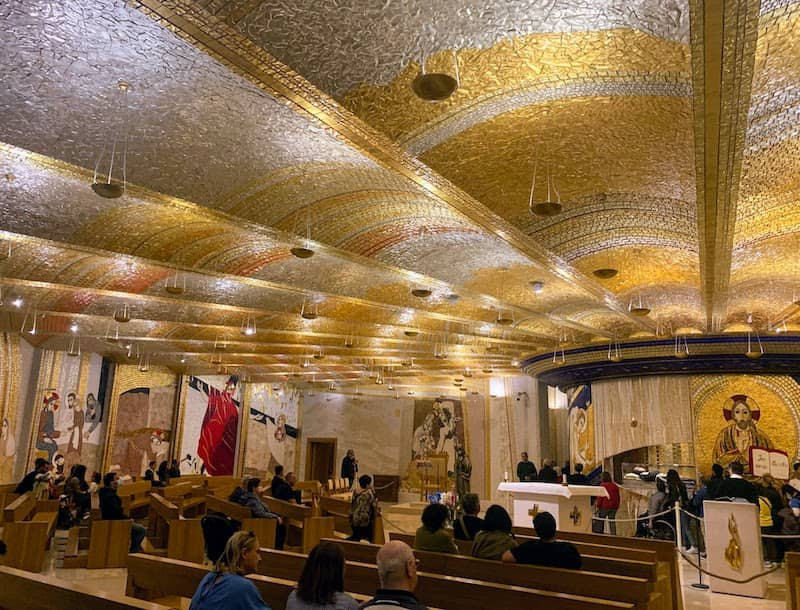
When I went down toward the crypt, the atmosphere changed noticeably. The large modern sanctuary gives way to a quieter space where visitors move more slowly, and many stop to pray. For me, this was the most emotionally significant part of the visit.

Padre Pio’s tomb is enclosed within the crypt and is available for public veneration. The area around it is decorated with extensive gold-toned mosaics, and visitors generally move through quietly, with many stopping to pray or pay their respects.
If you are visiting primarily as a pilgrim, you may want to allow more time here than you would for a typical sightseeing stop. Even if you are visiting because of an interest in Padre Pio’s life, history, or the architecture of the sanctuary, I would avoid treating the crypt as something to see quickly and move on from.
One thing worth remembering is that this is an active place of pilgrimage, not simply a tourist attraction. Many people around you may have travelled to San Giovanni Rotondo for deeply personal religious reasons, so it is worth being respectful of the atmosphere and allowing others space to pray.
What Does Padre Pio’s Tomb Look Like?

Padre Pio’s resting place is within the crypt beneath the modern sanctuary. His remains have been displayed for public veneration, and the presentation of the tomb and remains has changed over time following conservation and restoration.
If you have seen older photographs of Padre Pio’s tomb online, the current presentation may therefore look different from what you expect. I would also be cautious about describing Padre Pio simply as an “incorrupt saint.” After his death, his remains underwent conservation and restoration. For that reason, I’d avoid describing the remains simply as ‘fully incorrupt’ without explaining their subsequent conservation and restoration.
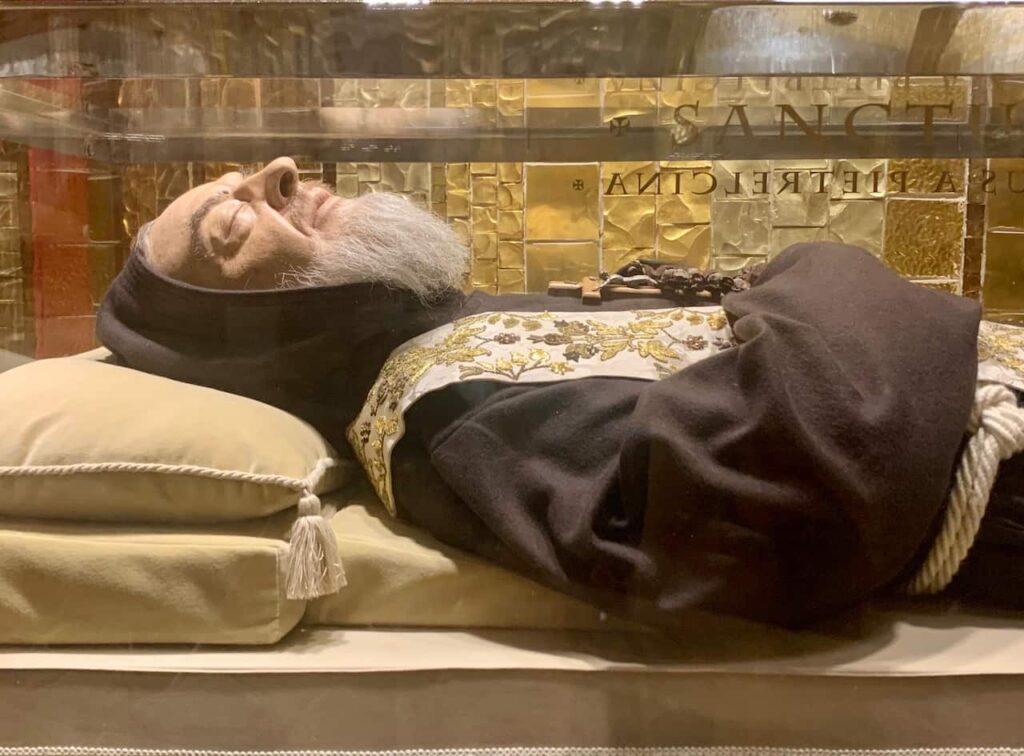
For visitors, the more important part of the experience is the setting itself: the richly decorated crypt, the mosaics, the quiet atmosphere, and the steady flow of pilgrims coming to pray at Padre Pio’s tomb.
If this is one of the main reasons for your visit, I would plan to spend some unhurried time here rather than simply taking a photograph and leaving.
Padre Pio’s Birthplace
Padre Pio was born in Pietrelcina, in the Campania region of southern Italy.
That is separate from San Giovanni Rotondo. Pietrelcina in Campania is about a 2-hour drive from San Giovanni Rotondo in Puglia. The exact time depends on traffic and your exact starting point, of course.
Pietrelcina is the place associated with his childhood and early life, while San Giovanni Rotondo is where he spent the great majority of his ministry and where his sanctuary and tomb are located.
If you’re travelling specifically because of Padre Pio, visiting Pietrelcina would give you a different perspective on his life. For most visitors travelling around Puglia, however, San Giovanni Rotondo is the more practical place to include in an itinerary.
Where Did Padre Pio Live?
Padre Pio was sent to San Giovanni Rotondo in 1916 and remained closely associated with the town until his death in 1968.
The Church of Santa Maria delle Grazie and the adjoining Capuchin friary are therefore just as important to understanding his life as the modern sanctuary.
You can visit places associated with his daily life and ministry, including the friary and the areas connected with his work as a priest.
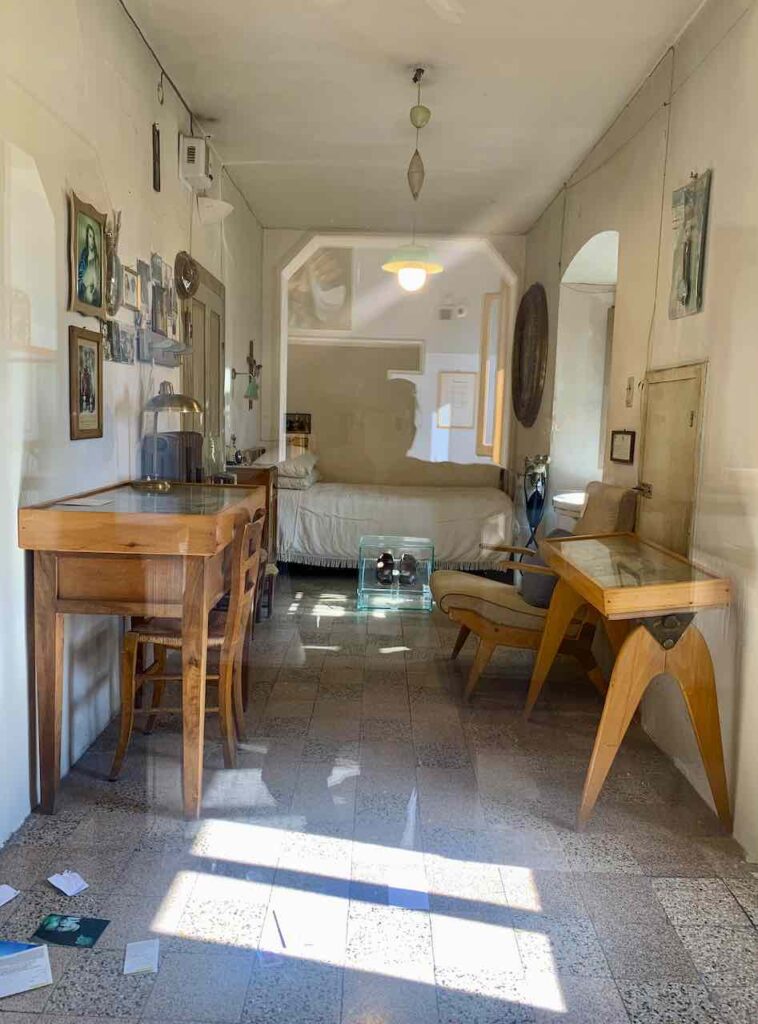
This was actually one of my favourite parts of the visit.
The modern sanctuary is impressive, but the older buildings helped me picture Padre Pio as a friar who lived and worked here rather than simply as the famous saint whose name now attracts pilgrims from around the world.
Padre Pio Shrine Church: The Modern Sanctuary
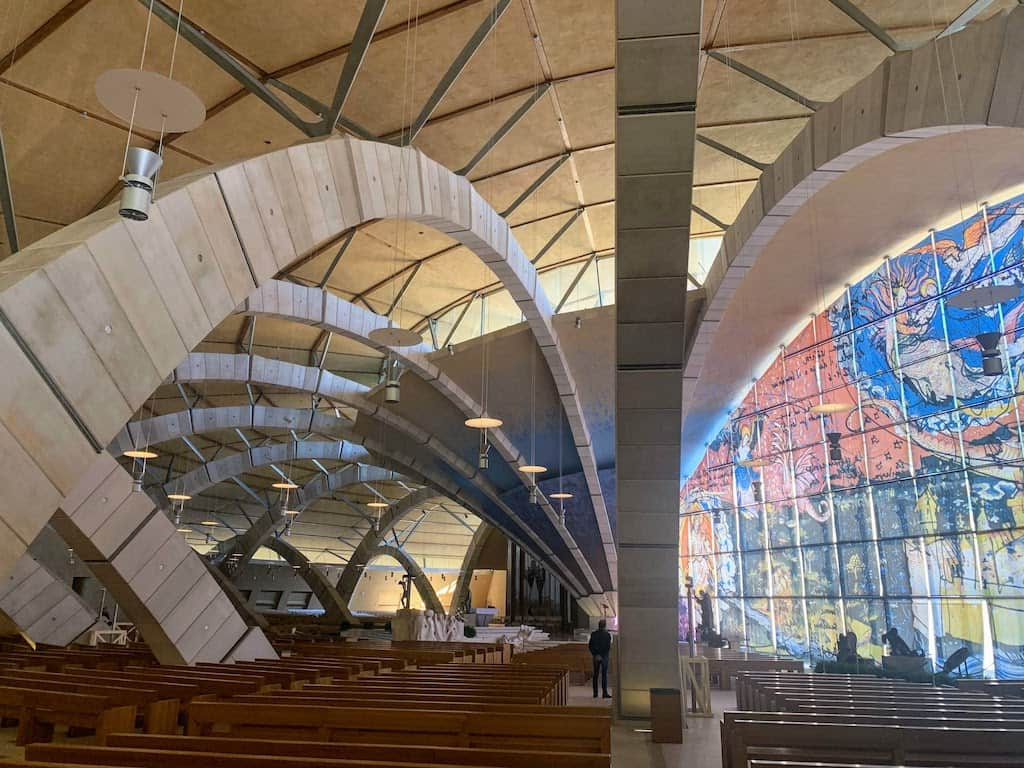
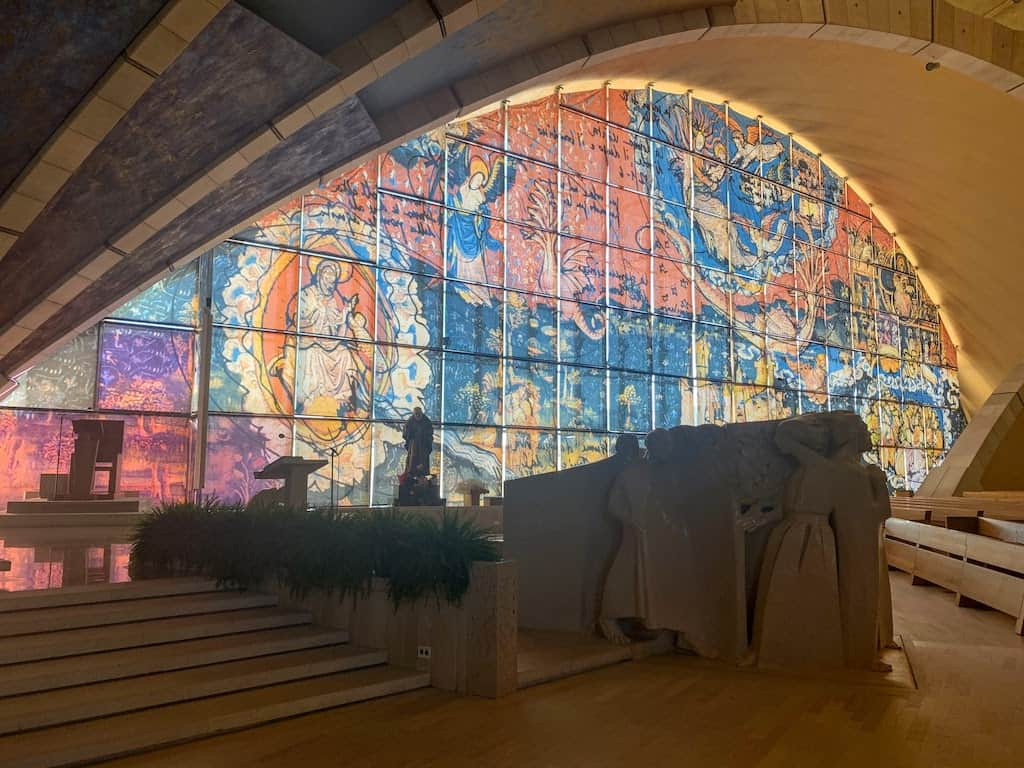
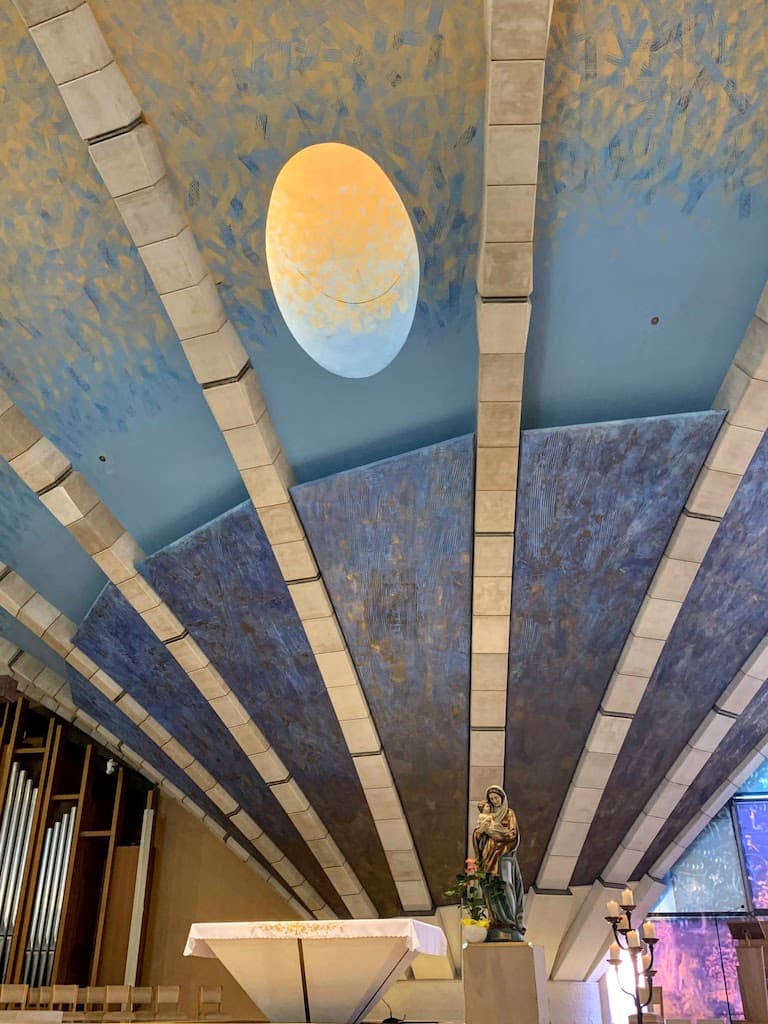

The modern sanctuary is unmistakably different from the historic churches found elsewhere in Puglia. Designed by Renzo Piano, its sweeping wooden structure, stonework, stained glass and mosaics give the building a distinctly contemporary character.
Rather than trying to imitate a historic Italian church, the sanctuary is unmistakably modern. Stone, sweeping curves, and a large open interior give it a completely different character from the older Church of Santa Maria delle Grazie next door.
Inside, the scale is impressive, but I think the most interesting part is the way the building leads you through different spaces toward the crypt.
The sanctuary also contains significant works of religious art, including sculpture, stained glass, and mosaics.
If you enjoy architecture, it’s worth taking your time here even if you’re not visiting primarily for religious reasons.
The Old Church of Santa Maria delle Grazie

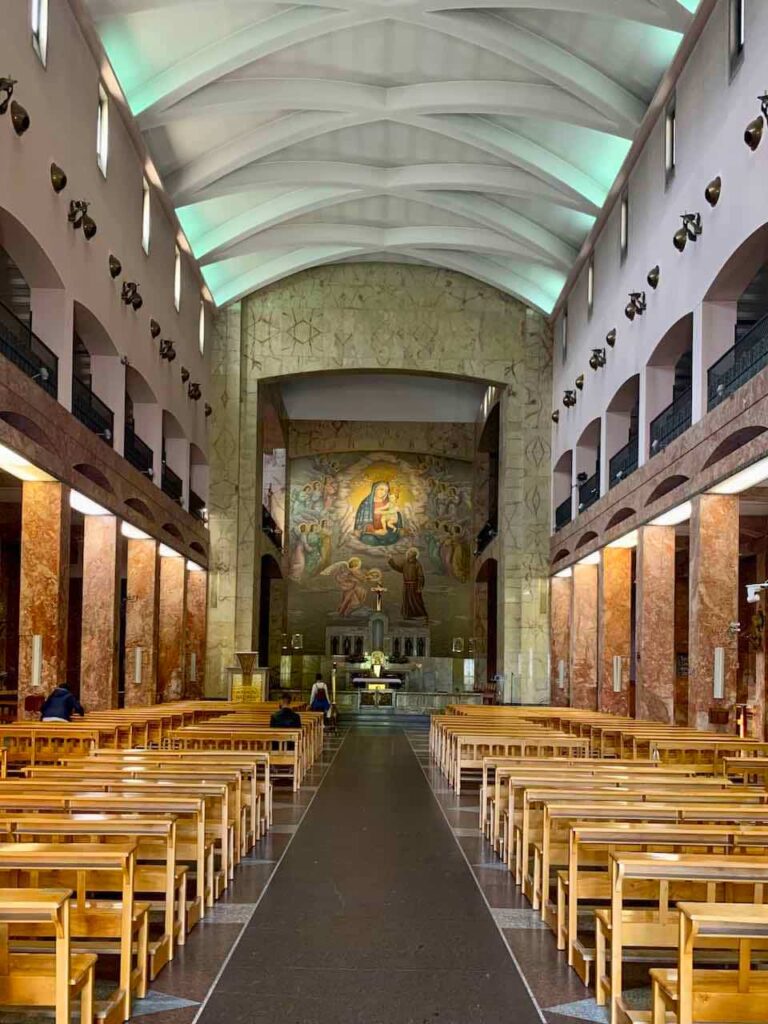
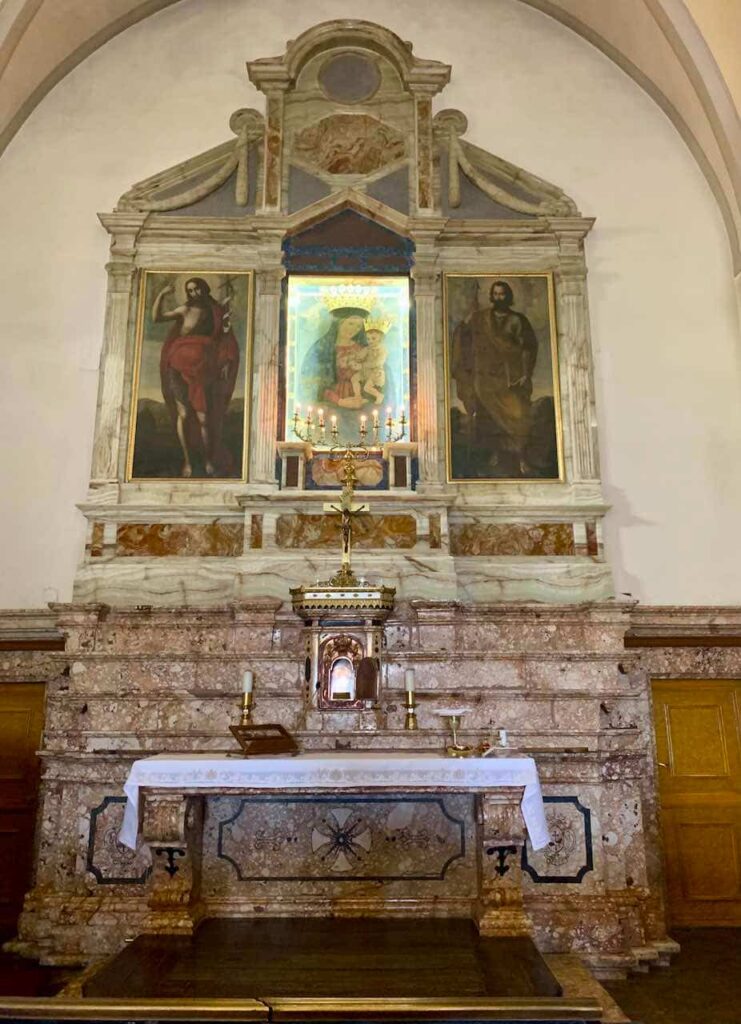
Don’t make the mistake of visiting only the modern sanctuary.
The Church of Santa Maria delle Grazie, next to the new church, provides a much stronger connection to Padre Pio’s everyday life.
The Church of Santa Maria delle Grazie gives you a much more intimate connection to Padre Pio’s daily life. This is where he celebrated Mass and served the local community for decades.
For me, seeing both was one of the most interesting parts of the visit.
Mass at the Padre Pio Shrine
Mass is celebrated at the Sanctuary of Saint Pio of Pietrelcina and at the older Church of Santa Maria delle Grazie.
Mass times: The sanctuary currently lists multiple daily Masses at Santa Maria delle Grazie, the Church of Saint Pio, and the Lower Church. On weekdays, Masses are currently scheduled at 6:30 a.m., 7:30 a.m., 10:00 a.m., 11:30 a.m., and 6:00 p.m.; weekends and feast days have additional celebrations. Because schedules can change for feast days and special events, check the sanctuary’s official Mass schedule immediately before your visit.
If attending Mass is important to you, I’d also recommend arriving early enough to understand where you need to go rather than trying to arrive at the last minute.
The Vatican’s account of Padre Pio’s life places the celebration of Mass and his ministry in the confessional at the heart of his spiritual work.
Can You Request a Mass Intention?
Yes, the sanctuary provides services for pilgrims, including opportunities connected with Mass intentions.
This was something I personally did.
During my visit, I requested a Mass intention at the Pilgrimage Office of the Sanctuary. I filled out the relevant information and left a small offering. Because procedures and arrangements can change, check with the Pilgrimage Office when you arrive if this is important to you.
Official Padre Pio Shrine Visitor Information
Because Mass times, opening hours, pilgrimage services, and access arrangements can change, I recommend checking the sanctuary’s official information before your visit.
These are the most useful official resources:
- Official Sanctuary website — general information about the sanctuary and its services.
- Mass and celebration times — current Mass schedule, opening hours, and celebrations.
- Pilgrimages Office — information for pilgrims, sanctuary maps and guided visits.
- Pilgrimage requests — useful if you are visiting as part of an organized pilgrimage or group.
- Contact information — the sanctuary’s address and contact details.
I would check the official Mass and visitor information shortly before travelling, particularly if you are visiting on a Sunday, feast day, or during a major pilgrimage celebration.
What Can You Visit at the Padre Pio Shrine?
You aren’t simply visiting one church when you come to the Padre Pio Shrine. The sanctuary complex includes several connected places associated with Padre Pio, including the modern Church of Saint Pio, the older Church of Santa Maria delle Grazie, the crypt, and areas connected with his life and ministry.
Opening hours can vary between different parts of the complex.
Santa Maria delle Grazie
The historic Church of Santa Maria delle Grazie is currently listed as open from 6:00 a.m. to 10:00 p.m.
Padre Pio’s cell is currently listed as accessible from 7:00 a.m. to 7:00 p.m.
The older church and areas associated with Padre Pio’s daily life provide a very different experience from the monumental modern sanctuary.
Church of Saint Pio
The modern Church of Saint Pio, including the mosaics, Lower Church, and the crypt, is currently listed as open from 7:00 a.m. to 7:00 p.m.
The entrance gates to the square in front of the Church of Saint Pio are currently listed as open from 6:00 a.m. to 10:00 p.m.
If you’re interested in the architecture, take time to visit the modern church even if you’re primarily visiting Padre Pio’s tomb. The building itself is an important part of the sanctuary, designed by Italian architect Renzo Piano.
Can You Visit Padre Pio’s Friary and Cell?
Some areas associated with Padre Pio’s life can be visited, but the friary remains a religious community rather than a conventional museum. Access to individual rooms or areas can therefore be restricted.
This is why I would avoid describing the entire friary as open to tourists. Instead, check which areas are accessible when you arrive or ask the Pilgrimage Office for current information.
The sanctuary also offers guided visits for visitors who want to learn more about the complex. The current information includes a guided visit of the new Church of Saint Pio for individuals and families on Saturday at 4:00 p.m. Guided-visit arrangements can change, so check the sanctuary’s current information before planning your visit.
How to Get to Padre Pio Shrine in San Giovanni Rotondo
For most travellers, driving is the easiest option.
There is no railway station in San Giovanni Rotondo itself, so visitors arriving by train need to connect through another town, with Foggia being the main transport hub for the area.
From Bari
Bari is generally the most convenient major airport for travelers visiting San Giovanni Rotondo as part of a Puglia itinerary.
About 87 mi (140 km) from Bari, the drive to San Giovanni Rotondo takes roughly two hours, depending on traffic and your exact starting point.
If you’re already planning to explore Puglia by car, this is the option I’d recommend.
From Brindisi
Brindisi is farther away (about 155 mi/250 km), but it can make sense if your Puglia trip begins in the southern part of the region.
This is the route I took.
I flew into Brindisi, picked up a rental car, and drove north through Puglia before reaching San Giovanni Rotondo.
That made the shrine easy to incorporate into a larger road trip rather than treating it as a separate excursion.
From Naples
Naples is another possible starting point, particularly if you’re combining Campania with Puglia.
San Giovanni Rotondo is about 135 mi (218 km) from Naples. The drive takes roughly two and a half hours, depending on traffic. A private tour to the Sanctuary from Naples is also available if you don’t prefer driving in Italy or it is simply more convenient for you.
From Rome
From Rome, San Giovanni Rotondo is a much longer journey by car, taking roughly four hours under normal conditions. San Giovanni Rotondo is about 236 mi (380 km) from Rome.
Visiting the Padre Pio Sanctuary in San Giovanni Rotondo makes a meaningful pilgrimage day trip from Rome. If you’re based in Rome and specifically want to visit Padre Pio, a guided excursion or organised transfer may make more sense than renting a car just for the trip.
Parking at the Padre Pio Shrine
Parking: If you are arriving by car, allow extra time to find parking around the sanctuary complex, particularly during busy pilgrimage periods and feast days. The sanctuary’s official website provides driving directions but does not currently publish a general visitor-parking map or parking guarantee, so I would avoid assuming that a particular parking area will be available when you arrive.
I arrived by car as part of my Puglia road trip, and I parked at the private parking of Hotel Vittoria, where I stayed in San Giovanni Rotondo.
Accessibility at the Padre Pio Shrine
The sanctuary’s pilgrimage office makes arrangements for groups that include wheelchair users. However, the official website does not currently provide a detailed accessibility guide covering every route, entrance, lift or restroom.
If you have specific mobility requirements, I recommend contacting the Pilgrimage Office before your visit so you can confirm the most suitable access arrangements.
Pilgrimage Office: +39 0882 417509
Email: re*******@**************io.it
The Pilgrimage Office is located on the square of the Church of Saint Pio and provides information for pilgrims, sanctuary maps, and guided-tour services.
Visiting Without a Car
You can also reach San Giovanni Rotondo by public transportation, but it requires more planning.
A common approach is to travel by train to Foggia and then continue by bus or other local transport to San Giovanni Rotondo.
For a visitor already travelling around Puglia, I would personally choose a rental car if possible. It gives you much more flexibility and makes it easier to combine San Giovanni Rotondo with other places in the Gargano area.
Where Is San Giovanni Rotondo?
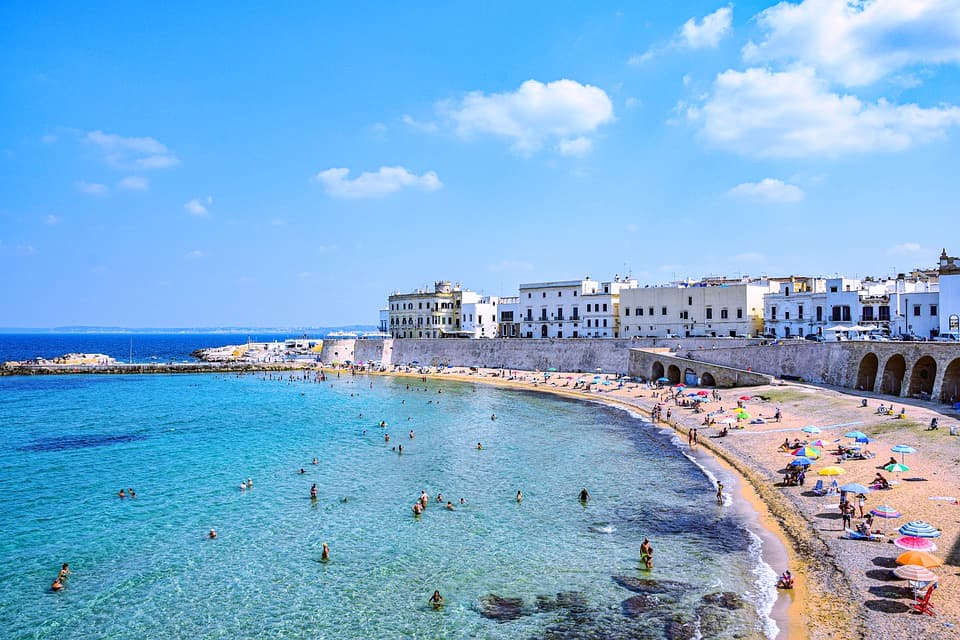
San Giovanni Rotondo is in northern Puglia, inland on the Gargano peninsula. Unlike many of Puglia’s better-known destinations, it isn’t a coastal town, so it feels quite different from places such as Polignano a Mare, Monopoli and the Gargano beach towns.
The town is roughly 600 metres above sea level, giving it a hillier setting than many of the destinations visitors associate with Puglia.
What Else Can You Visit Near San Giovanni Rotondo?
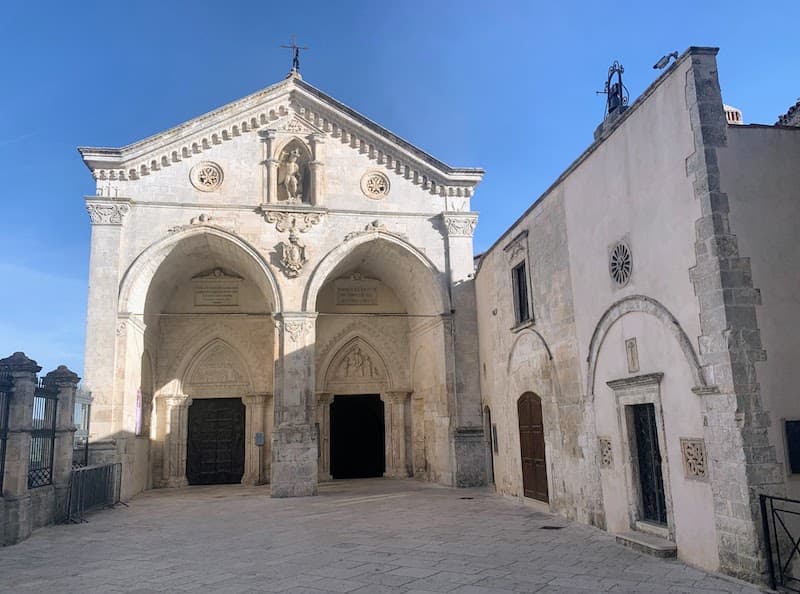
If you’re making the drive to San Giovanni Rotondo, consider combining it with Monte Sant’Angelo.
Monte Sant’Angelo is another important pilgrimage destination in the Gargano area, associated with the Sanctuary of Saint Michael the Archangel.
The two destinations work well together geographically and make a particularly good day or overnight addition to a Gargano itinerary.
You can also continue toward the Gargano coast if you have more time.
If you’re exploring Puglia by car, San Giovanni Rotondo works particularly well as part of a Gargano itinerary. You can combine a visit to the Padre Pio Shrine with Monte Sant’Angelo and then continue toward the Gargano coast if you have more time.
One possible route is:
Bari → San Giovanni Rotondo → Monte Sant’Angelo → Vieste
You don’t have to follow this exact order. The best route depends on where you’re staying and whether you’re travelling north, south or along the coast.
If you’re travelling without a car, Foggia is the main railway connection, with onward bus connections to San Giovanni Rotondo.
Map: Where San Giovanni Rotondo Fits Into a Puglia Road Trip
This route shows one possible way to combine the Padre Pio Shrine with Monte Sant’Angelo and the Gargano coast.
Where to Stay Near the Padre Pio Shrine
If your priority is being close to the sanctuary, staying within walking distance makes the visit much easier.
I stayed at Hotel Vittoria, which is close to the sanctuary.
The biggest advantage was convenience. Being nearby meant I didn’t have to worry about driving and parking every time I wanted to visit the shrine.
It also makes an early-morning visit much easier, which is something I’d recommend if you want to experience San Giovanni Rotondo when it is quieter.
For a broader selection of accommodation, search San Giovanni Rotondo based on how close you want to be to the sanctuary rather than simply choosing the highest-rated hotel in town.
How Long Do You Need at the Padre Pio Shrine?
I’d allow at least half a day for a first visit.
The sanctuary complex includes the modern Church of Saint Pio, the Lower Church and crypt, the mosaics, Santa Maria delle Grazie, and visitor-accessible areas associated with Padre Pio’s life. If you’re attending Mass, spending time in prayer, or visiting as part of a pilgrimage, allow more time.
I wouldn’t try to squeeze San Giovanni Rotondo into a one-hour stop between other attractions. The experience is better when you have time to move through the complex without rushing.
The itinerary below is how I’d structure a half-day visit.
A Half-Day Itinerary for Visiting the Padre Pio Shrine
If this is your first visit to San Giovanni Rotondo, this is how I would structure a morning at the sanctuary complex.
8:30 a.m. — Arrive in San Giovanni Rotondo
Arrive, park, and make your way toward the sanctuary complex. If you’re visiting during a busy pilgrimage period, allow some extra time for parking and walking to the entrance.
9:00 a.m. — Santa Maria delle Grazie
I’d begin with the older Church of Santa Maria delle Grazie rather than going straight to the modern sanctuary.
This gives you some context for Padre Pio’s life in San Giovanni Rotondo and lets you see the church where he celebrated Mass for many years.
9:30 a.m. — Padre Pio’s former rooms
Continue to the areas of the friary and Padre Pio’s former rooms that are open to visitors.
The modern sanctuary is impressive, but these older spaces helped me picture Padre Pio as a friar who actually lived and worked here rather than simply as the famous saint whose name now attracts pilgrims.
Access to individual areas can change, so check what is open when you arrive.
10:15 a.m. — Modern Sanctuary
Now make your way to the modern Church of Saint Pio, designed by Renzo Piano.
I would give yourself time to appreciate the architecture rather than treating the church simply as the place you pass through on your way to the crypt.
Look at the sweeping wooden structure, stonework, stained glass, and mosaics before continuing downstairs.
11:00 a.m. — Crypt and tomb
Allow some unhurried time for the lower level and the crypt.
This is likely to be the most important part of the visit if you’re coming primarily because of Padre Pio. His tomb is here, and many visitors come specifically to pray and pay their respects.
The atmosphere is very different from the large modern church above.
11:45 a.m. — Mosaics and sanctuary complex
If you enjoy photography, architecture, or religious art, allow a little extra time to look at the mosaics and other artwork throughout the sanctuary.
Rather than simply photographing the most obvious views, look at the smaller details as you move through the complex. The sanctuary contains an enormous amount of artwork, and it is easy to miss things if you are focused only on getting to the tomb.
12:15 p.m. — Pilgrimage Office
If you need a sanctuary map, information about pilgrimage services, Mass intentions, or guided visits, the Pilgrimage Office is a useful stop.
The office is located on the square of the Church of Saint Pio and provides information and assistance to pilgrims.
12:30–1:00 p.m. — Lunch or departure
At this point, you can either leave the sanctuary and have lunch in San Giovanni Rotondo or continue with your wider Gargano itinerary.
Pilgrim’s House (La Casa del Pellegrino) also lists a restaurant with a panoramic terrace for packed lunches from 11:30 a.m. to 3:30 p.m., which can be useful if you’re travelling on a tighter schedule.
My Tips for Visiting the Padre Pio Shrine
1. Visit Both Churches
Don’t limit your visit to the modern sanctuary. Santa Maria delle Grazie provides an important connection to Padre Pio’s life and ministry.
2. Allow Time for the Crypt
Padre Pio’s tomb is one of the main reasons people come to San Giovanni Rotondo. Allow enough time to visit it.
3. Dress Respectfully
This is an active Catholic sanctuary and place of pilgrimage, so dress appropriately, particularly if you plan to attend Mass.
4. Check Schedules Before Travelling
Mass times, access arrangements, and opening information can change, particularly around feast days and major celebrations. Check the sanctuary’s current information before setting out.
5. Combine It with Monte Sant’Angelo
If you’re driving through the Gargano area, Monte Sant’Angelo is a natural addition to your itinerary.
Frequently Asked Questions
Where is the Padre Pio shrine in Italy?
The Sanctuary of Saint Pio of Pietrelcina is in San Giovanni Rotondo, Puglia, in Foggia province on the Gargano peninsula.
Where was Padre Pio born?
Padre Pio was born in Pietrelcina, in the Campania region of southern Italy, on May 25, 1887.
When did Padre Pio die?
Padre Pio died in San Giovanni Rotondo on September 23, 1968, at the age of 81.
When was Padre Pio canonized?
Pope John Paul II canonized Padre Pio on June 16, 2002, in St Peter’s Square.
What is Padre Pio best known for?
He is particularly known for the stigmata, his ministry as a priest and confessor, his devotion to prayer, and his charitable work, especially the Casa Sollievo della Sofferenza in San Giovanni Rotondo.
How do you get to San Giovanni Rotondo without a car?
The usual approach is to travel by train to Foggia and then continue by bus or other local transportation to San Giovanni Rotondo. A car is generally more convenient if you’re combining the visit with a wider Puglia itinerary.
Planning a Longer Puglia Road Trip?
If you’re building a larger Puglia itinerary, San Giovanni Rotondo works particularly well as part of a road trip through the region.
You can combine it with:
- Alberobello
- Ostuni
- Polignano a Mare
- The Gargano coast
- Monte Sant’Angelo
- Bari
- Other towns and villages throughout Puglia
I planned San Giovanni Rotondo as part of my own Puglia road trip rather than visiting it as a standalone destination, and I think that’s one of the best ways to experience it.
Is the Padre Pio Shrine Worth Visiting?
For me, absolutely.
San Giovanni Rotondo was one of the stops I had most deliberately planned into my Puglia road trip, and it ended up being one of the most memorable.
What stayed with me was the contrast between the monumental modern sanctuary and the much more intimate places connected with Padre Pio’s daily life.
That progression made the visit feel less like ticking another attraction off a Puglia itinerary and more like following the story of one person through the places that shaped his life.
Whether you’re travelling as a Catholic pilgrim, because you’re interested in Padre Pio, or simply because you’re exploring a less familiar part of Puglia, I’d make time for San Giovanni Rotondo.
Just don’t rush.





I am planning to visit 19th October 2026.Article gives me a clear understanding.Thanks
I am glad to read that it helped you. Enjoy your visit to Padre Pio’s shrine!