I Drove All Over Puglia, Italy — Here Are 6 Road Trip Itineraries That Actually Work
Puglia was never supposed to be a quick stop for me. I landed in Brindisi with a rental car booked, a rough route sketched out, and no real idea how much this region would get under my skin. Two weeks later during my Puglia road trip, I was still adding towns to my list.
If you’re searching for the best itinerary for a Puglia road trip, you’re in the right place. I explored Puglia on a road trip myself — driving from whitewashed hill towns to cave cities, from Adriatic cliffs to Ionian beaches — and I put everything I learned into this guide. Whether you have a long weekend or two full weeks, you’ll find a Puglia itinerary below that fits your trip.
This isn’t a generic list pulled from other blogs. It’s a real, road-tested Puglia travel itinerary, built from actual driving times, actual stays, and actual mistakes I won’t let you repeat.
📌 Table of Contents
Essential Things to Know Before Your Puglia Road Trip
- Best way to explore: By car — Puglia’s towns are close together but poorly served by public transport
- Airports to start from: Bari (BRI) or Brindisi (BDS)
- Minimum time needed: 5 days for the highlights; 7–10 days for a complete trip
- Best months: May, June, September, and October
- Avoid if possible: July and August (extreme heat, high prices, big crowds)
- Driving style: Relaxed, well-maintained roads, easy parking outside major cities
What Does a Puglia Road Trip Cost?
One thing that surprised me was that a Puglia road trip was more affordable than I’d expected, especially compared with northern Italy. Your exact budget will depend on the season and the type of accommodation you choose, but here’s a realistic estimate for a one-week road trip.
| Expense | Typical Cost |
|---|---|
| Rental car | €25–€70 per day |
| Fuel | €70–€120 per week |
| Parking | €0–€25 per day (depending on the town) |
| Accommodation | €100–€220 per night |
| Food | €25–€60 per person per day |
| Total budget (excluding flights) | Around €1,200–€2,000 for two people for one week |
Note: These figures are based on my own trip and are intended as a realistic guide. Prices are typically higher during July and August and lower in the shoulder seasons.
Why a Puglia Road Trip Is Worth It
Puglia, in Italy’s deep south, is built for road-tripping. The distances between towns are short, the coastline alternates between dramatic cliffs and soft sandy beaches, and the countryside is scattered with olive groves, whitewashed masserias, and cone-roofed trulli houses you won’t see anywhere else on earth.
Public transport connects the bigger cities, but it won’t get you to the hidden beaches, the rural back roads, or the small hill towns that make Puglia so memorable. Having your own car means you set the pace — lingering over a sunset in Polignano a Mare, stopping wherever an unmarked coastal viewpoint catches your eye.
How Many Days Do You Need in Puglia?
This is the question I get asked most, and honestly, the answer depends on your travel style. Here’s my honest breakdown:
- 3 days — a taste of Puglia, enough for a quick visit to two tiny coastal towns, the trulli of Alberobello, and a UNESCO cave city
- 4 days — enough to add a famous whitewashed hill town without rushing
- 5 days — hits the essential highlights (the coast, Matera, Alberobello) and adds the Florence of the South
- 7 days — my recommended minimum for a well-rounded Puglia road trip with adding the Gargano peninsula
- 10 days — time to add charming whitewashed towns and historic landmarks.
- 14 days — the full experience, covering both coastlines and the countryside in between
If you only remember one thing from this guide, let it be this: Puglia rewards slow travel. Every extra day you can add will pay off.
Where to Start Your Puglia Road Trip
If it’s your first visit, I strongly recommend starting your Puglia road trip in Bari. Flights are more frequent, rental cars are usually cheaper, and it creates the smoothest clockwise route around the region with minimal backtracking.
Puglia has two international airports, and either one works well as your starting point.
- Bari (Karol Wojtyla Airport) sits roughly in the middle of the region, which makes it a smart base if you want easy access to both the Gargano peninsula in the north and the Salento peninsula in the south.
- Brindisi (Salento Airport) sits farther south, about 70 miles (113 km) from Bari — roughly a 90-minute drive. It’s the better choice if your itinerary leans heavily toward Salento and the southern coast.
I flew into Brindisi and picked up my rental car right at the airport. The process was smooth, and within twenty minutes I was on the road. I use DiscoverCars to compare car rental companies and prices before every trip to Italy — it’s consistently the easiest way to find a good deal with free cancellation.
One of the nicest parts of having a car was being able to stop without a plan. More than once, I pulled over simply because the coastline looked beautiful or a small town caught my eye. Those unplanned detours ended up being some of the most memorable moments of the trip, and they’re a big part of why I’d recommend driving rather than relying on public transport. Don’t be afraid to leave a little space in your itinerary for those unexpected stops—you’ll rarely regret it.
Best Time for a Puglia Road Trip
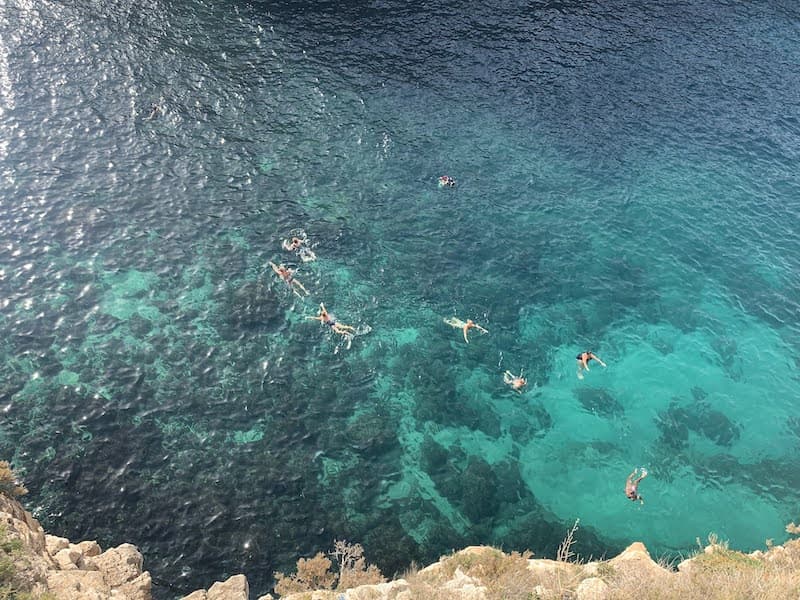
I did my road trip in October, and I’d recommend the same window to almost anyone. The crowds had thinned out, the heat had eased off, and I still went swimming in the Adriatic more than once. Also, according to the Italian Air Force Meteorological Service, October in Puglia offers mild temperatures without rainfall — perfect weather for road tripping!
May, June, and September are the sweet spot — warm days, manageable crowds, and fair prices. October is a close second, especially if you want sunny weather without the summer rush.
July and August are Puglia’s peak season. Temperatures regularly climb past 95°F (35°C), accommodation prices spike, and popular towns like Polignano a Mare and Monopoli get genuinely crowded. Unless a summer beach holiday is exactly what you’re after, I’d steer clear of those two months.
📌 Puglia Road Trip Planning Checklist
Before you hit the road, make sure you’ve covered these essentials:
- Book your rental car early, especially if you need an automatic.
- Reserve trulli or cave hotels several months in advance.
- Download offline maps for rural areas.
- Familiarise yourself with ZTL (limited traffic) zones like in the Municipality of Bari and the Municipality of Lecce.
- Pack for hot weather if travelling between June and September.
You’ll find more detailed tips and the biggest lessons I learned later in this guide.
Puglia Road Trip Map
Having a visual reference makes planning so much easier. Below is roughly how the towns in this guide connect to each other, moving from the central coast down through the Valle d’Itria and into Salento (with an optional loop north to the Gargano peninsula). I’ll include driving times for each leg within the itineraries so you can build your own route or follow mine exactly.
As a rule of thumb for your Puglia road trip map:
- Bari area (Monopoli, Polignano a Mare) → Matera: about 1.5 hours
- Matera → Alberobello: about 1 hour
- Alberobello → Ostuni: about 45 minutes
- Ostuni → Lecce: about 1 hour 15 minutes
- Lecce → Gallipoli or Otranto: 30–45 minutes
- Bari area → Gargano peninsula (Vieste): about 2.5 hours
The Best Puglia Road Trip Route
If it’s your first time visiting Puglia, I recommend following a clockwise route starting and ending in Bari. This route keeps driving times manageable, avoids unnecessary backtracking, and lets you experience the region’s best mix of coastal towns, historic cities, countryside, and beaches.
Recommended route:
Bari → Polignano a Mare → Monopoli → Alberobello → Locorotondo → Matera → Ostuni → Lecce → Otranto → Gallipoli → Bari
The route starts in Bari because it’s the region’s main transport hub. After collecting your rental car, it’s only around a 40-minute drive to Polignano a Mare, making it an ideal first stop before continuing to Monopoli and the rest of central Puglia.
This itinerary begins with some of Puglia’s most famous postcard-perfect towns before heading inland to the UNESCO World Heritage Sites of Alberobello and Matera. From there, continue south through the white city of Ostuni and the baroque streets of Lecce before exploring the dramatic coastline of Salento around Otranto and Gallipoli. Finally, return to Bari via the motorway, which makes the journey back surprisingly straightforward.
I recommend this route because each stop naturally leads to the next without long detours. It also gives you the flexibility to shorten or extend your trip depending on how many days you have. If you’re visiting for less than a week, you can simply skip either the Gargano Peninsula in the north or the southernmost part of Salento without disrupting the overall route.
Why this route works
- Minimal backtracking, so you’ll spend more time exploring and less time driving.
- Short, manageable driving days, with most journeys taking between 30 minutes and 2 hours.
- A great balance of experiences, including beaches, historic towns, UNESCO sites, scenic countryside, and excellent food.
- Easy to adapt, whether you have 3, 5, 7, 10, or 14 days in Puglia.
Puglia Road Trip Itineraries: 3 to 14 Days
Below are five complete itineraries, from a quick Puglia road trip 3 days getaway to a leisurely two-week loop. Pick the one that matches your travel dates, or mix and match sections to build your own itinerary for Puglia.
Not sure which itinerary to choose? This quick guide will help you pick the one that best matches the time you have available.
| If you have… | Best itinerary | Highlights |
|---|---|---|
| 3 days | Polignano a Mare & Monopoli → Matera → Alberobello | Perfect for a short getaway and first-time visitors. |
| 4 days | Add Ostuni | Gives you time to explore the White City without rushing. |
| 5 days | Add Lecce | Experience Puglia’s beautiful Baroque architecture and vibrant old town. |
| 7 days | Add Gargano Peninsula (St. Padre Pio Sanctuary, St. Michael’s Cave & Vieste) | The ideal itinerary for first-time visitors who want to see Puglia’s highlights with famous pilgrimage sites |
| 10 days | Add Grotte di Castellana, Trani & Castel del Monte, Locorotondo, Martina Franca & Gallipoli | A more relaxed pace with time to discover charming towns and historic landmarks. |
| 14 days | Include Otranto | The ultimate road trip with beaches, nature, and plenty of time for spontaneous stops. |
Puglia Road Trip Itinerary: 3 Days
If you only have a Puglia 3 day itinerary to work with, this route hits the absolute must-sees without feeling rushed. It’s compact, it’s beautiful, and it’s the itinerary I’d recommend to anyone flying into Puglia for a quick escape.
At a glance:
- Day 1: Polignano a Mare & Monopoli (coast)
- Day 2: Matera (UNESCO cave city)
- Day 3: Alberobello (UNESCO trulli) & drive back to Bari
- Total driving distance: ~180 km
Day 1: Polignano a Mare & Monopoli
Pick up your car and head straight to these two seaside towns, just 10 km (a 15-minute drive) apart.
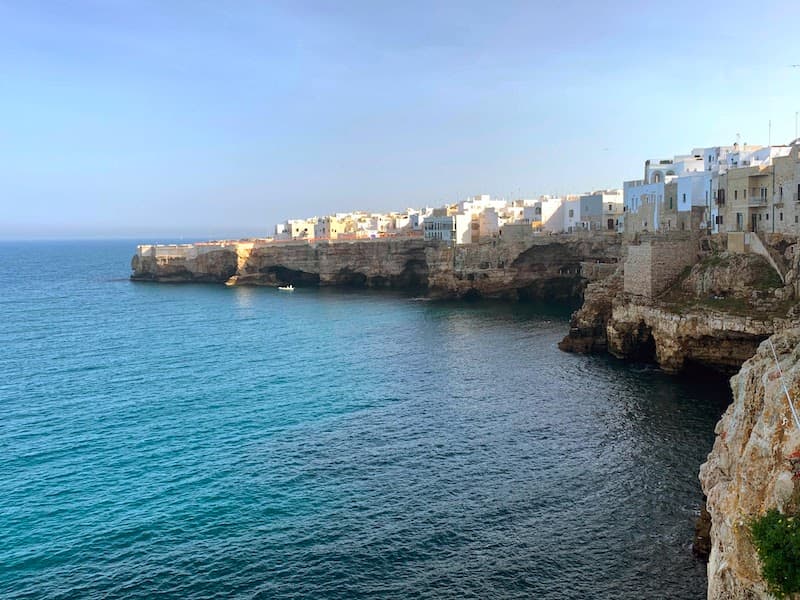
Start in Polignano a Mare, Puglia’s postcard town, famous for its cliffside old town perched directly above the sea. On my Puglia road trip, I arrived around 9 am, parked at the Parcheggio Lama Monachile just outside the old town, and walked the ten minutes into the historic center. Wander the whitewashed alleys, grab a coffee at Caffè Dei Serafini with stunning views of the Adriatic Sea, and if you’re brave (and it’s summer), take a dip where the cliffs meet the water — I did, and the shock of that cold, clear water is something I still think about.
In the afternoon, drive 20 minutes south to Monopoli, a quieter but equally charming port town with a working harbor, a compact historic center, and some of the best seafood on the Adriatic coast. I had the best raw seafood platter of my entire trip near the port here, and I’d genuinely plan your evening around a long, unhurried dinner rather than rushing off to the next stop. Stay overnight here or in Polignano; I chose Monopoli for the quieter nights and lower hotel prices, and I’d make the same choice again.
Day 2: Matera (UNESCO)
Wake up early and drive about an hour and a half to Matera, just over the regional border in Basilicata.
Matera’s Sassi — ancient cave dwellings carved into the rock — are a UNESCO World Heritage Site and genuinely one of the most extraordinary places I’ve visited in Italy. I’ll admit I underestimated how disorienting the Sassi are to navigate on foot the first time — download an offline map before you go, or better, book a local guide so you actually understand the layers of history you’re walking through.
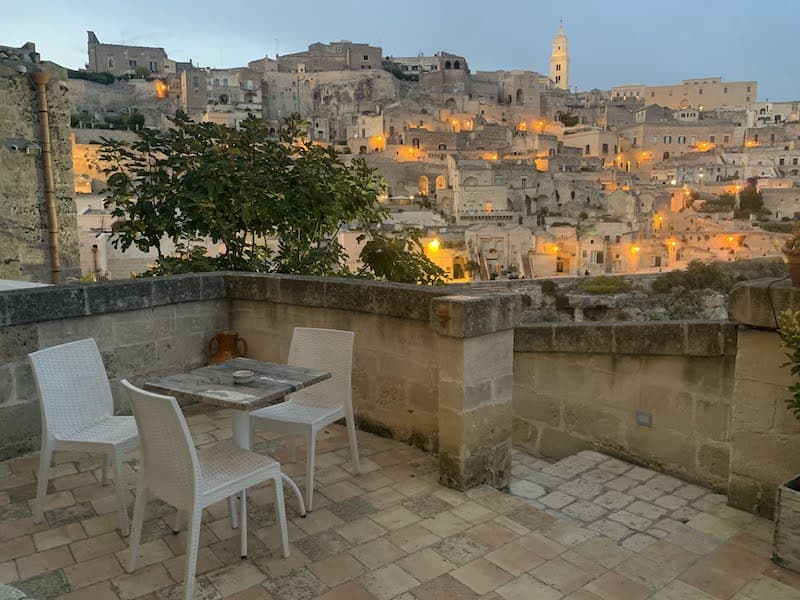
Spend the day wandering the two Sassi districts, ducking into rock churches carved directly into the tufa stone, and watching the golden-hour light hit the cave houses from Belvedere Murgia Timone, which I’d rank as one of the single best viewpoints in southern Italy. I stayed until well after sunset just to watch the cave windows light up one by one, and it’s a memory that’s stuck with me longer than almost anywhere else on this entire trip.
Book a cave hotel here if you can; sleeping in a cave is an experience in itself.
Day 3: Alberobello (UNESCO) & drive back

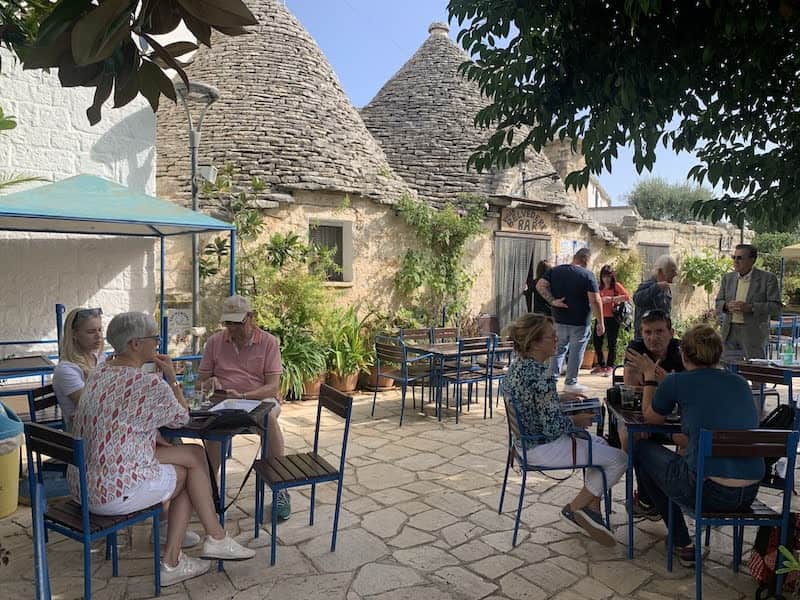
Drive back into Puglia toward Alberobello, home to the whimsical, cone-roofed trulli houses — another UNESCO site and one of the most photographed spots in the region. I’d recommend arriving before 10 am; by 11 am the Rione Monti district can be shoulder-to-shoulder with day-trippers from cruise ships docked in Bari, and the narrow streets between the trulli become genuinely hard to move through.
Two to three hours is plenty to explore the Rione Monti and Aia Piccola districts — I popped into a few of the shops selling handmade ceramics and local almond pastries, and chatted with an elderly shop owner who’d lived in one of the trulli his whole life, which added far more context than any guidebook could. Grab lunch nearby before heading back toward Bari/Brindisi airport for your flight home. For a deeper dive before you go, check out my guide to things to do in Alberobello.
Map of 3 Day Puglia Road Trip
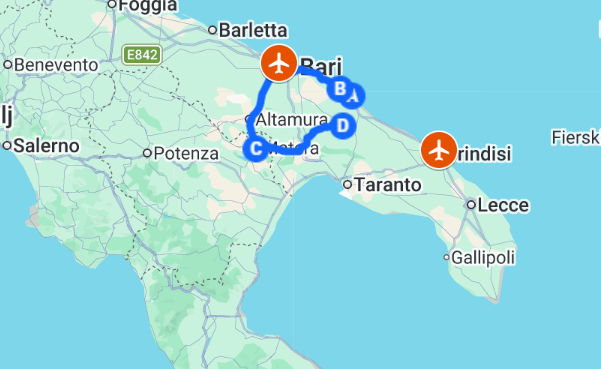
The 3-day Puglia road trip route: Bari → Polignano a Mare → Monopoli → Matera → Alberobello → Bari, roughly 180 km total driving
Puglia Road Trip Itinerary: 4 Days
Got one extra day? This Puglia itinerary 4 days builds nicely on the 3-day version by slowing down the coastal start and adding one more unmissable hill town.
At a glance:
- Days 1–2: Polignano a Mare & Monopoli, plus Grotte di Castellana
- Day 3: Matera (UNESCO cave city)
- Day 4: Alberobello (UNESCO trulli) & Ostuni (White City)
Days 1–2: Polignano a Mare & Monopoli
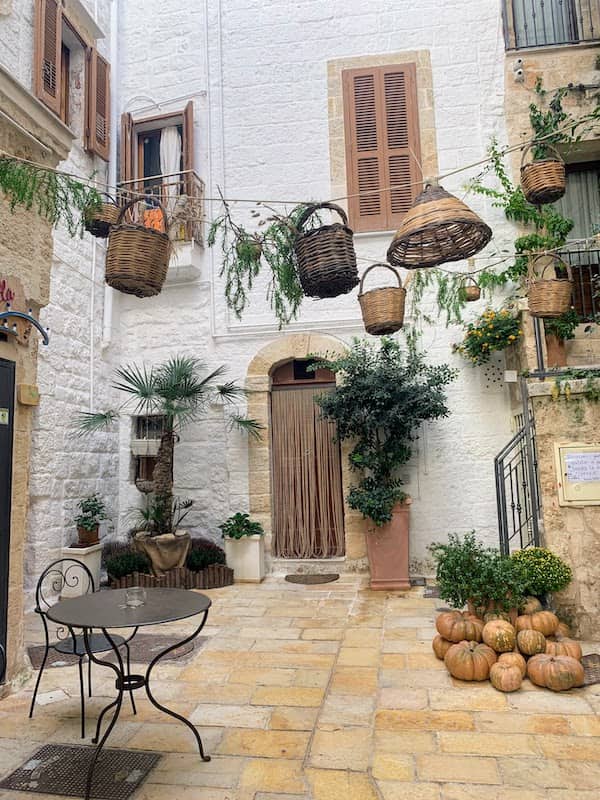
Give yourself two full days on the coast this time, since Polignano and Monopoli genuinely reward a slower pace than most first-time visitors give them.
Split your time between Polignano a Mare’s dramatic cliffs and Monopoli’s harbor town charm, with an easy day trip to the Grotte di Castellana caves if you want to add some underground scenery to the mix. I did the 3 km “long route” tour through the caves and can confirm it’s worth the extra 45 minutes over the short version — the final chamber, known as the White Cave, is unlike anything else I saw in Puglia. Book online in advance, since same-day tours sell out in high season. After the cave tour, head back to Monopoli for dinner. One of my favourite meals was fresh seafood at La Locanda sul Porto in Monopoli.
Day 3: Matera
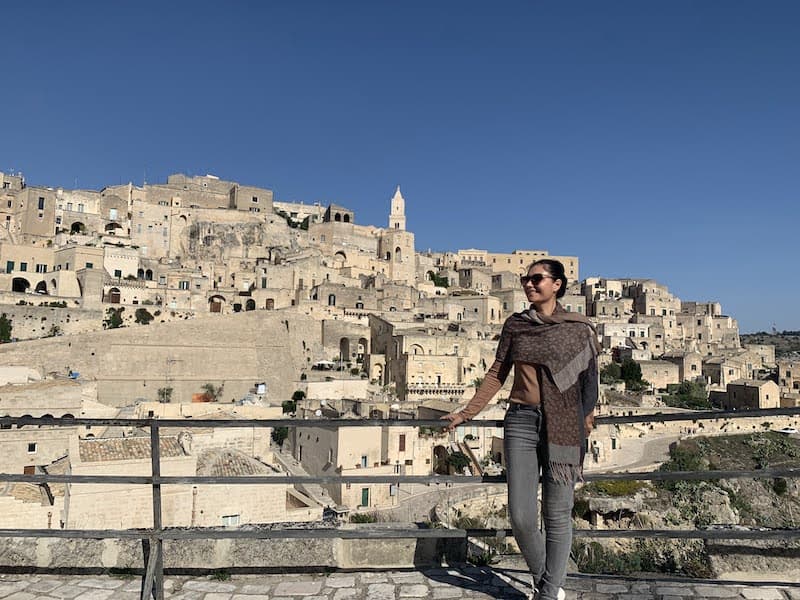
Head to Matera for the day (or overnight, if you can swing it). This is a place that rewards a slower pace — the Sassi look completely different at sunrise, midday, and sunset, so try to catch at least two of the three if your schedule allows it.
I overnighted in a converted cave hotel here and woke up to church bells echoing off the rock walls; it’s an experience no day-trip can replicate, and it changed how I thought about the town entirely. In the evening, I found a small restaurant tucked into a rock archway serving traditional crapiata stew, and eating it by candlelight in a cave that’s been inhabited for thousands of years is not something I’ll forget anytime soon.
If you only have the day, prioritize a guided walk through the Sasso Caveoso in the late afternoon, when the crowds thin and the light turns gold.
Day 4: Alberobello & Ostuni
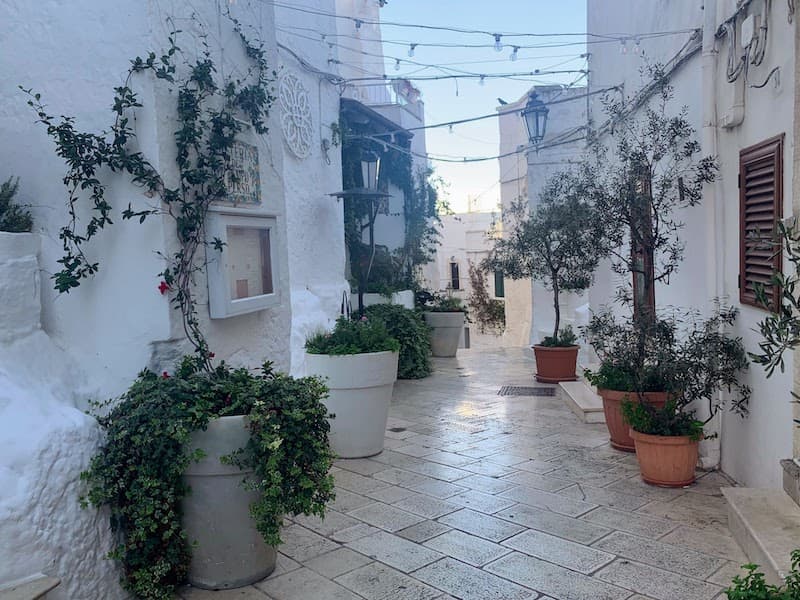
Drive to Alberobello in the morning for the trulli, then continue to Ostuni, the “White City” perched on a hilltop overlooking olive groves and the sea. It’s the perfect place to end your trip with a glass of local wine before driving back to Bari. On my visit to Ostuni, I sat at a rooftop bar in Ostuni’s old town as the sun set over thousands of olive trees, and it’s one of the mental snapshots from this trip I go back to most often.
Give yourself at least two hours just to wander Ostuni’s maze-like whitewashed streets without a real destination in mind; some of my favorite photos from the entire trip came from getting mildly, happily lost here. My travel guide to Ostuni, Puglia covers this town in much more depth, including where to eat and stay.
Parking tip: I found it much easier to park just outside the old town and walk uphill rather than trying to drive into the historic centre. The walk only took a few minutes and saved me the stress of navigating the narrow streets and searching for a parking space.
Map of the 4 Day Puglia Itinerary
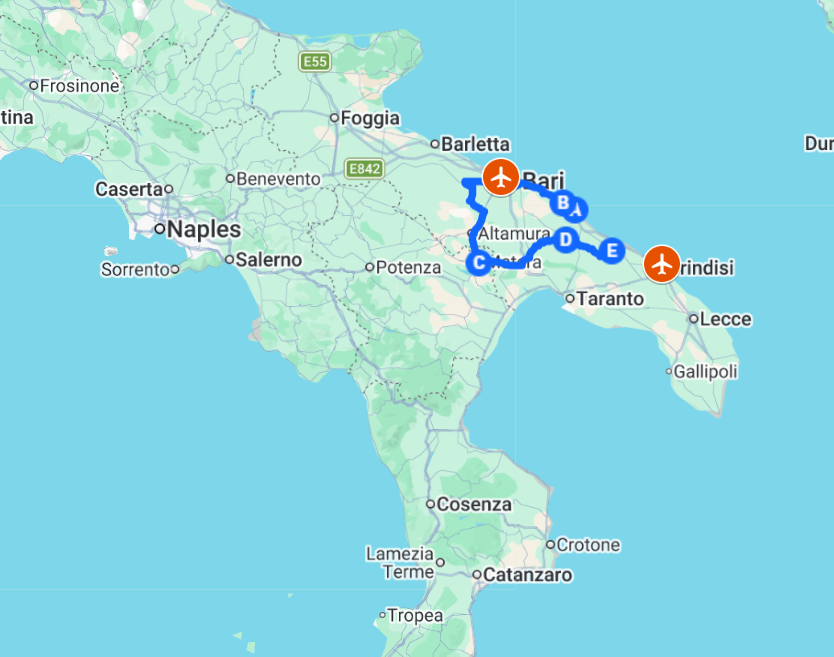
The 4 Days in Puglia route: Bari → Polignano a Mare → Monopoli → Castellana Grotte → Matera → Alberobello → Ostuni → Bari.
Puglia Road Trip Itinerary: 5 Days
This is where a Puglia road trip itinerary really starts to shine — you get the coast, the UNESCO sites, and your first real taste of the Salento (the deep south of Puglia).
At a glance:
- Day 1: Polignano a Mare & Monopoli
- Day 2: Matera (UNESCO cave city)
- Day 3: Alberobello (UNESCO trulli) & Locorotondo
- Days 4–5: Ostuni & Lecce
- Total driving distance: ~320 km
Day 1: Polignano a Mare & Monopoli
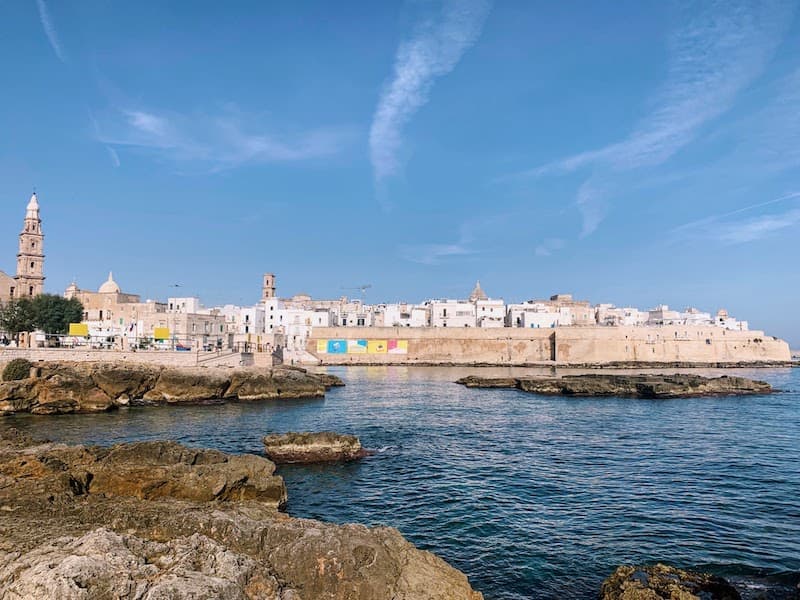
Ease into the trip along the coast, as in the itineraries above, but with an extra day of buffer, take the time to genuinely explore rather than rush.
If you have a car already, skip the paid lots in Polignano’s center and park along Via Alessandro Manzoni instead — it’s a five-minute walk and free outside of peak summer weekends, a tip a local gave me that saved me both time and money. Walk over to the viewpoint above Lama Monachile. It’s the first view that really made Puglia click for me. Seeing the little beach tucked between the limestone cliffs with the Adriatic stretching into the distance instantly made me understand why Polignano a Mare is one of Italy’s most photographed towns. I ended up standing there much longer than I’d planned before exploring the rest of the town.
I stayed in a spacious apartment in central Monopoli. However, Polignano a Mare has more romantic, cliffside charm. If you’re traveling as a couple and want to splurge, book a table (or a room) at Hotel Grotta Palazzese, a restaurant built into a natural sea cave in Polignano a Mare.
Day 2: Matera (UNESCO)

A full day (or overnight stay in a cave hotel) in Matera, giving you time for a guided tour of one of the cave houses and a proper long lunch of local Lucanian dishes. I had cavatelli with turnip greens and pork sausage at a family-run trattoria tucked into the Sasso Caveoso, and it remains one of the best meals of my entire trip through Italy.
Beyond the food, I’d genuinely recommend booking a cave-house tour with a local guide rather than exploring alone at first, since so much of what makes the Sassi remarkable — the underground cisterns, the shared courtyards, the way families lived here until as recently as the 1950s — simply isn’t visible without context. I finished the day at a viewpoint just outside the historic center, watching the cave windows glow amber as the sun dropped, which felt like the perfect close to a full day here.
Day 3: Alberobello (UNESCO)

A relaxed, full day dedicated entirely to Alberobello, and honestly, it deserves every hour of it. Sleep in an actual trullo — it’s one of the most unique stays in Italy and a highlight of any Puglia travel itinerary.
I spent the morning wandering the Rione Monti district slowly, popping into a trullo-turned-museum to properly understand the construction technique behind these strange conical roofs — built dry, without mortar, so they could reportedly be dismantled quickly to dodge historic property taxes.
I had a long lunch of orecchiette with cime di rapa at a small family restaurant just off the main square, then spent the afternoon in the quieter Aia Piccola district, where trulli are still used as actual homes rather than souvenir shops. I ended up chatting with a shop owner who’d spent decades making trulli-shaped ceramics by hand, and left with a small piece I still keep on my desk.
By early evening, with the crowds gone, I found a quiet corner of Piazza del Popolo to just sit and take in the view — easily one of the most peaceful moments of the whole trip.
Day 4–5: Ostuni & Lecce
Spend day four in Ostuni, then drive about an hour south to Lecce, the “Florence of the South,” known for its extravagant Baroque architecture carved from soft golden limestone.
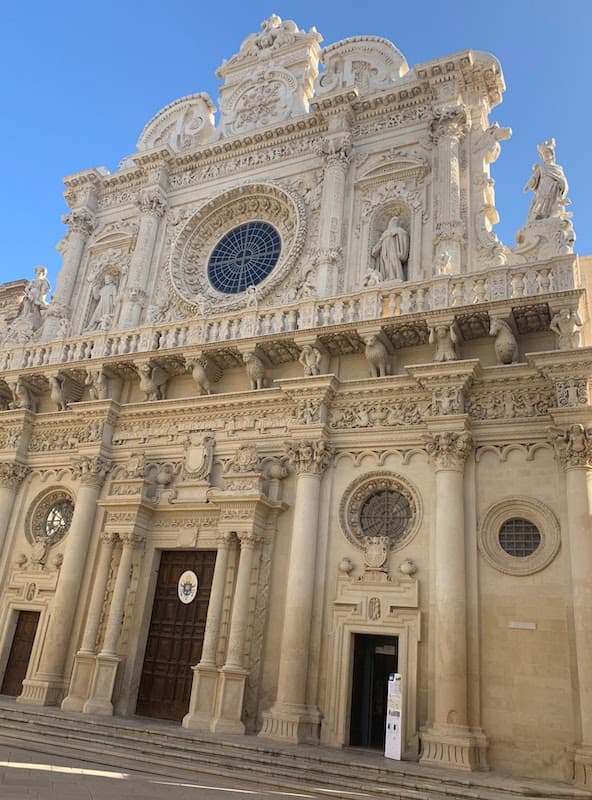
Give Lecce a full day (or two half-days) to properly explore — it’s one of the most underrated cities in Italy, and I genuinely wished I’d budgeted an extra night here rather than rushing through. I spent one full afternoon just looking up at the elaborate stone carvings on the facade of the Basilica di Santa Croce, and another watching the Roman amphitheater right in the middle of the modern city center. In the evenings, Lecce’s aperitivo scene rivals anywhere in northern Italy — I ended up staying out far later than planned on both nights simply because the piazzas stayed lively well past midnight, something I hadn’t expected from a smaller southern city.
Map of the 5 Day Puglia Road Trip
The 5-day Puglia road trip route: Bari → coast → Matera → Alberobello → Ostuni → Lecce → Bari, roughly 320 km total
Puglia Road Trip Itinerary: 7 Days
A full week is, in my opinion, the sweet spot for a first Puglia road trip. This Puglia 7 day itinerary adds the wild, mountainous Gargano Peninsula in the north, giving you a completely different side of the region.
At a glance:
- Day 1: Monopoli & Polignano a Mare
- Day 2: Gargano Peninsula & Vieste
- Day 3: Sanctuary of San Michele & San Giovanni Rotondo
- Day 4: Matera (UNESCO cave city)
- Day 5: Alberobello (UNESCO trulli)
- Day 6: Ostuni & Lecce
- Day 7: Lecce & drive back to Bari
- Total driving distance: ~550 km
Day 1: Monopoli & Polignano a Mare
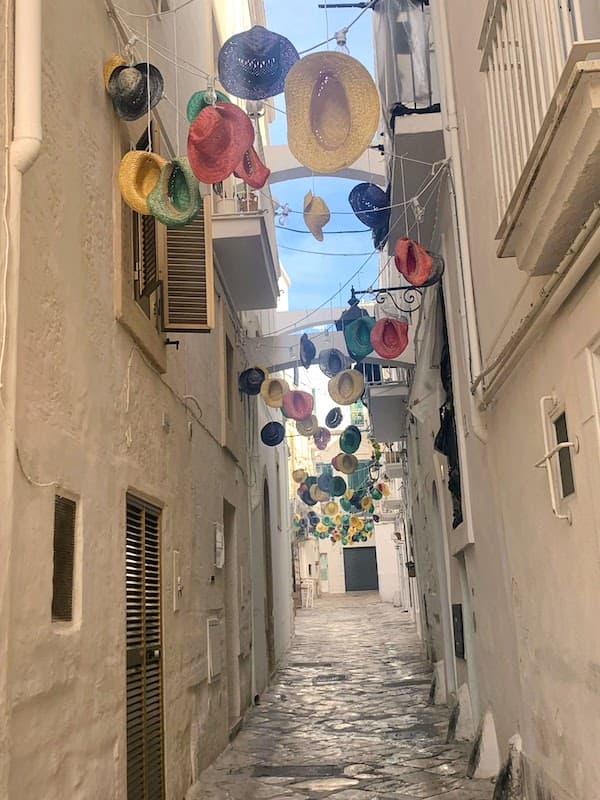
Start along the coast as before, settling into Puglia’s slower pace of life before the longer drives later in the week. This was the day I learned the golden rule of Puglia driving: fill up your tank whenever you see a station, since they thin out fast once you leave the main coastal road, especially heading toward the Gargano the next day.
I spent the morning in Polignano a Mare, wandering the cliffside old town and taking in the classic views over Lama Monachile beach, then drove down the coast to Monopoli where I stayed overnight. With a full week ahead of me, I didn’t feel rushed at all on this first day, and I’d encourage you to resist the urge to over-plan — some of the best moments came from simply wandering without a fixed schedule.
Day 2: Gargano Peninsula & Vieste

Drive north (around 2.5–3 hours) to the Gargano Peninsula, Puglia’s “spur,” where limestone cliffs drop into some of the clearest water in Italy. Base yourself in Vieste, a lively seaside town with beautiful beaches like Spiaggia di Pizzomunno right in town.
I booked a boat trip out to the sea caves along the coast the moment I arrived, and I’d genuinely recommend doing this on arrival day rather than waiting, since afternoon winds can cancel tours later in the week. The boat took us past towering white cliffs and into caves where the water glowed an almost unreal shade of blue-green, and our captain — a Vieste local for over forty years — pointed out sea stacks and hidden coves you’d never find on your own. That evening, I had dinner overlooking the harbor as fishing boats came in for the night.
Day 3: Sanctuary of San Michele & San Giovanni Rotondo
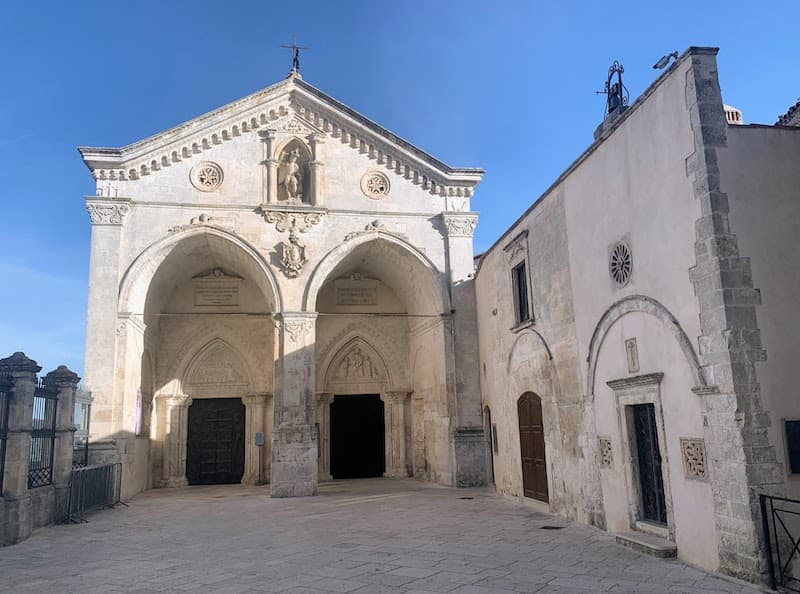
Explore the interior of the Gargano, including the Sanctuary of San Michele Arcangelo in Monte Sant’Angelo, another UNESCO-listed pilgrimage site carved into the mountain, and San Giovanni Rotondo, home to the sanctuary of Padre Pio. Both sites draw genuine pilgrims, not just tourists, and I found dressing modestly (covered shoulders and knees) made the visit far more comfortable and respectful of the atmosphere around me. Walking down into the sanctuary’s grotto in Monte Sant’Angelo, carved directly into the mountainside, felt genuinely different from any other church I’d visited in Italy — quieter, older, and more solemn.

In San Giovanni Rotondo, the newer basilica designed by Renzo Piano – the Padre Pio Pilgrimage Church- whose soaring modern architecture surprised me given the traditional pilgrimage town surrounding it, and I’d recommend budgeting at least an hour there alone. Spent an overnight here.
Day 4: Matera (UNESCO)
Drive back south toward Matera (about 2.5 hours) for a full day exploring the Sassi.
If you can, visit the Sassi in the early evening, once the day-trip buses get cleared out — the light and the quiet make a huge difference compared to the crowded midday hours. I used the daylight hours to explore some of the rock churches with faded Byzantine frescoes still visible on the walls, then spent the evening simply wandering without a map, letting the maze of stone stairways and passageways lead me wherever they wanted. I had dinner in Matera at a restaurant built into an old cave dwelling, where the menu leaned heavily into traditional Basilicata dishes I hadn’t seen anywhere else on the trip, including a rich lamb ragù.
Spend the day and night in this extraordinary cave city.
Day 5: Alberobello (UNESCO)
Spend the day among the trulli of Alberobello, with time for lunch in the countryside at a working masseria (farmhouse estate).
In town, I spent the morning exploring the quieter side streets away from Rione Monti, where trulli are still used as actual homes rather than souvenir shops, and got a much better sense of what daily life here looks like. I booked a lunch at a masseria just outside town that grows its own olives and makes its own burrata on-site, and it was easily one of the highlights of my week. I’d recommend picking up a bottle of local olive oil directly from a masseria rather than a shop in town; the quality difference is immediately obvious.
Book an overnight stay in a trullo!
Day 6: Ostuni & Lecce
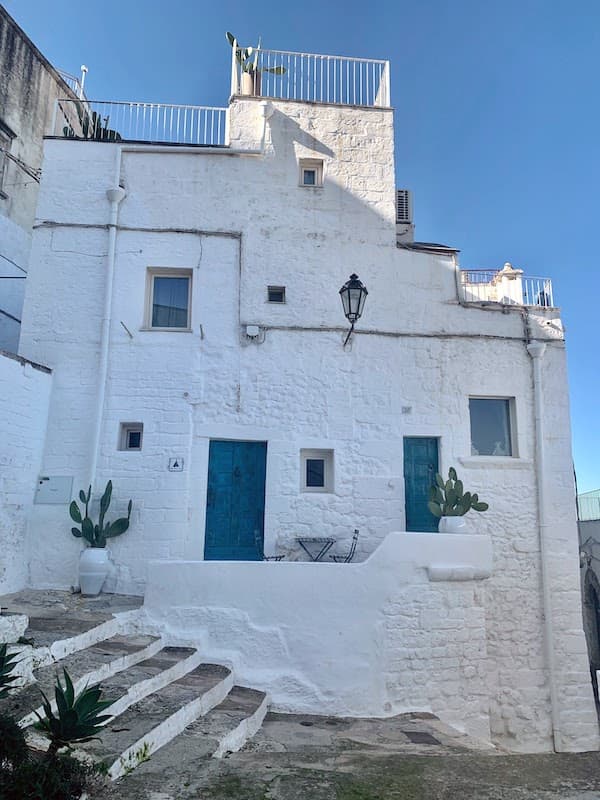
Combine a morning in Ostuni with an afternoon arrival in Lecce.
In Ostuni, I spent the morning climbing up toward the cathedral through narrow whitewashed lanes, stopping for a granita at a small café along the way, before driving south. Once in Lecce, I used the remaining daylight just to get my bearings — walking from Piazza Sant’Oronzo out toward the Roman amphitheater and back — before settling in for a proper Salento dinner featuring local Negroamaro wine, which I hadn’t tried before this trip and now actively seek out at home.
Tip: I’d suggest checking into your Lecce accommodation before dark — the one-way streets in the historic center genuinely confused my GPS more than once, and navigating them for the first time after sunset added unnecessary stress to an otherwise relaxed day.
Day 7: Lecce & drive back
Use your final day to properly explore Lecce’s Baroque churches and piazzas before driving back to Bari for your departure.
I spent the morning at the Basilica di Santa Croce, studying the elaborately carved facade up close, then wandered through the university quarter, which felt noticeably more local and lived-in than the tourist-heavy center. Give yourself at least 90 minutes of buffer time for the drive back and returning your rental car at the airport. I made one last stop at a roadside stand for fresh burrata and bread to eat in the car, a small ritual that felt like the right way to close out a full week on the road.
Craving a full list of stops? My best places to visit in Puglia guide expands on every town mentioned here.
Map of the 7-Day Puglia Road Trip
The Puglia 7 day road trip route: Bari → Polignano a Mare → Vieste → Monte Sant’Angelo → San Giovanni Rotondo → Matera → Alberobello → Ostuni → Lecce → Bari, roughly 550 km total
Puglia Road Trip Itinerary: 10 Days
With 10 days, you can slow right down. This Puglia 10 day itinerary is the one I’d recommend for food lovers, photographers, and anyone who wants to actually relax on their trip rather than just check off sights.
At a glance:
- Days 1–2: Monopoli, Polignano a Mare & Grotte di Castellana
- Day 3: Castel del Monte & Trani
- Day 4: Gargano & Vieste
- Day 5: Matera (UNESCO cave city)
- Day 6: Alberobello (UNESCO trulli)
- Day 7: Locorotondo, Martina Franca & Ostuni
- Day 8: Lecce
- Days 9–10: Gallipoli & drive back to Bari
- Total driving distance: ~700 km
Days 1–2: Monopoli, Polignano a Mare & Grotte di Castellana

Base yourself in Monopoli or Polignano a Mare for the first two nights. Take it easy for your first two days on the Apulian coast and slowly explore Monopoli and Polignano a Mare. On day two, visit the Grotte di Castellana — a spectacular underground cave system just 25 minutes away, with stalactites, stalagmites, and passages stretching over two miles underground. Inside the caves, our guide walked us through chambers with formations dating back over a hundred million years, ending in the astonishing White Cave, whose alabaster-like walls genuinely don’t look real in photos.
I also drove the small coastal road between Monopoli and Polignano rather than the main highway — it’s slower, but the sea views around every bend made it worth the extra twenty minutes, and I pulled over more times than I can count just to take photos. On my Puglia trip, I spent an evening simply sitting on the rocks in Polignano watching the sunset paint the cliffside houses orange, a moment I didn’t rush at all given how much time I had.
Day 3: Castel del Monte & Trani
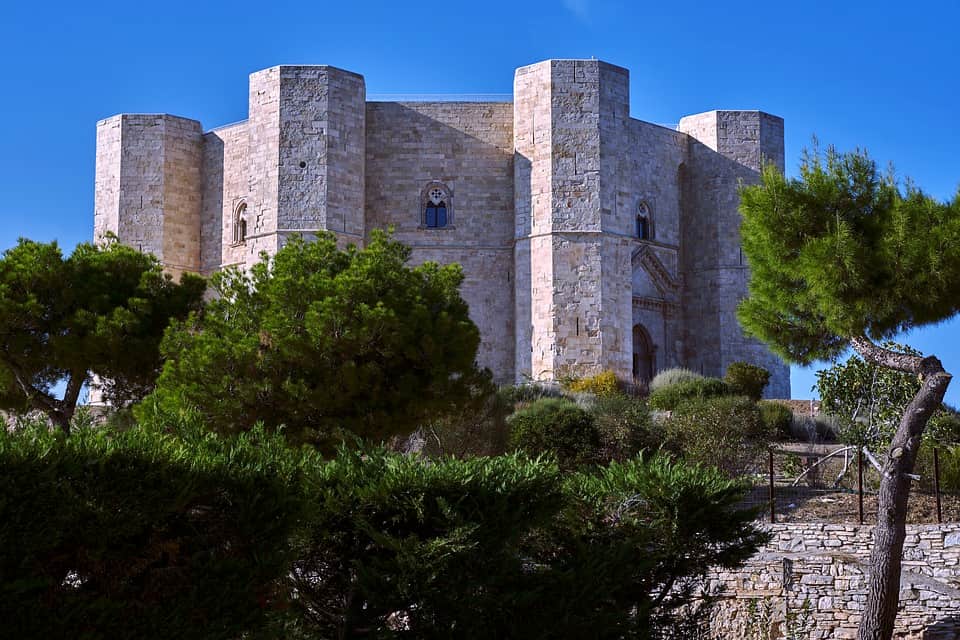
Drive inland to the enigmatic octagonal fortress of Castel del Monte, another UNESCO site, before continuing to the seaside city of Trani, home to a stunning pink-limestone cathedral that sits almost in the water.
I timed my visit to Castel del Monte for late afternoon, when the crowds thin out and the stone glows amber in the light — a tip from a local guide that made all the difference in my photos and let me actually appreciate the castle’s strange, mathematically precise geometry without jostling for space.

In Trani, a genteel seaside town nicknamed “the Pearl of Puglia”, I arrived just before sunset and walked straight down to the cathedral, watching the light change on the pink stone as fishing boats bobbed in the harbor beside it. Overnight in Trani, and don’t skip a walk along the harborfront after dinner — it’s beautifully lit and far quieter than the daytime crowds suggest.
Day 4: Gargano & Vieste
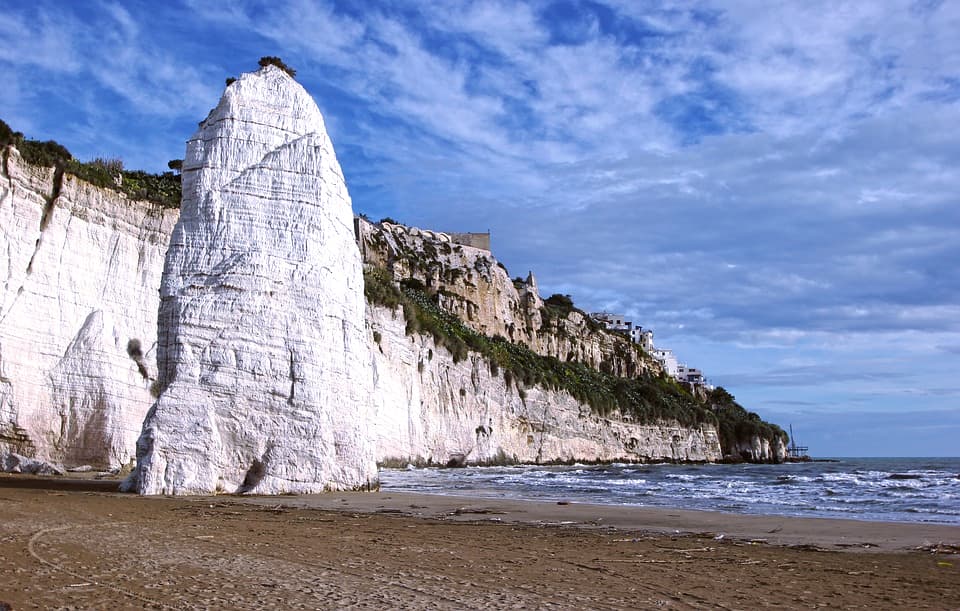
Head north to the Gargano Peninsula, basing yourself in Vieste for beach time and boat trips to sea caves along the coast.
If you have a full day here rather than a rushed one, rent a small boat yourself instead of joining a group tour — it’s not much more expensive and lets you linger at whichever cove you like, which is exactly what I did after feeling rushed on a group tour during a previous trip.
I spent hours slowly working my way along the coastline, stopping to swim in secluded inlets that boat tours often skip entirely, and had a simple lunch of grilled fish at a beach shack accessible only by water. By evening, I was back in Vieste’s old town, wandering its cliffside streets as the last light hit the sea below.
Day 5: Matera (UNESCO)
A full day in Matera, ideally with an overnight stay in a cave hotel — it’s a completely different experience after dark. I’ll never forget sitting on my cave hotel’s terrace at 9 pm watching the Sassi lit up gold against the night sky, a view that genuinely rivaled anything I’d seen elsewhere in Italy.
With a full, unhurried day here, I finally had time to visit some of the lesser-known rock churches on the quieter edges of the Sasso Barisano, where I had entire frescoed chambers completely to myself. I also took a longer walk out to the Murgia Materana park across the ravine, looking back at the Sassi from a distance, which gave me a completely different appreciation for just how vast and ancient this cave city really is.
Day 6: Alberobello (UNESCO)
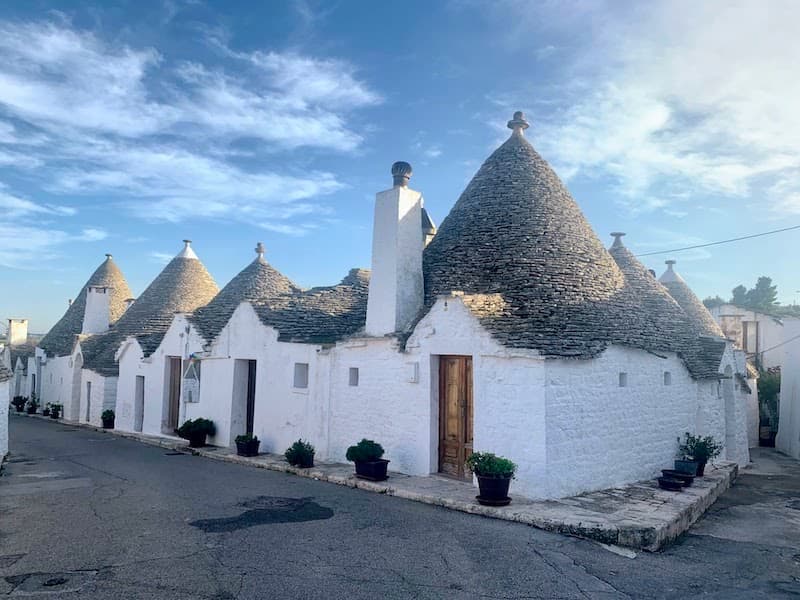
Explore Alberobello’s trulli districts and the surrounding Valle d’Itria countryside.
With extra time, I rented bicycles and rode out into the countryside between the trulli — a completely different, quieter perspective on the area than walking the main tourist streets, and one I’d genuinely recommend to anyone with a spare few hours. Cycling past working trulli farmhouses, dry stone walls, and endless olive groves gave me a much better sense of how this landscape actually functions day to day, beyond the souvenir shops in town.
Back in Alberobello itself, I spent the afternoon chatting with a ceramics shop owner who’d been making trulli-shaped pottery for thirty years, and left with a piece I still keep on my desk as a reminder of the trip. Sleep in a trullo.
Day 7: Locorotondo, Martina Franca & Ostuni
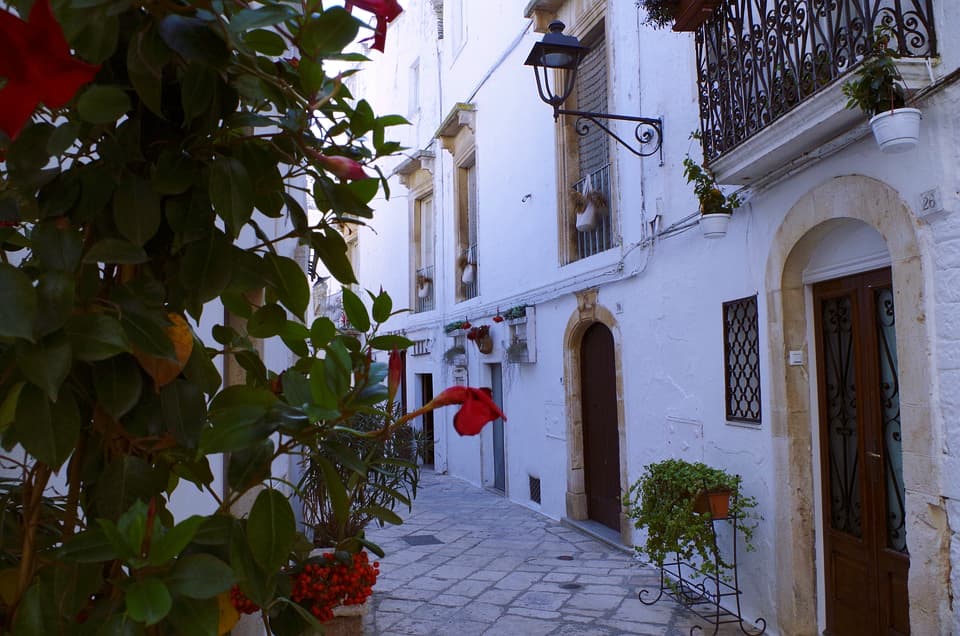
Spend the day hopping between three of the Valle d’Itria’s prettiest towns: Locorotondo, Martina Franca, and Ostuni, all within a 10–30 minute drive of each other.
Martina Franca’s Baroque old town gets far fewer visitors than its neighbors, and I found its quiet cafés a welcome break after several busier days — I sat for nearly an hour in a nearly empty piazza just people-watching, something I hadn’t allowed myself time for earlier in the trip. Locorotondo’s circular layout of whitewashed houses is best appreciated slowly, on foot, and I spent a good hour simply wandering its balconies and flower-filled windowsills before continuing on.
By the time I reached Ostuni in the late afternoon, the golden light on the whitewashed hill town made for some of the best photos of my entire trip, and dinner on a terrace overlooking the olive groves below felt like the perfect way to close the day. Overnight in Ostuni.
Day 8: Lecce
Head to Lecce, 80 minutes from Ostuni.
Enjoy a full day dedicated to Lecce’s Baroque splendor, its street food, and its buzzing aperitivo scene. I made a point of trying a pasticciotto fresh from the oven at a bakery near Piazza Sant’Oronzo before 9 am, when locals were still lining up for their own — it was warm, custard-filled, and worth setting an alarm for.
I also joined a short walking tour focused specifically on Lecce’s stonework, and the level of detail carved into the soft local limestone only really clicked once someone pointed it out to me stone by stone. In the evening, I joined the local passeggiata through the historic center, stopping for a spritz at one of the piazza bars, and ended up staying out far later than I’d planned simply because the atmosphere was so lively.
Days 9–10: Gallipoli & drive back
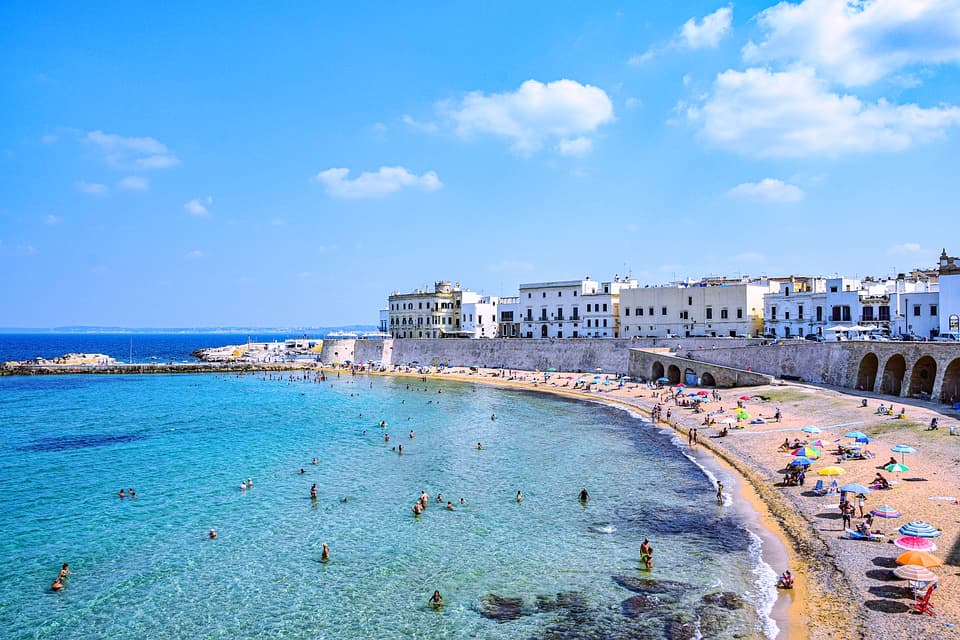
Finish your trip on the Ionian coast in Gallipoli, nicknamed “the Ibiza of Italy”, known for some of the best beaches in Puglia, before the drive back to Bari.
The water on the Ionian side is noticeably calmer and warmer than the Adriatic coast up north — a difference I genuinely didn’t expect until I felt it myself, wading in off one of the beaches just south of the old town. I spent the first day mostly on the sand, moving between a few different beach clubs along the coast road, and the second wandering Gallipoli’s fortified old town, perched on its own small island connected to the mainland by a short bridge. My final dinner here, overlooking the harbor at sunset, felt like a fitting last night before the long drive back to Bari the following morning.
Curious what to eat along the way? Don’t miss my upcoming guide to the foods of Puglia — the region’s cuisine is reason enough to visit.
Map of the 10-Day Puglia Road Trip
The Puglia 10 day road trip route: Bari → coast → Castel del Monte → Trani → Gargano/Vieste → Matera → Alberobello → Valle d’Itria → Lecce → Gallipoli → Bari, roughly 700 km total
2-Week Puglia Road Trip Itinerary
If you have the luxury of a full Puglia road trip 2 weeks long, this is the ultimate, unhurried version of the trip — the one I’d genuinely love to do myself again.
At a glance:
- Days 1–2: Monopoli & Polignano a Mare
- Day 3: Castel del Monte, overnight in Trani
- Day 4: Monte Sant’Angelo & Vieste
- Day 5: San Giovanni Rotondo
- Day 6: Matera (UNESCO cave city)
- Day 7: Alberobello (UNESCO trulli)
- Day 8: Locorotondo, Martina Franca & Ostuni
- Day 9: Lecce
- Days 10–11: Gallipoli
- Days 12–14: Otranto, then drive back to Bari
- Total driving distance: ~900+ km
Days 1–2: Monopoli and Polignano a Mare
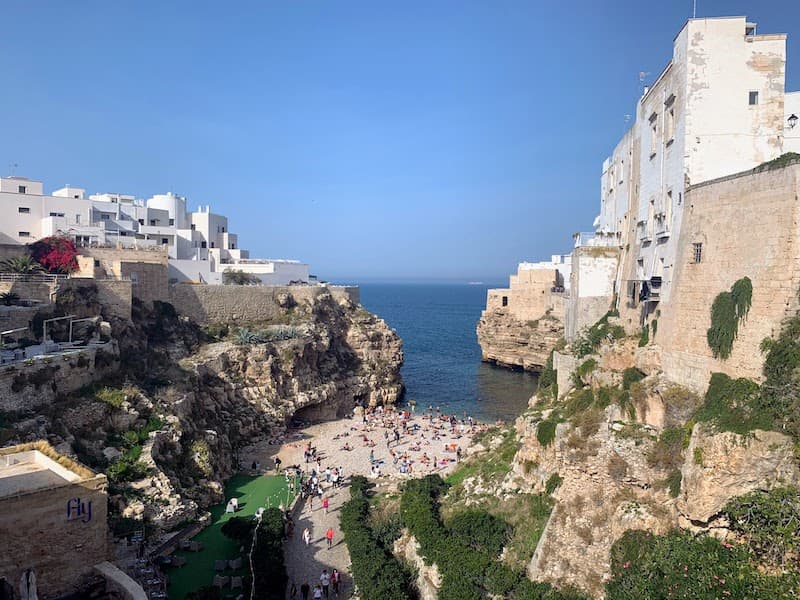
Stay in Polignano a Mare or Monopli for two nights.
With two full days here on the Adriatic coast rather than one, take the time to slow down and simply sit at a café to watch the fishing boats come in — it’s easy to rush past this simple pleasure on a shorter trip through this same stretch of coast.
I split my time between Monopoli’s old town and harbor, and Polignano’s dramatic cliffside streets, taking a slow coastal drive between the two rather than the direct highway route. One afternoon I found a quiet, mostly local beach just outside Monopoli where I swam for hours without another tourist in sight, a reminder that even in well-known towns, a little extra time lets you find genuinely quiet corners.
Day 3: Castel del Monte & Trani
Castel del Monte itself remains one of the strangest and most memorable buildings I’ve ever visited; its perfectly symmetrical octagonal design has puzzled historians for centuries, and walking its empty upper floors in the late afternoon light gave me plenty of time to genuinely absorb the mystery rather than rushing through with a crowd.
Explore the fortress, then settle into Trani for the evening, when the cathedral is beautifully lit against the harbor. I’d recommend booking a room with a sea-facing balcony here if your budget allows — mine looked directly onto the cathedral, and I sat out there with a glass of local Nero di Troia wine well past midnight, watching the lights reflect on the water.
Day 4: Monte Sant’Angelo, then Vieste on the Gargano peninsula.
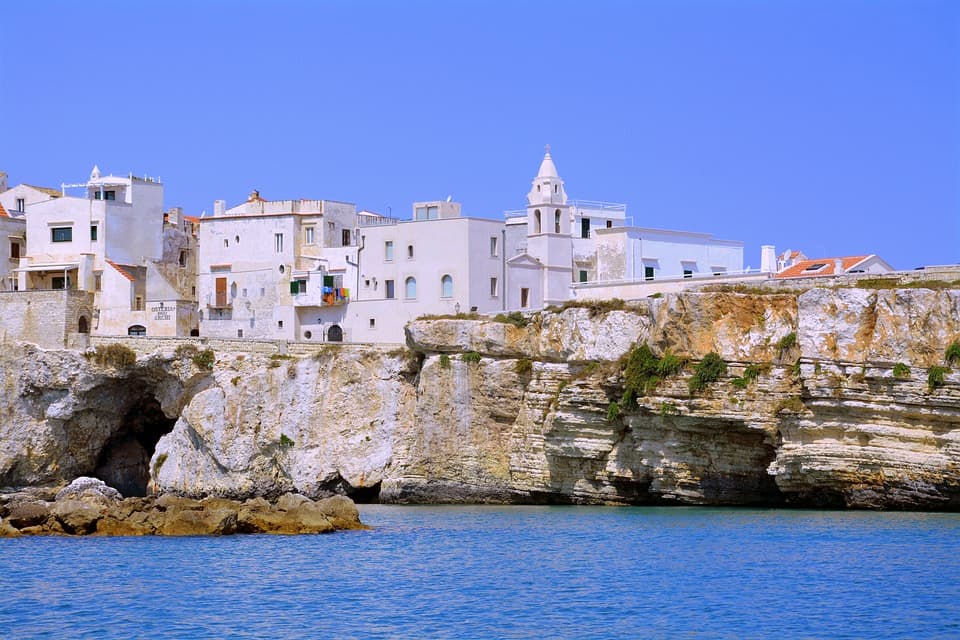
Visit the sanctuary before continuing to the coast for beach time in Vieste. The drive between the two winds through dense Gargano forest and olive groves — roll the windows down, since the smell of wild herbs along this stretch of road is something I still remember vividly months later.
Monte Sant’Angelo’s grotto sanctuary, carved directly into the mountain, felt genuinely different from any other pilgrimage site I visited in Italy, quieter and older, with centuries of pilgrims’ footsteps worn into the stone steps leading down. By the time I reached Vieste in the late afternoon, the contrast between the solemn mountain sanctuary and the bright, lively beach town below felt like two completely different countries in the same single day.
Day 5: San Giovanni Rotondo
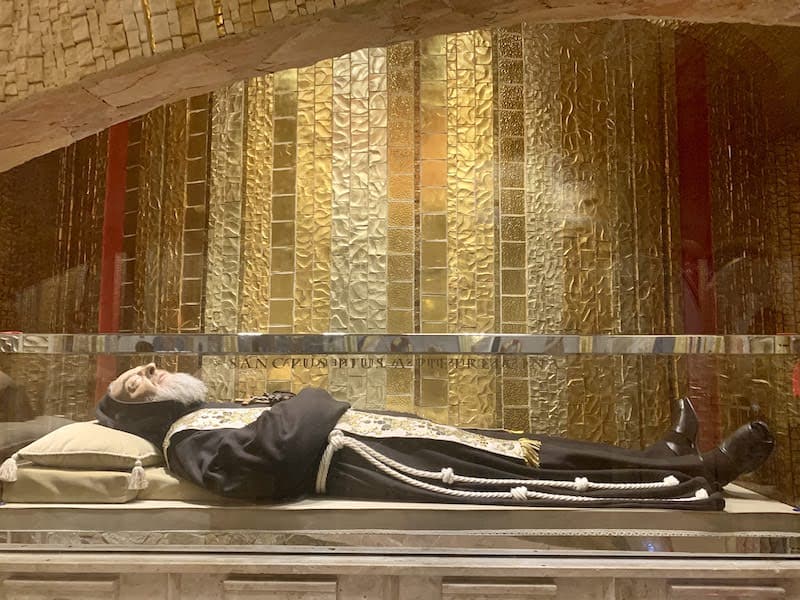
A quieter, more reflective day exploring the pilgrimage sites of San Giovanni Rotondo, with time for a scenic drive through the Foresta Umbra on the way south. I stopped in the forest here, and the shaded woodland was a genuinely refreshing surprise mid-trip, with beech trees towering overhead and barely any other visitors around.
In San Giovanni Rotondo itself, I spent a long stretch of the afternoon inside the modern Renzo Piano-designed church, whose soaring concrete arches felt almost cathedral-like despite being built just a few decades ago. Afterward, I wandered the streets nearby, where shops sell religious items and local sweets side by side, giving the town a genuinely distinct character from anywhere else on the trip.
Day 6: Matera
A full day (or two half-days) in the Sassi, with a relaxed dinner in one of the cave restaurants. By my second visit to Matera on this longer trip, I’d learned enough about the layout to find a rooftop terrace known mostly to locals — ask your hotel for a recommendation rather than relying on review sites alone, since some of the best viewpoints here simply aren’t listed online.
I spent the morning revisiting a few rock churches I’d rushed through on an earlier trip, taking the time to actually read the information panels and appreciate the faded frescoes properly. That evening’s dinner, in a candlelit cave restaurant serving slow-cooked lamb and local wine, felt like exactly the kind of unhurried meal this longer itinerary is designed to allow.
Day 7: Alberobello
Take your time here — visit the trulli museum, browse local ceramics, and enjoy lunch at a countryside masseria.
With a full, unhurried day, I chatted with a ceramics shop owner who’d been making trulli-shaped pottery for thirty years, and left with a piece I still keep on my desk as a small daily reminder of this trip. I also spent a good hour inside the Trullo Sovrano, the only two-story trullo in town, learning about the clever dry-stone construction technique that’s kept these buildings standing for centuries without any mortar at all.
Lunch at a nearby masseria, surrounded by olive groves and completely silent aside from birdsong, was the kind of slow, memorable meal that’s hard to fit into a shorter itinerary.
Day 8: Locorotondo, Martina Franca, and Ostuni
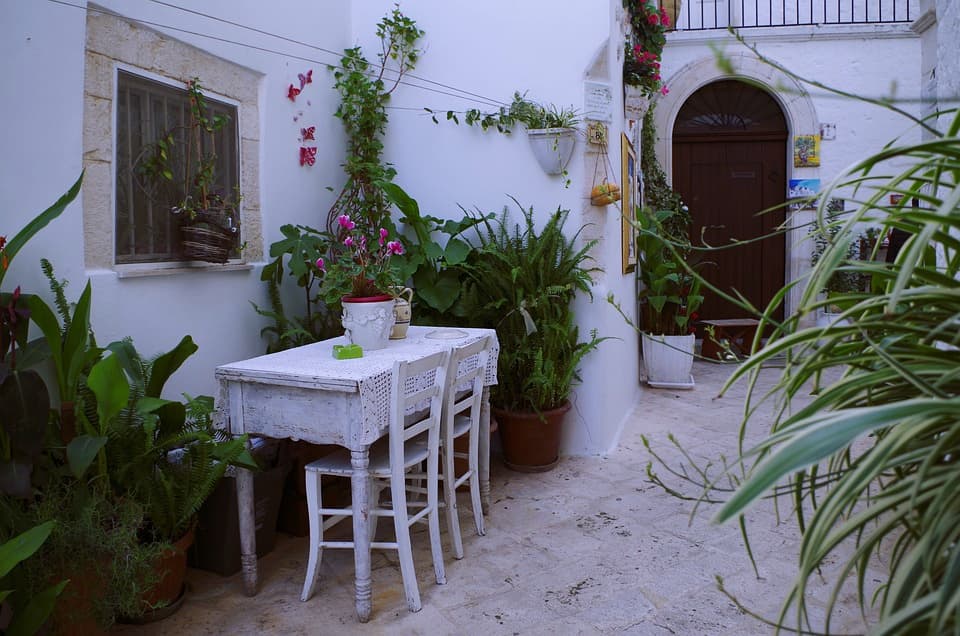
A full day touring the Valle d’Itria’s three most charming towns. I’d suggest starting in Locorotondo before 9 am, since its tiny streets are genuinely magical when they’re empty and the morning light hits the white stone just right.
From there, I drove to Martina Franca for a slower midday visit, wandering its elegant Baroque palazzi and stopping for coffee in a nearly empty piazza. By late afternoon I reached Ostuni, where I climbed toward the cathedral through narrow whitewashed lanes and found a rooftop bar just as the sun began to set over the olive groves stretching toward the sea — easily one of the most photogenic moments of the entire two weeks.
Day 9: Lecce
Dedicate a full day (or two) to Lecce’s Baroque churches, historic cafés, and the city’s famous pasticciotto pastries.
Here, I also joined a short walking tour focused specifically on Lecce’s stonework — the level of detail carved into the soft local limestone only really clicks once someone points it out to you, from tiny carved cherubs to elaborate floral columns most visitors walk straight past. I spent a full afternoon just people-watching in Piazza Sant’Oronzo. Dinner that night, at a restaurant serving traditional Salento dishes alongside local Negroamaro wine, remains one of the meals from this trip I still think about regularly.
Days 10–11: Gallipoli
Two days to properly enjoy the beaches and old town of Gallipoli.
I spent one full day just moving between beach clubs along the coast road south of town, and the second wandering the old town’s fortress walls at sunset — both very different, both worth it, and having two full days here rather than a rushed afternoon made a genuine difference to how relaxed I felt. The water here is some of the calmest and clearest I found anywhere on the trip, and I spent long stretches simply floating just offshore, watching the old town’s skyline from the water.
On the second evening, I found a small seafood restaurant inside the old town walls where the owner personally recommended the catch of the day, and it turned out to be one of the best meals of the entire two weeks.
Days 12-14: Otranto & Fly Back Home

Finish your trip in Otranto, Italy’s easternmost town, with its Byzantine cathedral, crystal-clear water, and laid-back charm.
I’ll admit Otranto surprised me a lot — the mosaic floor inside the cathedral alone justified the drive, an enormous medieval depiction of the tree of life covering the entire nave floor in astonishing detail. The water off the town’s rocky coastline was some of the clearest I saw anywhere in Puglia, and with three full days here, I alternated between swimming, wandering the old town’s fortress walls, and simply relaxing at a café table with a book, something I hadn’t allowed myself time for anywhere earlier in the trip. It felt like the right, slow-paced place to end such a long journey.
Drive back to Brindisi (about an hour from Otranto) or Bari (about 2 hours 20 minutes) to return your rental car.
Map of the Ultimate 14-Day Puglia Road Trip
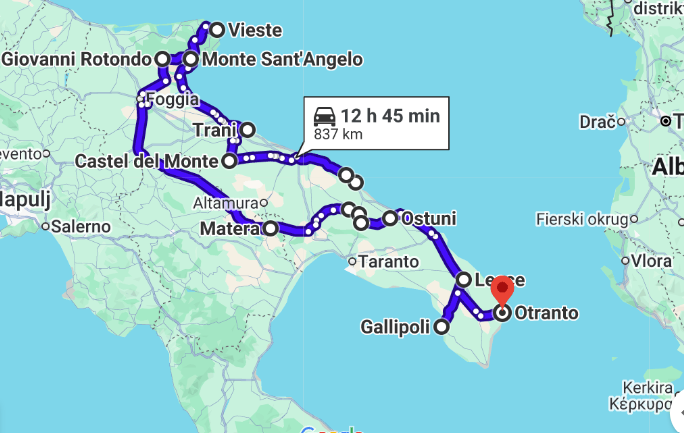
The 14-day Puglia road trip route: full loop from Bari through Gargano, Matera, Valle d’Itria, Salento, and back, roughly 900+ km total
South Italy Road Trip: Combining Puglia With Other Regions
Puglia sits at the “heel” of Italy’s boot, which makes it an easy add-on if you’re planning a broader south Italy road trip. Matera (technically in Basilicata) is already baked into every itinerary above, and some travelers extend their trip further into Basilicata or up toward the Amalfi Coast. If Puglia is one leg of a longer southern Italy journey, I’d still budget at least 5–7 days just for this region — trying to rush it defeats the purpose of coming here in the first place.
Practical Tips for Driving in Puglia
- Parking: Before my trip, I’d read horror stories about parking in southern Italy, but Puglia turned out to be surprisingly straightforward. In almost every town, I parked just outside the historic center and walked 5–10 minutes into the old town. It saved me from navigating narrow streets and worrying about traffic restrictions, and I never felt like the walk was inconvenient. I searched Google for “parcheggio libero” or “parcheggio gratuito” (free parking) — it worked almost everywhere.
The only places where I’d plan a little extra time are Polignano a Mare and Alberobello during peak season, when parking fills up quickly. Arriving before mid-morning makes a noticeable difference. - Driving: One thing that surprised me was how easy driving actually felt. Before arriving, I’d expected driving to feel similar to Naples or even parts of Rome, but once I left the airports, I found Puglia’s roads surprisingly relaxed. Most drives between towns were short enough that I never felt exhausted behind the wheel, which made it easy to fit several stops into a day without feeling rushed.
- Book unique stays in advance: Cave hotels in Matera and trulli in Alberobello sell out early, especially in high season.
- Don’t overpack your days: Puglia’s charm is in lingering — over a coffee, a sunset, a plate of orecchiette. Leave room in your itinerary to do nothing in particular.
- Pack for the coast and the countryside: You’ll want both swimwear and comfortable shoes for cobblestone hill towns.
For more inspiration on what to do once you’ve arrived in each town, take a look at my things to do in Puglia roundup, which pulls together the best experiences region-wide.
What I’d Do Differently (Mistakes to Avoid on a Puglia Road Trip)
Looking back, there are a few things I’d change if I were planning the same road trip today. None of them ruined the trip, but they’d make a second visit even better.
I’d spend less time changing hotels
On paper, staying somewhere new every night looked like the best way to see more of Puglia. In reality, constantly packing, checking in, and hunting for parking ate into the day more than I expected.
If I did it again, I’d choose two or three bases instead. For example, I’d stay around Monopoli or Polignano a Mare for the central coast, Lecce for Salento, and Vieste if I wanted to explore Gargano. Day trips are easy, and you’ll spend more time enjoying places instead of moving between them.
I’d skip trying to see both Gargano and Salento in one short trip
One thing I underestimated before visiting Puglia was its size. On a map it doesn’t look huge, but driving between the Gargano Peninsula in the north and Salento in the south takes much longer than many people expect. If I only had five or six days again, I’d focus on one region instead of trying to see everything. Spending less time in the car means you’ll have more time to enjoy long dinners, explore the old towns, and take those spontaneous detours that ended up being some of my favourite memories.
I’d book cave hotels and trulli much earlier
The cave hotel I stayed in Matera ended up being one of the highlights of the trip, and sleeping in a trullo in Alberobello is something I still recommend to everyone. These are exactly the kinds of places that disappear months in advance, especially from May through September.
If those experiences matter to you, I’d reserve them before worrying about the rest of the itinerary.
I’d avoid driving into historic centers
Most of Puglia’s old towns are best explored on foot anyway. Whenever possible, I’d park just outside the historic center and walk in rather than trying to navigate narrow streets or figure out local traffic restrictions.
It usually meant less stress and only a few extra minutes on foot.
I’d arrive in Polignano a Mare before 9 a.m.
Places like Polignano a Mare, Alberobello, and Ostuni feel completely different before the crowds arrive.
Early mornings meant quieter streets, easier parking, better photos, and a much more relaxed atmosphere. By lunchtime, especially in summer, those same streets can become packed.
I’d leave more room for spontaneous stops
Some of my favorite memories came from the moments I hadn’t planned at all. They came from pulling over at a coastal viewpoint, wandering through a small town I’d never heard of before, or stopping for lunch at a restaurant because it was full of locals.
Don’t schedule every hour of every day. One of the best things about having a rental car is being able to change your plans when something catches your eye.
I’d happily return in October
I visited in October, and I’d choose the same month again without hesitation. The weather was still warm enough for swimming, accommodation prices were lower than peak summer, and the roads and towns felt far less crowded than they do in July or August.
For me, it was the perfect balance between beach weather and comfortable sightseeing.
If I planned another Puglia road trip tomorrow, I wouldn’t try to see more places—I would simply spend longer in the ones I loved. That’s the biggest lesson this region taught me.
The Biggest Surprise From My Puglia Road Trip
Before visiting, I thought the beaches would be the highlight of my Puglia road trip. They were beautiful, but they weren’t what stayed with me most. The moments I still think about are wandering Matera’s cave streets at sunset, getting lost in Ostuni after dark when the day-trippers had gone home, and lingering over long dinners in Lecce’s Piazza Sant’Oronzo. If I have one piece of advice, it’s this: don’t spend your entire trip chasing beaches. Leave time for slow evenings in the towns—they’re where Puglia really won me over.
Frequently Asked Questions About a Puglia Road Trip
How many days do I need for a Puglia road trip?
Plan on at least 5 days to see the essentials — the coast, Matera, and Alberobello. For a more complete Puglia Italy itinerary that includes the Gargano peninsula and the Salento coast, 7 to 10 days is ideal. With 2 weeks, you can comfortably cover both coastlines without rushing.
Is Puglia good for a road trip?
Yes — Puglia is one of the best regions in Italy for road-tripping. Distances between towns are short, roads are well-maintained, and a car gives you access to hill towns, rural masserias, and beaches that are difficult or impossible to reach by public transport.
What is the best time to visit Puglia for a road trip?
May, June, and September offer the best mix of warm weather, manageable crowds, and fair prices. October is also excellent. July and August bring intense heat and heavy crowds, especially along the coast.
Where should I start a Puglia road trip?
Most travelers start in Bari, which sits centrally and has the region’s main international airport. If your itinerary focuses on Salento and the southern coast, starting in Brindisi can save you driving time
Do I need a car in Puglia?
While trains connect the larger cities, a rental car is essential if you want to follow a full Puglia road trip itinerary. Many of the best spots — rural trulli, hidden beaches, and small hilltop towns — simply aren’t reachable by public transport.
Is 7 days enough for Puglia?
Yes. A week is enough to see the highlights: Bari’s coastal towns, Matera, Alberobello, Ostuni, and Lecce, plus a full day on the Gargano peninsula. If you want to add Salento’s beaches too, extend to 10 days if you can.
What is the most beautiful part of Puglia?
It’s genuinely hard to pick one. The stretch between Polignano a Mare, Monopoli, Alberobello, and Ostuni is postcard-perfect, but the Baroque city of Lecce and the beaches around Gallipoli and Otranto are just as stunning. The best Puglia itinerary combines the Valle d’Itria with the Salento peninsula.
Can you do a Puglia road trip without visiting Matera?
You could, but I wouldn’t recommend it. Matera sits just across the Puglia-Basilicata border and is close enough to nearly every itinerary above that skipping it means missing one of the most extraordinary ancient cities in the world.
Final Thoughts
Whatever length you choose — a quick Puglia 3 day itinerary or the full 10 day Puglia itinerary and beyond — the beauty of a Puglia road trip is that it rewards you for slowing down. Some of my favorite memories weren’t from the big sights at all, but from unplanned stops: a roadside stand selling burrata straight from the fridge, a nap under an olive tree, a random festa in a town square I can’t even find on the map anymore.
Before you go, make sure to check out my other Puglia guides to round out your trip:
- Things to do in Puglia
- Travel guide to Ostuni, Puglia
- Things to do in Alberobello
- Things to do in Matera
- The best foods of Puglia
- Best places to visit in Puglia
I’ve driven this route myself, town by town, meal by meal, and I can say with confidence: however many days you have, Puglia will make you want more.