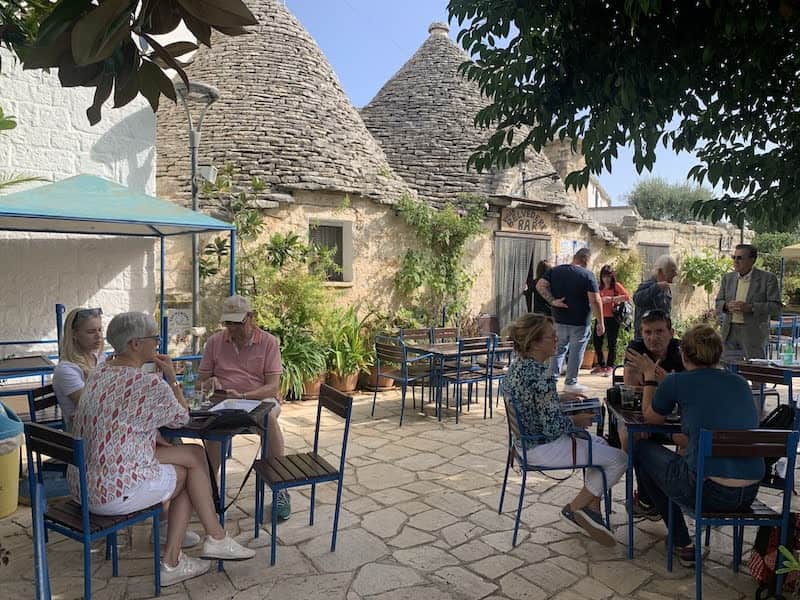
Food in Puglia: 23 Foods I Tried and Loved, From Cime di Rapa to Caffè Leccese

Food in Puglia: 23 Traditional Dishes to Try
If you’re looking for food in Puglia, prepare to arrive hungry. This is one of those parts of Italy where some of the simplest things I ate ended up being the meals I remembered most.
During my Puglia road trip, I ate my way through Bari’s old town, stopped for burrata near Andria, picked up focaccia from bakeries, and went through more bags of taralli than I care to admit. I expected the big-name dishes to be the highlights, but some of my favourite moments were much less complicated: warm focaccia eaten straight from the bakery, fresh burrata with tomatoes and olive oil, and a paper bag of taralli in the car between towns.
Puglia’s food is rooted in simple, seasonal ingredients and the cucina povera tradition of making something delicious from what was available. You’ll find handmade pasta, exceptional olive oil, fresh cheeses, seafood from two seas, rustic breads, grilled meats and some seriously good pastries.
I already wrote about the best places to visit in Puglia and the best things to do in Puglia, but f ood deserves its own guide — because honestly, it might be the best reason to visit.So this isn’t simply a list of traditional Puglian dishes. I’ve included the foods I actually looked for during my road trip, the ones that surprised me, the ones I’d happily order again, and the dishes I’d prioritise if I were planning another trip to Puglia with limited time.
What Is Puglia Known For? (The Quick Answer)
Puglia is best known for its extra virgin olive oil, handmade orecchiette, burrata and other fresh cheeses, rustic breads, seafood and vegetable-focused dishes.
The region produces around 45% of Italy’s olive oil, according to recent regional production data, and its cuisine makes very good use of it.
Puglia also has around 860 kilometres of coastline, stretching along both the Adriatic and Ionian Seas, so seafood naturally plays a major role in the regional table.
If you’re visiting for the first time, I’d start with orecchiette con cime di rapa, fresh burrata, focaccia Barese, bombette and a warm pasticciotto. Then work your way into some of the more regional dishes further down the list.

Top 10 Foods to Try in Puglia
Short on time? Start with these 10 classic foods in Puglia. They’re the dishes and local specialties I’d prioritize on a first trip.
| Food | Where I’d try it | Why |
|---|---|---|
| Orecchiette con cime di rapa | Bari | The classic |
| Burrata | Andria | Best when incredibly fresh |
| Focaccia Barese | Bari | Perfect road-trip snack |
| Bombette | Martina Franca/Cisternino | For meat lovers |
| Panzerotto | Bari | Best eaten hot |
| Fave e cicoria | Salento | Classic cucina povera |
| Ciceri e tria | Lecce/Salento | A standout pasta dish |
| Rustico Leccese | Lecce | Ideal quick breakfast/snack |
| Pasticciotto | Lecce | Don’t leave without trying one |
| Taralli | Anywhere | Your road-trip snack |
Want the full list? Keep reading for 23 traditional Puglia foods, from handmade pasta and famous cheeses to street food, seafood, meat dishes, desserts, and local drinks.
What Makes Puglian Cuisine Different
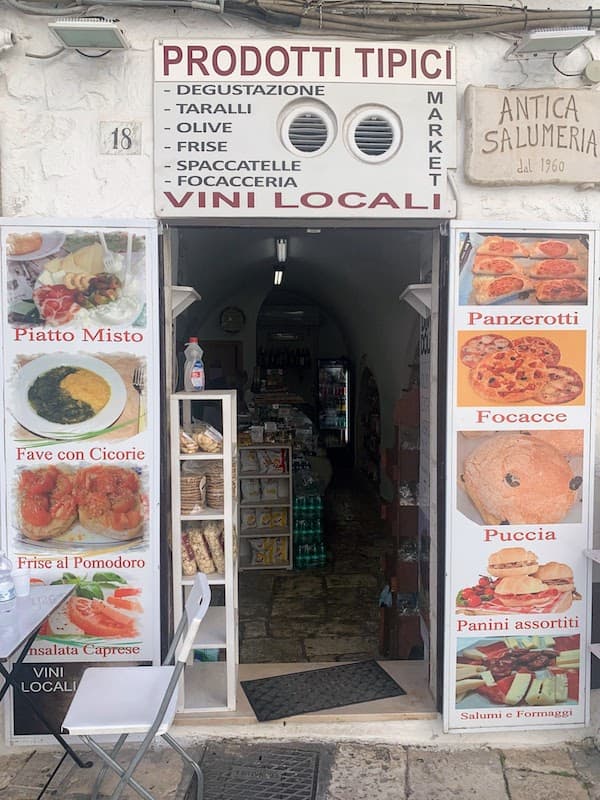
Puglian cuisine leans on fresh, seasonal, and hyper-local produce — tomatoes, peppers, artichokes, eggplants, almonds, capers, cheese, fish, and homemade pasta are all staple foods in Puglia. Compared to the richer, meat-heavy dishes you’ll find further north (Tuscany’s bistecca and cinghiale come to mind), the cuisine of Puglia is lighter, more vegetable-forward, and deeply shaped by its 860 kilometers of coastline along the Adriatic and Ionian Seas.
Puglia products worth seeking out at any market include: extra virgin olive oil, burrata, caciocavallo podolico, taralli, sun-dried tomatoes, and bottles of Primitivo or Negroamaro wine. If you want a real taste of Puglia to bring home, start there.
Best Food and Wine Tours in Puglia
If your trip is coming up fast and you’d rather taste your way through Puglia with a local guide than track down every dish yourself, here are a few well-rated food and wine experiences worth booking in advance:
- Puglia: Mozzarella-Making Class at an Apulian Farm
- Martina Franca: Wine & Local Products Tasting
- Lecce Private Home Cooking Class
- Alberobello: Dining Experience at a Local’s Home
- Foggia 2-Hour Private Gourmet Wine Tour with Tastings
- Ostuni: Olive Oil Tasting Tour
If you’re basing yourself in the whitewashed town of Ostuni for a few days, I have a full Ostuni, Italy travel guide that pairs nicely with that olive oil tour.
Now, onto the food itself.
Pasta From Puglia: The Pugliese-Style Pasta You Have to Try
Pasta from Puglia is handmade, egg-free (unlike the pasta you’ll find further north), and built around durum wheat semolina. Puglian-style pasta is shaped by hand rather than pressed by machine, and it’s still common to see Puglian women shaping orecchiette on wooden boards outside their front doors in Bari’s old town.
1. Orecchiette con Cime di Rapa

If there’s one dish that sums up food in Puglia, it’s this one. I ordered it more than once during my road trip, and the version I had in Bari was still the one I thought about afterward.
Orecchiette means “little ears,” and this small, ear-shaped pasta is the region’s signature shape — traditionally made in Puglia’s home kitchens using just durum wheat flour and water, no eggs involved. Cooks shape it by hand, dragging small cubes of dough across a wooden board or over a thumb until they curl into little cups perfect for holding sauce. I remember watching women making orecchiette by hand in Bari’s old town and realizing how different the pasta looked from the perfectly uniform orecchiette I’m used to seeing in supermarkets. Some pieces were slightly larger, some thinner, and none were quite identical. That imperfection was part of the charm.
The most beloved way to serve orecchiette is con cime di rapa: tossed with bitter broccoli rabe, garlic, chili flakes, and anchovies, then finished with a drizzle of olive oil and a generous dusting of grated pecorino. The bitterness of the greens against the salty anchovy and nutty pecorino is what makes this dish so addictive.
You’ll find it on nearly every trattoria menu across Puglia, and honestly, no two versions taste quite the same — that’s part of the fun of ordering it in a new town every night. Consider this the essential first bite of any Puglia food trip.
If you’re staying in Bari, don’t just order orecchiette in a restaurant. I’d make time to walk through Bari Vecchia and watch the pasta makers working, then order the dish somewhere nearby. Seeing the women shaping each piece by hand made me appreciate why the slightly irregular shapes are part of the charm. If I were ordering just one pasta dish in Puglia again, this is the one I’d choose.
2. Ciceri e Tria

Ciceri e Tria translates simply to “chickpeas and pasta,” and it’s a classic Salento dish.
Tria is a local, egg-free flat pasta similar in shape to tagliatelle, made from flour, semolina, olive oil, and water. What sets this dish apart from other pasta from Puglia is the clever textural trick at its core: half the pasta is boiled soft, while the other half is fried until crisp, then both are folded together with stewed chickpeas, garlic, onion, carrot, celery, cherry tomatoes, and a touch of dried chili. The result is a bowl that’s simultaneously silky and crunchy in every bite, which sounds unusual until you try it — then it makes total sense.
I tried ciceri e tria in Osteria Da Angiulino while exploring Lecce, and the crispy fried pieces of pasta were what stood out to me most. I’d expected a fairly rustic chickpea pasta dish, but the contrast between the soft pasta and crunchy fried pieces made it much more interesting than I anticipated. If you’re eating your way through Lecce, I’d prioritize this over another generic pasta dish.
Ciceri e Tria has deep roots in Lecce and the surrounding Salento countryside, where it’s traditionally served as a hearty primo piatto. If you’re building a Puglia food and wine itinerary around Lecce, this dish belongs near the top of your list.
3. Linguine ai Ricci (Sea Urchin Pasta)

Sea urchins, or ricci di mare, are a genuine delicacy along the Salento coastline, harvested from the Adriatic and Ionian Seas and prized for their briny, almost creamy roe. Linguine ai ricci turns that roe into a strikingly simple pasta sauce: just olive oil, garlic, parsley, a touch of chili, and the sea urchin itself, tossed with boiled linguine until the roe melts into something close to a sauce. The flavor is intensely oceanic — if you’ve never eaten sea urchin before, this is about as gentle and approachable an introduction as you’ll find, since the pasta mellows its more intense edges.
I first tried sea urchin pasta on the Salento coast, and the flavor was much more intensely marine than I expected. If you love seafood, this is one of the dishes I’d actively look for rather than ordering a safer pasta option. If you’re not a fan of strong ocean flavors, though, I’d put burrata or orecchiette higher on your list.
It’s considered a classic primo piatto of Salento cuisine and tends to appear seasonally on menus, since fresh ricci availability depends on the catch. If you spot it on a specials board while dining near the coast, don’t hesitate — this is one of those only-in-Puglia dishes worth prioritizing.
Traditional Puglia Cheese: A Real Taste of Puglia
Puglia is a haven for cheese lovers, and its dairy products are arguably the most famous foods of Puglia worldwide.
4. Caciocavallo Podolico
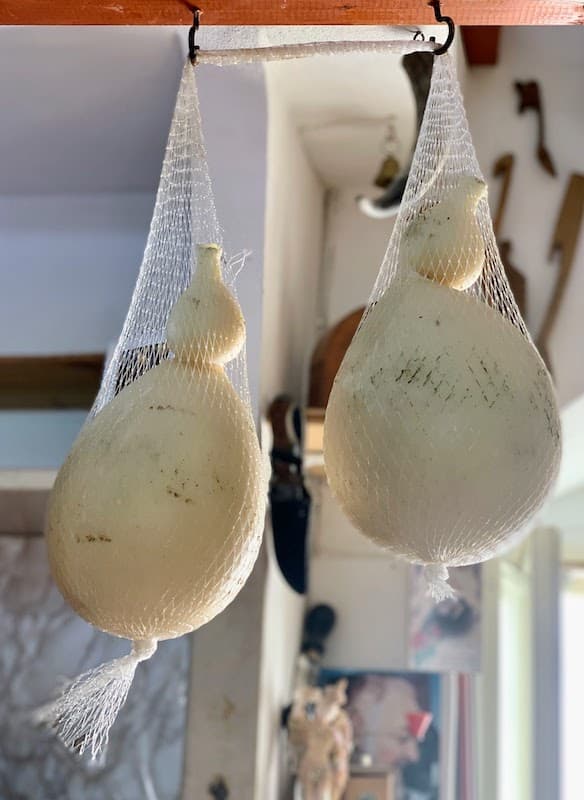
Caciocavallo podolico is a special, lesser-known cheese from Puglia, hailing from the Gargano peninsula in the north of the region. It’s made from the milk of Podolica cows — a hardy, semi-wild breed that grazes freely across Gargano’s aromatic pastures, feeding on wild thyme, mountain mint, and lemon balm. That diet directly shapes the cheese’s flavor, so no two batches of caciocavallo podolico taste quite identical, and the herbal complexity is easy to notice if you know what to look for.
The cheese itself is bag-shaped and pale yellow, traditionally aged and hung in pairs from wooden beams in cheese shops across the region — a sight you’ll notice the moment you walk into any good salumeria in Puglia. Considered a symbol of Gargano, I’d look for the Podolico version rather than settling for a generic caciocavallo, since the podolico version is a different experience entirely.
I first tried Caciocavallo Podolico at a small cheese shop in Monte Sant’Angelo. It had a much more pronounced, complex flavour than the caciocavallo I’d tried before, and it was one of those cheeses I kept thinking about afterward. If you’re a serious cheese lover, this is the one I’d seek out in Gargano.
5. Mozzarella di Gioia del Colle

If you love fresh mozzarella, a Puglian specialty is worth trying: Mozzarella di Gioia del Colle, a fresh stretched-curd cheese traditionally made with whole cow’s milk. It has PDO status in the European Union, and the official specification requires the cheese to be made exclusively from whole cow’s milk.
It comes in several shapes, including round, braided and knot-shaped forms, and has a smooth or slightly fibrous texture with a delicate, slightly tangy milky flavour. When freshly made, a little whey should escape when you cut into it — one of those small details that tells you you’re eating it at its best.
If you’re travelling through the Valle d’Itria or the area around Gioia del Colle, I’d look for it in a local caseificio rather than reaching for a supermarket mozzarella. Freshness makes a noticeable difference with this kind of cheese, and eating it close to where it’s made is part of the experience.
It’s also worth distinguishing it from Burrata di Andria, another famous cheese from Puglia. Burrata has a mozzarella-like outer casing but is filled with cream and shredded pasta filata (stracciatella); the protected Burrata di Andria specification also identifies cow’s milk as its raw material.
If you’re choosing just one fresh cheese to try in Puglia, I’d put burrata and Mozzarella di Gioia del Colle on the list — they’re quite different experiences despite both being fresh, stretched-curd cheeses.
6. Burrata

If one cheese put Puglia on the international culinary map, it’s burrata, which originated in the town of Andria near Bari and has since become a fixture on menus far beyond Italy. “Burrata di Andria” has PGI status, and the EU specification confirms the cow’s-milk mozzarella casing and cream/stracciatella filling.
Burrata means “buttered” in Italian, and the name gives away its structure: a mozzarella shell encases a rich, indulgent filling of cream and soft mozzarella scraps, so cutting into a fresh burrata releases a satisfying, buttery ooze.
It’s a delicate cheese with a short shelf life — properly fresh burrata should be eaten within a day or two of being made, which is exactly why tasting it in Puglia hits so differently than eating it anywhere else. The best way to enjoy it is also the simplest: a whole burrata on a plate, a generous drizzle of good local olive oil, maybe a few ripe tomatoes or a scattering of sea salt, and nothing else standing in the way. This is Puglia’s most famous cheese for a reason.
I’d eaten burrata plenty of times before visiting Puglia, but tasting it fresh in the region was a completely different experience. I had some of my best burrata stops around Andria, where it was so fresh and delicate that I found myself wanting to eat it almost straight from the container, with nothing more than olive oil and a little salt. If you’ve only had supermarket burrata before, this is one of the foods I’d make a point of trying locally. It’s also one of the first things I’d seek out again on another Puglia trip.
7. Stracciatella
Stracciatella is technically the filling inside burrata, but in Puglia it’s also sold and enjoyed entirely on its own, and once you’ve tried it, you’ll understand why it deserves separate billing. Made from shredded mozzarella soaked in fresh cream, stracciatella hails specifically from the province of Foggia and has a silky, almost spreadable texture with a mild, milky flavor that makes it incredibly versatile in the kitchen.
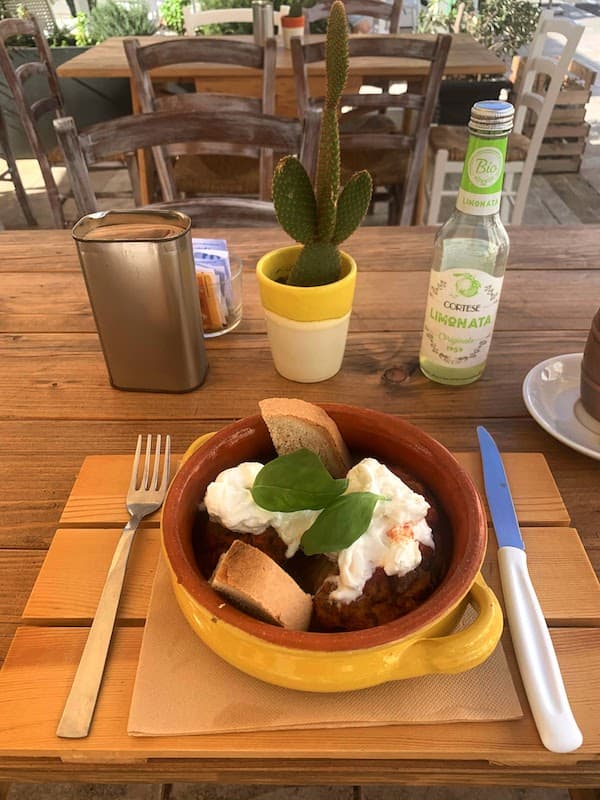
One of my favourite food memories from Puglia was a baked eggplant dish served in a pignatta and topped with creamy stracciatella and fresh basil. I’d originally thought of stracciatella mainly as the filling inside burrata, so seeing it used this way was one of the more memorable food surprises of the trip. If you see stracciatella used as a topping on a local dish, I’d order it.
You’ll see it draped over pasta dishes, spooned onto bruschette, or served as its own antipasto alongside crusty Pane di Monte Sant’Angelo, sun-dried tomatoes, and a good pour of extra virgin olive oil. It’s rich without being heavy, and its mildness makes it a perfect canvas for whatever bold Puglian flavors you pair it with — chili, anchovy, or sweet roasted peppers all work beautifully against its creaminess. Don’t leave Puglia without trying stracciatella at least once, served completely unadorned.
Puglia Street Food: What to Try When You’re Walking and Hungry
Puglia street food deserves its own category. This is a region built for grazing your way through old towns, and I did exactly that on my Puglia road trip.
8. Taralli Pugliesi
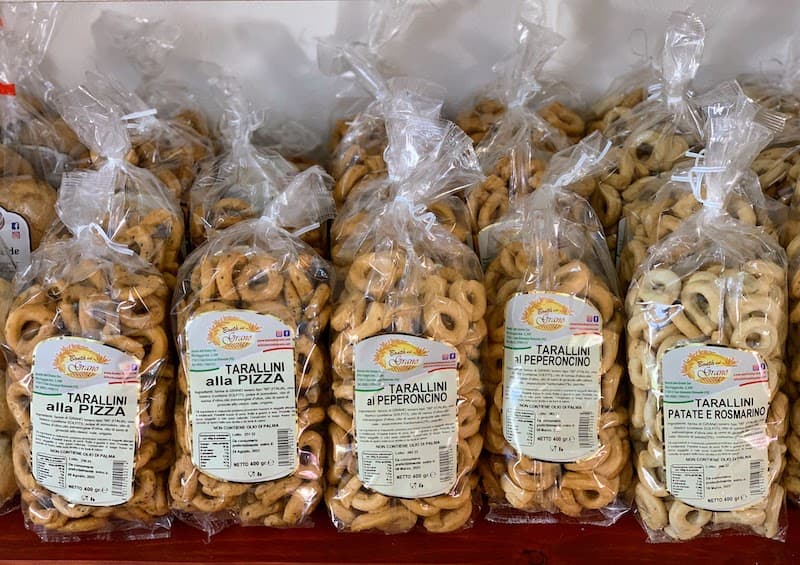
Taralli are the snack you’ll start eating out of curiosity and end up buying by the bagful before you leave Puglia. These ring-shaped, pretzel-like bites are made from a simple dough of flour, extra virgin olive oil, and local white wine, boiled briefly and then baked until crisp — a process similar to how a bagel is made, which explains their satisfying crunch. You’ll find them in two main sizes (larger taralli and smaller tarallini) and in both savory and sweet varieties. Savory versions are seasoned with fennel seeds, chili, or red onion, while sweet taralli come finished with a delicate sugar glaze.
Every bakery, market stall, and grocery shop across Puglia sells its own version, and locals happily debate whose recipe is best. They’re endlessly snackable, travel well in a suitcase, and make one of the easiest edible souvenirs from your trip — pick up a few bags labeled taralli al finocchietto if you only try one variety.
I quickly learned that buying one small bag of taralli was optimistic. They became my default road-trip snack between towns, and the fennel-seed version was the one I kept coming back to. If you’re driving around Puglia, I’d actually buy a few different varieties at the start of the trip rather than waiting until the end—you’re going to eat them.
9. Panzerotti Pugliesi
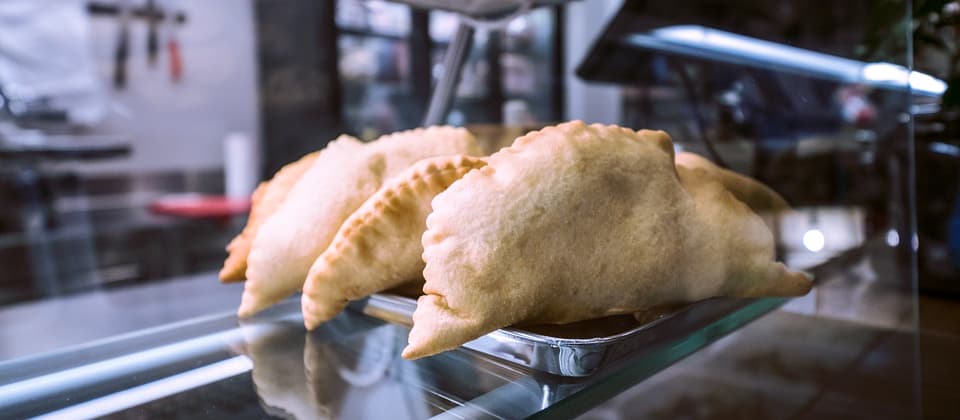
Panzerotti are small, fried, pocket-sized calzones, and they might be the single most satisfying grab-and-go item in all of Puglia street food. The classic filling pairs tomato and mozzarella, essentially delivering a fried, handheld version of pizza margherita, though bakeries across the region also offer variations stuffed with ricotta, spinach, mortadella, anchovies, or olives. What makes panzerotti special is the contrast: the outside fries up crisp and golden, while the inside stays molten and gooey, so the first bite always demands a bit of patience (and probably a napkin).
You’ll find them sold fresh from bakeries and pizzerias throughout the day, especially around lunchtime and early evening, when locals grab one on their way somewhere else. Bari and its surrounding towns are particularly well known for excellent panzerotti, so if you’re road-tripping through the region, keep an eye out for a shop with a line out the door — that’s usually a good sign.
I had my panzerotto hot from La Rotellina in Polignano a Mare, and the main thing I remember is how difficult it was to wait long enough for the molten filling to cool down. I’d eat this fresh rather than take one back to the hotel—the crisp exterior and hot mozzarella are the whole point.
10. Pucce Pugliesi
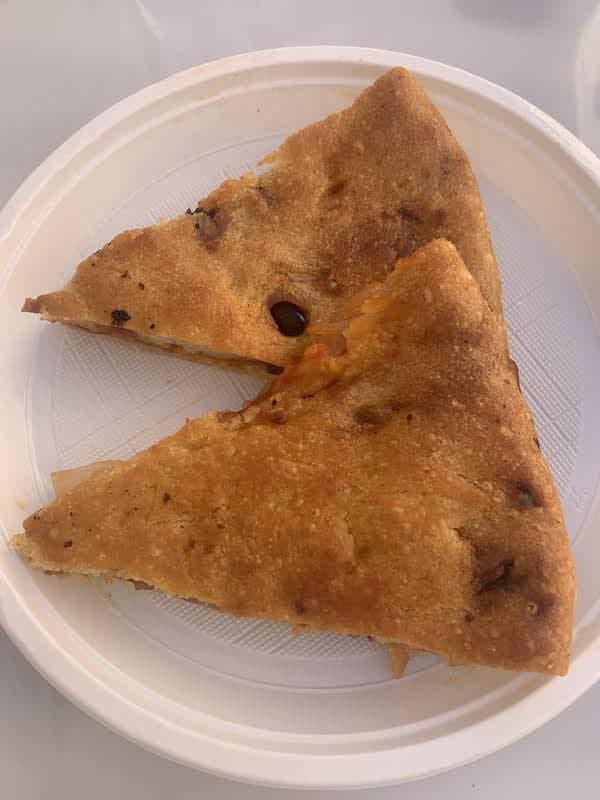
Puccia (singular) and pucce (plural) are Puglia’s answer to the sandwich, built on soft, slightly chewy, olive-oil-enriched bread that’s distinct from anything you’d find elsewhere in Italy. The most traditional filling combines tomato, mozzarella, olive oil, and oregano, though bakeries offer countless variations with cold cuts, tuna, lettuce, or cheese depending on the region and the shop. One version worth specifically seeking out is pucce con uccelletti, filled with smoked scamorzine wrapped in pancetta — a rich, smoky combination that’s become one of the most sought-after pucce fillings across the region.
I think puccia is one of the better choices when you’re sightseeing and don’t want to stop for a full restaurant meal. I had it at Antica Salumeria dal 1960 in Ostuni during a busy day of exploring, and the combination of chewy bread and a generous filling made it much more substantial than I expected from a quick lunch.
You’ll find pucce sold in bakeries, delis, and casual lunch spots throughout Puglia, and they make an ideal portable lunch if you’re spending the day exploring towns rather than sitting down for a full meal. If you’re planning a road trip, picking up a fresh puccia in the morning is a smart way to fuel a long day of sightseeing.
11. Rustico Pugliese
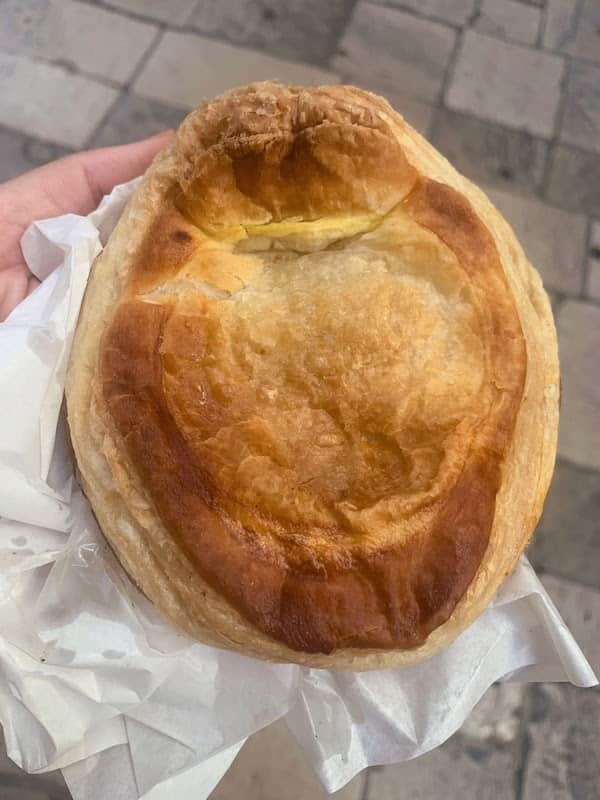
Rustico is an iconic pastry that hails specifically from the Baroque city of Lecce, and it’s one of the more indulgent entries on this list of the best food in Puglia. The pastry is built from puff pastry filled with a rich béchamel cream, tomato, and mozzarella, then baked until the outside turns golden and puffed while the inside stays soft, creamy, and slightly sticky. Bite into a fresh rustico, and you’ll understand immediately why it’s earned cult status among locals and visitors alike — it’s essentially a savory, cheesy hand pie with a satisfying contrast of textures.
You’ll find rustico sold in bakeries throughout Lecce and the wider Salento peninsula, often eaten as a mid-morning snack, a light lunch, or a piece of street food while wandering the city’s stunning baroque streets. I tried mine from Rusticana 1971 in Lecce, and it was exactly the kind of unfussy local snack I was hoping to find — flaky, golden pastry wrapped around a warm, creamy filling of béchamel, tomato, and mozzarella. I’d order it again, especially in the morning, and pair it with a Caffè Leccese for a classic Salento breakfast.
12. Polpette di Pane
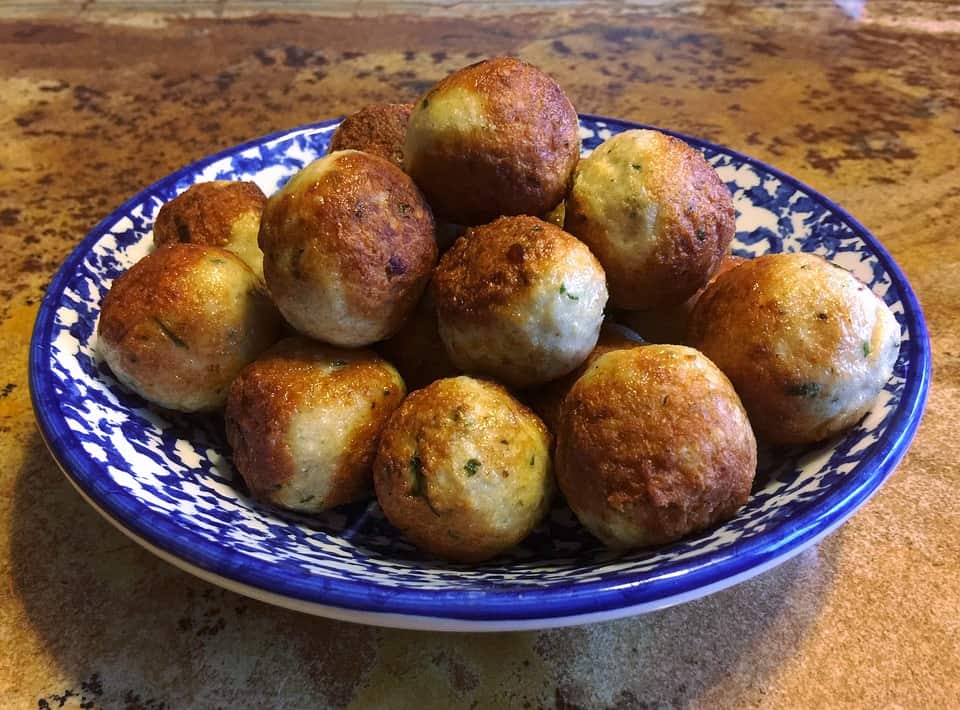
Polpette di pane, or bread balls, are a beautiful example of cucina povera philosophy in action — a dish born from the practical need to use up stale bread rather than waste it. The recipe is simple: bread soaked in milk, combined with egg and finely chopped parsley, shaped into small balls, and fried until golden and crisp on the outside. Despite their humble, leftover-driven origins, polpette di pane have become a popular snack and appetizer across Puglia, appearing on antipasto platters in trattorias and as casual finger food at gatherings.
They’re soft and slightly savory inside, with a satisfying crunch outside, and they pair beautifully with a simple tomato dipping sauce if you want to elevate them further. Don’t dismiss this dish because it sounds plain on paper — it’s a perfect example of how traditional Puglia food consistently turns the simplest ingredients into something you’ll want to eat again.
13. Frise Pugliesi (Friselle)

Frise, also called friselle, are a distinctively shaped, twice-baked bread that’s become one of the most refreshing options in Puglia’s street food scene, especially during the region’s hot summer months. Shaped like small donuts, frise are briefly dipped in water to soften slightly before being topped with ripe tomatoes, olive oil, salt, and oregano in the classic version — though you’ll also see them dressed up with olives, basil, tuna, anchovies, mozzarella, or grilled vegetables depending on the vendor. The dry, twice-baked bread stays satisfyingly crunchy even after being moistened, giving frise a unique texture unlike typical bruschetta.
They’re sold widely across markets and casual eateries throughout Puglia and make an ideal light lunch on a hot day when a heavier meal feels unappealing. If you’re exploring coastal towns in July or August, a frisa topped with juicy summer tomatoes is exactly the kind of simple, satisfying food in Puglia that captures the region’s culinary spirit.
Bread From Puglia
14. Focaccia Barese
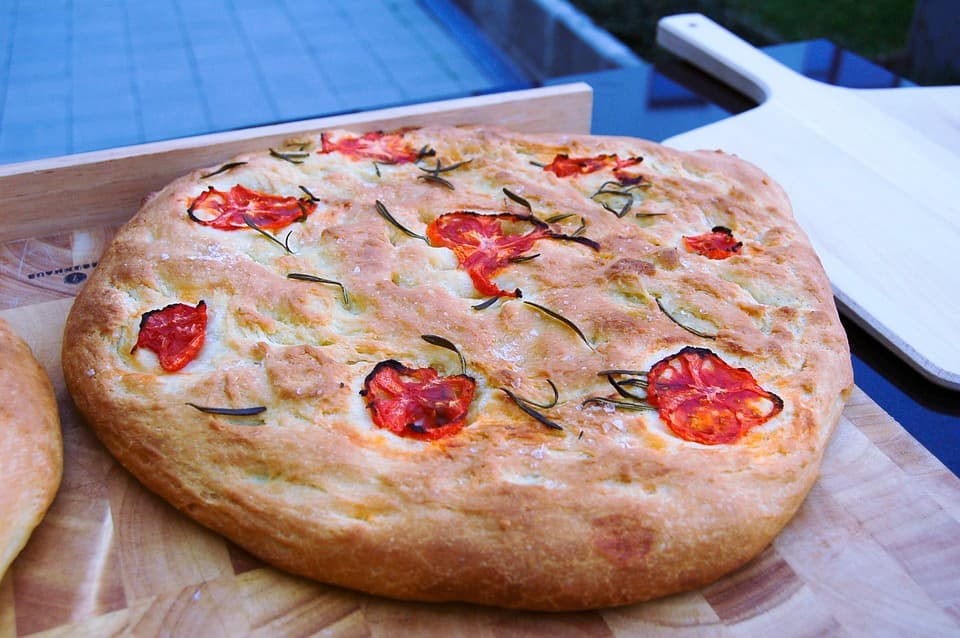
Alongside focaccia Genovese, focaccia Barese is one of the two most celebrated focaccia styles in all of Italy, and tasting it fresh in Bari is a highlight of any Puglia food trip.
The dough combines two types of flour — soft flour and semolina — along with boiled potatoes, which is the real secret behind its texture, keeping the interior remarkably soft while the crust turns golden and crisp. Traditional focaccia Barese is round rather than rectangular, topped generously with cherry tomatoes, black olives, and a scattering of oregano or rosemary, and the semolina flour gives the dough its warm, yellow hue. You’ll find bakeries across Bari selling it fresh throughout the day, often cut into thick wedges and sold by weight, perfect for an on-the-go breakfast or midday snack. If you only try one bread from Puglia, make it this one — it’s an essential taste of Bari’s culinary identity.
15. Pane di Monte Sant’Angelo
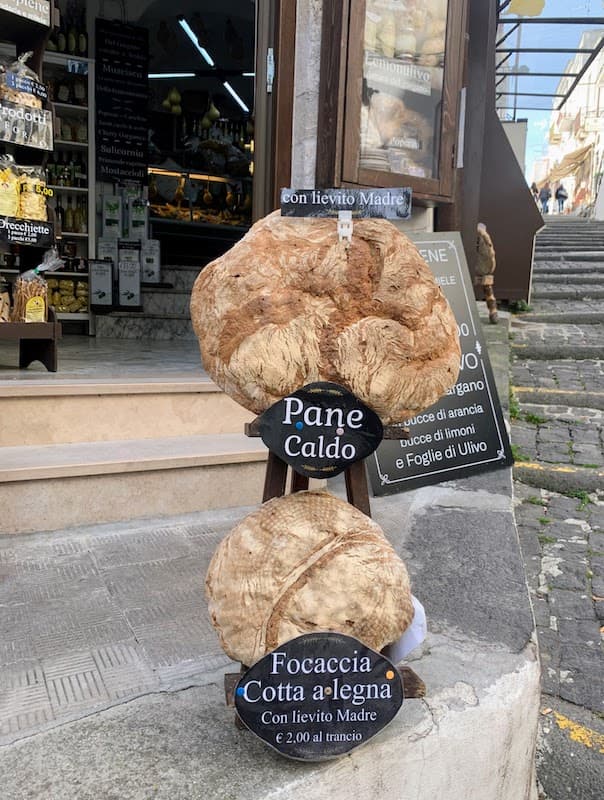
Pane di Monte Sant’Angelo is one of the most striking traditional Puglia breads you’ll come across, hailing from the hilltop town of Monte Sant’Angelo on the Gargano promontory in the province of Foggia. I came across Pane di Monte Sant’Angelo while exploring the town itself.
What sets it apart immediately is its size: the loaves are traditionally enormous, historically weighing 5 to 6 kilograms and stretching 70 to 90 centimeters in diameter, though today bakeries also produce smaller, more manageable loaves of around 1 to 4 kilos for everyday buyers. It’s made from soft wheat flour (unlike the durum wheat used in many other Puglian breads), water, salt, and a local natural yeast called lu crescente, then baked in old wood-fired stone ovens that in Monte Sant’Angelo traditionally stay lit year-round, extinguished only on Christmas and New Year’s Day. The result is a loaf with a soft, fragrant, almond-colored crust that stays crunchy while the inside remains dense and pleasantly chewy.
Locals eat it simply, torn and drizzled with good olive oil and topped with ripe cherry tomatoes, or turned into pancotto, a rustic bread-and-vegetable soup born from cucina povera roots. Look for it in bakeries around Monte Sant’Angelo and across the wider Gargano area if you’re extending your Puglia road trip north.
16. Pasqualino Sandwich


The Pasqualino sandwich holds a unique, almost legendary status in the small trulli town of Alberobello, where it was invented in 1966 by local grocer Pasquale Dell’Erba and has since become an essential culinary stop for anyone visiting.
Built on rosetta or turtle-shaped bread, the classic Pasqualino is filled with salami, cheese, tuna, and capers, with optional additions like cold cuts, pickles, or mushrooms depending on the shop and your personal taste. What makes it special isn’t complicated technique — it’s the history and the fact that several groceries throughout Alberobello still make their own version, each with slight variations that locals debate passionately.
I tried a Pasqualino while exploring Alberobello, and it became one of those unexpectedly memorable bites in Puglia. The combination of tuna, salami, cheese and capers sounds unusual on paper, but the salty, savoury filling works surprisingly well against the soft bread. It was exactly the kind of unfussy lunch that made sense in the middle of a day spent wandering around the trulli.
If you’re heading to see the famous trulli, I cover this sandwich in more depth (along with where to stay and what else to do) in my Alberobello, Italy travel guide — grabbing one from a small grocery near the trulli district is genuinely one of the best things to do there.
Seafood and Fish Dishes of Puglia
With the Adriatic on one side and the Ionian on the other, seafood is a genuine staple food in Puglia.
17. Cozze Arraganate Pugliesi

Mussels, or cozze, are among the most popular seafood ingredients across Puglia’s coastal towns, and cozze arraganate is one of the simplest, most satisfying ways to enjoy them. The dish bakes fresh mussels with a generous topping of breadcrumbs, parsley, and capers, letting the oven’s heat crisp the topping while the mussels themselves stay tender and briny underneath. It’s an unfussy preparation that lets the quality of the seafood shine through rather than masking it with heavy sauces, which fits perfectly with the broader philosophy behind the cuisine of Puglia.
Cozze arraganate typically appears as an antipasto in seaside trattorias along both the Adriatic and Ionian coasts, and it pairs beautifully with a crisp local white wine and crusty bread for mopping up the juices left in the dish. If you’re a seafood lover working through a list of the best food in Puglia, this is an easy, essential entry to check off your list.
18. Tiella Barese (Riso, Patate e Cozze)

Tiella Barese, also known simply as riso, patate e cozze (rice, potatoes, and mussels), is one of Bari’s most beloved comfort dishes and a wonderful example of how Puglia turns humble ingredients into something deeply satisfying.
The dish layers thinly sliced potatoes, rings of onion, chopped parsley, sliced tomatoes, fresh mussels, rice, and grated pecorino into a shallow baking pan called a tiella, which is where the dish gets its name, then bakes everything together until the rice absorbs the briny mussel liquid and the top turns golden. The result is something between a casserole and a seafood risotto, hearty enough to serve as a full meal on its own.
While it originated in Bari, you’ll find versions of tiella served throughout Puglia today, often as a Sunday lunch dish or a special-occasion meal. If you want to understand how Puglia food and wine culture blends simplicity with real depth of flavor, this dish is a perfect case study.
Vegetarian Puglia Dishes
19. Fave e Cicoria

Fave e cicoria might be the single dish that best captures the soul of cucina povera, and it remains one of the most cherished traditional Puglia dishes to this day. The preparation is deceptively simple: dried fava beans are slow-cooked down into a smooth, creamy purée, then paired with sautéed wild chicory greens and finished with a generous drizzle of extra virgin olive oil, garlic, salt, and pepper. The magic is in the contrast — the hearty, almost buttery fava purée balances beautifully against the pleasantly bitter chicory, creating a dish that’s rustic yet deeply satisfying.
Traditionally served as an antipasto alongside crusty Puglian bread for scooping, fave e cicoria has spread well beyond Puglia and is now considered a staple across southern Italy more broadly. It’s entirely vegetarian, naturally, and reflects the same fava-bean-forward cooking traditions found in Mediterranean and Egyptian cuisines. If you only try one plant-based dish in Puglia, make it this one.
20. Melanzane Ripiene Pugliesi
Eggplants are a genuine staple food in Puglia, showing up across countless dishes, and melanzane ripiene — stuffed eggplants — is one of the best vegetarian expressions of that love. Whole eggplants are hollowed out and their pulp mixed with small cubes of bread, chopped parsley, mozzarella, grated pecorino, diced tomatoes, and basil, then the mixture is spooned back into the eggplant shells and baked until everything turns tender and lightly golden on top. The result balances creamy, cheesy filling against the eggplant’s naturally mild, slightly smoky flavor, making for a dish that’s simple to prepare yet genuinely comforting to eat.
Melanzane ripiene appears on trattoria menus throughout Puglia as a vegetarian main course or a generous side dish, and it’s a great option if you’re traveling with vegetarians or simply want a break from pasta and seafood. It’s a lovely showcase of how well Puglia’s cuisine treats vegetables as the star rather than an afterthought.
Meat Dishes From Puglia
Most of Puglia’s cuisine leans vegetable- and seafood-forward, but there are a few carnivore-approved classics worth knowing.
21. Bombette Pugliesi
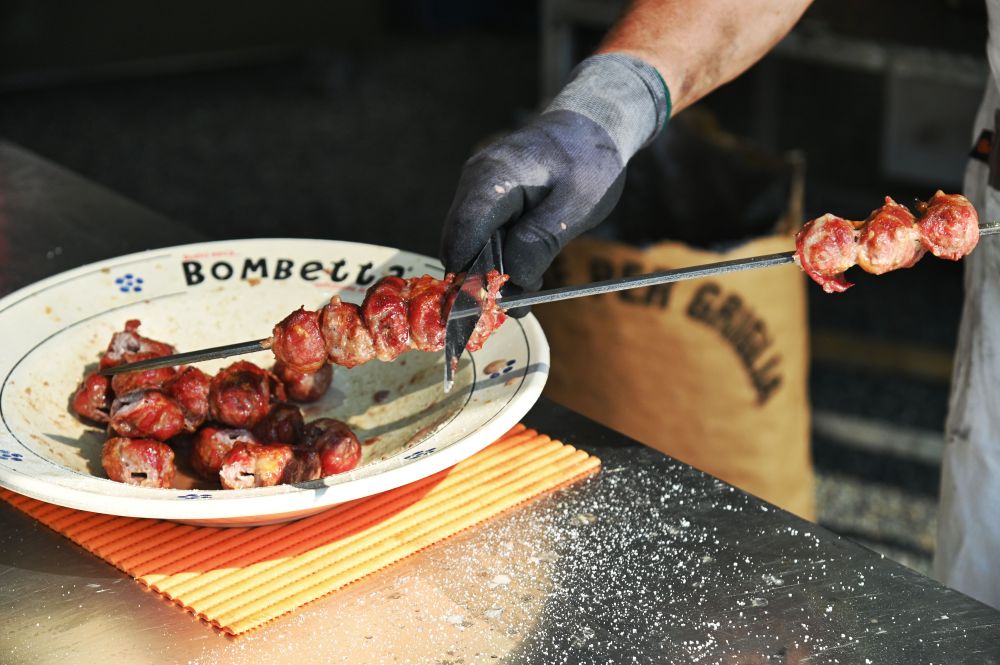
Bombette are small, tightly rolled meat parcels — typically made from pork — stuffed with bacon and caciocavallo podolico cheese, then grilled or baked until the outside chars slightly and the cheese inside turns molten. The name “bombette” (little bombs) hints at what happens the moment you bite in: a burst of smoky, cheesy, savory flavor that’s become one of the most popular meat dishes across Puglia.
You’ll often find them sold hot off a butcher’s grill as a form of Puglia street food, especially in towns like Martina Franca and Cisternino, both known regionally for their exceptional grilled meats and butcher-run restaurants where you choose your cuts directly from the counter. Bombette also appear as a classic second course (secondo piatto) on restaurant menus throughout the region, usually served simply with a side of grilled vegetables or bread. If you’re a meat lover working through the best food in Puglia, plan a stop specifically for bombette in one of these towns.
If you only have time for one meat dish, choose this one.
Puglia Desserts: The Sweet Side of Puglian Cuisine
22. Pasticciotto Pugliese (Leccese)

Pasticciotto is a warm, custard-filled pastry that belongs to the culinary heritage of Lecce and has become a symbol of the entire Salento peninsula.
The pastry shell is traditionally made with lard for extra richness, though modern bakeries increasingly use butter instead, and it’s filled generously with smooth, creamy custard before baking until the crust turns golden. In texture and spirit, it’s not unlike a Portuguese pastel de nata, though the flavor profile leans more delicately vanilla-forward and the shell is thicker and more substantial.
Pasticciotto is meant to be eaten warm, ideally within minutes of coming out of the oven, which is exactly how bakeries across Lecce and the wider Salento region serve it each morning. It’s an essential part of the local breakfast routine, almost always paired with a Caffè Leccese, and stores, cafes, and bakeries throughout Puglia sell it, though the versions in Lecce itself are considered the gold standard. Don’t leave the region without trying one still warm.
I grabbed my first proper pasticciotto in Lecce, and it was much more substantial than I expected from a small pastry. The pastry was crisp and buttery around the edges while the warm custard filling stayed soft in the middle. If you’re exploring Lecce, I’d make time for one in the morning rather than treating it as an afterthought
23. Pettole Pugliesi (Pittule)

Pettole, also called pittule, are simple, fried dough balls made from a leavened batter of flour, water, and yeast, shaped loosely by hand and fried until they puff up golden and crisp outside while staying soft and airy within. They come in both savory and sweet varieties — savory versions might hide a piece of olive, anchovy, or salt cod inside the dough, while sweet pettole are finished with a dusting of sugar or a generous dip in honey after frying.
Traditionally associated with Christmas, pettole have also become tied to specific local feast days across the region: they’re made in Lecce for the Feast of San Martino in November, in Taranto for Santa Cecilia’s Feast Day, and in Brindisi around the Feast of San Lorenzo in July. These days, though, you’ll find pettole sold as a popular year-round Puglia street food, served hot as either an appetizer or a simple dessert. Grab a paper cone of them from a street vendor for a satisfying quick bite.
Drinks to Try in Puglia
Caffè Leccese
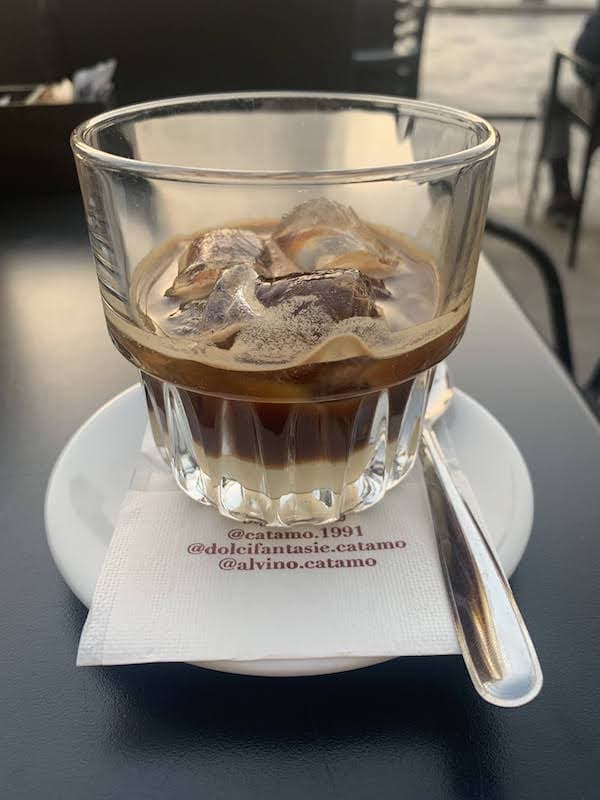
Caffè Leccese is Salento’s answer to the summer heat, and it’s become one of the most recognizable regional coffee drinks in all of Italy. The recipe is straightforward but genuinely refreshing: a shot of espresso poured over ice and combined with sweet almond milk (latte di mandorla), served in a glass rather than a traditional coffee cup, giving it a completely different character from a standard iced coffee. The almond milk brings a distinct nutty sweetness that balances the espresso’s bitterness beautifully, making Caffè Leccese something you’ll want to order again and again once temperatures climb.
It’s consumed throughout the day across Lecce and the wider Salento peninsula — not just as a morning pick-me-up but as an afternoon treat, often paired with a warm pasticciotto for the ultimate Salento snack combination. If you’re chasing an authentic taste of Puglia beyond the food itself, sitting at a café in Lecce with a Caffè Leccese in hand is about as local an experience as you’ll find.
Sangria Leccese (Sangria del Salento)
It might come as a surprise, but Puglia has developed its own distinctly local take on sangria, a drink most people associate exclusively with Spain. Sangria Leccese, or Sangria del Salento, is built on a base of local wine, combined with thinly sliced peaches, oranges, and lemons, a cinnamon stick for warmth, a splash of rum, and topped off with a few glasses of soda for effervescence.
The whole mixture is left to refrigerate for six to eight hours before serving, allowing the fruit and spices to properly infuse the wine, resulting in a refreshing, fruit-forward drink perfectly suited to hot Salento summers. You’ll find it served at bars, beach clubs, and casual restaurants throughout the Salento peninsula, especially during the peak summer months when a cold, fruity drink feels essential after a day at the beach. It’s a fun, unexpected addition to any Puglia food and wine exploration and a great reminder that the region’s culinary creativity extends well beyond its famous dishes.
Puglia Wine: Primitivo and Negroamaro
No exploration of Puglia food and wine is complete without spending real time with the region’s two signature red grapes: Primitivo and Negroamaro.
Primitivo is genetically related to California’s Zinfandel and produces bold, jammy, full-bodied reds with notes of dark fruit and a warm, slightly spiced finish, thriving particularly well in the hot, dry climate around Manduria. Negroamaro, whose name translates roughly to “black and bitter,” yields deep, structured wines with earthy, herbal undertones that pair beautifully with grilled meats, tomato-based pasta dishes, and Puglia’s rich array of cheeses.
Both grapes have thrived here for centuries thanks to Puglia’s ideal Mediterranean growing conditions, and the region has increasingly gained recognition among wine lovers looking beyond Italy’s more famous Tuscan and Piedmontese regions. If you want to taste both varieties side by side with a knowledgeable local, the Martina Franca wine and local products tasting linked above is one of the easiest ways to do exactly that.
Olive Oil From Puglia
Olive oil isn’t just an ingredient in Puglia — it’s the backbone of the entire cuisine. Puglia produces around 45% of Italy’s olive oil, making it the country’s leading olive-oil-producing region. Puglia is home to millions of olive trees, including ancient trees that have shaped the region’s landscape for centuries. If you bring home one Puglia product, make it a bottle of local extra virgin olive oil.
After spending time around Puglia’s olive groves, I found myself paying much more attention to the olive oil on the table than I normally would. In several meals, it was treated almost like a finishing ingredient rather than something hidden in the cooking, and I started noticing how peppery, grassy or fruity different oils could taste. It made buying a bottle to take home feel less like a souvenir and more like bringing part of the trip back with me.
FAQ: What to Know About Food in Puglia
What is Puglia known for?
Puglia is known for its olive oil, burrata and other fresh cheeses, orecchiette pasta, cucina povera cooking philosophy, and seafood from its two coastlines
What food is Puglia famous for?
Some of the best-known foods from Puglia include orecchiette con cime di rapa, burrata, taralli, focaccia Barese, and Pane di Monte Sant’Angelo.
What is traditional Puglia food like?
Traditional Puglia food is simple, seasonal, and vegetable- and seafood-forward, built on the cucina povera tradition of using humble, local ingredients well rather than expensive ones.
What is Pugliese-style pasta?
Pugliese-style pasta is typically handmade and egg-free, made only from durum wheat semolina and water. Orecchiette and tria are the two most iconic shapes.
Is Puglia food spicy?
Some dishes use a light kick of dried chili (peperoncino), especially in pasta sauces, but Puglian cuisine overall is not particularly spicy — flavor comes from good olive oil, garlic, and fresh produce rather than heat.
What’s the difference between Puglia and Tuscan cuisine?
Puglia cuisine leans lighter, more vegetable- and seafood-driven, and pasta is typically egg-free. Tuscan cuisine (which I cover in a separate Tuscany food guide) leans more toward hearty meat dishes like bistecca alla Fiorentina and richer, egg-based pastas.
What should I eat first in Puglia?
Start with orecchiette con cime di rape and a plate of fresh burrata — together, they capture the essence of Puglia’s cuisine in one meal.
Where can I try the best food in Puglia?
Bari’s old town, Lecce, Ostuni, and Alberobello are all excellent bases. I cover exactly where to go in my guides to the best places to visit in Puglia and Ostuni, Italy.
Where to Go Next in Puglia
Food is only part of the story. If this guide has you dreaming about a trip, here’s where to go from here:
- Plan your route with my Puglia road trip itinerary
- Get the full rundown of the best places to visit in Puglia
- See the best things to do in Puglia
- Explore the trulli town in my Alberobello, Italy guide
- Wander the whitewashed streets in my Ostuni, Italy guide
- And if you’re extending your trip into neighboring Basilicata, don’t miss the cave city — I’m working on a full guide to the best things to do in Matera, an easy add-on to any Puglia road trip
Puglia is one of those regions where the food alone justifies the trip. Pack your appetite — and maybe stretchy pants.