Ostuni, Italy: 20 Magical Things to Do in the White City
Ostuni, Italy: 20 Amazing Things to Do + Local Hidden Gems
The first time you see Ostuni from the road below, it genuinely looks unreal — a hilltop stacked entirely in white, glowing against the blue sky like someone spilled a bucket of paint over an entire town. I remember slowing the car down just to look at it. Photos of Ostuni Italy don’t exaggerate. If anything, they undersell how dramatic that first glimpse actually is.
I visited Ostuni during a road trip across Puglia, and it ended up being one of the towns I think about most. This guide covers everything to do in Ostuni, where it is, how much time you need, and every practical detail I wish someone had told me before I went — from parking in Ostuni to which beaches near Ostuni are actually worth the drive.
If you’re planning a longer trip through the region, I’ve also written a full Puglia road trip itinerary, a guide to the best places to visit in Puglia, and a list of the best things to do in Puglia if you want the bigger picture before zooming in on Ostuni. And since Ostuni pairs so naturally with the Valle d’Itria (Itria Valley), don’t miss my travel guide to Alberobello, Italy either — the two towns are only about 40 minutes apart.

Quick Answers: Ostuni at a Glance
If you’re short on time, here’s the essential version of this Ostuni travel guide.
- Where is Ostuni, Italy? In the province of Brindisi, Puglia (Apulia), on a hilltop about 8 km from the Adriatic coast.
- How long do you need? Half a day for the historic center, 2–3 days if you want to add the beaches and countryside.
- Best time to visit: April to June or September to October — mild weather in Ostuni without the peak-summer crowds.
- Best way to get there: Rent a car at Brindisi Airport — Brindisi to Ostuni is about a 40-minute drive.
- Top experience: An Ostuni walking tour with gelato tasting through the centro storico.
- Parking in Ostuni: Skip trying to drive into the historic center. Park in one of the paid lots just outside the old walls (like Parcheggio Tenente Specchia or along Via Roma) and walk in — it’s only a few minutes on foot.
Where Is Ostuni, Italy?
Ostuni sits in the province of Brindisi, in Puglia — the “heel” of Italy’s boot — perched on three hills about 8 km inland from the Adriatic Sea. You’ll often see it written as “Ostuni Puglia Italy” or “Ostuni Apulia,” since Puglia and Apulia are simply the Italian and English names for the same region.
To place Ostuni on Italy’s map: the town is roughly 40 minutes from Brindisi, about 45 minutes from Bari, and 45 minutes from Alberobello. That makes Bari to Ostuni and Brindisi to Ostuni both very manageable drives, and it’s a natural stop if you’re road-tripping between Bari, the Valle d’Itria, and the southern Salento coast.
Map tip: the centro storico (historic center) of Ostuni is compact and entirely walkable once you’re inside the walls. Drop a pin on Piazza della Libertà (Liberty Square), and you’ll see that nearly everything worth seeing sits within a ten-minute walk of it.
Why Is Ostuni Called “The White City”?
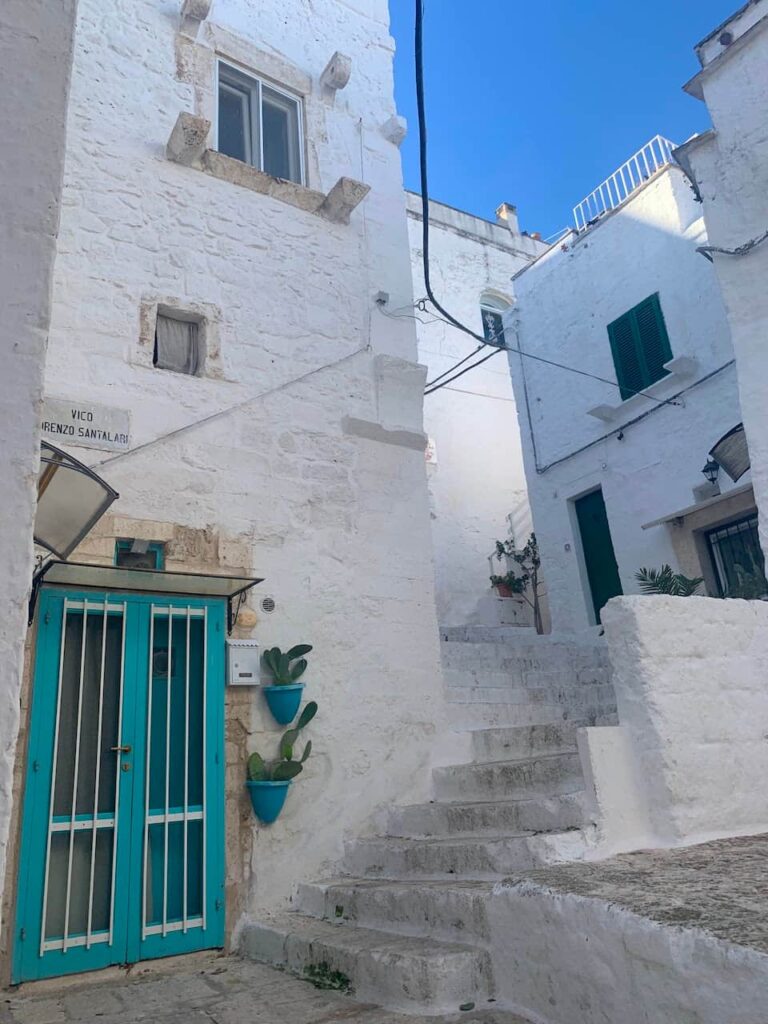
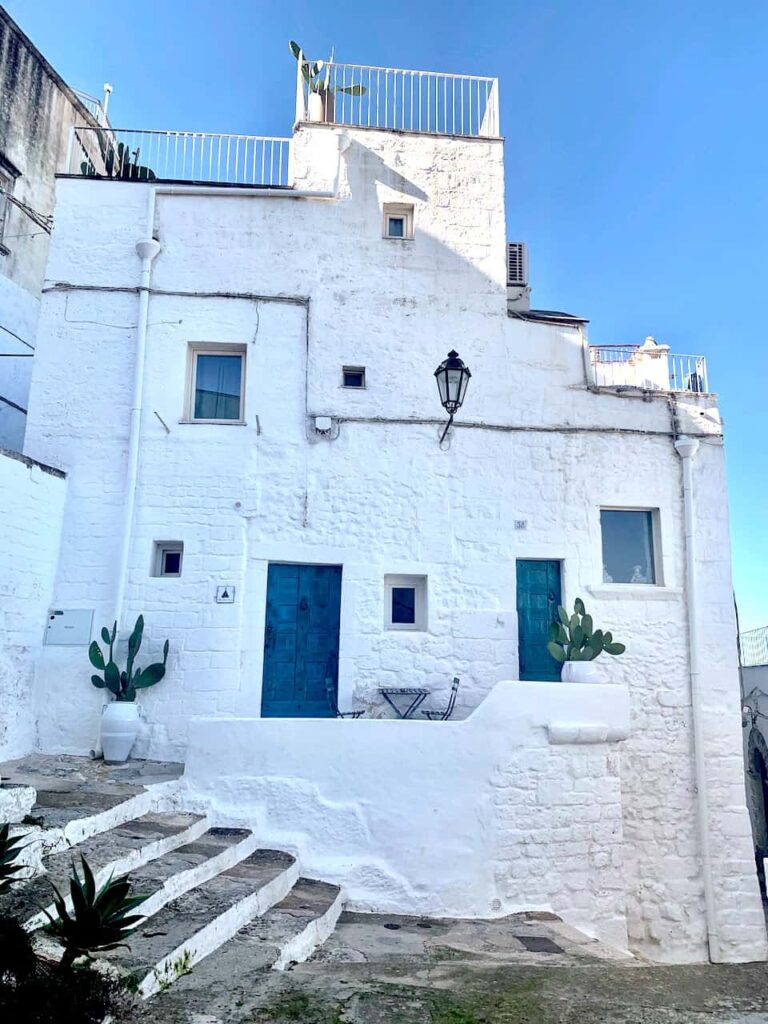
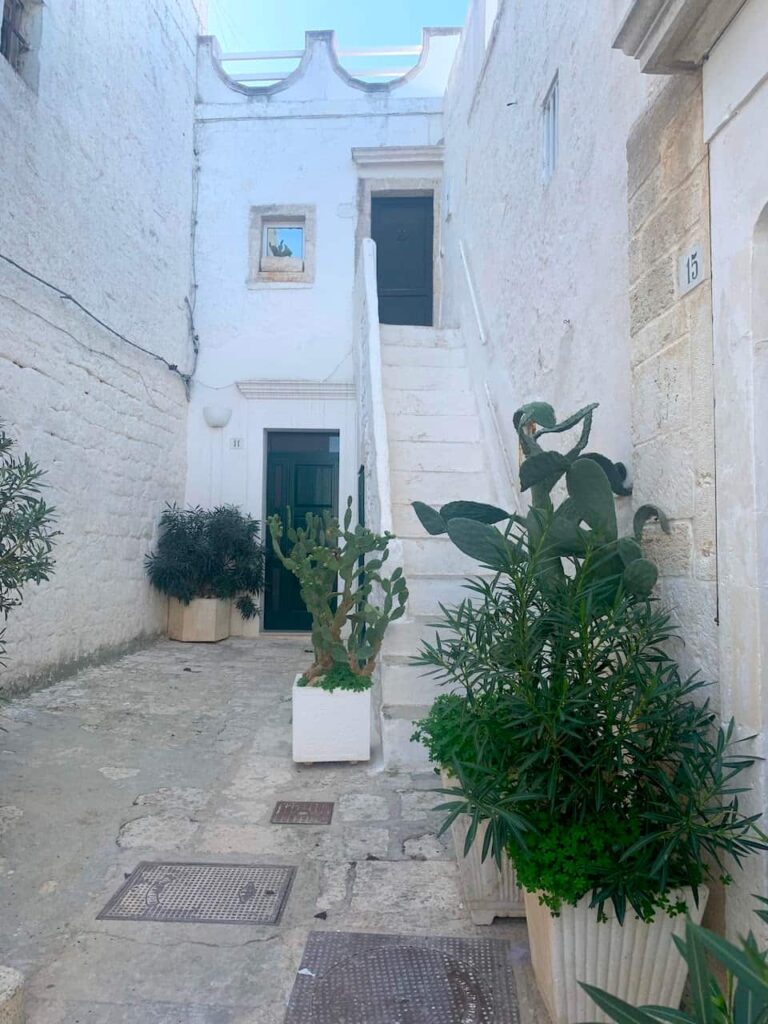
Ostuni is known as Puglia’s White City because every building in the historic center is coated in bright lime whitewash — a tradition that started centuries ago as a way to reflect the summer heat and, according to local lore, disinfect the streets during outbreaks of plague. The result is a maze of blinding-white alleys, stone archways, and stairways that climb the hillside in every direction.
Beyond the color, Ostuni’s history runs deep. Normans, Byzantines, and Greeks all left their mark on the town, and its roots stretch back to a Roman settlement and later a key medieval trading post. The surrounding countryside is thick with centuries-old olive groves and vineyards, which is part of why Ostuni is such a good base for food and wine travel in Puglia. If you want the fuller regional picture, I cover the region’s specialties in my upcoming guide to the foods of Puglia.
Top Ostuni Experiences & Tours
- Ostuni walking tour and gelato tasting
- Ostuni tuk-tuk tour of the ancient village
- Ostuni olive oil tasting tour
- Ostuni vineyard walk and wine tasting
Check out Discover Cars – no hidden costs, free cancellation, and generally the easiest way to explore Ostuni and the rest of Puglia at your own pace.
Interactive Map of Ostuni
The centro storico Ostuni is built on a hill, so expect some uphill walking — comfortable shoes matter more here than almost anywhere else in Puglia. Everything below is organized roughly from the bottom of town near Piazza della Libertà up to the highest point at the Cathedral, so you can follow it as a natural walking route.
20 Best Things to Do in Ostuni, Italy
Here’s my full rundown of what to do in Ostuni, roughly in the order I’d tackle them on foot.
1. Visit Piazza della Libertà and the Column of Sant’Oronzo
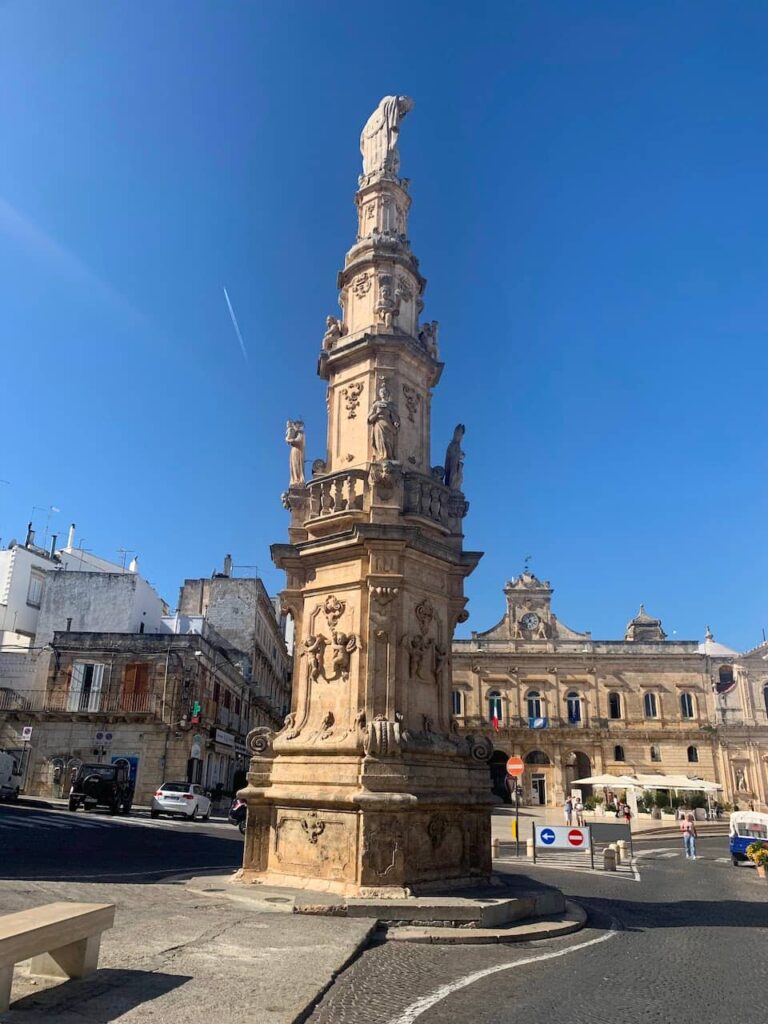
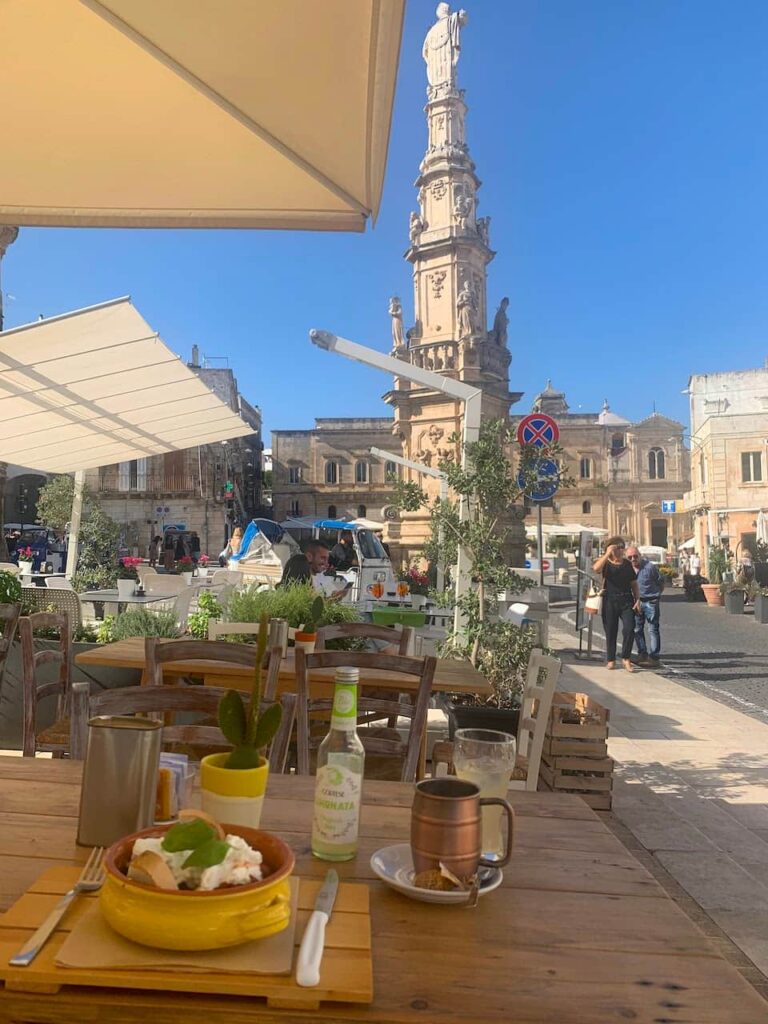
The heart of Ostuni’s historic center is Piazza della Libertà (Liberty Square), home to the striking Colonna di Sant’Oronzo (Column of Saint Oronzo), the Chiesa di San Francesco d’Assisi (Church of Saint Francis of Assisi), the Chiesa dello Spirito Santo (Church of the Holy Spirit), and the Comune Di Ostuni (Town Hall). This is where I’d tell anyone to begin, and honestly where most visits to Ostuni naturally start anyway — it’s the square you’ll walk through if you’re arriving from the parking areas below the old town.
The column itself was erected in the early 1700s as a gesture of thanks after Ostuni was spared the worst of a plague outbreak that devastated much of southern Italy, and it’s a nice bit of context to have in mind as you look up at it. I’d suggest grabbing a coffee at one of the cafés lining the square and simply watching the town wake up around you before you start climbing — mornings here are unhurried, with shopkeepers rolling up shutters and the occasional scooter buzzing past. It’s also, practically speaking, the easiest reference point if you need directions anywhere else in Ostuni.
2. Explore Ostuni’s Historic Upper Town
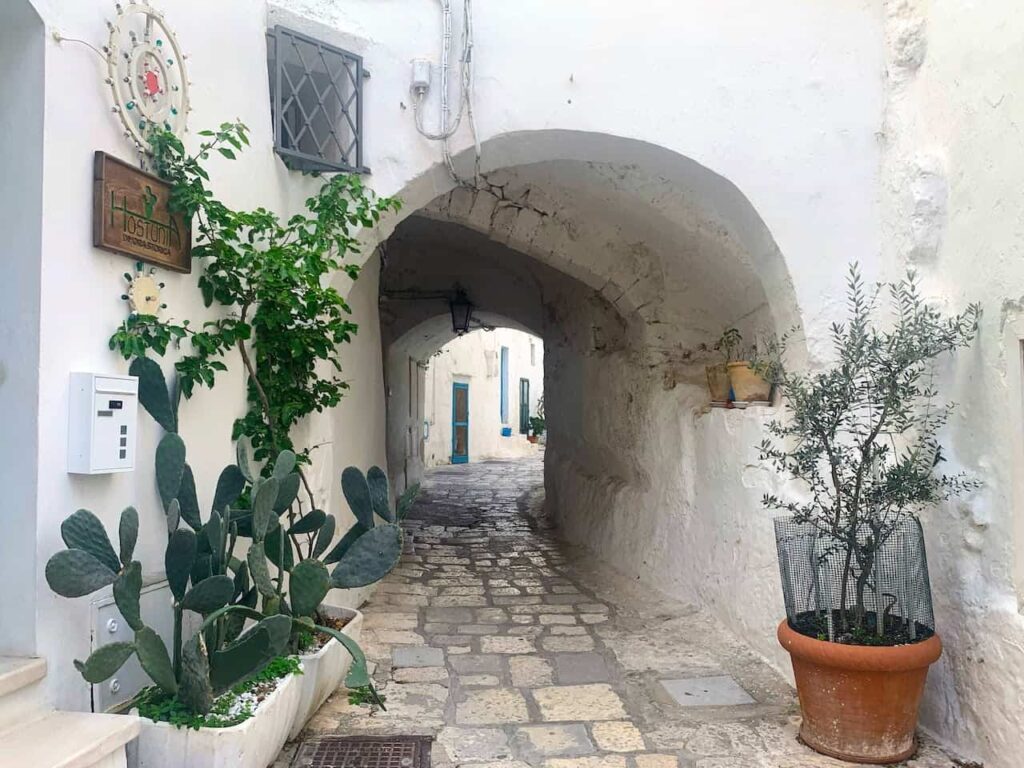
Walking from Porta Nova up toward Porta San Demetrio is, for me, the single best way to understand what makes Ostuni’s white city so distinctive. This is the oldest layer of the town, and the layout still follows the same defensive logic it was built for centuries ago — narrow, winding, and deliberately confusing, so that anyone attacking the hill from below would get lost before reaching the top.
As you climb, the alleys narrow further, the whitewash somehow gets even brighter, and stone staircases twist between buildings in ways that make a map almost useless. I stopped trying to navigate with my phone here and just let myself wander, which is honestly the right approach — you’ll double back on yourself a few times, and that’s part of the experience. Along the way, you’ll pass the Church of Saint Vito the Martyr before eventually reaching the top of the hill, where the views start opening up between the buildings. Give yourself at least thirty unrushed minutes for this stretch alone.
3. Visit the Cattedrale di Santa Maria Assunta

Ostuni’s cathedral sits at the very top of the old town, at the end of that climb through the Upper Town, and it’s worth every step. Built between the late 15th and early 16th centuries in Romanesque-Apulian style with clear Gothic touches, the facade features an unusual rose window built from 24 individual spokes — it’s worth pausing outside for a minute before you go in, since it’s easy to walk straight past it without noticing the detail.
Compared to some of the grander cathedrals elsewhere in Italy, the interior here is fairly restrained — simple stone, modest chapels, none of the overwhelming gilding you’ll find in Rome or Florence. That’s part of what I liked about it. The setting is what makes it memorable rather than the scale: standing at the highest point of an entire white hilltop city, with the Adriatic visible in the distance on a clear day. It’s a short visit, maybe fifteen minutes, but it’s the natural high point — literally — of exploring the historic center.
4. Walk under the Arco Scoppa

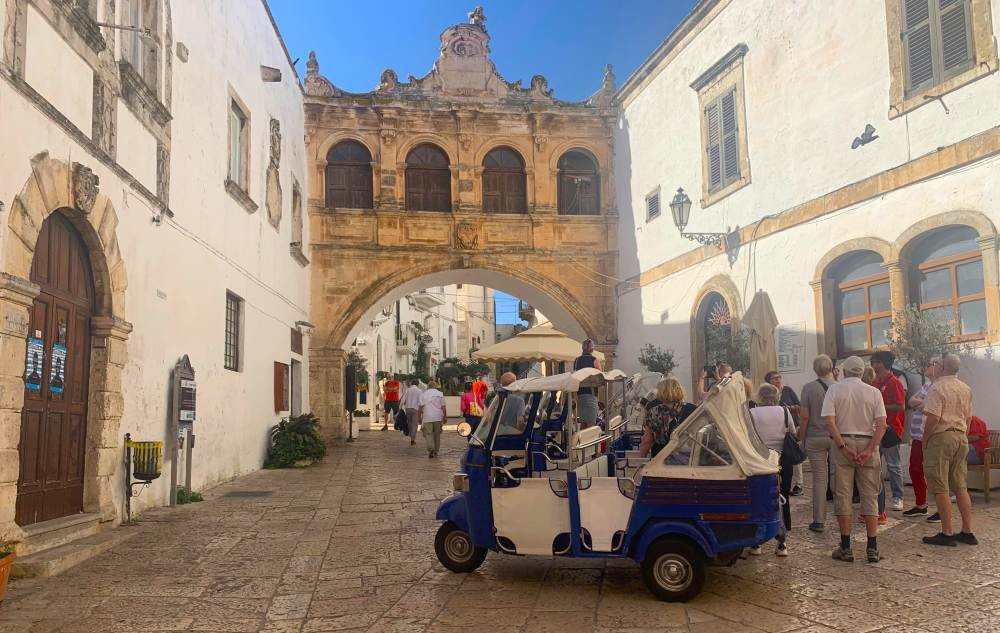
The Arco Scoppa (Scoppa Arch) is one of Ostuni’s most photographed landmarks, and I nearly missed it the first time — it’s tucked into the alleys rather than sitting on any main route, which is exactly why it’s worth seeking out deliberately. The arched passageway connects two parts of the old town, curving overhead between whitewashed walls in a way that genuinely feels like stepping through a stone time portal rather than just another archway.
It’s a quick stop, just a couple of minutes, but I’d build in time to actually stand under it rather than snap one photo and move on. The light changes constantly as clouds pass overhead, and the contrast between the cool shade of the arch and the blinding white alley on either side is one of those small architectural details that makes wandering Ostuni so rewarding. Ask a local or your guide for directions if you can’t find it — the alleys here genuinely don’t follow logic.
5. Take a guided walking tour of the centro storico

To really understand the layers of history packed into Ostuni’s white city, I’d recommend joining a local walking tour with gelato tasting at some point during your visit, rather than trying to piece the town’s history together from plaques alone — there really aren’t many of those in Ostuni, and a lot of the interesting context lives entirely in local memory.
In about ninety minutes, a local guide walks you through the town’s layered Norman, Byzantine, and Greek influences, explains why certain doorways are painted specific colors, and points out architectural details you’d almost certainly miss wandering on your own — I certainly did, on my first solo pass through the alleys. Small group sizes mean you can actually ask questions instead of trailing a raised flag through a crowd, and the tour wraps up with a proper gelato tasting, which is a genuinely nice way to end a warm afternoon of uphill walking. It’s an easy, low-effort way to add real depth to everything you’re already seeing.
6. Take a Tuk-Tuk Tour Through Ostuni
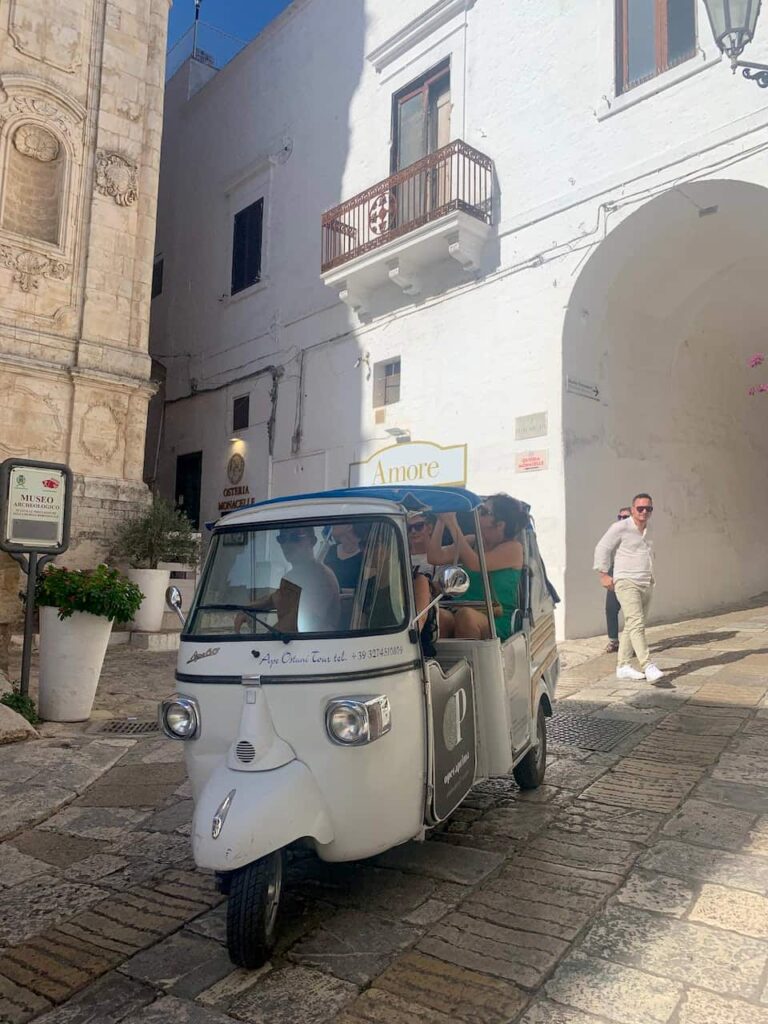
If walking uphill in the Puglia sun isn’t your thing — or if you’re traveling with family members who’d rather not tackle a hillside of stairs — hop on a tuk-tuk tour of the ancient village instead. The little three-wheeled vehicles can squeeze through alleys that would be a tight fit for a normal car, which means you genuinely get access to corners of Ostuni that most day-trippers on foot never find.
It covers considerably more ground than you’d manage walking in the same amount of time, and your driver-guide narrates as you go — hidden churches, old family homes, the odd bit of local gossip about who lives where. It’s also just genuinely fun in a way I wasn’t expecting; there’s something a little ridiculous and joyful about weaving through a whitewashed medieval town in an open-air tuk-tuk. If you’ve already spent a day or two walking other Puglia towns and your legs need a break, this is a welcome change of pace.
7. Admire the Cinta Muraria (City Walls)

Ostuni’s Cinta Muraria dates back to the 16th century and once protected the town from Ottoman and Saracen raids along this stretch of the Adriatic coast — a real threat for centuries in this part of southern Italy, which is part of why so many Puglia hill towns share this defensive, hilltop layout. You’ll actually spot the walls before you spot anything else in Ostuni, since they’re the first thing that comes into view as you approach by car, rising up out of the olive groves like a white crown on the hill.
Walking along the walls themselves gives you a completely different perspective on the town than wandering the interior alleys does — instead of narrow whitewashed corridors, you get sweeping open views over the olive groves and out toward the Adriatic in the distance. I found this one of the quieter parts of my visit, with far fewer people than the busy squares below, and a nice spot to slow down for ten or fifteen minutes.
8. Photograph Porta Azzurra

The bright blue door of Porta Azzurra, set against Ostuni’s blinding-white walls, is one of the most photographed and Instagrammed spots in town — and honestly, for good reason. There’s something about that single saturated color against so much white that stops you mid-step, the same way the whole town does from a distance.
It’s a small stop, easy to fold into your walk through the historic center rather than something you need to plan around, but the color contrast is even more striking in person than it looks in photos. I’d go early in the day if you want a shot without other visitors in frame, since word has clearly gotten around about this particular doorway. Even if photography isn’t really your thing, it’s worth the two-minute detour — it’s a good, simple example of how deliberately Ostuni’s residents have leaned into the white-and-color aesthetic that makes the whole town so visually distinctive.
9. Enjoy Panoramic Views from Piazzetta Martiri delle Foibe
For the best panoramic view of Ostuni — the kind of shot that ends up as everyone’s cover photo — head to the Piazzetta Martiri delle Foibe – Belvedere di Ostuni, about a 10-minute walk from the historic center. It’s slightly out of the way of the main sightseeing loop, which is exactly why it’s quieter than you’d expect for having arguably the best view in town.
From the belvedere, you get an uninterrupted sweep of the white city climbing its hill, the surrounding olive groves stretching out in every direction, and the Adriatic Sea shimmering beyond. I went at golden hour and had it almost to myself, which felt like a genuine reward for the short extra walk. Beyond the view, the piazzetta also commemorates the Martyrs of the Foibe massacres, and the memorial adds a layer of quiet weight to the spot — worth a moment of reflection rather than treating it as purely a photo stop.
10. Eat like a local at Antica Salumeria
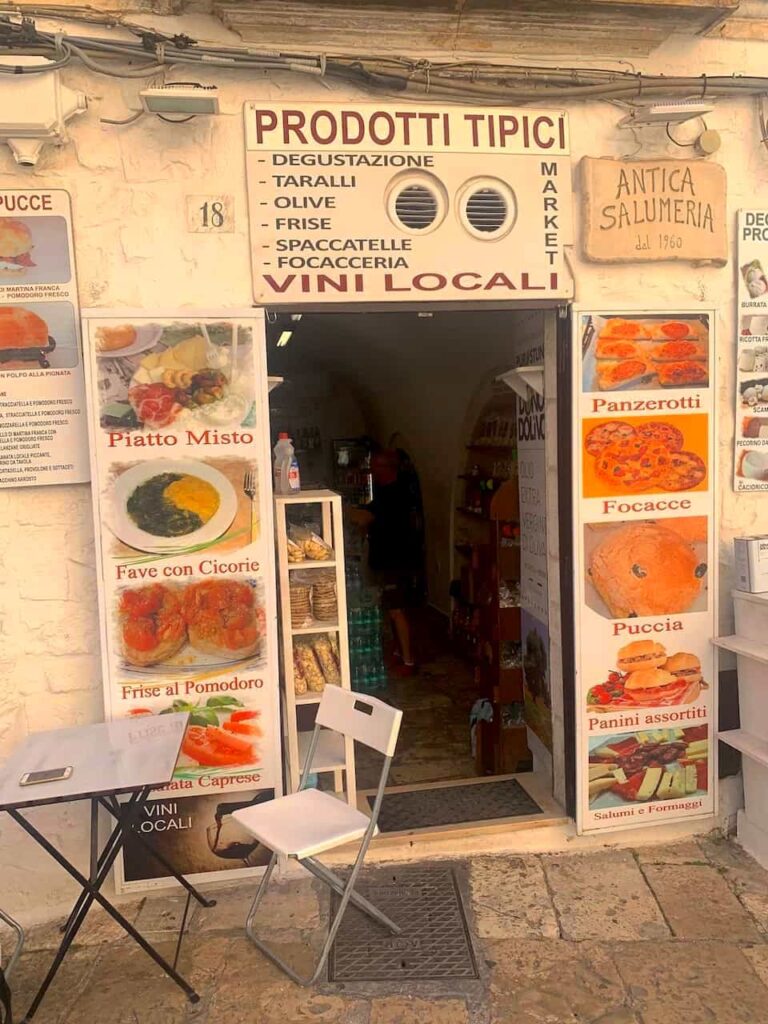
Ostuni is a genuinely excellent food town, and one of my favorite meals during my whole Puglia trip happened at Antica Salumeria, a small, unpretentious spot that’s been serving traditional food since 1960. It’s tucked into the historic center, and the kind of place where the person slicing your prosciutto probably has strong opinions about which local cheese pairs best with it.
I sat down expecting a quick snack and ended up staying for over an hour, working through a board of local cheeses, cured meats, and olive oil that tasted nothing like the bottled stuff I bring home from the supermarket. It’s the kind of unfussy, ingredient-first meal that Puglia does better than almost anywhere else in Italy — no elaborate plating, just genuinely excellent local products served simply. If you only try one traditional food spot in Ostuni, this is the one I’d point you toward first.
11. Sip an Aperol Spritz with a view at Bar Perso
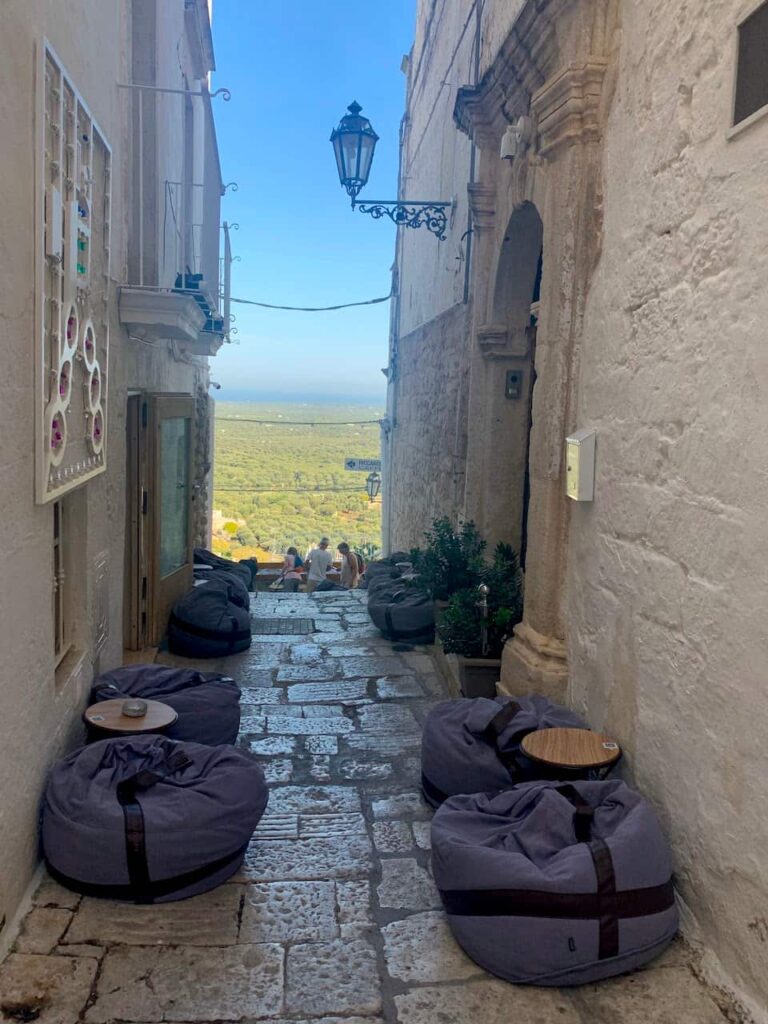

For sunset drinks with a proper view, head to Bar Perso, where the terrace looks out over the surrounding countryside toward the horizon. After an afternoon spent climbing Ostuni’s uphill alleys, there’s something particularly satisfying about finally sitting still with a cold drink and a view that stretches for miles.
The Aperol Spritz here is unremarkable in the sense that it’s exactly what you’d expect — the ritual is really the point. I ordered one intending to stay for twenty minutes and ended up watching the whole sunset play out over the olive groves below, the white buildings around me slowly shifting from bright white to a soft gold. It’s the kind of spot where you order one drink and end up staying for two, and honestly, that unhurried pace is exactly how I’d recommend spending an evening in Ostuni rather than rushing to squeeze in one more sight.
12. Take an olive oil tasting tour at a masseria
Puglia produces roughly 40% of all Italy’s olive oil, and nowhere did that fact feel more real to me than in the countryside around Ostuni, where the groves stretch out in every direction as far as you can see. On a 1-hour olive oil tasting tour, you’ll visit a working masseria just outside town and walk among olive trees that are genuinely a thousand years old — gnarled, twisted trunks that have been producing fruit since long before the town’s cathedral was even built.
The tasting itself was a genuine education rather than just a chance to buy a souvenir bottle: different varietals, different harvest times, and the difference between a fresh, peppery first-press oil and the milder stuff most of us grew up cooking with. I walked away tasting olive oil completely differently, in the same way a good wine tasting changes how you drink wine afterward. For anyone who genuinely cares about food, this is one of the most memorable things to do in Ostuni, Italy.
13. Ride an e-bike through the olive groves
If you’d rather cover the countryside on two wheels instead of on foot, this 3-hour e-bike tour through Ostuni’s ancient olive groves is one of the more active but genuinely rewarding ways to spend a morning outside the historic center. The electric assist means you don’t need to be in serious cycling shape to keep up — this is flat-to-rolling countryside, not a mountain route.
The route winds through the so-called “plain of ancient olive trees,” passing groves that have been continuously cultivated for centuries, with your guide stopping periodically to explain how the trees are pruned, harvested, and pressed into oil. You cover far more ground than you would walking, which means you see a genuinely wider slice of the Ostuni countryside — old dry-stone walls, scattered masserie, the occasional grazing sheep. Between the fresh air, the scenery, and the pace being just brisk enough to feel like an adventure, it’s a nice contrast to a day spent wandering narrow white alleys.
14. Taste the wines of Ostuni DOC
Ostuni holds two separate DOC (Denominazione di Origine Controllata) wine designations, which tells you something about the quality and consistency coming out of these vineyards — it’s not a wine region that gets nearly the attention Tuscany or Piedmont do, and I think that’s part of its appeal. On a guided vineyard walk and wine tasting, you’ll walk directly through the vines with a local host before settling in for a proper tasting.
The wines themselves tend toward robust reds made from local grape varieties you won’t easily find outside Puglia, alongside crisp, food-friendly whites that pair beautifully with the region’s seafood. I appreciated that this wasn’t a rushed tasting-room pour-and-go; the two-hour format gives you time to actually walk the rows, ask questions about the growing conditions, and understand why this particular stretch of countryside produces the wine it does. It’s a genuinely relaxed, unhurried way to spend an afternoon if wine is your thing, with the Ostuni countryside as a backdrop rather than a generic tasting counter.
15. Cook and dine at a local’s home

For one of the most genuinely authentic experiences in Ostuni, consider booking a dinner and cooking class at a local family’s home rather than another restaurant meal. It’s a small-group setting, usually in someone’s actual kitchen, which changes the whole tone of the evening compared to sitting at a restaurant table being served.
You’ll learn to make orecchiette, Puglia’s signature “little ear” pasta, entirely by hand — no machine, just flour, water, and a butter knife dragged across a piece of dough in a motion that looks deceptively easy until you try it yourself. My first attempts looked nothing like the host’s, and everyone laughed about it, which is exactly the point. Afterward, you sit down together and eat what you’ve made, and the conversation tends to drift well beyond recipes into daily life in Ostuni. For more on the region’s dishes and where to find them, keep an eye out for my upcoming guide to the foods of Puglia.
16. Relax at the Best Beaches Near Ostuni
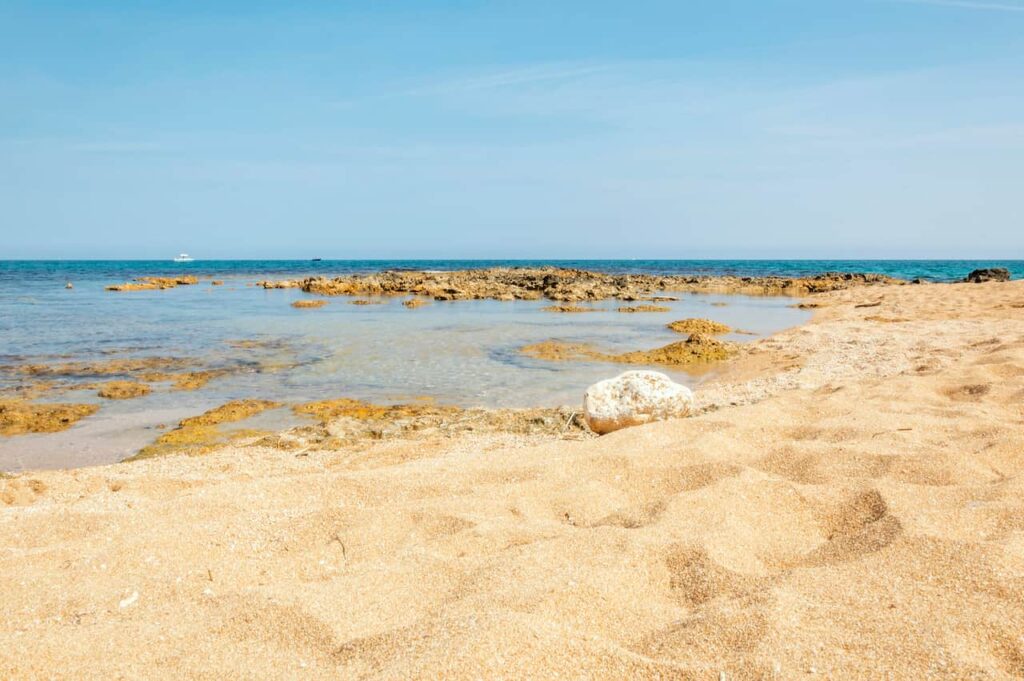
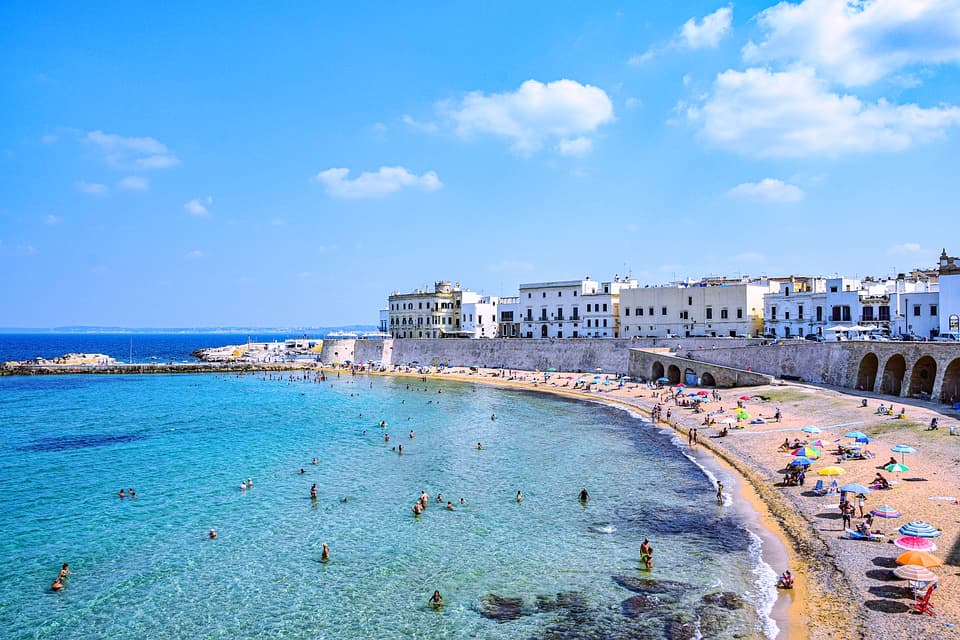
Ostuni isn’t only about the whitewashed historic center — and I think this is genuinely the part most visitors skip, which is a shame, because the beaches near Ostuni are some of the best on this entire stretch of the Adriatic coast. Pack a swimsuit and head to Lido Onda Blu for a lively, well-equipped stretch of sand, or Spiaggia di Torre Pozzelle for something wilder and less developed, with rocky coves and clear turquoise water.
Beyond those two, Spiaggia Costa Merlata, Spiaggia di Rosa Marina, Lido Morelli, and Spiaggia di Monticelli round out the list, each with its own character, from family-friendly lidos with sunbed rentals to quieter, more rugged coastline. Most of these beaches in Ostuni are a 15–25 minute drive from the historic center, so I’d plan for a car or taxi if you’re not staying somewhere along the coast already. If you can, budget at least half a day here — it’s a completely different, more relaxed side of Ostuni than the hilltop alleys.
17. Stay overnight in a traditional masseria

Sleeping in a restored masseria — a historic Puglia farmhouse estate — is, in my opinion, the single best way to experience the Ostuni countryside rather than only its historic center. These properties were originally working farms, and the best ones have kept that character: thick stone walls, working olive presses, and gardens instead of manicured hotel landscaping.
Masseria Il Frantoio, with its citrus gardens, centuries-old olive groves, and an original 15th-century mill still standing on the property, is genuinely one of the prettiest places I’ve stayed in Puglia, and it’s only about 10 minutes from both Ostuni’s historic center and the sea — a rare combination. Waking up there, with breakfast served among the olive trees, felt worlds away from a standard hotel stay. For a longer stay or if you’re traveling with family or a group, this masseria with its own trulli is another lovely option, giving you both the masseria setting and the novelty of staying inside a trullo.
18. Day-trip into the Itria Valley
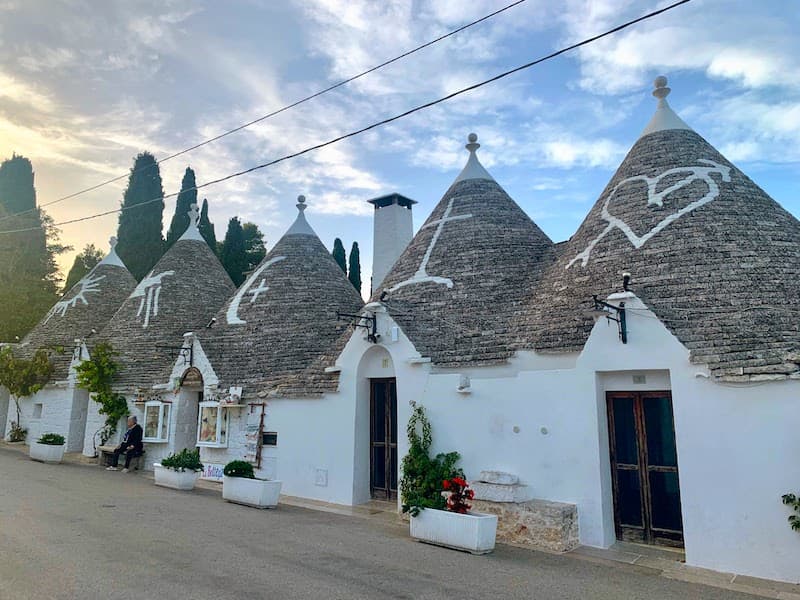
From Ostuni, it’s an easy trip into the Itria Valley, a pocket of Puglia known for its own distinctive white towns and rolling countryside dotted with trulli and vineyards. Alberobello and Locorotondo both sit within easy reach, and if you’d rather not drive yourself between wineries, this private wine tour that stops in both Alberobello and Locorotondo is a genuinely enjoyable way to combine sightseeing with tasting in a single outing.
I did the drive myself on my Puglia road trip, and the scenery along the way — endless dry-stone walls, olive groves, and the occasional cluster of cone-roofed trulli appearing out of nowhere — is worth the trip on its own, even before you arrive. If you’d rather explore Alberobello in more depth independently, I’ve put together a full Alberobello travel guide covering the best things to do there, including where to stay if you decide to spend the night in a trullo yourself.
19. Take a day trip to Matera

While it’s technically over the regional border in Basilicata rather than Puglia, Matera and its extraordinary cave-dwelling Sassi district are close enough to Ostuni — around 90 minutes by car — to make a genuinely worthwhile day trip if your schedule allows for it. It’s one of those places that photos genuinely don’t do justice; an entire ancient city carved directly into limestone ravines, inhabited continuously for thousands of years and now a UNESCO World Heritage Site.
I’d treat it as a full-day excursion rather than a rushed half-day add-on, since the Sassi district rewards slow wandering just as much as Ostuni’s alleys do, and the light on the cave dwellings changes dramatically from morning to golden hour. It pairs beautifully with a wider Puglia road trip, and enough travelers combine the two towns that guided day tours from the region routinely include both stops. I’ll be sharing my full guide to things to do in Matera soon, with a complete breakdown of what to see there.
20. Visit the Best Towns Near Ostuni
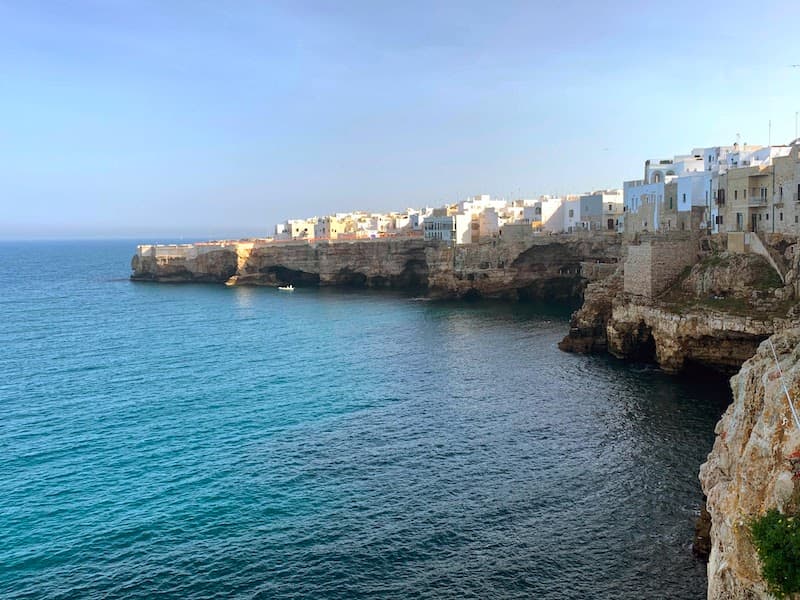
One of the biggest reasons I’d recommend basing yourself in Ostuni for a few days, rather than just passing through, is how central it is to the rest of Puglia. Monopoli is about 30 minutes away and worth an afternoon for its harbor and old town; Polignano a Mare is around 40 minutes and home to one of the most photographed beaches in Italy, tucked dramatically between two cliffs; and Alberobello, with its UNESCO-listed trulli, is roughly 45 minutes by car.
None of these require an overnight stay elsewhere — you can genuinely use Ostuni as a single base and do day trips to each, which cuts down on packing and unpacking bags every night, something I always appreciate on a longer Puglia road trip. If you have a few extra days built into your itinerary, I’d rotate through these towns rather than trying to cram them all into one exhausting day. I cover all of them, plus more, in my guide to the best places to visit in Puglia.
Free Things to Do in Ostuni
One of the best things about visiting Ostuni is that many of its top attractions are completely free.
Spend a few hours wandering the whitewashed streets of the Centro Storico, where every narrow alley, flower-filled staircase, and hidden piazza offers a new photo opportunity.
Visit Piazza della Libertà, admire the impressive Column of Sant’Oronzo, and stroll beneath the elegant Arco Scoppa. Don’t miss the panoramic viewpoints overlooking the endless olive groves and the Adriatic coastline, especially around Piazzetta Martiri delle Foibe. While the Ostuni Cathedral charges a small fee to enter, admiring its beautiful Gothic façade is free. If you’re visiting during the warmer months, several nearby beaches are also free to access, making it easy to combine a morning exploring the White City with an afternoon by the sea. Ostuni proves that you don’t need a big budget to enjoy one of Puglia’s most beautiful destinations.
How to Spend One Day in Ostuni
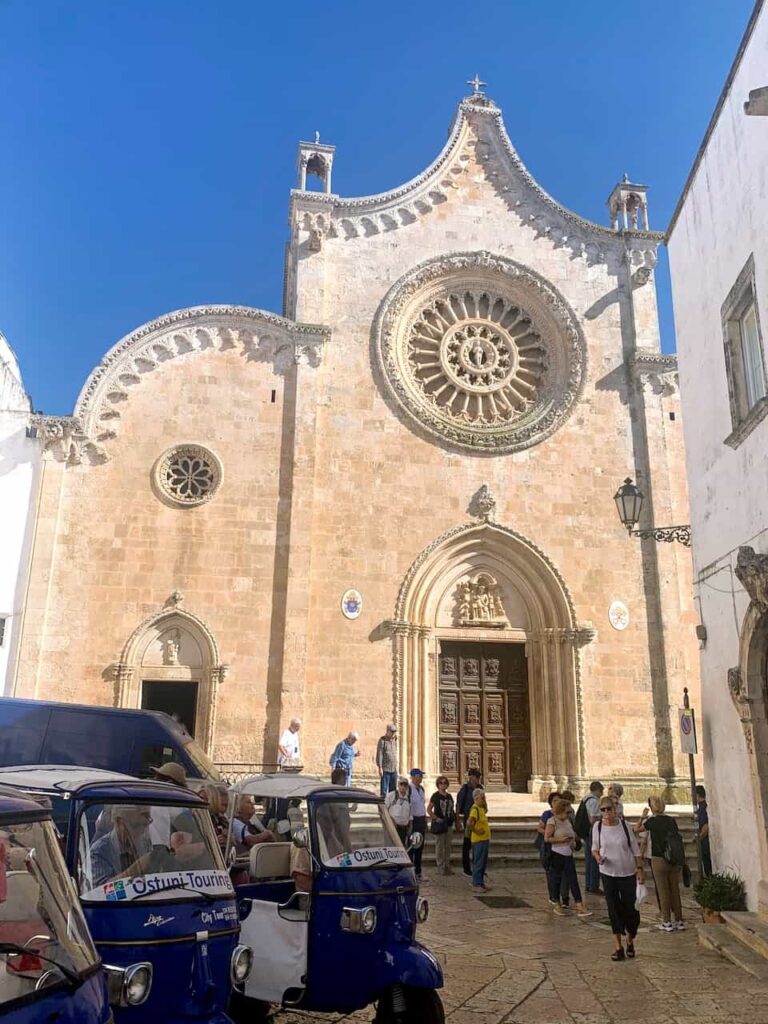
Many travelers visit Ostuni as a day trip from Bari, Brindisi, or Alberobello, and one day is enough to experience the city’s highlights at a relaxed pace. Start early to enjoy the quiet streets before the crowds arrive, spend the afternoon exploring the historic center, and finish the day with dinner overlooking the olive groves.
Morning: Explore the Historic Center
Begin your visit in Piazza della Libertà, the lively heart of Ostuni. Admire the Column of Saint Oronzo before wandering uphill through the whitewashed streets toward Ostuni Cathedral. Along the way, stop at Arco Scoppa, photograph the colorful Porta Azzurra, and enjoy the countless flower-filled alleyways that make the White City so photogenic.
Lunch
For lunch, enjoy traditional Apulian specialties at Antica Salumeria Centro Storico or another local trattoria. Sample regional favorites such as burrata, capocollo, focaccia, fresh orecchiette, or a platter of local cheeses and cured meats.
Afternoon
After lunch, explore areas you may have missed in the old town, browse artisan boutiques, or join a tuk-tuk or guided walking tour to learn about Ostuni’s history. If you have a car, consider visiting a nearby masseria for an olive oil tasting or wine experience among centuries-old olive trees.
Sunset
As the afternoon light softens, walk to Piazzetta Martiri delle Foibe or another panoramic viewpoint overlooking the endless olive groves stretching toward the Adriatic Sea. Golden hour is one of the best times for photography, as the white limestone buildings glow in the warm Mediterranean light.
Evening
End your day with an aperitivo at Bar Perso, where colorful bean bags line the whitewashed stone steps, creating one of Ostuni’s most memorable outdoor lounges. Afterwards, enjoy dinner at a traditional restaurant before taking one last stroll through the beautifully illuminated streets of the historic center.
Suggested One-Day Ostuni Itinerary
| Time | Activity |
|---|---|
| 8:30–10:00 | Explore Piazza della Libertà and the historic center |
| 10:00–11:00 | Visit Ostuni Cathedral and Arco Scoppa |
| 11:00–12:30 | Photograph Porta Azzurra and wander the whitewashed alleys |
| 12:30–2:00 | Lunch at a traditional trattoria or salumeria |
| 2:00–4:30 | Tuk-tuk tour, shopping, or a nearby masseria visit |
| 4:30–6:30 | Scenic viewpoints and sunset photography |
| 6:30 onward | Aperitivo at Bar Perso followed by dinner |
Essential Ostuni Travel Tips
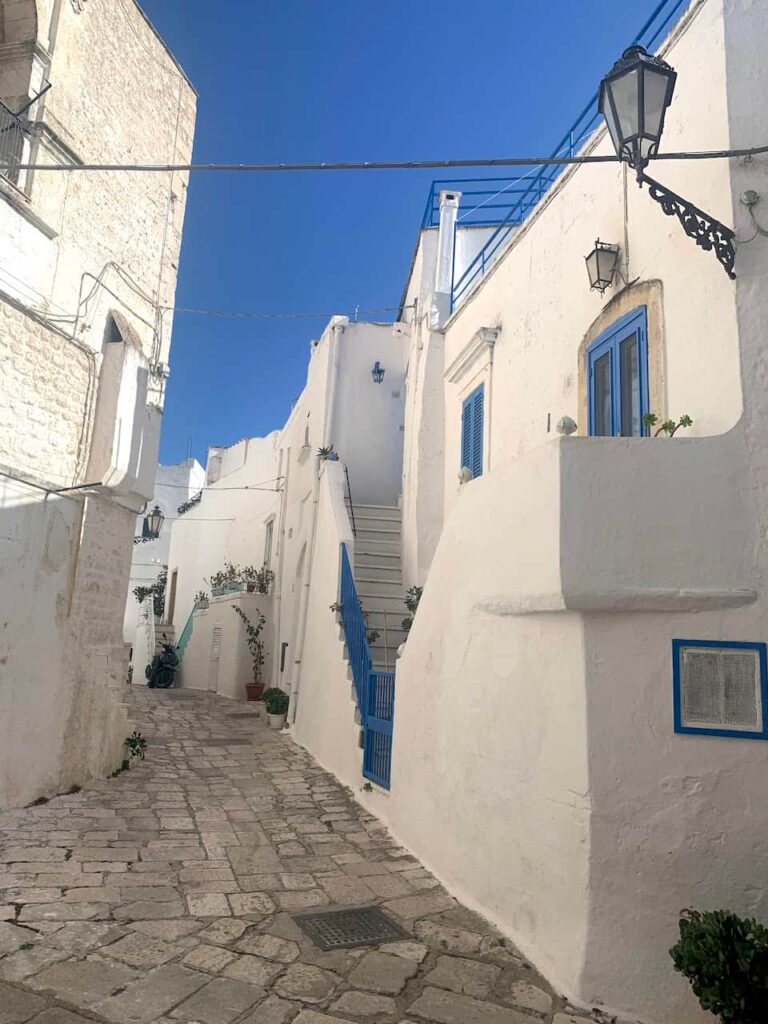
Ostuni is easy to enjoy, but a few small planning details make a real difference. Here’s what I’d do differently, or what I’m glad I did right.
- Don’t try to drive into the historic center. Parking in Ostuni’s old town is extremely limited, and the streets are narrow. Park in one of the paid lots just outside the walls — like Parcheggio Tenente Specchia or along Via Roma — and walk in.
- Don’t skip comfortable shoes. Ostuni’s centro storico is built uphill, with plenty of stairs and uneven stone. This isn’t a flip-flop kind of town.
- Don’t visit only in July or August if you can help it. The weather in Ostuni is genuinely hot in peak summer, and the historic center gets crowded. Spring and early fall are far more comfortable.
- Don’t stay only in the old town if you want a car. If you’re road-tripping, a masseria just outside Ostuni gives you easy parking and a quieter base, while still being minutes from the centro storico.
- Don’t skip the beaches. It’s easy to treat Ostuni as purely a historic center, but the beaches near Ostuni are some of the nicest on this part of the Adriatic coast, and most visitors never make it there.
Where to Stay in Ostuni
Hotels in Ostuni fall into two main camps: boutique stays inside the whitewashed historic center, and restored masserie scattered through the surrounding countryside. Both give you a genuinely different flavor of Ostuni, and I’d choose based on whether you’re traveling with a car.
I’d recommend a boutique apartment in the heart of the historic center if you want to be able to walk everywhere, or Masseria Salinola, an 18th-century masseria with a swimming pool and free parking, if you’d rather have a quieter countryside base with easy access by car.
What to Eat in Ostuni
Ostuni is one of the best places to experience the authentic flavors of Puglia. The local cuisine celebrates simple, high-quality ingredients, including extra virgin olive oil, handmade pasta, fresh vegetables, locally produced cheeses, and seasonal seafood.
While exploring the White City, be sure to try regional specialties such as orecchiette alle cime di rapa, Puglia’s iconic handmade pasta served with turnip greens, and creamy burrata, which originated in the region. Meat lovers shouldn’t miss bombette, delicious grilled pork rolls stuffed with cheese, while traditional dishes like fave e cicorie (mashed fava beans with wild chicory) showcase the area’s rustic culinary heritage. Pair your meal with a glass of Primitivo, Negroamaro, or a local Ostuni DOC wine, and don’t miss the chance to sample award-winning extra virgin olive oil produced from the ancient olive groves surrounding the city.
If you’re planning a culinary journey through southern Italy, be sure to read my guide to the Must-Try Foods in Puglia, where I share the region’s most iconic dishes, desserts, cheeses, street food, and wines.
Best Restaurants in Ostuni

For a true taste of Puglia, start at Antica Salumeria for traditional local fare, or head to Osteria del Tempo Perso for a more upscale meal with a view. Ristorante Spessite is another excellent choice if you want a proper sit-down Italian dinner. All three are genuinely among the best restaurants in Ostuni, Italy, and all sit within easy walking distance of Piazza della Libertà.
How to Get to Ostuni, Italy
Ostuni is easiest to reach by car. From Brindisi Airport, Brindisi to Ostuni is around a 40-minute drive, making it the more convenient airport if Ostuni is your main stop. Bari to Ostuni takes about 45 minutes by car and is your best option if you’re flying into Bari or combining Ostuni with Alberobello and the Valle d’Itria.
By train, Ostuni does have its own station — but it’s about 8 km from the historic center, so you’ll still need a taxi or bus from there. Buses run to Ostuni from nearby towns like Monopoli (about 40 minutes) and Brindisi (about 50 minutes), and are generally a more convenient option than the train if you’re not driving.
Getting Around Ostuni
Ostuni is a compact, walkable city, and the best way to experience its historic center is on foot. The narrow cobblestone streets, staircases, and winding alleyways of La Città Bianca are closed to most traffic, allowing visitors to explore at a leisurely pace while discovering hidden squares, charming cafés, and panoramic viewpoints.
If you’re arriving by car, keep in mind that the Centro Storico is a ZTL (Limited Traffic Zone), meaning only authorized vehicles are permitted to enter. Several paid and free parking areas are available just outside the old town, from where it’s only a 5–10 minute walk to Piazza della Libertà.
For a more relaxed sightseeing experience, you can join a tuk-tuk tour or hop aboard the local tourist road train, both of which provide an easy way to explore the city’s highlights without tackling the steep hills. If you plan to visit nearby beaches, masserias, or towns such as Alberobello and Cisternino, renting a car is the most convenient option, as public transportation outside Ostuni is limited.
Weather in Ostuni
Ostuni sees a classic Mediterranean climate: hot, dry summers and mild, wetter winters. July and August regularly push into the low-to-mid 30s°C (high 80s–90s°F), while spring (April–June) and fall (September–October) sit in a far more comfortable range for walking the uphill alleys of the historic center. If beach time is your priority, June through September gives you warm enough sea temperatures without the very peak of the summer crush.
How Many Days Do You Need in Ostuni?
I’d suggest at least two to three days in Ostuni. That’s enough time to properly explore the historic center, get out to the countryside for a tasting or two, and still have a day for the beaches near Ostuni. That said, Ostuni also works well as a base for a wider Puglia road trip — Monopoli is 30 minutes away, Polignano a Mare about 40 minutes, and Alberobello around 45 minutes by car.
Best Time to Visit Ostuni
The best time to visit Ostuni Italy is spring (April to June) or fall (September to October), when the weather is mild and the town isn’t as packed as it gets in peak summer. If you’re chasing a lively summer atmosphere and don’t mind the heat and crowds, July and August still deliver — just book accommodation well ahead and plan your sightseeing for the cooler parts of the day.
Nearby Towns to Visit from Ostuni
Ostuni’s hilltop position makes it a genuinely great base for exploring more of Puglia. A few favorites worth adding to your itinerary:
- Alberobello (about 45 minutes by car): Famous for its cone-roofed trulli houses and a UNESCO World Heritage Site since 1996. I cover it in full in my Alberobello travel guide.
- Locorotondo (about 30 minutes by car): Another whitewashed gem of the Itria Valley, known for its circular layout and sweeping panoramic views.
- Polignano a Mare (about 40 minutes by car): A dramatic cliffside town with crystal-clear water, best known for Lama Monachile beach tucked between two cliffs.
- Monopoli (about 30 minutes by car): A quieter, less touristy seaside town with a lovely historic center and a genuinely relaxed pace.
- Matera (roughly 1 hour by car): Just over the border in Basilicata, Matera’s cave-dwelling Sassi district makes a fantastic day trip. I’ll be publishing my full guide to things to do in Matera soon.
Is Ostuni Worth Visiting?
Yes — without question. Ostuni brings together history, food, wine, beaches, and some of the most photogenic streets in all of Puglia. Whether you’re wandering the whitewashed alleys of the centro storico, sipping wine on a hilltop terrace, or spending an afternoon at one of the beaches near Ostuni, this is a town that earns its reputation rather than just riding on a pretty Instagram feed.
FAQ: Frequently Asked Questions About Ostuni
Where is Ostuni, Italy located?
Ostuni is in the province of Brindisi, in Italy’s Puglia region, on a hilltop about 8 km from the Adriatic coast — roughly 40 minutes from Brindisi and 45 minutes from Bari.
What is Ostuni famous for?
Ostuni is famous as Puglia’s “White City,” known for its whitewashed historic center, its Romanesque-Apulian cathedral, and the olive groves and vineyards that surround it.
Is Ostuni worth visiting?
Yes. Ostuni combines a stunning whitewashed historic center, excellent local food and wine, and easy access to some of the best beaches on this stretch of the Adriatic coast.
What are the top things to do in Ostuni?
The top things to do in Ostuni include exploring the centro storico and Piazza della Libertà, visiting the Cattedrale di Santa Maria Assunta, walking under the Arco Scoppa, taking an olive oil or wine tasting tour, and spending time at the beaches near Ostuni.
How do I get from Bari to Ostuni?
Bari to Ostuni takes about 45 minutes by car, or roughly 1.5–2 hours by train and bus combined. Renting a car is the most convenient option.
How do I get from Brindisi to Ostuni?
Brindisi to Ostuni is about a 40-minute drive, which makes Brindisi Airport the most convenient gateway if Ostuni is your primary destination.
Where should I park in Ostuni?
Don’t drive into the historic center — the streets are too narrow. Park in one of the paid lots just outside the old walls, such as near Largo Porta Nova, and walk into the centro storico from there.
What is the weather like in Ostuni?
Ostuni has a Mediterranean climate with hot, dry summers (often into the low-to-mid 30s°C / high 80s–90s°F in July and August) and mild, wetter winters. Spring and fall offer the most comfortable sightseeing weather.
Where should I stay in Ostuni?
You can stay either in the whitewashed historic center for a walkable, boutique experience, or in a traditional masseria in the surrounding countryside for a quieter, more rural stay with easy parking.
What are the best beaches near Ostuni?
Popular beaches near Ostuni include Lido Onda Blu, Spiaggia di Torre Pozzelle, Spiaggia Costa Merlata, Spiaggia di Cala di Rosamarina, Lido Morelli, and Spiaggia Monticelli.
Final Thoughts
Ostuni is one of those towns that photographs beautifully but feels even better in person — the quiet hum of the historic center at golden hour, the smell of olive oil at a countryside tasting, a slow Aperol Spritz on a terrace overlooking the valley. If you’re mapping out the rest of your trip, my guides to the Puglia road trip itinerary, the best places to visit in Puglia, and the best things to do in Puglia are the natural next stops.