Best Places to Visit in Puglia: The Complete Guide From Someone Who Drove Every Mile of It
Puglia is home to some of Italy’s most beautiful destinations, from the iconic trulli of Alberobello to the whitewashed streets of Ostuni, the Baroque architecture of Lecce, and the dramatic cliffs of Polignano a Mare. After driving across the entire region myself, I’ve put together this guide to the best places to visit in Puglia, including famous highlights, underrated towns, and hidden gems worth adding to your itinerary.
If you’ve typed “best places to visit in Puglia” into Google more than once this week, I get it. I did the exact same thing before my own trip, and I remember how overwhelming it felt — so many whitewashed towns, so many “hidden gem” lists, and no clear sense of which places actually deserve your limited vacation days.
So here’s the short version: I road-tripped my way through Puglia, from the trulli of the Itria Valley to the sea caves of the Gargano peninsula, and I’m putting everything I learned into one guide. I already wrote a full breakdown of a Puglia road trip itinerary if you want the day-by-day version — but this post is the “where to go” master list: the best towns in Puglia, the best cities, the quiet villages nobody talks about, and the genuine hidden gems in Puglia that make this region so special.
Every place on this list I visited myself — nothing here is pieced together from other blogs, and where I mention a drive time, it’s one I actually did behind the wheel. This guide also sits alongside my dedicated posts on Puglia road trip planning, Ostuni, Alberobello, Matera, and the region’s food scene, so what you’re reading is cross-checked against a wider body of first-hand research rather than a single trip. Facts on distances, UNESCO status, and regional details are checked against official sources at the time of writing; nothing here is a paid placement, and I keep coming back to update anything that’s changed on the ground.
Whether you’re planning a weekend escape or a two-week road trip, these are the places I’d recommend visiting first.

📌 Table of Contents
Best Places to Visit in Puglia at a Glance

Short on time? Here’s a quick comparison of the best places to visit in Puglia, how long to spend at each, and which destinations are worth staying overnight.
| Place | Best For | Recommended Visit | Stay Overnight? | Perfect For |
|---|---|---|---|---|
| Alberobello | First visit & iconic trulli | Half day | If time allows | First-time visitors |
| Ostuni | Central base & whitewashed streets | 1 day | ✅ Yes | Couples |
| Lecce | History, Baroque architecture & food | 1 day | ✅ Yes | Culture lovers |
| Polignano a Mare | Dramatic coastline & cliff views | Half day | If time allows | Photographers |
| Monopoli | Beaches & authentic harbour | 1 day | ✅ Yes | Families |
| Otranto | Beaches & history | 1 day | If time allows | Beach lovers |
| Gallipoli | Nightlife & Ionian beaches | 1 day | ✅ Yes | Nightlife & groups |
| Bari | Local culture & street food | Half day–1 day | If time allows | Foodies |
| Trani | Seafront charm & historic centre | Half day | If time allows | Relaxed day trips |
| Locorotondo | Wine & hidden gem | 2–3 hours | No | Slow travellers |
| Martina Franca | Elegant Baroque old town | Half day | If time allows | Architecture lovers |
| Cisternino | Local food & relaxed atmosphere | 2–3 hours | No | Food lovers |
| Vieste | Nature & the Gargano coast | 2 days | ✅ Yes | Outdoor enthusiasts |
| Gargano Peninsula | Scenic drives & hiking | 2–3 days | ✅ Yes | Nature lovers |
| Tremiti Islands | Boat trips & snorkelling | Full day | No | Snorkellers & boat trips |
| Torre Guaceto Nature Reserve | Quiet beaches & wildlife | Half day | No | Wildlife lovers |
| Grotte di Castellana | Spectacular caves | Half day | No | Families & adventure |
| Castel del Monte | UNESCO castle & history | 2–3 hours | No | History lovers |
| Monte Sant’Angelo | Pilgrimage & panoramic views | Half day | If time allows | Pilgrims & history buffs |
| San Giovanni Rotondo | Padre Pio pilgrimage | Half day | If time allows | Pilgrims |
| Matera* | Cave city & unforgettable overnight stay | 1–2 days | ✅ Yes | History & photography |
*Although Matera is in Basilicata, it’s a natural addition to most Puglia itineraries and is well worth including in your planning.
** Top recommendations are bolded in the table
Quick Answer: The Best Places to Visit in Puglia
If you only have a few minutes, here’s the cheat sheet. These are, in my experience, the best places in Puglia for a first visit:
- Alberobello — the trulli capital and Puglia’s most iconic postcard
- Ostuni — the “White Town” hilltop icon of the Itria Valley
- Lecce — Puglia’s Baroque showpiece city, often called the “Florence of the South”
- Polignano a Mare — the cliffside town with the famous Lama Monachile beach
- Monopoli and Trani — whitewashed seaside towns with real, working harbors
- Otranto and Gallipoli — Salento’s best coastal towns for beaches and old-town charm
- Locorotondo, Martina Franca, Cisternino — the Itria Valley’s most underrated villages
- Vieste and the Gargano Peninsula — Puglia’s wild, green, cliff-lined north
- Castel del Monte and Grotte di Castellana — Puglia’s best day-trip landmarks
- The Sanctuary of St. Michael the Archangel in Monte Sant’Angelo and the Sanctuary of St. Padre Pio of Pietrelcina in San Giovanni Rotondo — Puglia’s most important pilgrimage sites
Keep reading for the full breakdown of why each of these made the list, how to get between them, and a few genuine hidden gems in Puglia that most guides skip entirely.
Map of the Best Places to Visit in Puglia
Where Is Puglia (And Why It’s Suddenly Everywhere)
Puglia — Apulia in English — forms the heel of Italy’s boot, in the far southeast of the country. It’s one of Italy’s eight southern regions, bordered by Molise, Campania, and Basilicata, and wrapped by two seas: the Adriatic to the east and the Ionian to the west.
Bari is the regional capital and the biggest city you’ll fly into, but the region’s real personality lives in its smaller towns — the whitewashed hill towns of the Itria Valley, the Baroque cities of the Salento peninsula, and the wilder, greener Gargano peninsula up north.
Puglia flew under the radar for a long time compared to Tuscany or the Amalfi Coast. That’s changing fast, and having driven through it myself, I understand exactly why: nowhere else in Italy gives you this combination of dramatic coastline, centuries-old olive groves, unique architecture, and prices that are still refreshingly reasonable.
When Is the Best Time to Visit Puglia
Puglia has a classic Mediterranean climate — hot, dry summers and mild, rainy winters. July and August regularly push past 35–40°C (95–104°F), and the coastal towns get genuinely packed.
If I’m being honest with you, the sweet spot is May, June, and September. You still get warm, swimmable weather, but without the peak-season crowds or prices. October is a solid runner-up if you care more about sightseeing than beach time — though I’d push back a little on writing off the beaches entirely. My own Puglia road trip was actually in October, and I was still able to swim in the sea in Puglia in October, both on the Adriatic and Ionian coasts. The water holds onto its summer warmth longer than you’d expect, the towns are noticeably calmer, and I never once had to fight a crowd for a spot on the beach.
How to Get to Puglia (and Why You’ll Want a Car)
Puglia has two main airports: Bari Karol Wojtyła Airport (BRI) and Brindisi Salento Airport (BDS). Bari is the better base for exploring the whole region, while Brindisi puts you closer to the Salento peninsula in the south.
I flew into Brindisi, picked up a rental car right at the airport, and drove the entire region myself — and I’d genuinely recommend the same route to anyone asking where to go in Puglia. Public transport between the smaller towns is patchy at best, and a car is what lets you chase the coastline, detour into a random hilltop village, and actually see the places on this list rather than just the two or three that happen to be on a train line.
I go into much more detail on routes, timing, and day-by-day stops in my Puglia road trip itinerary guide, and I’ve also put together a separate list of the best things to do in Puglia if you want activities to slot into your days, not just towns to visit.
Best Towns to Visit in Puglia (The Itria Valley Icons)
If someone asks me for the best towns in Puglia, this is where I always start. The Itria Valley, in the heart of the region, is home to the whitewashed towns that show up on every Puglia postcard — and they earn it.
Alberobello
Quick Facts
📍 Best for: First-time visitors & iconic trulli
⏱️ Time needed: Half day
✈️ Nearest airport: Bari (65 km)
⭐ Don’t miss: Rione Monti & Trullo Sovrano
💡 My tip: Arrive before 9 am to enjoy the streets before the tour buses arrive.
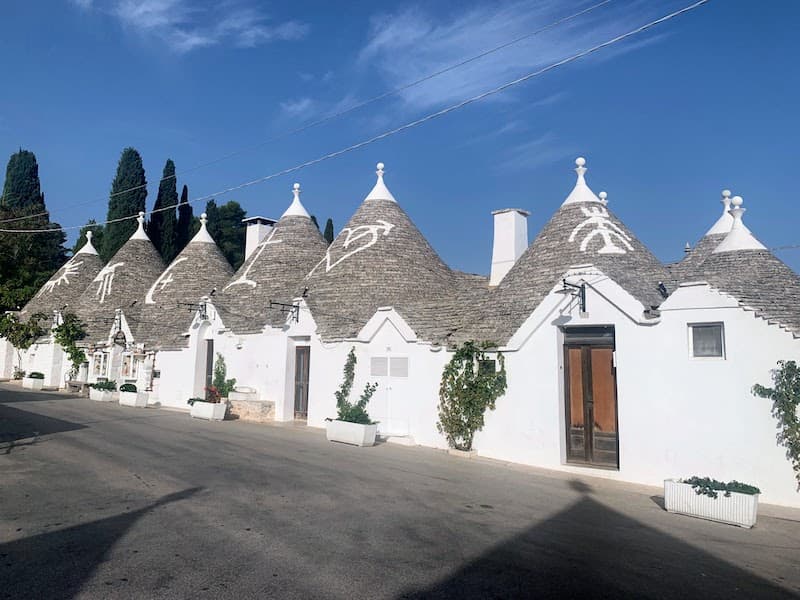
Alberobello is, without question, one of the best places to visit in Puglia, Italy, and probably the most photographed town in the entire region. It’s built almost entirely around trulli — the whitewashed, cone-roofed, dry-stone huts unique to this corner of Italy — and the historic Rione Monti and Aia Piccola districts, home to around 1,400 of them, hold UNESCO World Heritage status. Walking through Alberobello early in the morning, before the day-trip buses arrive from Bari, is genuinely one of my favorite memories from the whole trip; the narrow lanes between the huts feel almost fairy-tale-like when they’re quiet.
Many trulli today function as shops, wine bars, or small guesthouses, so it’s worth ducking inside a few rather than just photographing them from the street. Alberobello sits in the Itria Valley, roughly an hour’s drive from Bari, which makes it an easy first or last stop on a Puglia road trip. I’d budget at least half a day here, and I’ve written a full guide to the best things to do in Alberobello if you’re mapping out your visit.
Ostuni
Quick Facts
📍 Best for: Couples & scenic old towns
⏱️ Time needed: 1 day
✈️ Nearest airport: Brindisi (40 km)
⭐ Don’t miss: Piazza della Libertà and the White City viewpoints
💡 My tip: Stay overnight to experience Ostuni after the day-trippers leave.
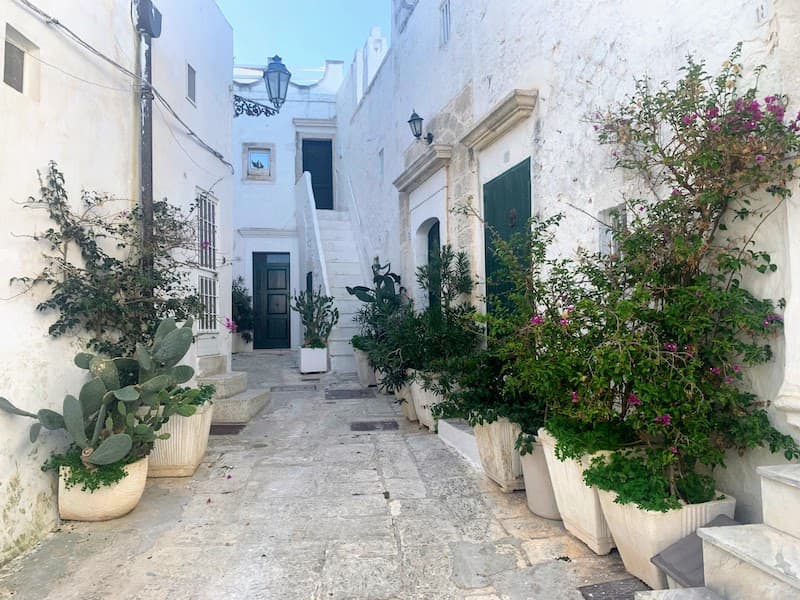
Ostuni, the “Città Bianca” or White Town, is one of the most beautiful hilltop towns in Puglia, and one I keep recommending to anyone planning a first trip to the region. Whitewashed houses cascade down the hillside from a 15th-century Gothic cathedral at the summit, and the maze of narrow, sloping alleyways is made for aimless wandering rather than a rigid checklist. What struck me most was how the town felt genuinely lived-in, not just preserved for tourists — laundry strung between buildings, locals chatting in doorways, small family-run trattorias tucked into side streets.
Ostuni is also one of the best places to stay in Puglia if you want a central base: it’s roughly a 40-minute drive from Alberobello and about 70 minutes from Bari, putting it within easy reach of both the Itria Valley towns and the Adriatic coast. I’d allow a full day here, more if you want to explore the surrounding olive groves. I’ve written a dedicated travel guide to Ostuni, Italy covering where to eat, stay, and wander in more depth.
Locorotondo

Quick Facts
📍 Best for: Wine & quiet villages
⏱️ Time needed: 2–3 hours
✈️ Nearest airport: Bari (70 km)
⭐ Don’t miss: Circular historic centre & panoramic viewpoints
💡 My tip: Combine it with Alberobello or Martina Franca on the same day.
Locorotondo is one of my personal hidden gems in Puglia — it rarely draws the crowds that Alberobello or Ostuni do, despite being every bit as photogenic. The name translates to “the round place,” a nod to its distinctive circular layout of whitewashed roundhouses topped with grey stone roofs, their balconies dripping with flowers in spring and summer. It’s also considered one of the best wine-tasting stops in Puglia, thanks to the crisp local white wine made from Verdeca grapes grown in the surrounding valley.
I found it to be one of the most relaxed towns of Puglia to simply sit with a coffee and watch daily life unfold, without a single tour group in sight. Most visitors spend one to two hours here, which makes it an easy, low-effort addition to a day trip. Locorotondo sits only about ten minutes by car from both Alberobello and Martina Franca, making it a natural stop between the two — I’d genuinely build your route around it rather than skip it.
Martina Franca
Quick Facts
📍 Best for: Baroque architecture
⏱️ Time needed: Half day
✈️ Nearest airport: Brindisi (75 km)
⭐ Don’t miss: Basilica di San Martino & Piazza Plebiscito
💡 My tip: Explore the quieter side streets—they’re often the most beautiful.
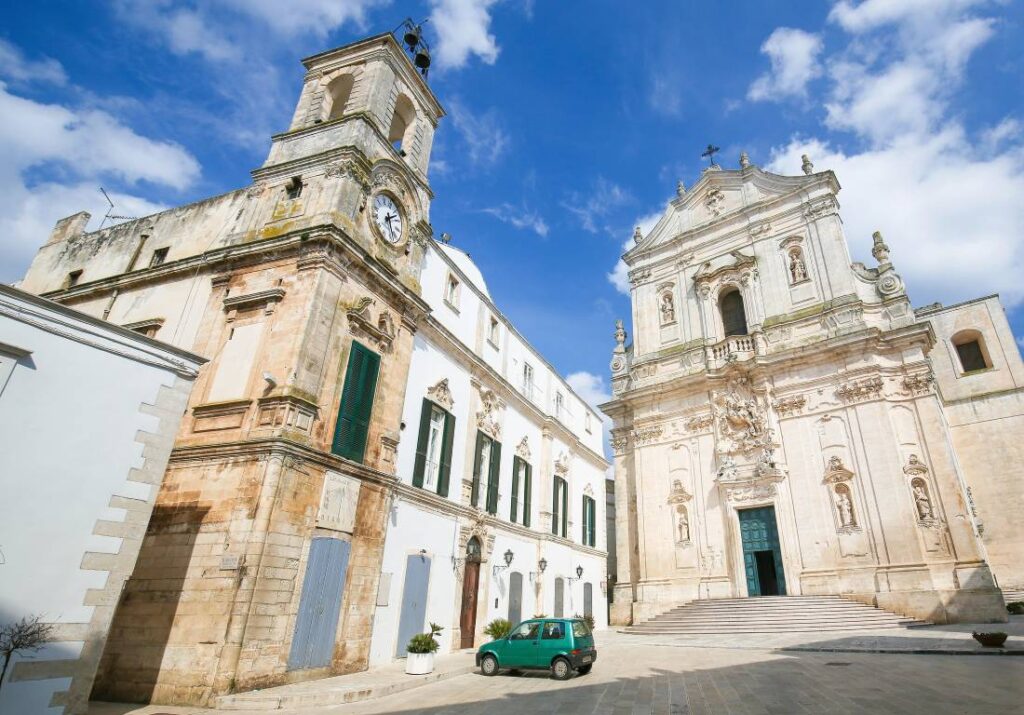
Martina Franca doesn’t get nearly the attention that Alberobello or Ostuni receive, and honestly, that’s part of its appeal. Its historic center, the Centro Storico, is packed with elegant Baroque churches and palazzi built in a distinctive local style known as Barocco Martinese, along with whitewashed residential streets that feel considerably quieter than its more famous neighbors. Wandering here in the late afternoon, I had entire piazzas almost to myself, which is a rare thing anywhere in this part of Italy during peak season.
It’s also a good base for exploring the surrounding Valle d’Itria countryside, with olive groves and vineyards stretching in every direction. Martina Franca sits in the Itria Valley, around a 30-minute drive from Ostuni and roughly 15 minutes from Locorotondo, making it easy to pair with both on the same day. If you’re building a list of the best villages in Puglia that skip the tour-bus crowds, this is one I’d move near the top.
Cisternino
Quick Facts
📍 Best for: Food lovers
⏱️ Time needed: 2–3 hours
✈️ Nearest airport: Brindisi (60 km)
⭐ Don’t miss: The old town & local butcher restaurants
💡 My tip: Visit in the evening when the piazzas fill with locals.
If you want to go one step further off the beaten path, Cisternino is the detour I’d point you toward. It’s another whitewashed Itria Valley town, smaller and considerably less touristed than Alberobello, but every bit as charming, with a compact historic core of narrow lanes and archways draped in bougainvillea. What Cisternino is genuinely famous for, at least among Italians, is its fornello pronto butcher-grills: you choose cuts of meat by weight at the counter, and the butcher cooks them for you on the spot, often served with local wine at a shared table. It’s one of the most memorable, unpretentious meals I had anywhere in Puglia.
Cisternino sits within about a 15-minute drive of both Ostuni and Locorotondo, so it slots naturally into an Itria Valley day without adding much driving time. For anyone specifically hunting for hidden gems in Puglia rather than the headline towns, Cisternino belongs firmly on that shortlist.
Best Cities in Puglia
Not every unforgettable stop in Puglia is a small town. The region’s cities have their own, very different, personality — and each brings something the hill towns can’t.
Lecce

Quick Facts
📍 Best for: History, architecture & food
⏱️ Time needed: 1 day
✈️ Nearest airport: Brindisi (45 km)
⭐ Don’t miss: Basilica di Santa Croce & Piazza del Duomo
💡 My tip: Visit in the evening when the golden limestone buildings glow at sunset.
Lecce is often nicknamed the “Florence of the South” for its extraordinary concentration of 17th-century Baroque architecture, carved from a soft local limestone that lets craftsmen work in astonishing, almost sculptural detail. The Basilica di Santa Croce and the buildings around Piazza Sant’Oronzo are the standout examples, and I’d argue you need at least a full day just to appreciate the facades, let alone the Roman amphitheater buried beneath the modern piazza. Lecce also functions as the cultural and culinary hub of the Salento peninsula, with a genuinely excellent food and wine scene layered on top of the architecture.
It’s less than a two-hour drive from Bari and only around 30 minutes from Brindisi airport, which makes it an easy anchor point for exploring the southern half of the region. In my opinion, Lecce is one of the best places to visit in Puglia, Italy for anyone who loves history and architecture — it rewards slow, unhurried wandering more than almost anywhere else on this list.
Bari
Quick Facts
📍 Best for: Food & local culture
⏱️ Time needed: Half day–1 day
✈️ Nearest airport: Bari (10 km)
⭐ Don’t miss: Bari Vecchia & Basilica di San Nicola
💡 My tip: Wander the old town at lunchtime to watch local women making fresh orecchiette pasta.
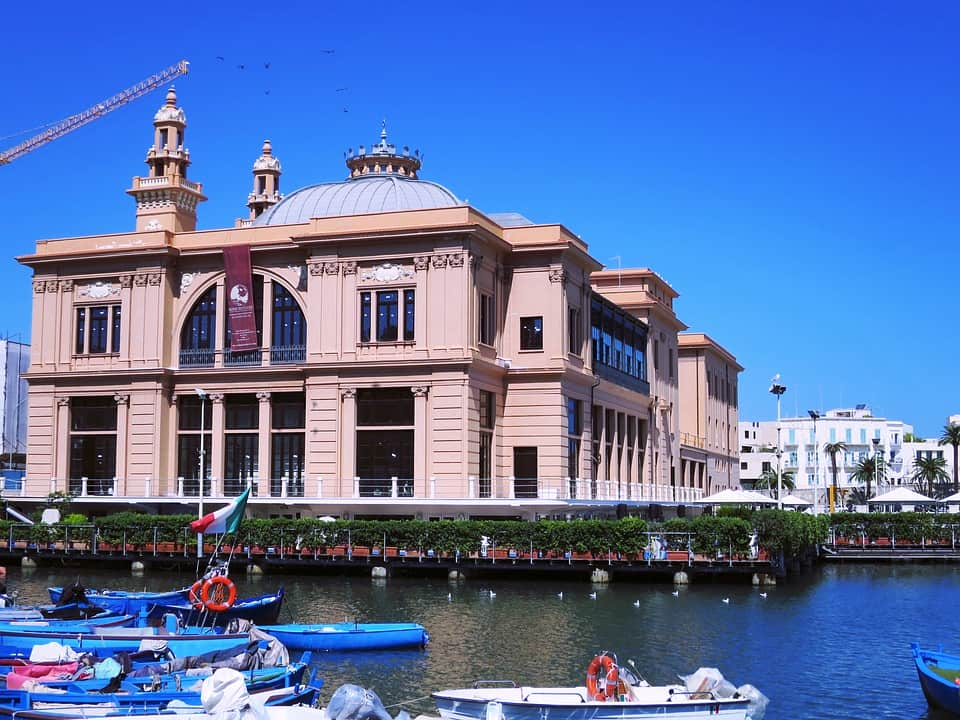
Bari, the regional capital, is where most Puglia trips begin and end, since it’s home to the main international airport. The old town, Bari Vecchia, is a genuine warren of narrow, sun-bleached lanes where you’ll spot local nonnas making orecchiette by hand right on the doorstep, laying the pasta out to dry on wooden boards in full view of passersby. It’s not the prettiest city in Puglia — that title probably goes to Lecce or one of the whitewashed towns — but it felt the most real to me, less curated for tourism and more like an actual working Italian city. The 11th-century Basilica of San Nicola and the harborside promenade are both worth an afternoon.
Bari’s port also connects by ferry to Croatia, Montenegro, Albania, and Greece, which makes it a useful jumping-off point if you’re combining Puglia with a wider Adriatic trip. I’d treat it as a solid first or last stop rather than the centerpiece of your itinerary.
Trani

Quick Facts
📍 Best for: Relaxed seaside atmosphere
⏱️ Time needed: Half day
✈️ Nearest airport: Bari (40 km)
⭐ Don’t miss: Trani Cathedral & the harbour
💡 My tip: Stay for sunset when the cathedral is beautifully lit.
Trani, nicknamed the “Pearl of Puglia,” is one of the most underrated cities I visited in the entire region, and one I think deserves far more attention on lists of the best places in Puglia. Its seafront cathedral, dedicated to St. Nicholas the Pilgrim, appears to rise almost directly out of the Adriatic, especially striking at golden hour when the creamy limestone catches the last light. The 13th-century castle built for Emperor Frederick II sits just along the harbor, and the old Jewish Quarter behind it is genuinely lovely to wander through, with narrow streets that feel largely untouched by mass tourism.
Trani is an easy day trip from Bari, roughly a 40-minute drive, which makes it simple to combine with a morning in the capital. If your itinerary is heavy on well-known names and light on quieter surprises, Trani is exactly the kind of city in Puglia I’d slot in to balance that out.
Best Seaside Towns in Puglia (Where to Base Yourself Near the Water)
If your version of the best places in Puglia leans more toward beach days than church facades, these are the coastal towns I’d point you toward first.
Polignano a Mare
Quick Facts
📍 Best for: Coastal scenery & photography
⏱️ Time needed: Half day
✈️ Nearest airport: Bari (50 km)
⭐ Don’t miss: Lama Monachile Beach & the cliff viewpoints
💡 My tip: Walk beyond the old town for quieter viewpoints overlooking the Adriatic.
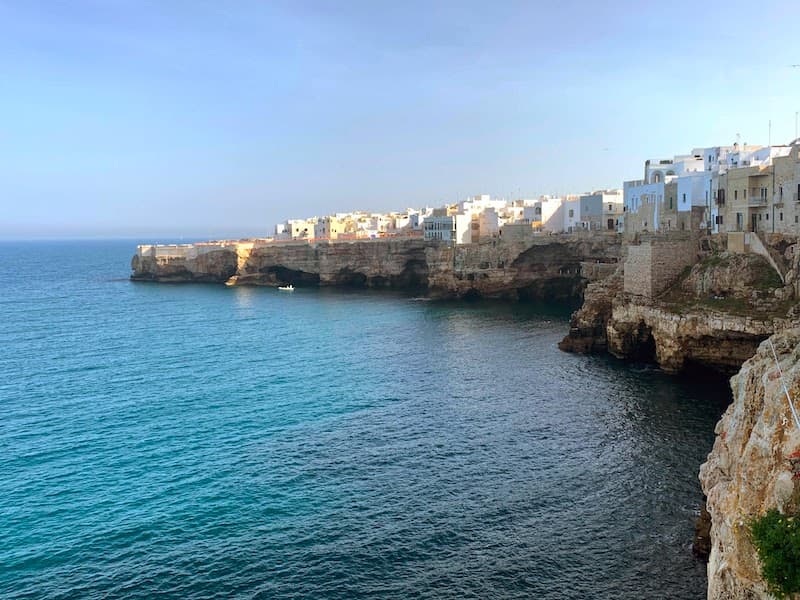
Polignano a Mare might be the single most photographed town in Puglia, and having stood on its cliffs myself, I understand exactly why. The town perches directly above the Adriatic on limestone cliffs, and the tiny Lama Monachile beach, wedged into a narrow cove between two rock faces with an ancient Roman bridge overhead, is worth braving the crowds for. Polignano is also famous for hosting the Red Bull Cliff Diving World Series each summer, and for its seafood restaurants built right into the cliffside caves, some with dining rooms that feel carved straight out of the rock.
It’s a favorite weekend spot for locals from Bari as much as it is for international visitors, which gives it a livelier, more romantic feel in the evenings than some of the quieter whitewashed towns. Polignano a Mare is only about a 40-minute drive from Bari, making it one of the easiest coastal day trips in the whole region, and one I’d genuinely build at least a half-day around.
Monopoli
Quick Facts
📍 Best for: Beaches & authentic seaside charm
⏱️ Time needed: 1 day
✈️ Nearest airport: Bari (60 km)
⭐ Don’t miss: Porto Antico & Cala Porta Vecchia
💡 My tip: It’s one of the best places in Puglia to combine beach time with exploring a historic centre.
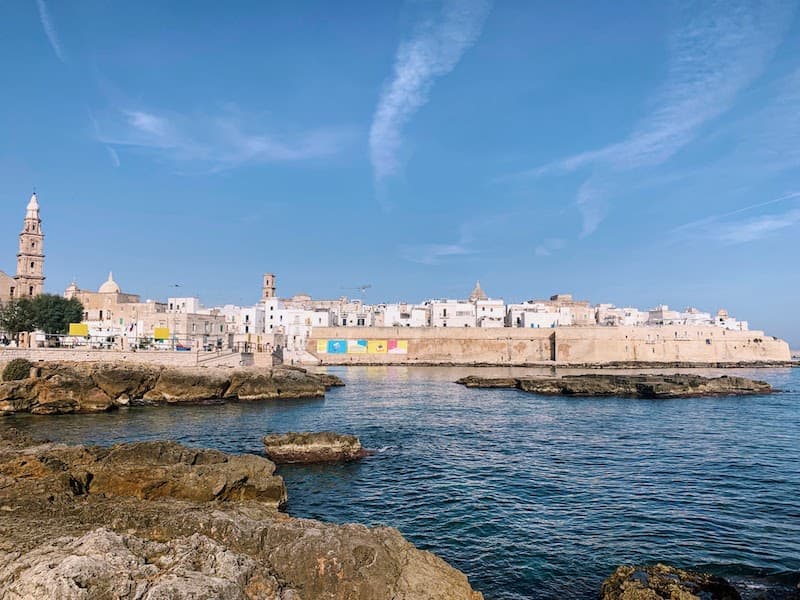
Monopoli sits just a short drive down the coast from Polignano and, in my experience, feels far less like a curated film set and more like a real, working seaside town — which I actually preferred. Whitewashed buildings, narrow cobbled alleys, and a genuinely active fishing harbor give it a rhythm that’s noticeably different from its more famous neighbor, with far fewer tour buses parked outside. Fishermen unload their catch each morning right along the harborfront, and several of the best seafood restaurants in the area buy directly from them.
Monopoli is larger than Polignano a Mare and has more of the practical infrastructure of a proper town — supermarkets, a real town center, everyday errands happening around you — which made it feel more vibrant to actually stay in overnight. It’s about a 40-minute drive from Bari and only 20 minutes from Polignano, so pairing the two into one relaxed day trip along the coast is easy and, honestly, one of my favorite half-days from the whole itinerary.
Otranto

Quick Facts
📍 Best for: History & beaches
⏱️ Time needed: 1 day
✈️ Nearest airport: Brindisi (95 km)
⭐ Don’t miss: Otranto Cathedral & Castello Aragonese
💡 My tip: Visit early or stay overnight to enjoy the old town before and after the busiest hours.
Otranto holds the distinction of being mainland Italy’s easternmost town, and that geographic quirk comes with a genuinely striking setting: a Norman-Aragonese castle, an 11th-century cathedral famous for its extraordinary medieval mosaic floor, and a stretch of turquoise Adriatic water that rivals anywhere in the Mediterranean. The old town’s whitewashed streets slope gently down toward the harbor, and just outside town, several sandy beaches make Otranto one of the best combined history-and-beach stops in the whole region. I spent an afternoon here after a morning in Lecce, and the contrast between Lecce’s ornate Baroque stonework and Otranto’s breezy, salt-air feel made for one of the better day pairings on my entire trip.
Otranto is roughly a 40-minute drive from Lecce, making it an easy add-on rather than a detour. If you’re deciding where to go in Puglia for a slower, beach-and-history kind of day, Otranto is one of the best places to see in Puglia, Italy for exactly that mix.
Gallipoli
Quick Facts
📍 Best for: Beaches & nightlife
⏱️ Time needed: 1 day
✈️ Nearest airport: Brindisi (85 km)
⭐ Don’t miss: Spiaggia della Purità & the historic centre
💡 My tip: Visit in June or September for warm weather with fewer crowds.
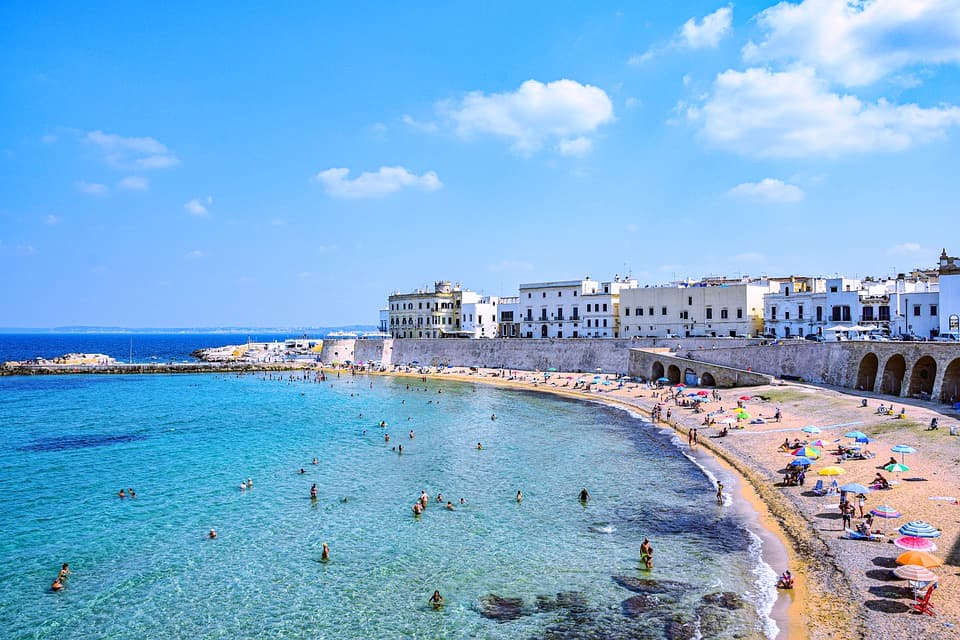
Gallipoli, on the Ionian side of the Salento peninsula, has earned the nickname “the Ibiza of Italy” for its lively summer nightlife scene, though its old town offers plenty for visitors who prefer history over beach clubs. The historic center sits on a small island connected to the mainland by a stone bridge, ringed by 13th-century defensive walls, a Baroque cathedral dedicated to St. Agata, and some of the clearest water I encountered anywhere in Puglia. The Beach of Purity, right in the old town, is the most popular spot to swim without leaving the historic core.
Gallipoli felt distinctly more youthful and energetic in the evenings than the quieter Adriatic towns, with a genuinely buzzing aperitivo scene along the seafront. It’s less than a 40-minute drive from Lecce, which makes it an easy and worthwhile day trip if you’re based there, or a lively overnight stop if nightlife is part of what you’re after in Puglia.
Vieste

Quick Facts
📍 Best for: Beaches & nature
⏱️ Time needed: 2 days
✈️ Nearest airport: Bari (180 km)
⭐ Don’t miss: Pizzomunno Beach & Vieste Old Town
💡 My tip: Use Vieste as your base for exploring the Gargano National Park.
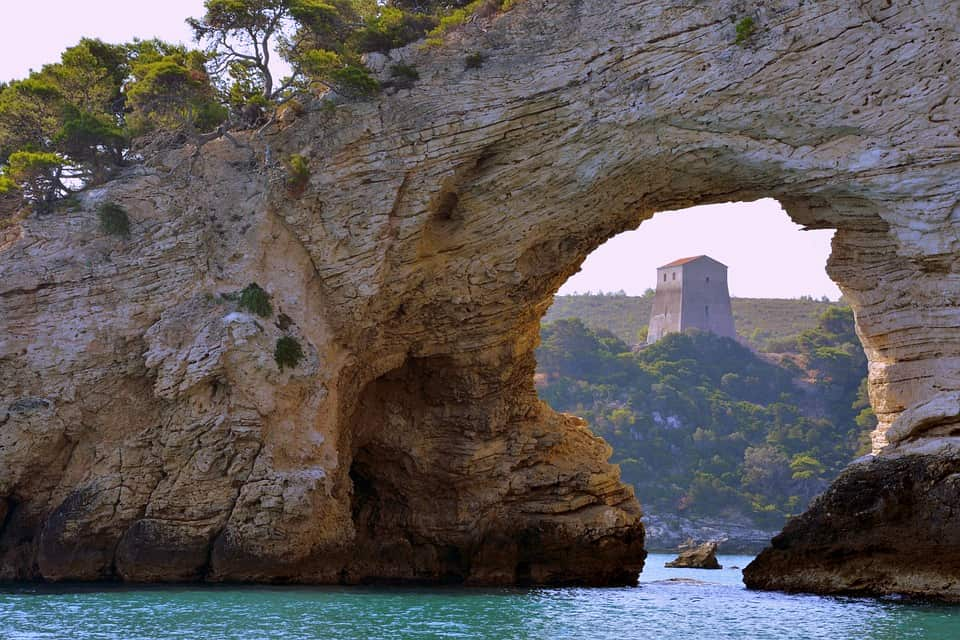
Up in the Gargano Peninsula, Vieste is the postcard town of Puglia’s wilder, greener north, and a noticeably different experience from the Salento coast further south. Nicknamed the “Pearl of Gargano,” the whitewashed old town sits on a cliff above the Adriatic, backed by pale golden sand beaches that felt considerably less crowded than anywhere I visited near Bari or Lecce. Touring Vieste’s sea caves by boat at sunset, watching the cliffs turn amber as the light dropped, is one of my favorite memories from the entire road trip. The surrounding Gargano National Park adds ancient forest and dramatic coastal scenery within easy reach.
Vieste is only about 30 minutes from the heart of the Gargano National Park, making it a natural base for a couple of nights if your route swings north. For anyone asking what to see in Puglia beyond the well-trodden Itria Valley and Salento circuits, Vieste and the Gargano coastline are where I’d send you.
Hidden Gems in Puglia (The Places Most Guides Skip)
Every list of the towns of Puglia covers the same five or six names. Here are the genuine hidden gems in Puglia that I think deserve far more attention than they usually get.
Torre Guaceto Nature Reserve
Quick Facts
📍 Best for: Nature, wildlife & quiet beach walks
⏱️ Time needed: 2–4 hours
✈️ Nearest airport: Brindisi (20 km)
⭐ Don’t miss: The flamingo-spotting trail and the wild, undeveloped stretch of beach inside the reserve
💡 My tip: Go early morning if you want the beach to yourself — by midday in summer, the small car park near the reserve entrance fills up fast.
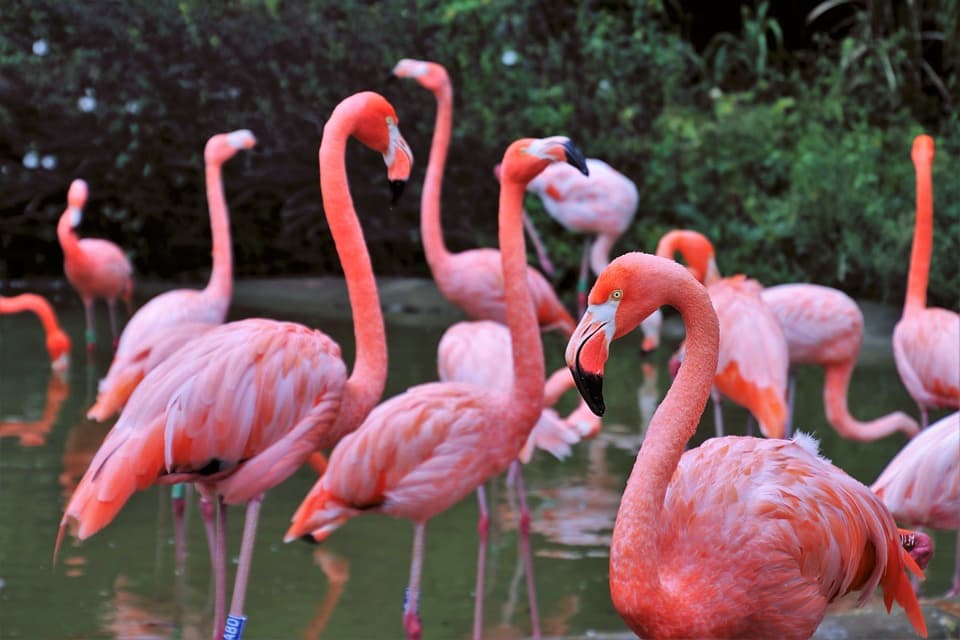
Between Ostuni and Brindisi, Torre Guaceto protects one of the last stretches of undeveloped coastline in this part of Puglia, along with the region’s largest pink flamingo colony. The reserve combines a marine protected area, a genuinely wild sandy beach, and pockets of untouched Mediterranean forest, making it a rare pocket of quiet nature between two busier stretches of coast. I came here specifically to walk rather than sightsee, and it was one of the few places on my whole trip where I didn’t see another tourist for long stretches. It’s a strong pick for anyone tired of church facades and whitewashed alleys and craving somewhere genuinely wild for an afternoon.
Torre Guaceto is roughly a 30-minute drive from both Ostuni and Brindisi, so it slots easily into a day that also includes one of the Itria Valley towns. If you’re specifically searching for hidden gems in Puglia rather than headline attractions, this reserve is exactly the kind of place that rarely shows up on mainstream lists.
Grotte di Castellana
Quick Facts
📍 Best for: Underground caves & natural wonders
⏱️ Time needed: 1–2 hours
✈️ Nearest airport: Bari (40 km)
⭐ Don’t miss: The Grotta Bianca (White Cave), the final chamber on the long tour, lined with brilliant white alabaster formations
💡 My tip: Book the longer tour route in advance in peak season — it sells out, and it’s the one that includes the White Cave.
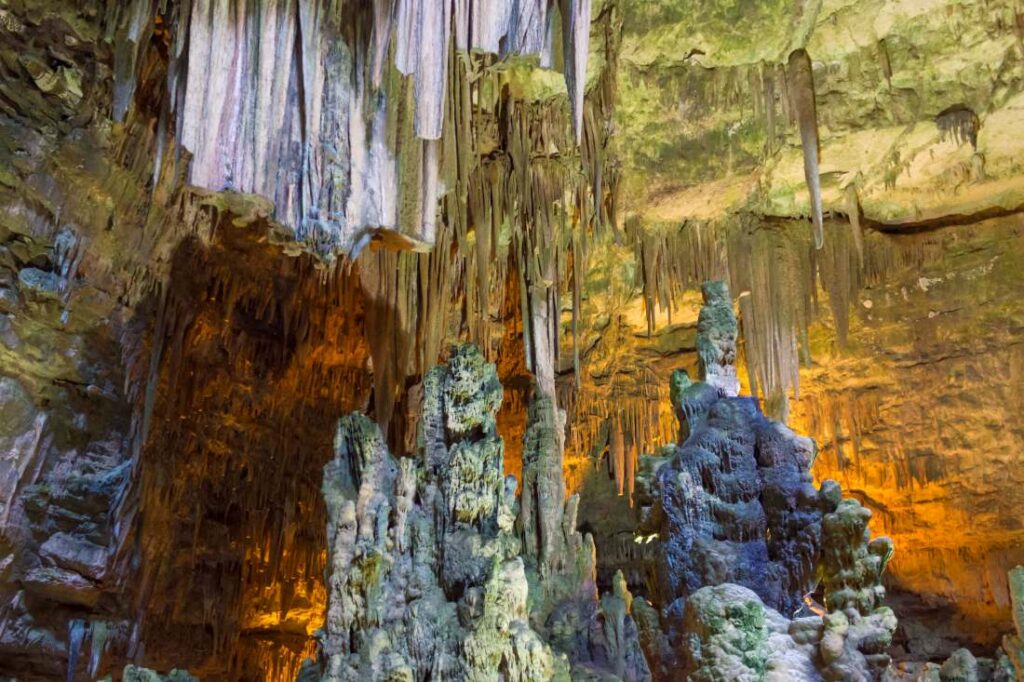
Near the small town of Castellana, this underground cave system ranks among the most spectacular natural attractions I saw anywhere in Italy, let alone Puglia. The complex stretches roughly 3.5 kilometers and descends about 120 meters below the surface, opening into vast chambers lined with stalactites, stalagmites, and fossilized formations built up over millions of years. Guided tours lead you through a mix of shorter and longer routes depending on how much time and stamina you have, and the temperature underground stays refreshingly cool even in the height of a Puglia summer. It’s one of the more genuinely surprising things to do in Puglia, especially if you assume the region is only about coastline and hill towns.
The caves sit a short, roughly 45-minute drive from Bari, making them an easy half-day addition if you’re based in or near the capital, or a natural stop en route toward the Itria Valley.
The Gargano Peninsula and National Park
Quick Facts
📍 Best for: Scenic road trips & hiking
⏱️ Time needed: 2–3 days
✈️ Nearest airport: Bari (depending on your base)
⭐ Don’t miss: Foresta Umbra & the coastal drive
💡 My tip: Don’t rush—the winding roads mean travel takes longer than expected.
The “spur” of Italy’s boot, the Gargano Peninsula, is Puglia’s greenest and most dramatically different corner, and one that surprised me the most on the whole trip. The Gargano National Park protects ancient woodland, including the Foresta Umbra with Aleppo pines estimated at several hundred years old, alongside dramatic cliffs, hidden coves, and resort towns that feel a world away from the Salento crowds further south. It’s a genuine must for nature lovers who want their Puglia trip to include forest and mountain scenery alongside the coastline.
I found the driving here slower and more winding than anywhere else in the region, which is part of the charm if you’re not in a rush. The peninsula and its national park anchor the northern end of Puglia, with Vieste as the most convenient coastal base for exploring both the forest interior and the surrounding cliffs and beaches.
Tremiti Islands
Quick Facts
📍 Best for: Boat trips & snorkelling
⏱️ Time needed: Full day
✈️ Nearest departure: Termoli or Vieste
⭐ Don’t miss: Cala delle Arene & the sea caves
💡 My tip: Book ferry tickets in advance during summer.
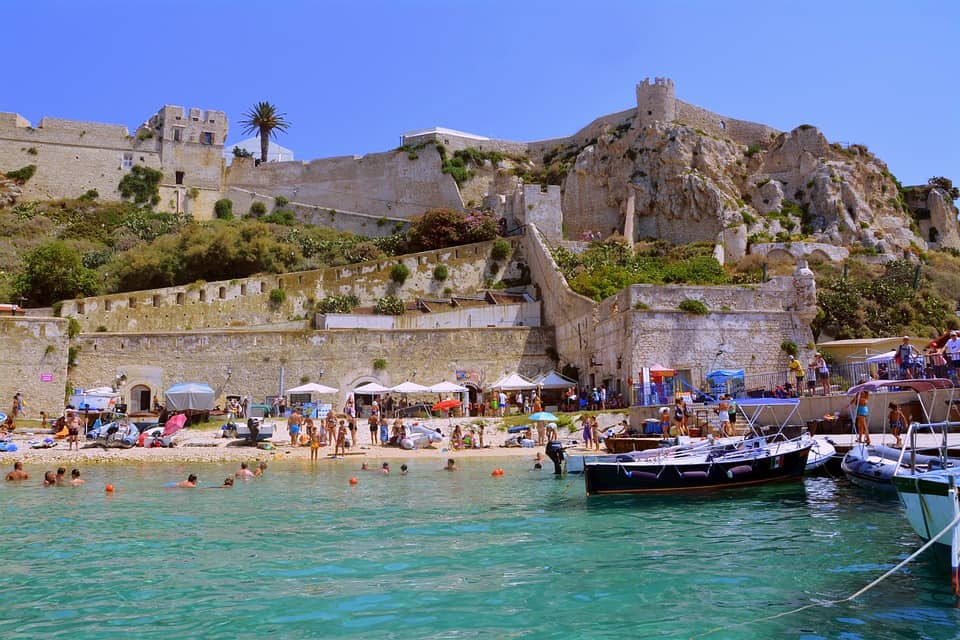
The Tremiti Islands are an isolated, genuinely beautiful archipelago in the Adriatic Sea, connected to the Gargano coast by ferry and forming part of the Gargano National Park’s protected waters. The five islands include the tourist-friendly San Domino, the more populated San Nicola, the largely abandoned Capraia, and two uninhabited islets, Pianosa and Cretaccio. Their remote history is fairly dark — they served as a prison during the Fascist era — but today they’re valued for exceptionally clear water and unspoiled coastline that feels far removed from the mainland’s crowds.
I’d treat this as a full-day boat trip rather than an add-on, since ferry schedules and crossing times mean it isn’t something you can rush. If your idea of the best places to visit in Puglia includes at least one proper island escape, the Tremiti Islands are the only realistic option in the region, and they’re reachable via ferry lines connecting from Vieste.
Monte Sant’Angelo
Quick Facts
📍 Best for: History, pilgrimage & panoramic views
⏱️ Time needed: Half day
✈️ Nearest airport: Bari (170 km)
⭐ Don’t miss: Sanctuary of Saint Michael the Archangel & the Norman Castle
💡 My tip: Combine your visit with nearby Vieste or the Foresta Umbra to experience both the cultural and natural highlights of the Gargano Peninsula.
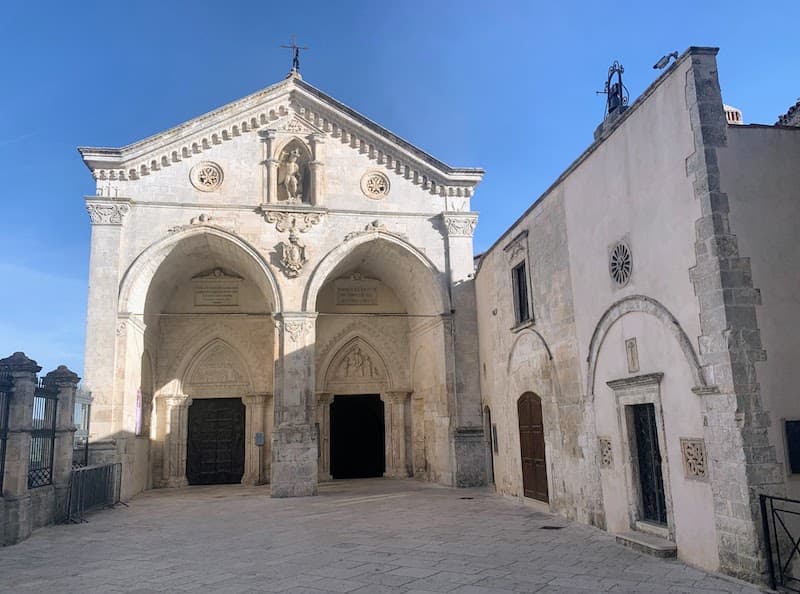
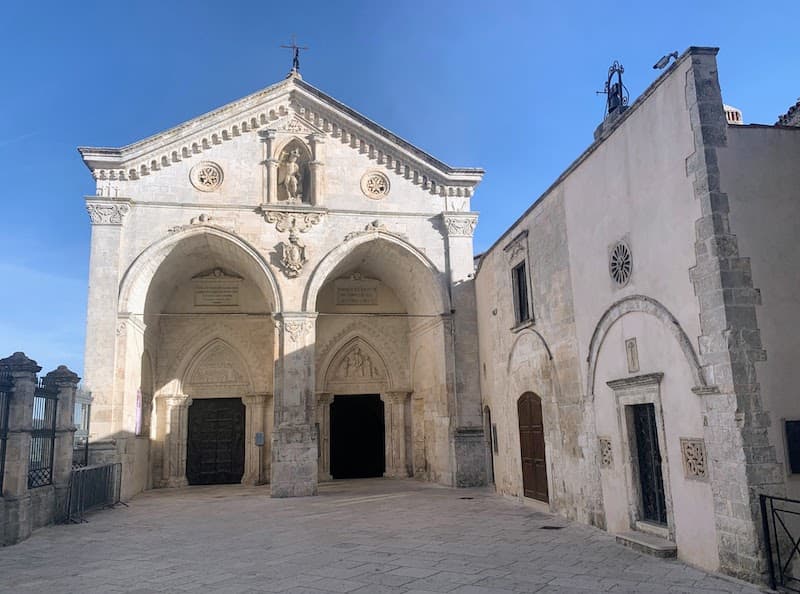
Monte Sant’Angelo, a town perched high in the Gargano, centers on the Basilica of San Michele, built around a cave where, according to tradition, the Archangel Michael appeared. The 5th-century sanctuary, a UNESCO-listed site as part of the serial site “Longobards in Italy. Places of power (568–774 A.D.), forms part of the wider St. Michael pilgrimage route connecting shrines across Europe, from Ireland to Greece, and it’s been an active pilgrimage destination since the early Middle Ages. Even setting aside the religious significance, the setting is genuinely striking, with sweeping views over the Gargano hills from the town’s highest points.
I found the atmosphere here noticeably calmer and more contemplative than almost anywhere else on this list, worth a visit for the architecture and history alone. Monte Sant’Angelo is about a 30-minute drive from San Giovanni Rotondo, making the two easy to combine into a single day focused on Puglia’s pilgrimage heritage. For more info, read my detailed travel guide to Monte Sant’Angelo.
San Giovanni Rotondo

Quick Facts
📍 Best for: Religious pilgrimage & spiritual heritage
⏱️ Time needed: Half day
✈️ Nearest airport: Bari (160 km)
⭐ Don’t miss: Sanctuary of Padre Pio & the Church of Saint Pio designed by Renzo Piano
💡 My tip: Even if you’re not visiting for religious reasons, the modern church and its architecture are worth seeing.
San Giovanni Rotondo is one of the most visited religious destinations in Puglia, built around the Sanctuary of Saint Pio of Pietrelcina, better known as Padre Pio, one of Italy’s most beloved modern saints. The complex draws around seven million visitors a year, making it the third most-visited Catholic pilgrimage site in the world after Guadalupe in Mexico and Lourdes in France, and the scale of the modern church built to accommodate that many visitors is genuinely impressive in its own right.
Even if pilgrimage isn’t the point of your trip, the surrounding town and the older original church are worth an hour or two of quiet exploring. San Giovanni Rotondo sits less than a two-hour drive from Bari and roughly three hours from Brindisi, so it’s best paired with Monte Sant’Angelo and a wider loop through the Gargano rather than visited on its own. Check out my visitor’s guide to Padre Pio Shrine in San Giovanni Rotondo.
Castel del Monte
Quick Facts
📍 Best for: History & UNESCO landmarks
⏱️ Time needed: 2–3 hours
✈️ Nearest airport: Bari (70 km)
⭐ Don’t miss: The octagonal castle and the panoramic views over the surrounding countryside
💡 My tip: Book the shuttle from the visitor car park if you don’t want to walk uphill, especially during the summer heat.
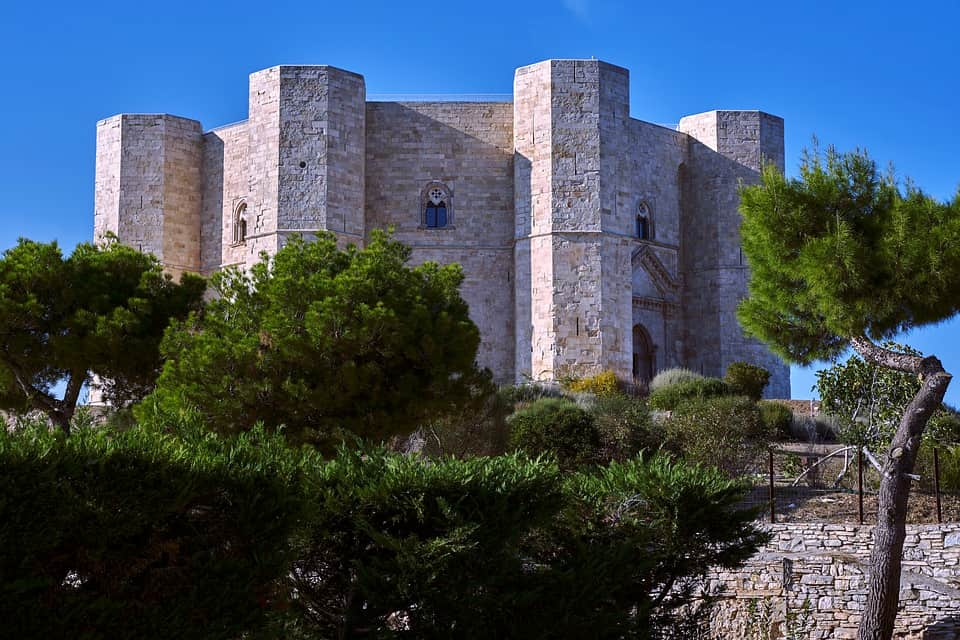
Castel del Monte is one of the most visually unusual landmarks in all of Puglia, and a UNESCO World Heritage Site in its own right. Built in the 13th century for Emperor Frederick II, the fortress has an unmistakable octagonal shape, with eight corner towers and eight rooms per floor arranged symmetrically around a central courtyard — a design so precise and unusual that historians still debate its exact original purpose. Standing beneath it on a clear day, with the surrounding Puglian countryside stretching out in every direction, it’s easy to see why it’s become something of a symbol for the region.
A visit typically takes about an hour, which makes it easy to fold into a longer day exploring the Bari province. Castel del Monte sits roughly an hour’s drive from Bari, making it a straightforward half-day detour if you’re basing yourself in or near the capital.
Matera (Just Over the Border)

Quick Facts
📍 Best for: Ancient cave dwellings & unforgettable overnight stays
⏱️ Time needed: 1–2 days
✈️ Nearest airport: Bari (65 km)
⭐ Don’t miss: The Sassi districts, Casa Grotta and sunset from Belvedere Murgia Timone
💡 My tip: Stay overnight in a cave hotel if your budget allows—Matera becomes much quieter after the day-trippers leave, and the illuminated Sassi at night are unforgettable.
Technically, Matera sits in neighboring Basilicata, not Puglia — but almost every Puglia road trip includes it, and I did too, without a single regret. Its famous Sassi districts, cave dwellings carved directly into limestone ravines, form one of the oldest continuously inhabited settlements in the world and hold UNESCO World Heritage status. Walking through the Sassi at dusk, as the cave-dwelling architecture lit up gold against the ravine, was one of the single most memorable evenings of my Puglia trip, arguably rivaling anything I saw within Puglia itself. Many of the old cave dwellings have been converted into atmospheric hotels and restaurants, so it’s worth staying at least one night rather than treating it as a quick stop.
Matera is close enough to the Puglia border to fold into the same itinerary with minimal extra driving. I’ve written a separate guide to the best things to do in Matera if you’re adding it to your route, which I’d genuinely recommend.
What to Eat: The Food of Puglia
You can’t talk about the best places to visit in Puglia without talking about what’s on the plate. Orecchiette pasta, burrata (which actually originated here), taralli, fresh seafood along the coast, and some of the best olive oil in the world — Puglia produces around 40% of Italy’s olive oil. I’ve put together a full guide to the foods of Puglia if you want to eat your way through the region as intentionally as you sightsee through it.
Best Area to Stay in Puglia
This is one of the questions I get asked most, so here’s my honest breakdown by travel style:
- First time in Puglia, want it all: Base yourself in the Itria Valley (Ostuni or Alberobello) — it’s central to the whitewashed towns and within reach of the coast.
- Beach-first trip: Stay along the Salento coast near Otranto or Gallipoli.
- City lovers: Base in Lecce or Bari and day-trip from there.
- Off the beaten path: Head north to the Gargano Peninsula around Vieste for a quieter, greener trip.
There’s no single best place to stay in Puglia — it genuinely depends on whether you’re chasing architecture, beaches, or quiet. I cover specific hotel and neighborhood picks for Ostuni in my Ostuni travel guide.
Frequently Asked Questions About Visiting Puglia
What is the best place to visit in Puglia?
For a first trip, Alberobello and Ostuni are the two most essential stops, but Lecce and Polignano a Mare are close behind if you also want a city and a beach town in the mix.
Where is the best place to visit in Puglia if I only have a few days?
Base yourself in the Itria Valley (Ostuni or Alberobello) — from there, Locorotondo, Martina Franca, and the Adriatic coast towns like Polignano a Mare are all within an hour’s drive.
What are the best towns to visit in Puglia?
Alberobello, Ostuni, Locorotondo, Martina Franca, Cisternino, Polignano a Mare, Monopoli, and Otranto consistently rank as the best towns in Puglia among both locals and visitors.
What are Puglia’s best hidden gems?
Torre Guaceto Nature Reserve, Cisternino, the Grotte di Castellana caves, the Tremiti Islands, and the Gargano Peninsula are the hidden gems in Puglia I’d send a repeat visitor to first.
How many days do you need in Puglia?
I’d suggest a minimum of 5–7 days to cover the Itria Valley, the Adriatic coast, and Lecce or the Salento peninsula without rushing. My full Puglia road trip itinerary breaks this down day by day.
Is Puglia worth visiting?
Yes — Puglia offers a rare mix of dramatic coastline, unique architecture (like the trulli of Alberobello), Baroque cities, and genuinely excellent, affordable food, all without the crowds you’ll find in Tuscany or on the Amalfi Coast.
What is Puglia famous for?
Puglia is best known for its trulli huts, whitewashed hill towns, Baroque city of Lecce, olive oil production (around 40% of Italy’s total), and its long, dramatic Adriatic and Ionian coastlines.
Final Thoughts on the Best Places to Visit in Puglia
Every time I try to narrow this list down, I end up adding something back in — that’s how good Puglia is. If I had to boil it down to one piece of advice: rent a car, split your time between the Itria Valley and the coast, and leave room in your itinerary for at least one town that isn’t on anyone else’s list.
For the full route I used to link all of these places together, check out my Puglia road trip itinerary, and for more ideas once you’re there, browse my guides to things to do in Puglia, things to do in Alberobello, the Ostuni travel guide, things to do in Matera, and the foods of Puglia.