The Ultimate San Gimignano Italy Travel Guide (2026): Best Things to Do, Attractions & Tips

San Gimignano, Italy, is one of the most iconic hill towns in Tuscany, known for its medieval skyline of towers, UNESCO World Heritage status, and timeless atmosphere. Often called the “Medieval Manhattan,” it is one of the most popular day trips from Florence and Siena.
In this San Gimignano travel guide, you’ll discover the best things to do in San Gimignano, how to get there, where to stay, and practical tips to help you plan your visit. Whether you’re coming for a few hours or staying overnight, this guide will help you experience the town beyond the crowds and tourist routes.
I’ve visited San Gimignano several times during my Tuscany road trips, including one overnight stay that completely changed how I experienced the town. In this guide, I’ll share both practical advice and personal insights to help you plan a more meaningful visit.

What to Know Before You Visit San Gimignano
Is San Gimignano Worth Visiting?
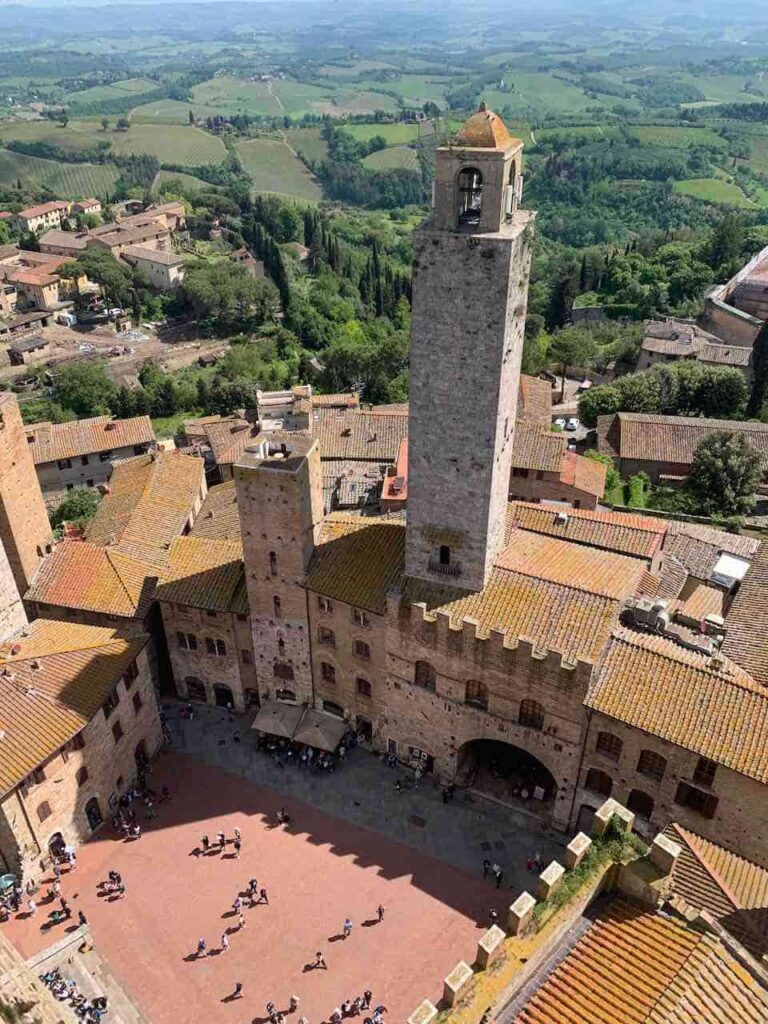
Absolutely—and not just as a quick stop. San Gimignano Tuscany is famous for its medieval towers (once over 70!), earning it the nickname “Medieval Manhattan.” Today, this medieval town is a World Heritage Site. But what makes it special isn’t just the skyline—it’s the atmosphere. Early mornings and late evenings feel magical, when the crowds thin and the stone streets glow.
Where is San Gimignano, Italy?
San Gimignano is located in central Tuscany, about:
- 1 hour from Florence
- 45 minutes from Siena
- Around 3 hours from Rome (by car)
This makes San Gimignano an easy day trip from Florence and Siena. Only 1 hour away, San Gimignano is a natural extension of a 1 day in Florence itinerary or a longer Tuscany trip.
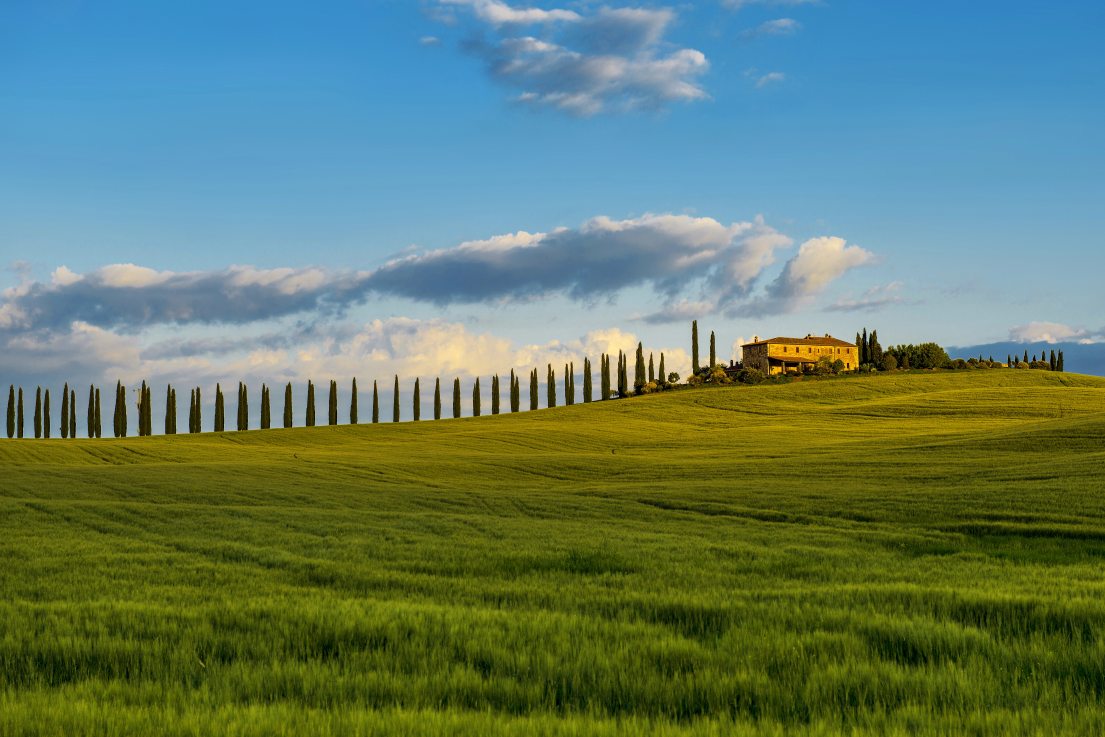
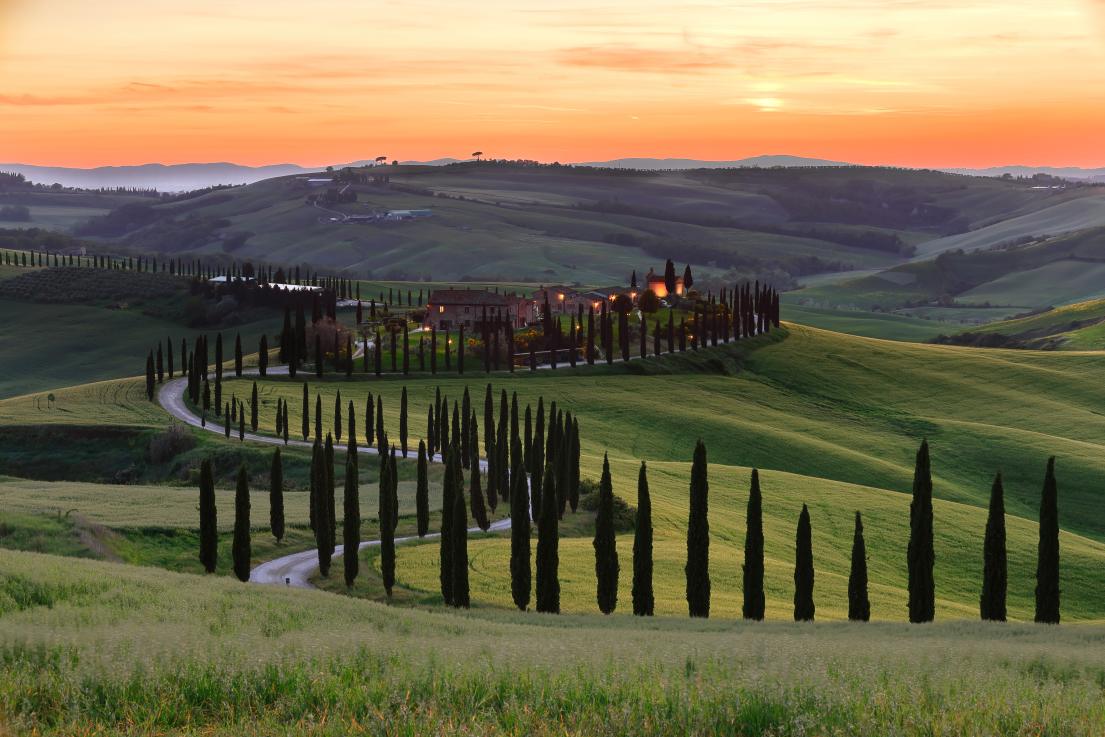
San Gimignano sits on a hill surrounded by vineyards and olive groves—classic Tuscan scenery.
How to Get to San Gimignano
By car (best option):
- Renting a car gives you the flexibility to explore Tuscany
- Roads are scenic and easy to navigate (I love driving in Tuscany!)
By public transport:
- Train to Poggibonsi + bus to San Gimignano
By tour:
- Day tours from Florence or Siena often include wine tastings and nearby villages. Like the Siena, San Gimignano, Pisa & Lunch at Winery Tour from Florence and San Gimignano and Volterra: Day Tour from Siena.
How Much Time to Visit San Gimignano?
One of the most common questions when visiting San Gimignano is how long to stay—and the answer depends on the experience you’re after.
At first glance, it may seem like a quick stop, but San Gimignano reveals its true charm when you slow down. On my first visit, I came for just a few hours and left wanting more. So, I returned in a few days. On my other Tuscany trip, staying overnight completely changed the experience—quiet mornings, golden sunsets, and a peaceful atmosphere once the crowds disappeared.
If you’re planning your itinerary, here’s what to expect:
- Half day: Enough to see key highlights like the main squares and towers
- Full day: Ideal for sightseeing, food, and wine at a relaxed pace
- 1–2 nights: The best experience—enjoy the town without crowds
Pro tip: Stay overnight if you can—it’s when San Gimignano feels truly magical.
Best Time to Visit San Gimignano
Timing makes a huge difference when visiting San Gimignano. While this UNESCO-listed hill town is beautiful year-round, the experience changes dramatically depending on the season—and even the time of day.
Revisiting San Gimignano, I’ve learned that it is at its best when you can enjoy it before the tour buses arrive or after they leave. Early mornings feel almost cinematic: empty stone streets, soft golden light on the towers, and locals opening their shops. Evenings are just as magical when day-trippers disappear, and the town feels like it belongs to you again.
Seasonally, spring and early autumn are the sweet spot—pleasant weather, vineyard landscapes in full color, and fewer crowds compared to peak summer.
- Spring (April–June): Ideal weather, blooming landscapes, moderate crowds
- Summer (July–August): Lively but crowded and hot midday
- Autumn (September–October): Wine season, warm tones, excellent atmosphere
- Winter (November–February): Quiet, atmospheric, but some closures
Pro tip: If you can, visit early morning or stay overnight—this is when San Gimignano truly feels timeless.
Is San Gimignano a Good Base for Exploring Tuscany?
Staying in San Gimignano can be a fantastic choice if you want to experience Tuscany at a slower, more atmospheric pace. While many travelers base themselves in Florence or Siena, San Gimignano offers something different—smaller crowds, dramatic hilltop views, and immediate access to the heart of the Tuscan countryside.
From here, you’re perfectly positioned for day trips across the region. Rolling vineyards, medieval villages, and iconic wine routes are all within easy driving distance. It’s especially ideal if your trip focuses on food, wine, and scenic road trips rather than big-city sightseeing.
That said, it’s best suited for travelers with a car, as public transport connections are more limited compared to larger cities.
- Great base for exploring central Tuscany by car
- Close to the Chianti wine region (30 min away), Colle di Val d’Elsa (30 min away), Monteriggioni (35 min away), and Siena (50 min away)
- Ideal for slow travel, food, and wine-focused itineraries
- Less convenient if relying only on public transport
Is the San Gimignano Pass Worth It?
If you plan to explore more than just the streets of San Gimignano, the San Gimignano Pass (approx. €15, valid for 2 days) is worth considering. It’s designed for visitors who want to step inside the town’s key cultural landmarks rather than simply admire them from the outside.
The pass typically includes access to major attractions like the Civic Museum, Torre Grossa, and other historic sites in the medieval center. Instead of buying individual tickets, this bundled option saves both time and money—especially useful if you’re visiting for a full day or staying overnight.
Beyond the practical savings, the pass also makes sightseeing more flexible. You can move between attractions at your own pace without worrying about separate ticket lines.
- Includes major sites like Torre Grossa and the Civic Museum
- More cost-effective than individual tickets
- Best suited for full-day or overnight visits
- Convenient for flexible, self-paced exploration
Pro tip: If you’re only in town for a few hours, you may not need it—but for deeper exploration, it’s a smart buy. You can get it in person at the ticket office in Piazza Duomo or online here.
Getting Around & Practical Info
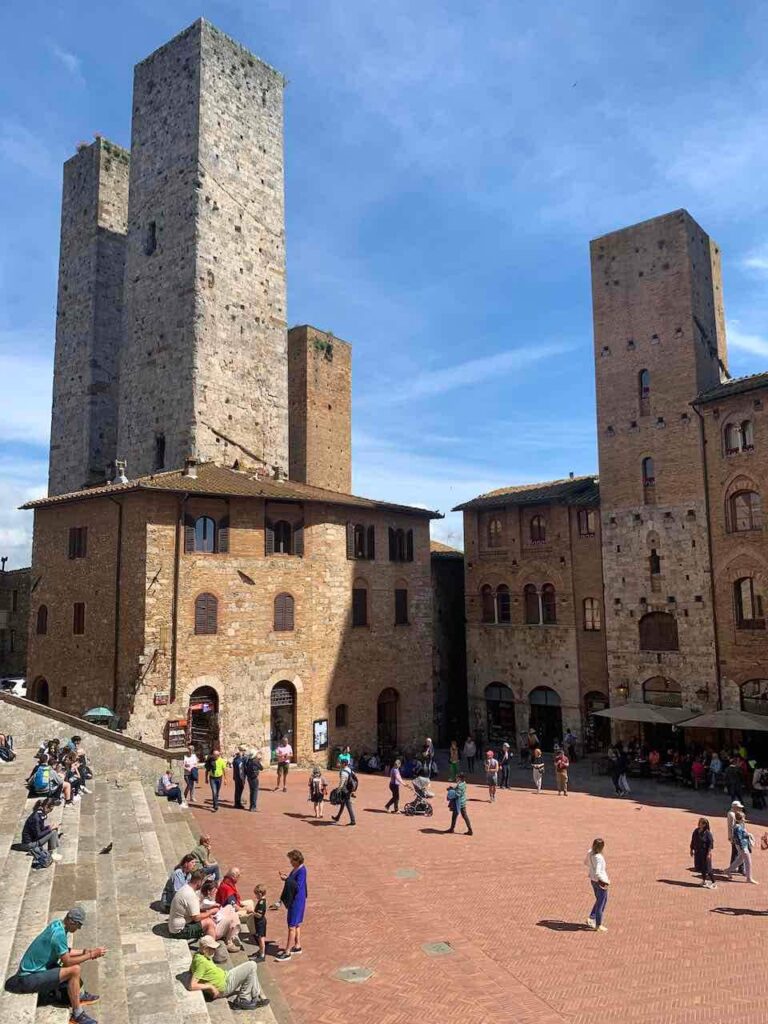
Getting Around San Gimignano
Exploring San Gimignano is refreshingly simple, and that’s part of its charm. The entire historic center is compact, pedestrian-only, and best experienced on foot. There are no cars inside the walls, so once you step through the gates, the pace naturally slows down.
The beauty of San Gimignano is not in rushing from one attraction to another, but in getting slightly lost among its stone streets, arches, and quiet corners. Every turn reveals a new view—whether it’s a medieval tower framed against the Tuscan sky or a hidden courtyard with local life unfolding slowly.
If you’re staying outside the center or arriving by car, you’ll park just outside the town walls and walk in through one of the historic gates.
- The historic center is fully walkable
- No cars allowed inside the town walls
- Parking is available just outside the gates
- Comfortable shoes are essential for cobblestone streets
Where to Park When Visiting San Gimignano?
Parking is one of the first practical things to plan when visiting San Gimignano, since the historic center is completely car-free. The good news is that parking is well-organized and clearly signposted just outside the medieval walls, making it relatively stress-free compared to many Italian hill towns.
When you arrive, you’ll follow signs to designated parking areas located below or around the old town. From there, it’s a short but slightly uphill walk through the gates into the historic center—an approach that actually adds to the experience as the towers slowly come into view.
Most visitors use the main lots, which are within walking distance of the center. Arriving early in the morning or later in the afternoon helps you avoid peak congestion, especially in high season.
- Arrive early for easier parking in peak season
- Parking is located just outside the historic walls
- Main lots include P1 Giubileo, P2 Montemaggio, and P3 Bagnaia
- Short uphill walk into the town center
Tips for Visiting San Gimignano
Visiting San Gimignano is relatively straightforward, but a few practical tips can make your experience significantly smoother—and more enjoyable. I can say from my own visits that the difference between a rushed stop and a memorable experience often comes down to timing, pacing, and knowing what to expect before you arrive.
This is one of those Tuscany destinations where small decisions matter: arriving early can mean wandering empty medieval streets, while poor timing can mean navigating heavy crowds around the main squares.
Here are the most important things to keep in mind:
- Arrive early or stay late: The town is busiest between 11:00–16:00 when tour groups arrive
- Stay overnight if possible: Early mornings and evenings are the most atmospheric times
- Wear comfortable shoes: Expect cobblestones, hills, and uneven medieval streets
- Park outside the walls: Plan a short uphill walk into the historic center
- Book ahead in peak season: Restaurants and accommodations fill quickly in spring and summer
- Bring cash + card: Most places accept cards, but small shops may prefer cash
- Allow time to wander: The real charm is in exploring without a strict plan
Pro tip: Don’t just rush between landmarks—some of the best moments in San Gimignano come from simply getting lost in its quiet side streets.
Where to Stay in San Gimignano, Italy
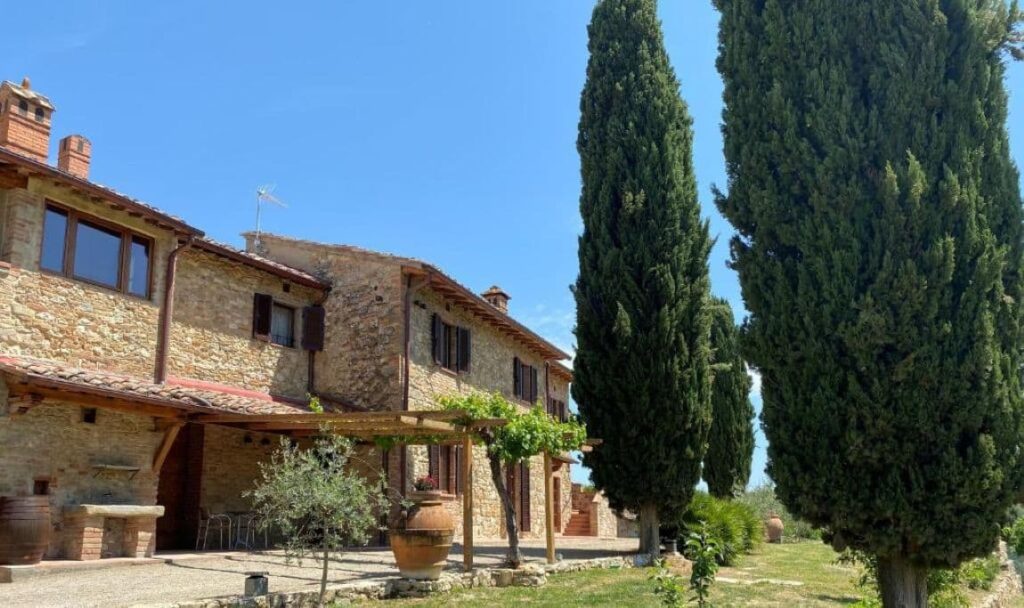
Staying in San Gimignano is one of those travel decisions that can completely transform your Tuscany experience. While many visitors come just for a day trip, overnight stays reveal a very different side of the town—quiet cobblestone streets, soft evening light on the towers, and mornings before the crowds arrive.
Accommodation here is mostly boutique-style, ranging from historic palazzos inside the walls to countryside agriturismos just outside town with vineyard views.
Here are some of the best places to stay in San Gimignano:
Inside the Historic Center
Stay at charming hotels like Hotel Leon Bianco or Hotel Bel Soggiorno for medieval charm, easy walking access, and magical early-morning streets.
Countryside Agriturismos
Just outside town, properties like Mormoraia and Tenuta Sovestro – Farmhouse and Winery offer vineyard views, pools, and a peaceful escape from crowds.
Luxury & Boutique Stays Nearby
Luxury estates like Cappuccina Country Resort among the hills around San Gimignano offer spa facilities, infinity pools, and panoramic Tuscan landscapes.
Pro tip: If your itinerary allows, stay at least one night inside or just outside the walls. San Gimignano after sunset is when it feels most authentic—calm, glowing, and unforgettable.
Things to Do in San Gimignano, Italy
1. Enter San Gimignano via Porta San Giovanni
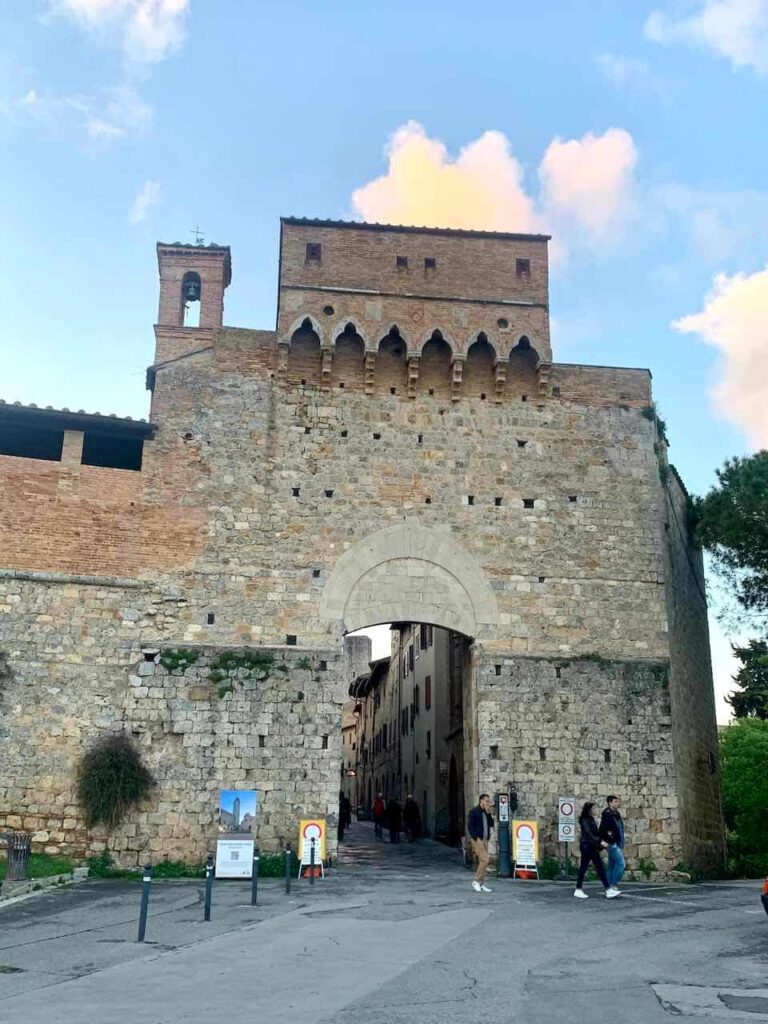
Arriving through Porta San Giovanni is one of those travel moments that instantly sets the tone for San Gimignano. As you pass through the ancient stone gate, the modern world disappears behind you, and the medieval skyline opens up ahead. It’s a powerful first impression—towering stone structures, narrow streets, and that unmistakable Tuscan light.
This is the main southern entrance into the historic center and where many walking tours begin. There are no opening hours since it’s part of the city walls, and access is completely free.
You’ll often find guided tours starting here, including small-group walking tours and food-focused experiences available on platforms like Viator.
Pro tip: Arrive early in the morning and walk in on foot —the quiet atmosphere makes the entrance far more memorable.
2. Stroll Via San Giovanni
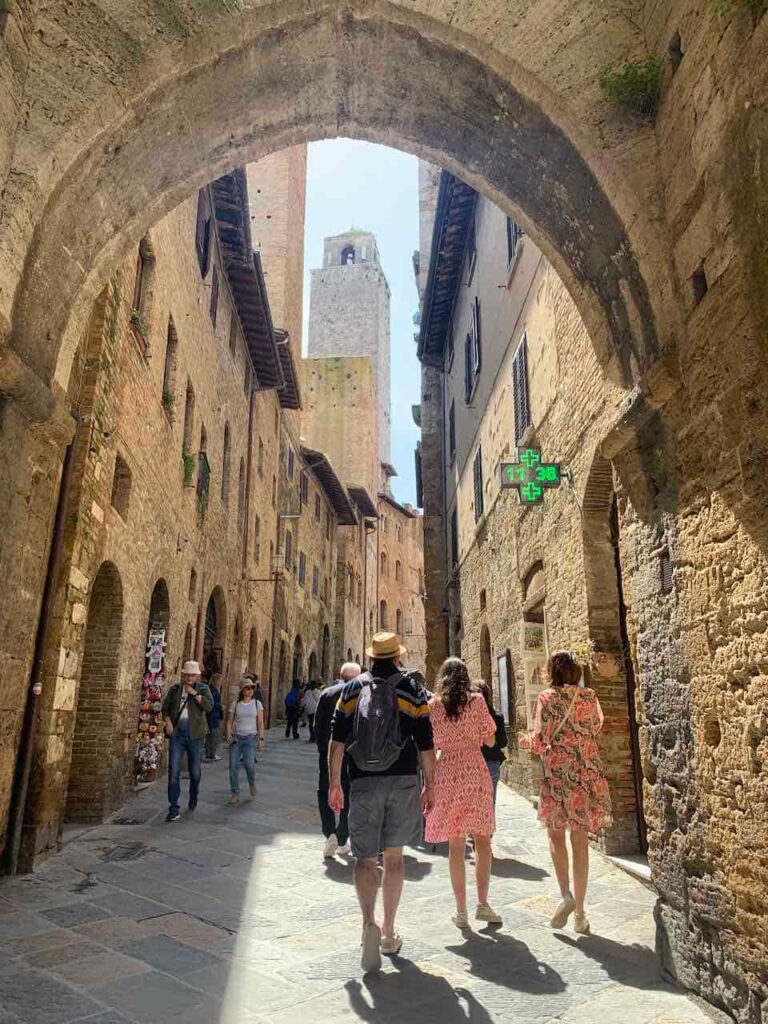
Via San Giovanni is the main artery of San Gimignano, connecting the gate to the heart of the historic center. It’s a lively but beautifully preserved medieval street lined with artisan shops, small cafés, wine bars, and gelato stops.
Walking here isn’t just about getting from A to B—it’s about absorbing the rhythm of the town. The stone facades, hanging flower pots, and glimpses of towers above create a slow, immersive experience that defines San Gimignano.
Shops typically open around 10:00 and close by 19:00, especially in peak season.
Pro tip: Don’t rush this street—step inside the shops to inspect the offer of authentic local products.
3. Head to Piazza del Cisterna
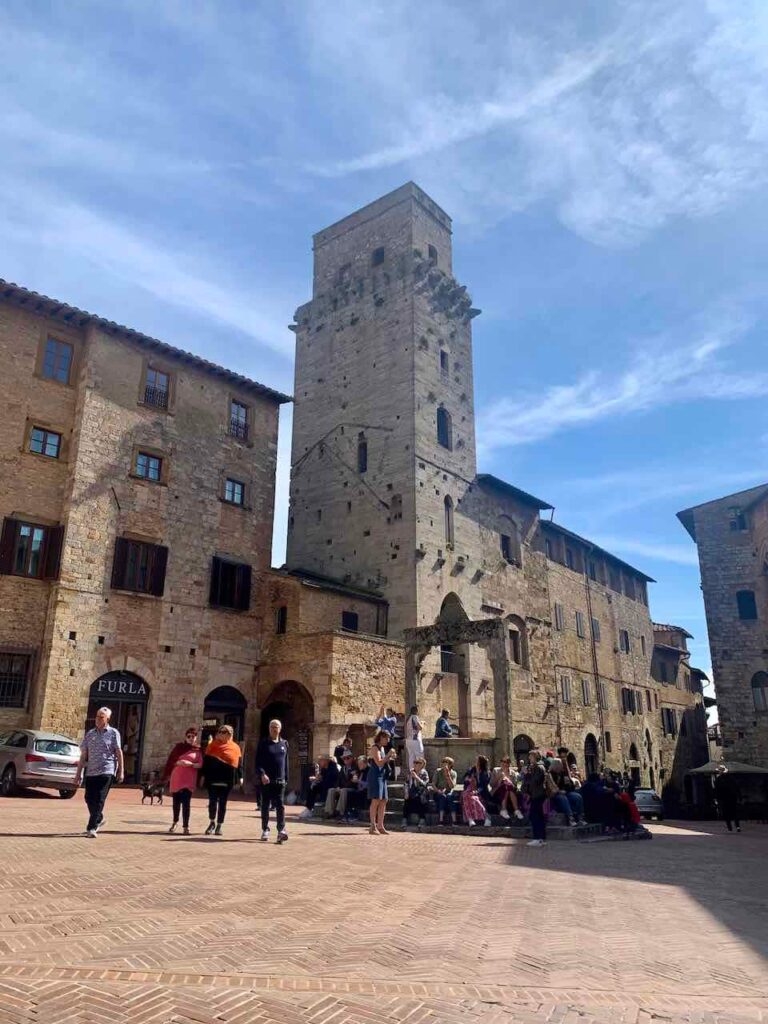
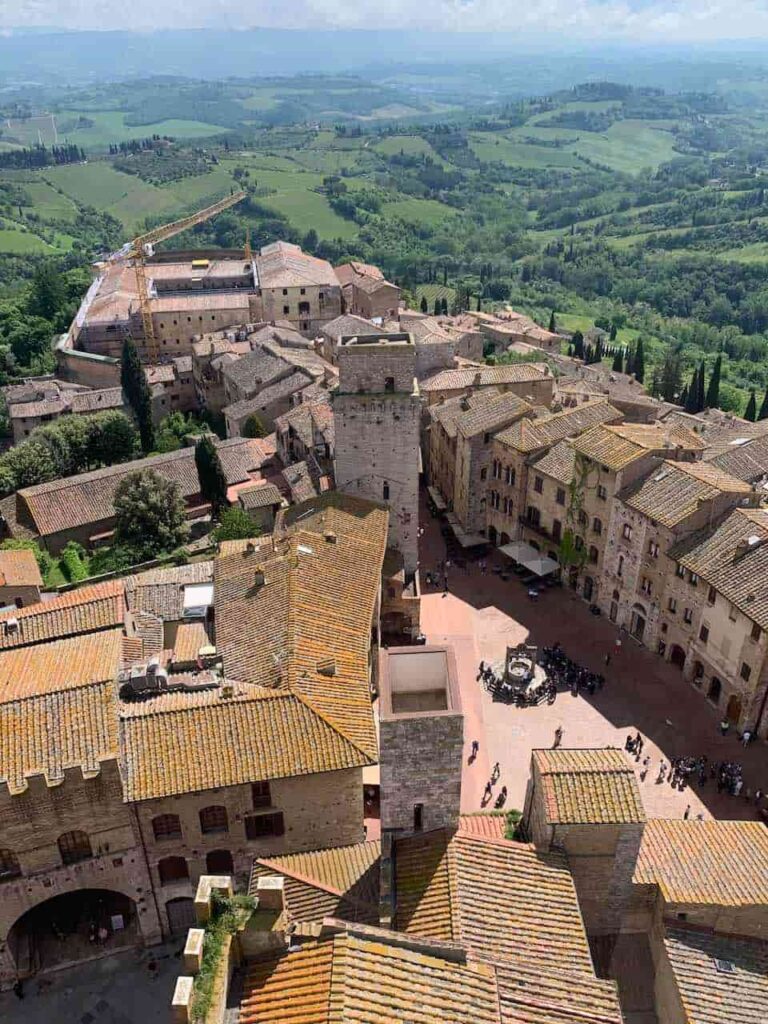
Piazza della Cisterna is the most iconic square in San Gimignano and one of the most beautiful medieval piazzas in Tuscany. Surrounded by stone towers, historic palaces, and old brick buildings, the square feels almost unchanged since the Middle Ages. Its triangular shape and central stone well create one of the most recognizable views in town.
Named after the ancient cistern located in the middle of the square, Piazza della Cisterna was once the center of medieval markets, festivals, and daily life. Today, it remains the liveliest part of San Gimignano, filled with cafés, gelaterias, wine bars, and visitors soaking in the atmosphere.
Despite its popularity, the square still feels incredibly atmospheric—especially in the early morning or evening when the crowds begin to thin and the warm Tuscan light reflects off the stone buildings.
It’s also home to famous spots like Gelateria Dondoli and serves as a natural meeting point while exploring the historic center.
Pro tip: Visit Piazza della Cisterna just before sunset—the golden light on the medieval towers makes it one of the most photogenic spots in San Gimignano.
4. Try Gelato at Gelateria Dondoli
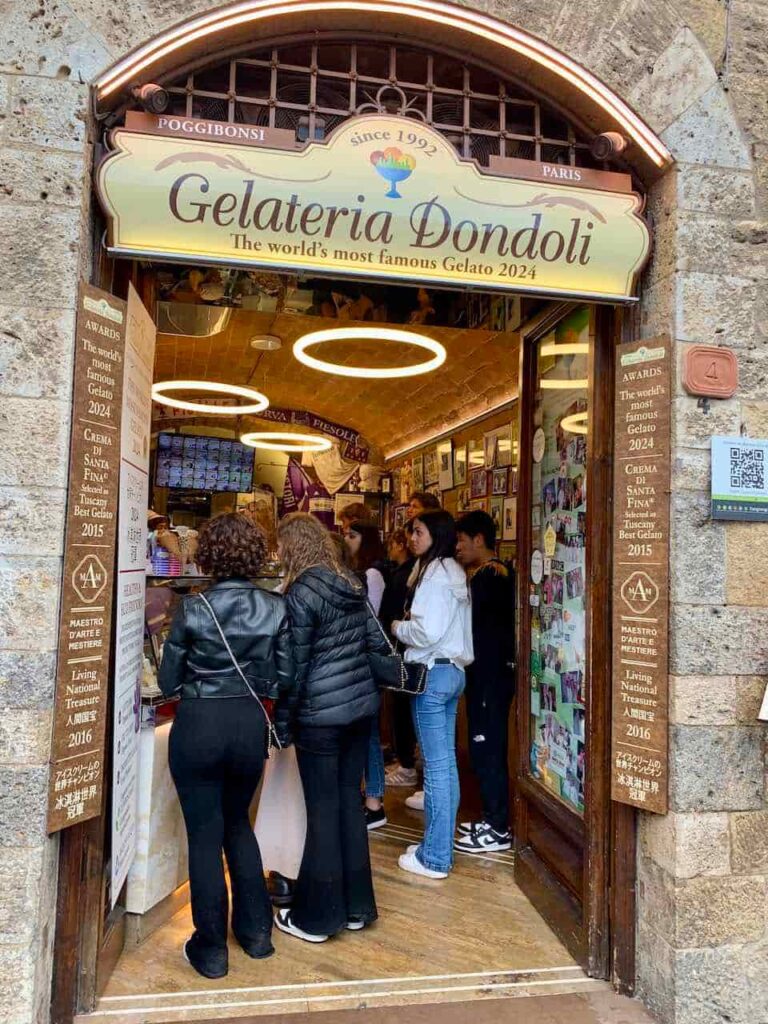
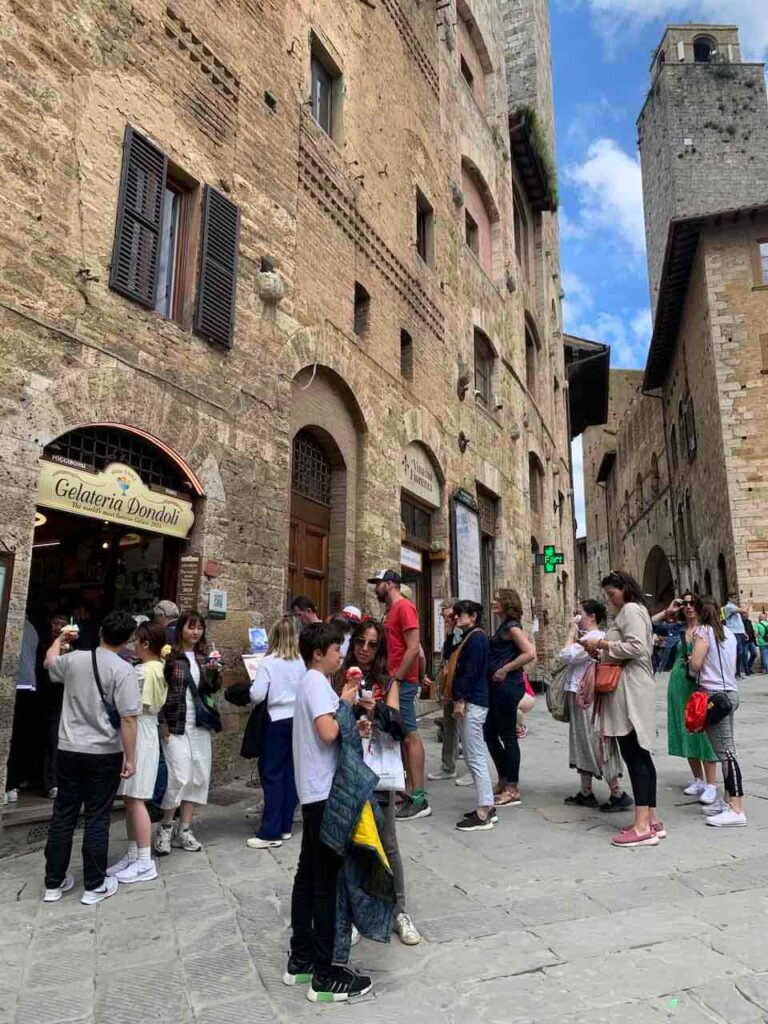
No visit to San Gimignano is complete without stopping at Gelateria Dondoli, one of the most famous gelaterias in the world. Located right in Piazza della Cisterna, it regularly attracts long queues—but the quality makes it worth the wait.
This award-winning gelato shop is known for creative flavors inspired by Tuscany, such as saffron cream, rosemary, and Vernaccia wine.
It’s open daily (typically 10:00–22:00 in peak season), with no ticket required—just patience for the line. Some food tours in San Gimignano include a tasting stop here.
Pro tip: Try unique flavors rather than standard ones—you’re here for something you won’t find elsewhere.
5. Explore Piazza del Duomo
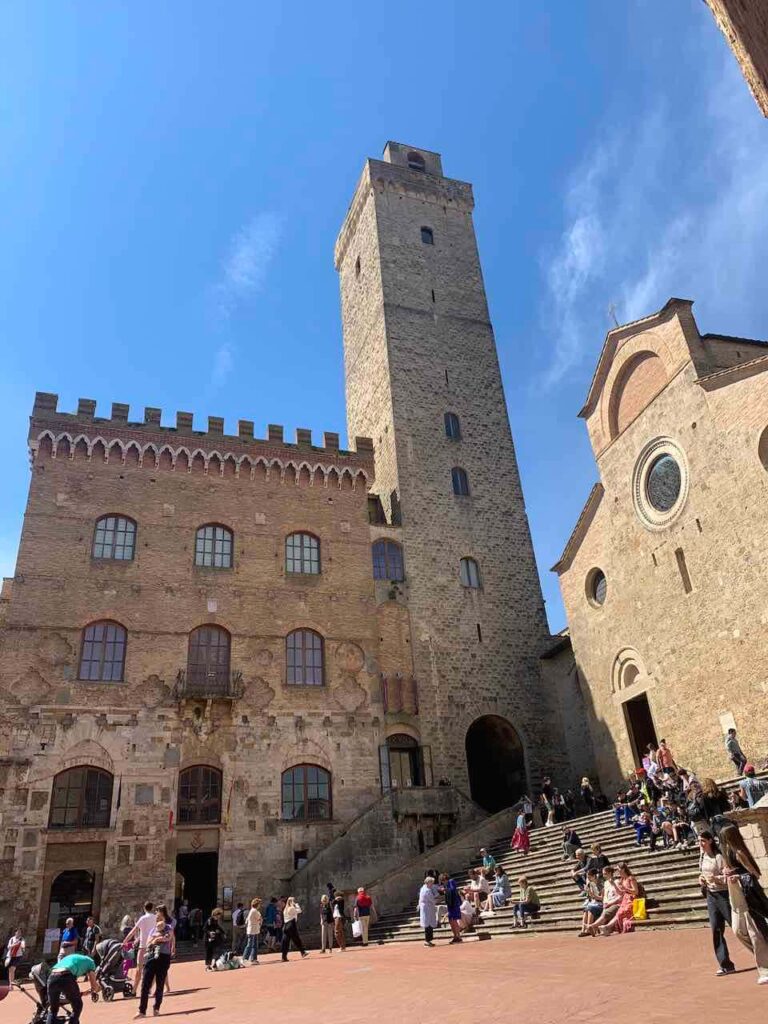
Piazza del Duomo is the spiritual and civic heart of San Gimignano. Unlike Piazza della Cisterna, this square feels more structured and ceremonial, surrounded by important buildings including the town hall and the Collegiate Church.
It’s completely free to access and open at all times, making it an easy stop as you explore the historic center. Many guided walking tours pass through here, especially those focusing on medieval history and art.
The square is less crowded than the main piazza, offering a more relaxed atmosphere where you can appreciate the architecture and scale of the town’s historic power.
Pro tip: Sit on the steps here for a quiet break—it’s one of the best places to take in the surrounding towers without the crowds.
6. Visit the Civic Museum
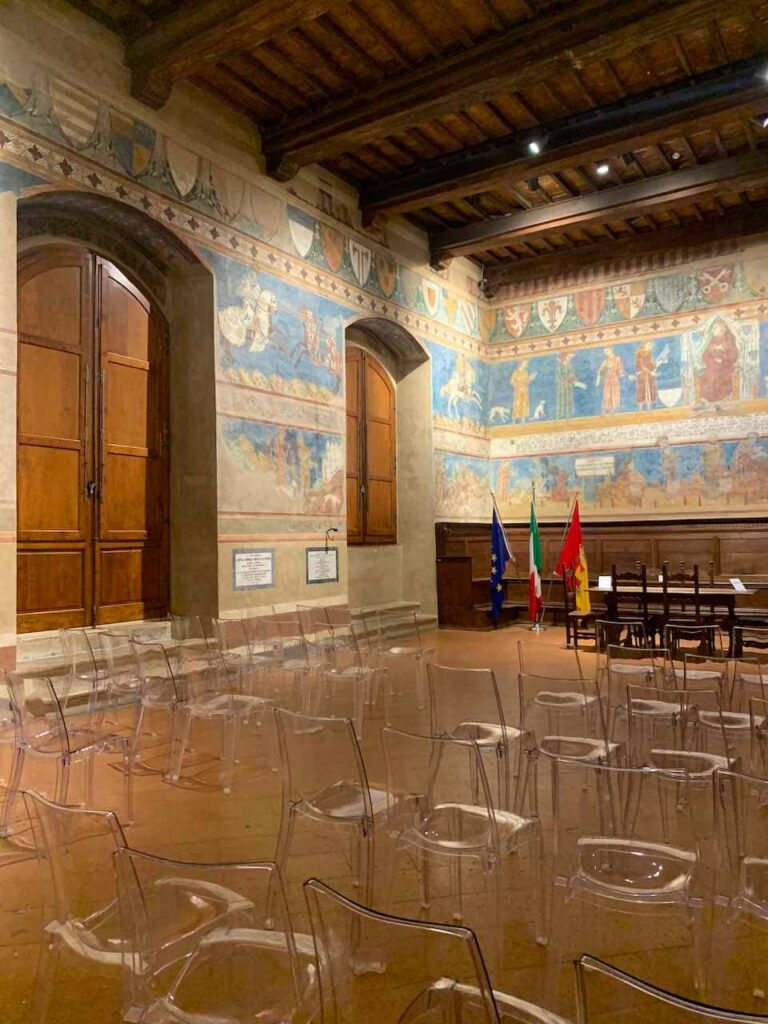
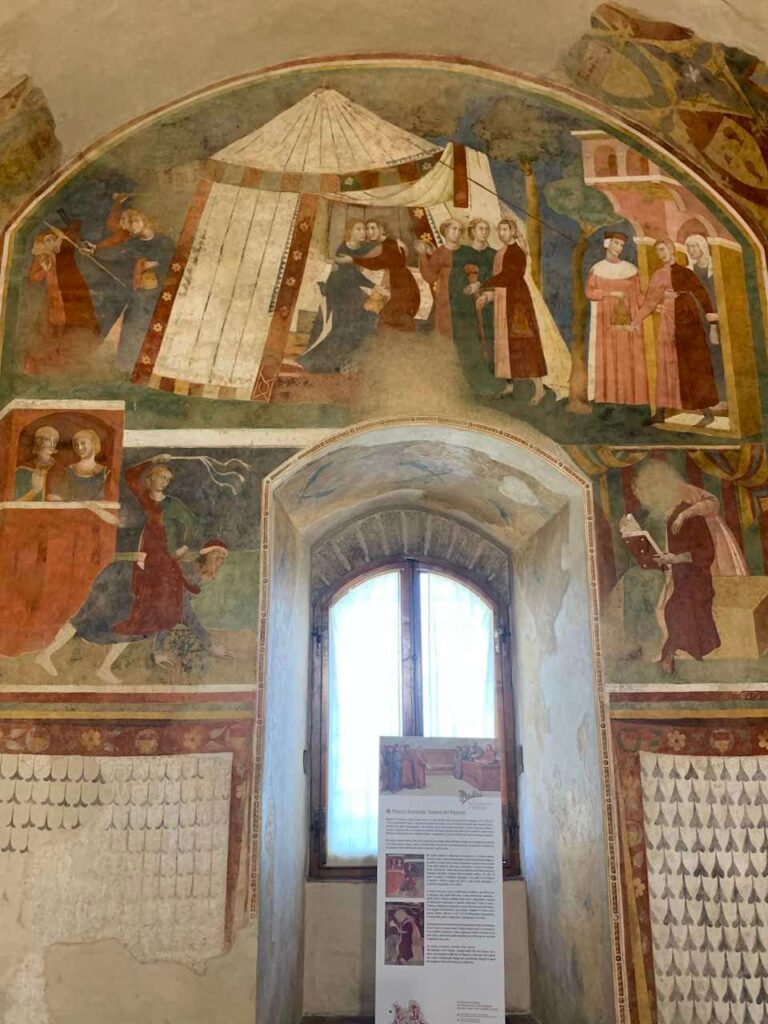
The Civic Museum is one of the best places to understand the cultural and political history of San Gimignano. Located inside the historic Palazzo Comunale, it houses frescoes, medieval artifacts, and access to the famous tower viewpoint.
Inside, you’ll find richly decorated rooms that once hosted the town’s governing council. The highlight for many visitors is the connection to Torre Grossa, which you can climb from within the museum complex.
Opening hours are typically 10:00–18:00 (seasonal variations apply), and entry is included with the San Gimignano Pass.
Pro tip: Combine this visit with Torre Grossa to maximize value and avoid backtracking.
7. Visit the Duomo of San Gimignano
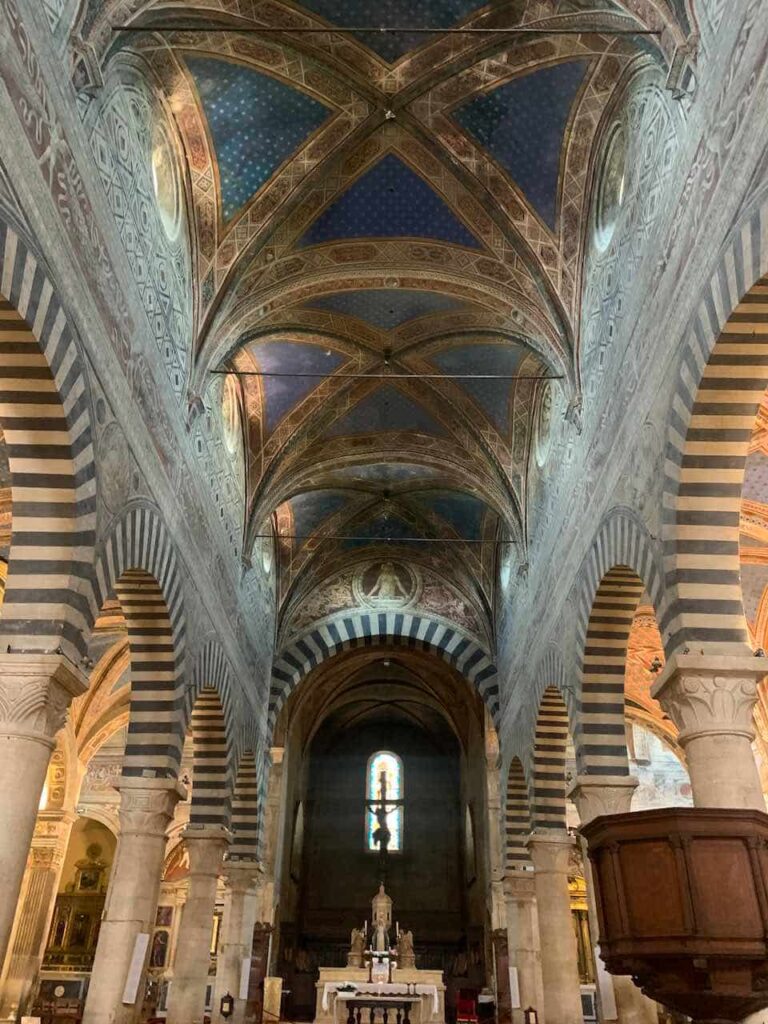
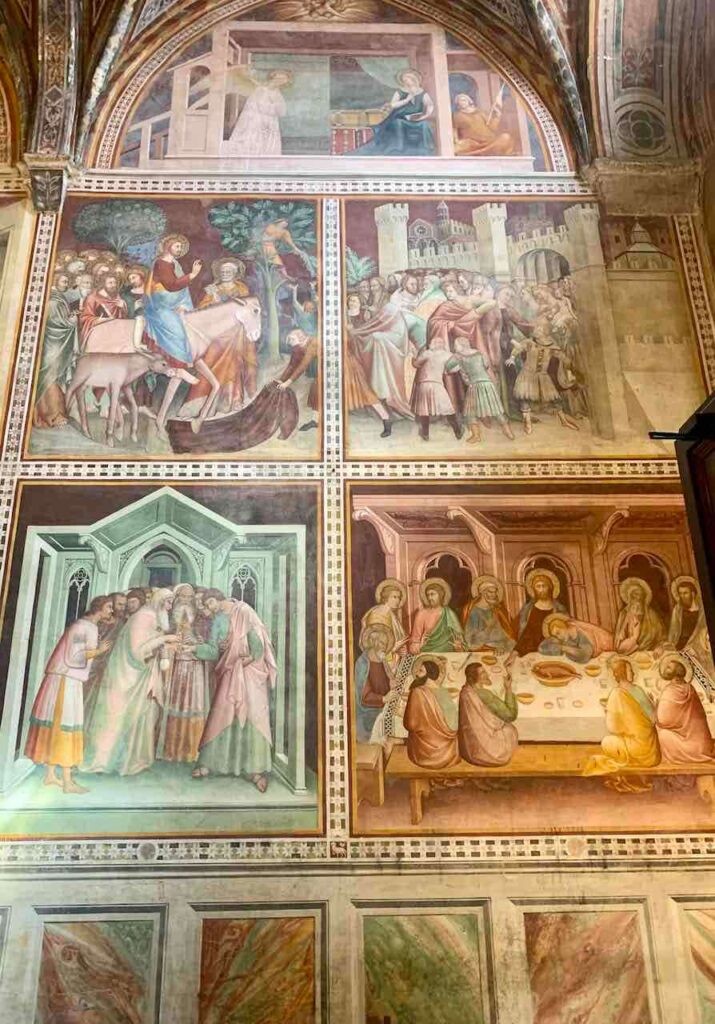
The Duomo of San Gimignano, officially the Collegiata di Santa Maria Assunta, is one of the most visually striking religious sites in Tuscany. From the outside, it appears modest—but stepping inside reveals extraordinary fresco cycles covering nearly every wall.
These frescoes depict biblical scenes in vivid detail, offering a glimpse into medieval storytelling and artistry.
Opening hours are generally 10:00–19:00, and tickets cost around €5–€7 depending on season and combined passes.
Pro tip: Visit earlier in the day when light filters through the windows, enhancing the colors of the frescoes.
8. Climb Torre Grossa
Climbing Torre Grossa is one of the most rewarding experiences in San Gimignano. At 54 meters, it is the tallest tower in town and offers sweeping panoramic views over the Tuscan countryside.
The climb involves a series of narrow stone staircases, but the view at the top is unforgettable—rolling hills, vineyards, and the cluster of medieval towers below.
Opening hours typically run from 10:00–18:00, and access is included in the Civic Museum ticket or San Gimignano Pass.
Pro tip: Go later in the afternoon for softer light and fewer crowds at the top.
9. Visit the Church of San Lorenzo
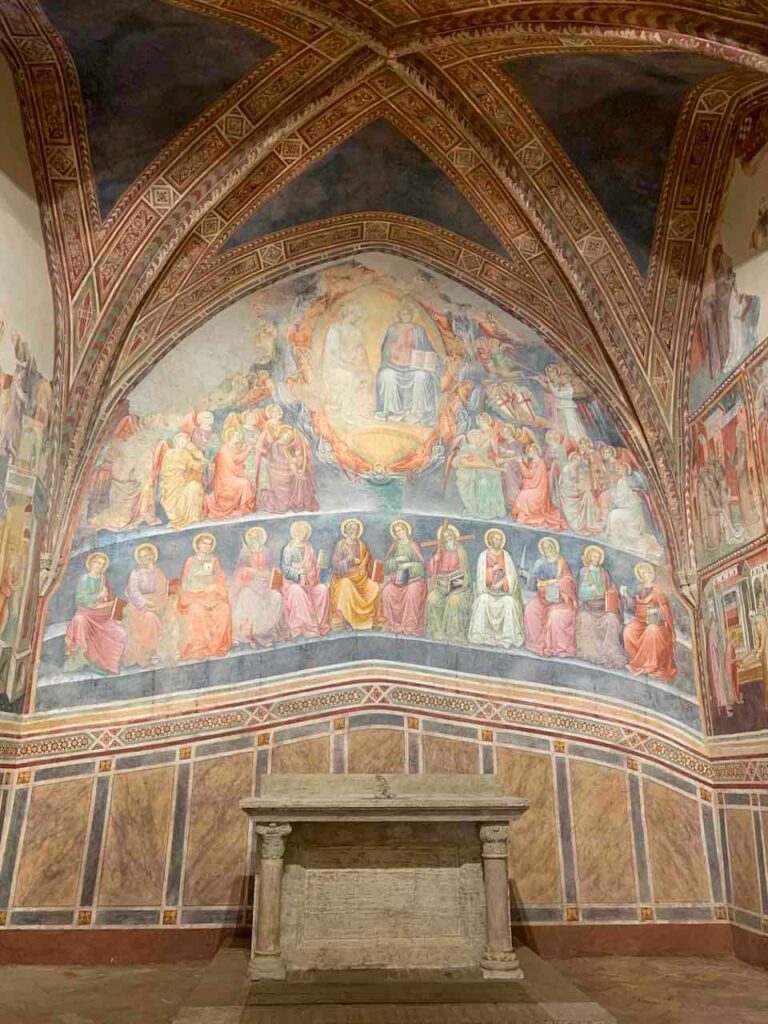
The Church of San Lorenzo is one of the quieter and most underrated religious sites in San Gimignano, offering a completely different experience from the more famous Duomo. While many visitors focus on the main squares and towers, this small Romanesque church rewards those who take a slower, more thoughtful approach to exploring the town.
Dating back several centuries, the church reflects the simpler, more intimate side of San Gimignano’s spiritual history. Inside, you’ll find a peaceful atmosphere with understated architecture that contrasts beautifully with the grandeur of the nearby historic landmarks. It’s less about spectacle and more about reflection, making it a welcome pause during a busy day of sightseeing.
The church is generally open during daytime hours, though times can vary seasonally, and entry is free.
Pro tip: Visit San Lorenzo after exploring the main attractions—it’s the perfect place to step away from the crowds and enjoy a quiet, contemplative moment in the heart of the medieval town.
10. Check Out the Archaeological Museum, Pharmacy of Santa Fina & Gallery of Modern Art
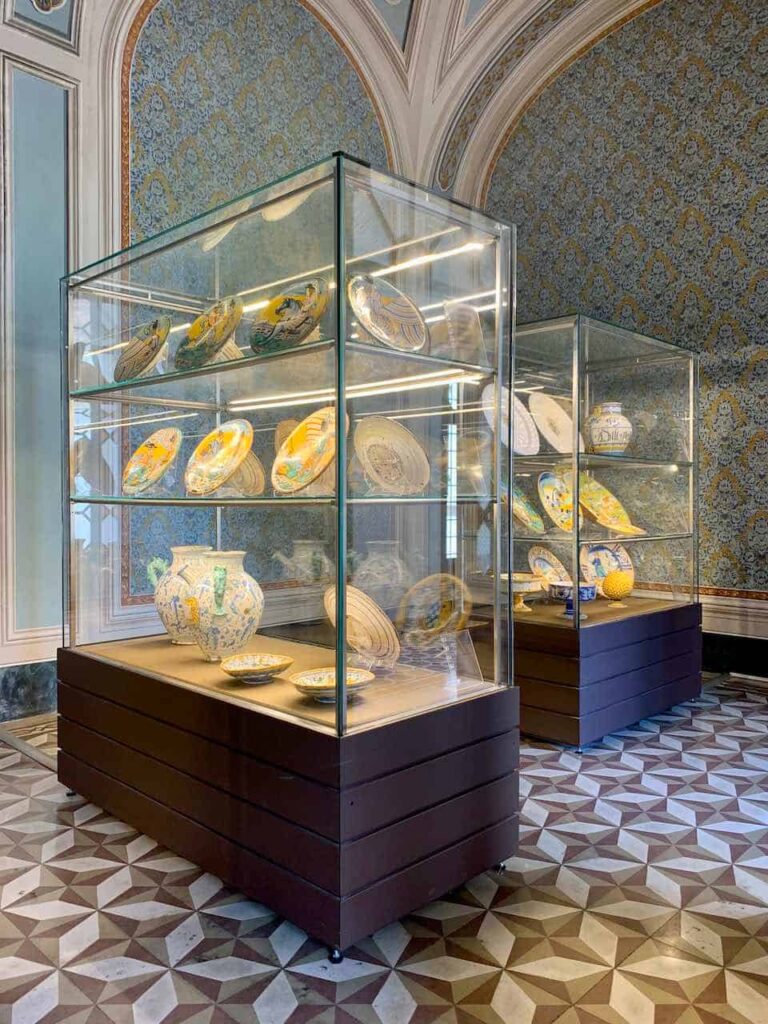
This is one of the most unexpectedly rich cultural stops in San Gimignano, combining archaeology, medieval medicine, and contemporary art in a single museum complex. Housed in historic buildings within the old town, it offers a deeper understanding of how San Gimignano evolved far beyond its famous skyline of towers.
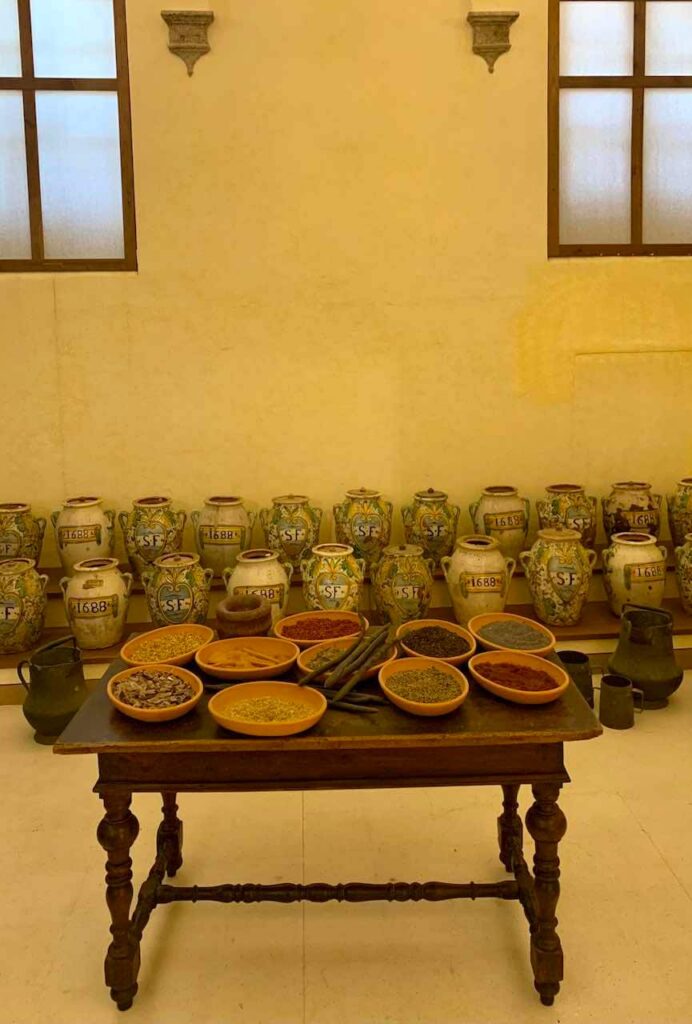
The Archaeological Museum showcases Etruscan and Roman artifacts discovered in the surrounding area, helping you understand the ancient roots of this hilltop settlement. One of the most fascinating sections is the Pharmacy of Santa Fina, which recreates a historic apothecary with beautifully preserved jars, tools, and medicinal displays that reveal how healing was practiced in medieval times.
The Gallery of Modern Art adds a surprising contrast, featuring rotating exhibitions that connect the past with contemporary artistic expression.
Opening hours are typically 10:00–18:00, and entry is included in the San Gimignano Pass.
Pro tip: Don’t rush this stop—the pharmacy section is small but incredibly detailed and often missed by visitors.
11. Wander the Historic Centre
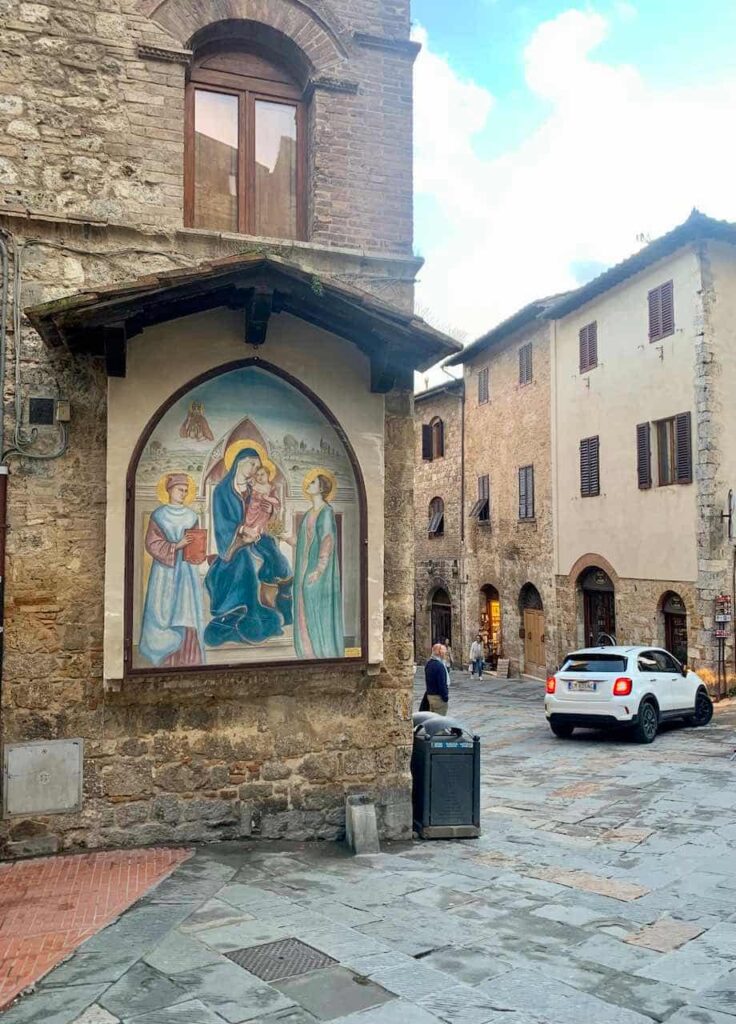
One of the most rewarding things to do in San Gimignano, Tuscany, is also the simplest—just wandering. The historic centre is a UNESCO World Heritage Site, and every stone street, archway, and courtyard feels like it belongs to another century.
Unlike cities where you follow a strict itinerary, San Gimignano invites you to slow down and explore without a plan. You’ll pass under ancient stone arches, discover quiet side alleys with almost no crowds, and catch unexpected views of medieval towers rising between rooftops. This is where the town’s real character lives—not just in its famous squares, but in its hidden corners.
The entire old town is pedestrian-only, making it perfect for aimless exploration.
Pro tip: Step away from the main streets in the late afternoon—this is when the light softens, and the town feels most atmospheric and authentic, especially as day-trippers begin to leave.
Food, Wine & Local Experiences
12. Try Vernaccia di San Gimignano (Wine Experience)
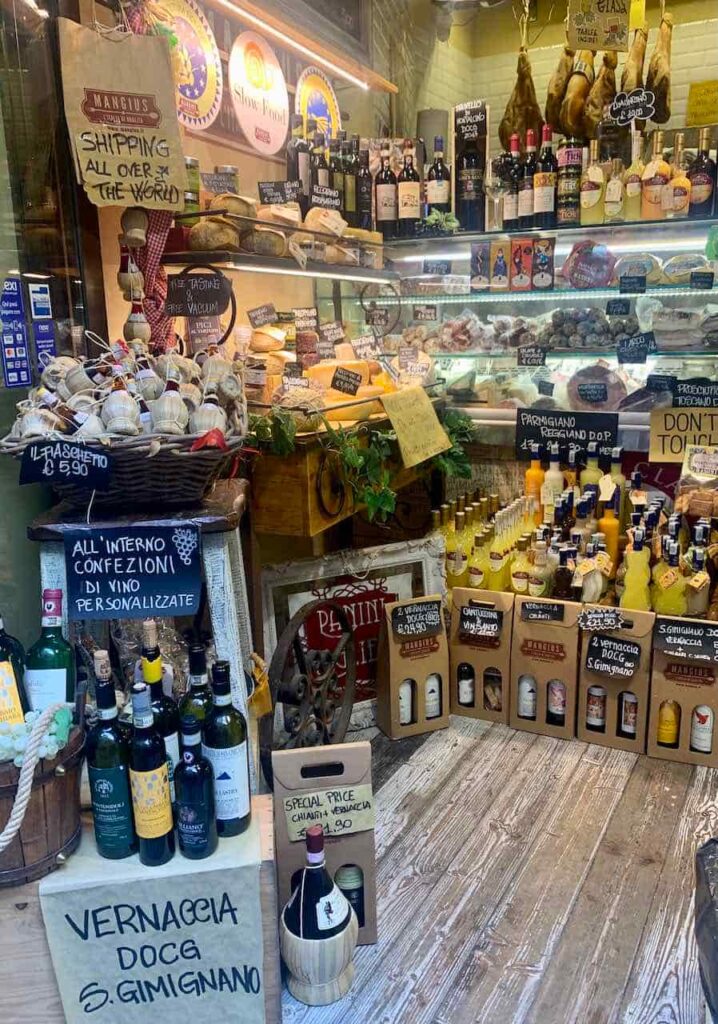
Wine is an essential part of experiencing San Gimignano, Italy, and no visit feels complete without trying Vernaccia di San Gimignano—the town’s historic white wine. This crisp, mineral-driven wine has been produced here for centuries and even holds DOCG status, Italy’s highest wine classification.
You can easily try Vernaccia in almost any local bar or restaurant in town, often served chilled and paired with Tuscan antipasti. But for a deeper experience, consider visiting nearby wineries where you can learn about the production process and taste directly at the source. Popular options include estates such as Tenuta Torciano and San Quirico, or smaller local producers around the countryside.
Opening hours vary depending on the venue, but tastings are typically available throughout the day. Prices range from simple tastings (€10–€25) to full wine tours with food pairings.
Pro tip: If possible, book a vineyard tasting during sunset—the golden light over the Tuscan hills makes the experience unforgettable and highly photogenic.
13. Enjoy the Gastronomy of San Gimignano
Food in San Gimignano is deeply rooted in traditional Tuscan cuisine—simple, seasonal, and incredibly flavorful. Eating here isn’t just about dining; it’s about slowing down and experiencing the rhythm of the region through its ingredients and recipes.
Local menus often feature dishes like handmade pici pasta with wild boar ragù, saffron-infused specialties, pecorino cheese from nearby farms, and rich Tuscan soups such as ribollita. Many restaurants source ingredients locally, which is why the flavors feel so authentic and tied to the landscape.
Most restaurants serve lunch from around 12:00–15:00 and dinner from 19:00 onward. Reservations are highly recommended during peak season, especially in the historic center.
Pro tip: Don’t rush your meals here—Tuscan dining is meant to be slow. Pair your food with a glass of Vernaccia di San Gimignano for a truly local experience.
14. Take a Tuscan Cooking Class
One of the most immersive ways to experience San Gimignano is through a hands-on cooking class. Instead of just tasting the region’s food, you step into the kitchen and learn how traditional Tuscan dishes are made—from fresh pasta to seasonal sauces and rustic desserts.
Many cooking classes take place in countryside villas or agriturismos just outside the town, surrounded by olive groves and vineyards. Others are hosted in historic kitchens within or near the medieval center. Experiences often include a guided market visit, preparation of multiple courses, and a shared meal paired with local wines.
Classes typically run for 3–5 hours and cost around €80–€150 per person, depending on the experience. They can be booked in advance online or directly through local farms and cooking schools.
Pro tip: Choose a class like this Tuscan Cooking Class that includes wine pairing and olive oil tasting—it turns the experience into a full Tuscan food journey rather than just a cooking lesson.
15. Shop Local Products
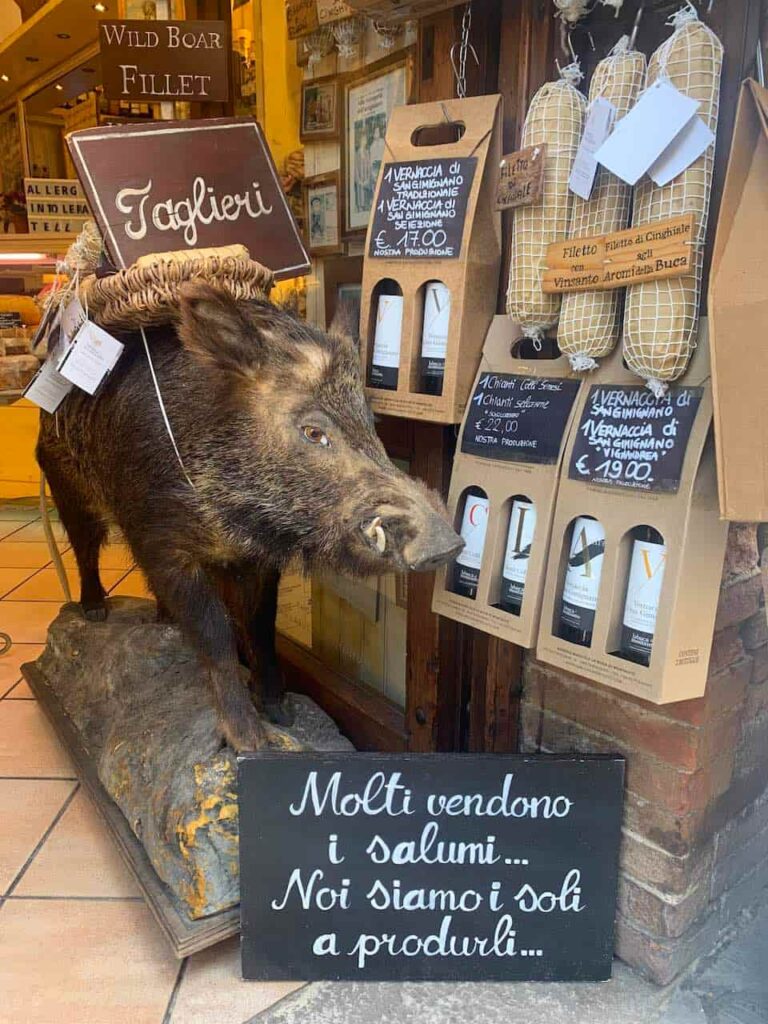
Shopping in San Gimignano is less about souvenirs and more about taking a piece of the region’s craftsmanship home with you. The town is filled with small artisan shops selling locally made products that reflect centuries of Tuscan tradition.
As you wander through the historic centre, you’ll find everything from hand-painted ceramics and leather goods to saffron products, truffle oils, and locally produced wine. Many of these items are made in nearby villages, which adds authenticity to what you’re buying.
Most shops are open daily from around 10:00 to 19:00, especially during high season. Browsing the shops is an experience in itself—many shop owners are happy to explain how their products are made.
Pro tip: Focus on edible souvenirs like Vernaccia wine, extra virgin olive oil, or saffron from the region—they’re lightweight, authentic, and actually let you relive your trip once you’re home.
16. Go for Truffle Hunting (San Gimignano Experience)
One of the most unique and memorable experiences near San Gimignano Italy is joining a truffle hunting tour. Guided by trained dogs and local experts, you walk through forests and countryside paths in search of one of Italy’s most prized culinary treasures.
These experiences are usually set just outside the town, in private woodland areas or rural estates. A typical tour includes an introduction to truffle hunting traditions, a guided walk with the hunter and dog, and often ends with a tasting meal featuring fresh truffles paired with local wines.
Tours generally last 2–3 hours and cost around €70–€150 per person, depending on the season and whether a full meal is included. They can be booked through platforms like Viator or directly with local truffle farms.
Pro tip: Autumn is the best season for truffle hunting in San Gimignano, and early morning tours tend to be the most successful—and the most atmospheric in the Tuscan countryside.
Best Day Trips from San Gimignano
17. Visit the Chianti Region Nearby
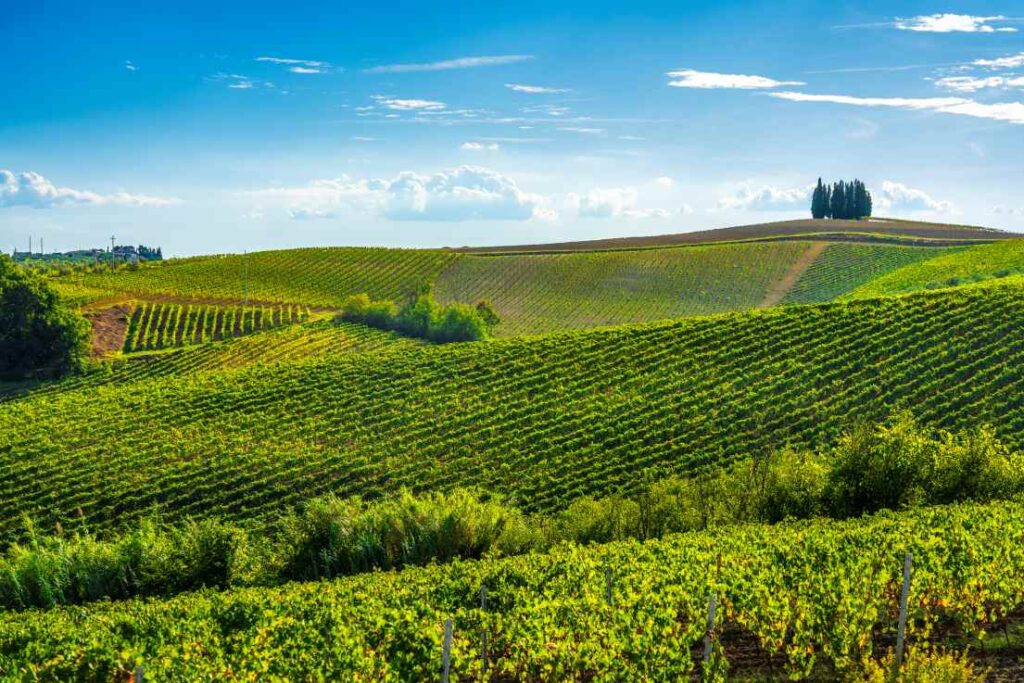
One of the biggest advantages of visiting San Gimignano is how close you are to the iconic Chianti wine region. Just a short drive away, the landscape shifts into rolling vineyards, cypress-lined roads, and postcard-perfect hilltop villages that define the Tuscan countryside.
This area is ideal for slow road trips, wine tasting experiences, and scenic stops at family-run wineries. Many estates offer guided tours where you can walk through vineyards, learn about wine production, and taste Chianti Classico paired with local cheeses and olive oil. It’s also a popular route for small-group tours departing from Florence or Siena.
Wineries typically welcome visitors between 10:00 and 17:00. Prices for tastings usually range from €15–€40 depending on the experience.
Pro tip: Drive the smaller country roads —the scenic routes between San Gimignano and Chianti are just as memorable as the wineries themselves.
18. Visit Monteriggioni

A short and scenic drive from San Gimignano brings you to Monteriggioni, one of the most perfectly preserved medieval walled villages in Italy. Unlike larger Tuscan towns, Monteriggioni feels almost untouched by time—small, circular, and entirely enclosed by its original stone walls.
Walking through the main gate feels like entering a living fortress. Inside, you’ll find a quiet village with a central square, a few cafés, artisan shops, and panoramic walking paths along the fortified walls. The views over the surrounding countryside are especially beautiful in the late afternoon light.
Some sections of the Monteriggioni walls and small museums have a modest entry fee (typically €5–€7). It’s an easy half-day trip and is often combined with Siena or Chianti wine tours.
Pro tip: Climb the wall walkway if open—it offers one of the best panoramic views of a medieval village in all of Tuscany, especially at sunset.
19. Visit Colle di Val d’Elsa
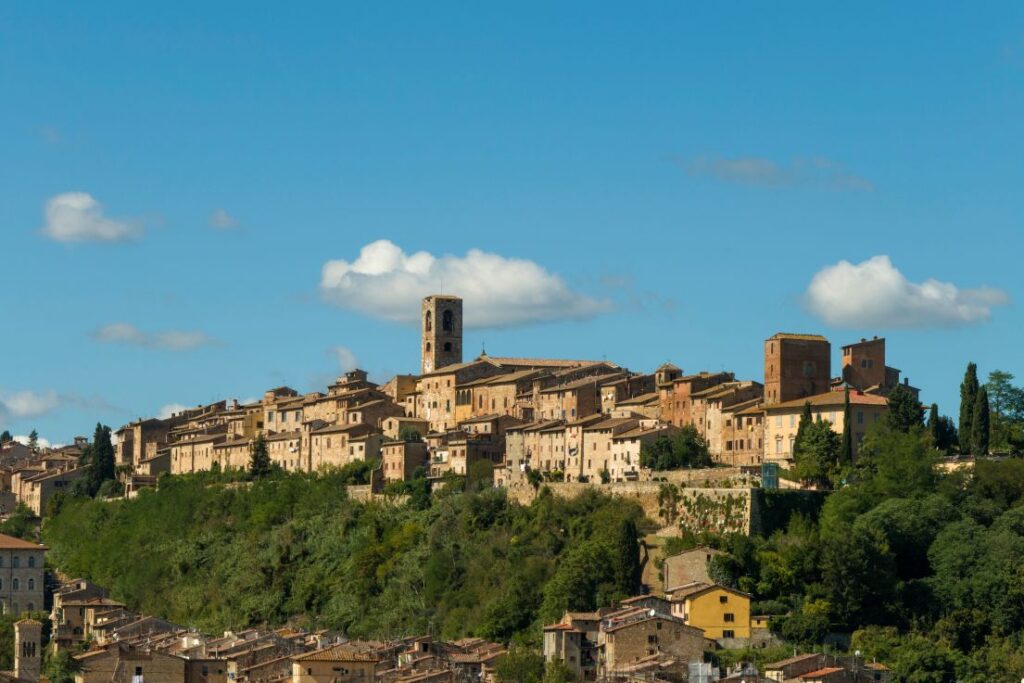
Just a short drive from San Gimignano, Colle di Val d’Elsa is one of Tuscany’s most underrated gems. Often overlooked in favor of more famous hill towns, it offers a quieter, more local experience while still delivering that unmistakable Tuscan charm.
The town is divided into two parts: the modern lower town and the historic upper village (Colle Alta). The real magic is in Colle Alta, where narrow medieval streets, stone arches, and panoramic viewpoints open up over the Elsa Valley. It feels authentic, lived-in, and far less touristy than nearby hotspots.
Colle di Val d’Elsa is also known for its long tradition of crystal glass production, which earned it the nickname “City of Crystal.” You’ll find small workshops and shops selling finely crafted glassware throughout the town.
Day Trip to San Gimignano from Florence
A day trip from Florence to San Gimignano is one of the most popular ways to experience Tuscany. San Gimignano is one of the most popular stops included in many Tuscany day trips from Florence, often combined with Siena or the Chianti wine region for a full countryside experience.
If you’re spending 2 days in Florence, you can easily fit San Gimignano into your Tuscany route as a half-day or full-day escape beyond the city.
In just over an hour, you can leave behind Renaissance palaces and arrive in a perfectly preserved medieval hill town surrounded by vineyards, olive groves, and rolling countryside.
The most convenient option is renting a car, which gives you full flexibility to explore at your own pace and even combine San Gimignano with nearby towns like Siena or Monteriggioni.
Siena and San Gimignano are often combined in Tuscany road trips, as both towns offer a powerful contrast of medieval architecture, history, and authentic Tuscan atmosphere.
If you prefer not to drive, there are also guided tours from Florence that typically include transport, a walking tour, and sometimes wine tastings in the Chianti region.
Travel time is approximately:
- By car: ~1 hour 15 minutes
- By guided tour: ~1.5–2 hours depending on stops
- By train + bus: ~2.5 hours (via Poggibonsi)
Most tours combine San Gimignano with Chianti wine tastings or Siena, making it a full Tuscany experience in one day.
Pro tip: If you’re visiting on an independent day trip, arrive early (before 10:30) to enjoy the town before tour buses arrive—and prioritize the main squares and Torre Grossa for the best views in a limited time.
🔗 More Tuscany Guides
If you’re planning your trip, you might also enjoy:
- 👉 1 Day in Florence Itinerary – explore the highlights of Florence in one day
- 👉 2 Days in Florence Itinerary – a slower, deeper city experience
- 👉 Florence Food Guide – guide to what to eat and where to eat in Florence
- 👉Best Things to Do in Florence – top attractions, landmarks, and experiences in the city
- 👉 Best Things to Do in Siena – medieval streets, historic piazzas, and cultural highlights
- 👉 Florence to Siena Day Trip Guide – how to plan the perfect journey between two iconic Tuscan cities
- 👉 Best Day Trips from Florence – Pisa, Siena, Chianti & more
- 👉 How to visit Pienza from Florence or Siena – a complete guide to reaching one of Tuscany’s most beautiful hill towns and exploring Val d’Orcia
- 👉 Traditional Food in Tuscany – authentic regional specialties