9 Villages in Val d’Orcia Italy That Will Leave You Speechless

I’ve traveled through Tuscany many times, crisscrossing its hills, vineyards, and sun-kissed medieval towns. But if there is one corner of Tuscany that captures the essence of the region more perfectly than anywhere else, it is Val d Orcia Italy. This is the Tuscany travelers’ dream before they go — rolling golden fields, rows of cypress trees leading to stone farmhouses, Renaissance villages perched on hilltops, and vineyards producing some of Italy’s most legendary wines. If Tuscany is a masterpiece, the Val d’Orcia region is its heart.
The first time I drove through southern Tuscany, I understood why this landscape became a UNESCO World Heritage Site. Every curve in the road revealed another postcard view: misty valleys at sunrise, medieval towers glowing in the afternoon light, and winding roads disappearing into the famous rolling hills of Tuscany. I first visited Val d’Orcia during a road trip through Tuscany, and it instantly became one of my favorite places in Italy.
After multiple visits, I can confidently say the best way to experience the region is by car. I absolutely love driving in Tuscany, and I highly recommend renting a car and exploring independently. Some of the most unforgettable moments happen between destinations — pulling over at a random viewpoint, discovering a tiny trattoria, or stumbling upon quiet villages that never make it into guidebooks.
Val d’Orcia was one of the highlights of my larger Tuscany road trip, especially after spending time exploring Florence, Siena, and the surrounding hill towns. If you’re planning a wider itinerary, my 1 Day in Florence Itinerary, 2 Days in Florence Itinerary, and guide to the Best Day Trips from Florence can help you plan the perfect Tuscany adventure.
In this guide, I’ll share everything you need to know about visiting this breathtaking corner of southern Tuscany— including the most beautiful villages, the best photo spots, where to stay, famous Tuscan landmarks, local food to try, and the top things to do in Val d’Orcia. Whether you’re planning a scenic Tuscany road trip, searching for hidden gems, or wondering where Val d’Orcia in Italy is, and how to visit, this detailed guide will help you plan an unforgettable trip.
Here’s what you’ll discover in this Val d’Orcia travel guide:
- The most beautiful villages in Tuscany Val d’Orcia
- Best scenic drives through the rolling hills of Tuscany
- Famous landmarks like the Chapel of Vitaleta
- The best wineries and food experiences
- Where to stay in Val d Orcia Italy
- Tips for planning the perfect Val d’Orcia itinerary
- The best time to visit Val d’Orcia Tuscany
- Recommended tours and self-drive routes
If you are searching for the true soul of Tuscany, you’ll find it here — among the vineyards, cypress roads, medieval villages, and timeless landscapes of Val d’Orcia.

📌 Table of Contents
5. How to Get to Val d’Orcia
6. Places to Visit in Val d’Orcia Italy
7. Famous Landmarks & Photo Spots in Val d’Orcia
8. Best Photography Spots in Val d’Orcia
10. Val d’Orcia Itinerary
What is Val d’Orcia?
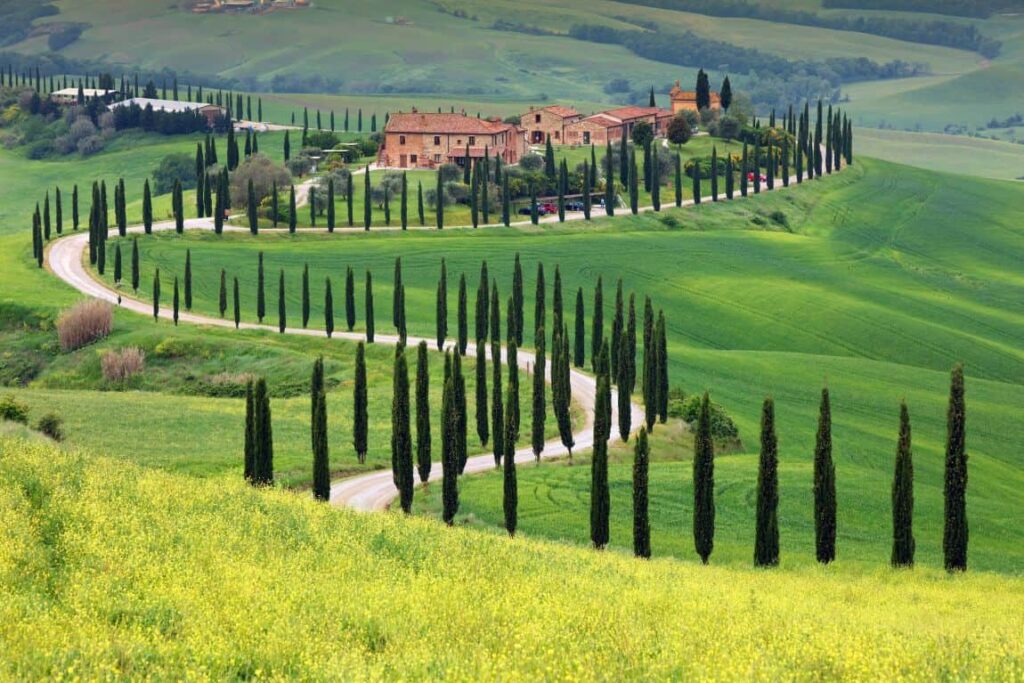
Val d’Orcia, also written as Val d’Orcia Toscana, Val d’Orcia Italy, or Valle d’Orcia, is a UNESCO World Heritage landscape in southern Tuscany. Stretching between Siena and Monte Amiata, the region is famous for its postcard-perfect scenery, medieval villages, thermal baths, vineyards, and winding country roads.
The landscape here inspired Renaissance painters, and honestly, it still feels like a living painting today. Every season transforms the valley differently — bright green in spring, golden in summer, misty in autumn, and beautifully quiet in winter.
What makes this valley special is how untouched it feels. Despite becoming one of the most photographed places in Italy, it still retains an authentic rhythm of life centered around wine, food, olive oil, and tradition.
What is Val d’Orcia Famous For?
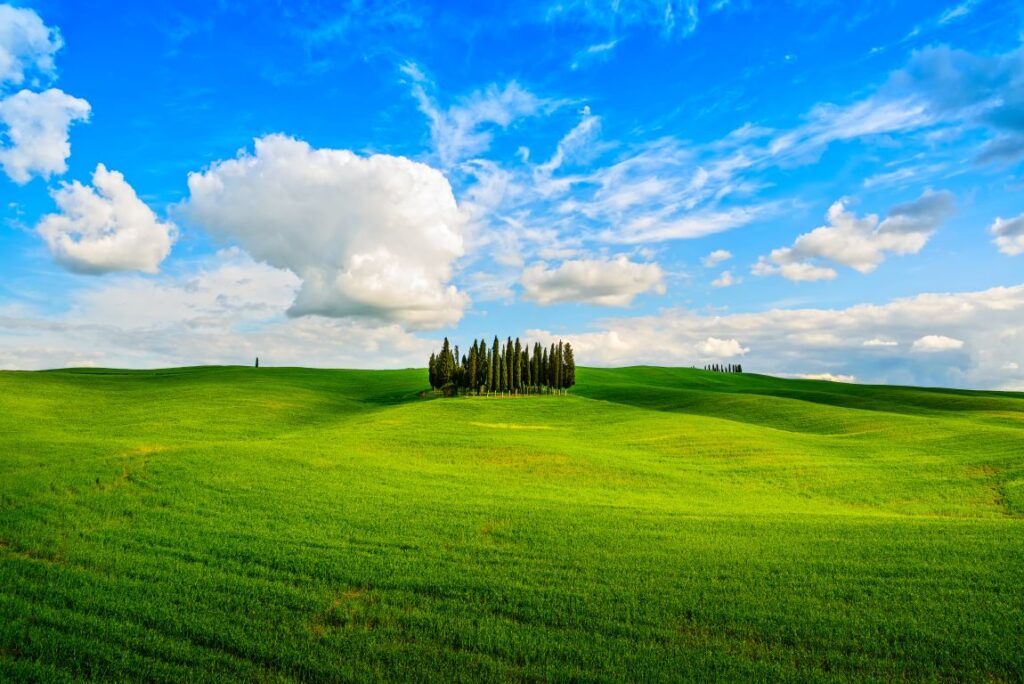
The region is famous for:
- The iconic rolling hills of Tuscany
- Cypress tree-lined roads
- Brunello di Montalcino wine
- Pecorino cheese from Pienza
- Medieval hilltop villages
- Thermal hot springs
- Stunning photography locations
- Scenic drives through the countryside
- UNESCO-protected landscapes
Many travelers recognize Val d Orcia Italy, from films like Gladiator, The English Patient, and Under the Tuscan Sun. But beyond the movie-famous scenery, the region is beloved for its slow travel atmosphere and incredible Tuscan cuisine.
Where is Val d’Orcia Italy?
Val d’Orcia is located in southern Tuscany, about:
The valley stretches around the towns of Pienza, Montalcino, San Quirico d’Orcia, and Castiglione d’Orcia.
Many travelers search for a Val d’Orcia Italy map before planning their route because the area is spread across several scenic villages connected by countryside roads.
Map of Val d’Orcia Villages
Val d’Orcia is spread across several beautiful hill towns and countryside landmarks in southern Tuscany. This map highlights the main villages, scenic drives, famous photography spots, and thermal baths mentioned throughout this guide, helping you plan the perfect Tuscany road trip itinerary.
How to Get to Val d’Orcia
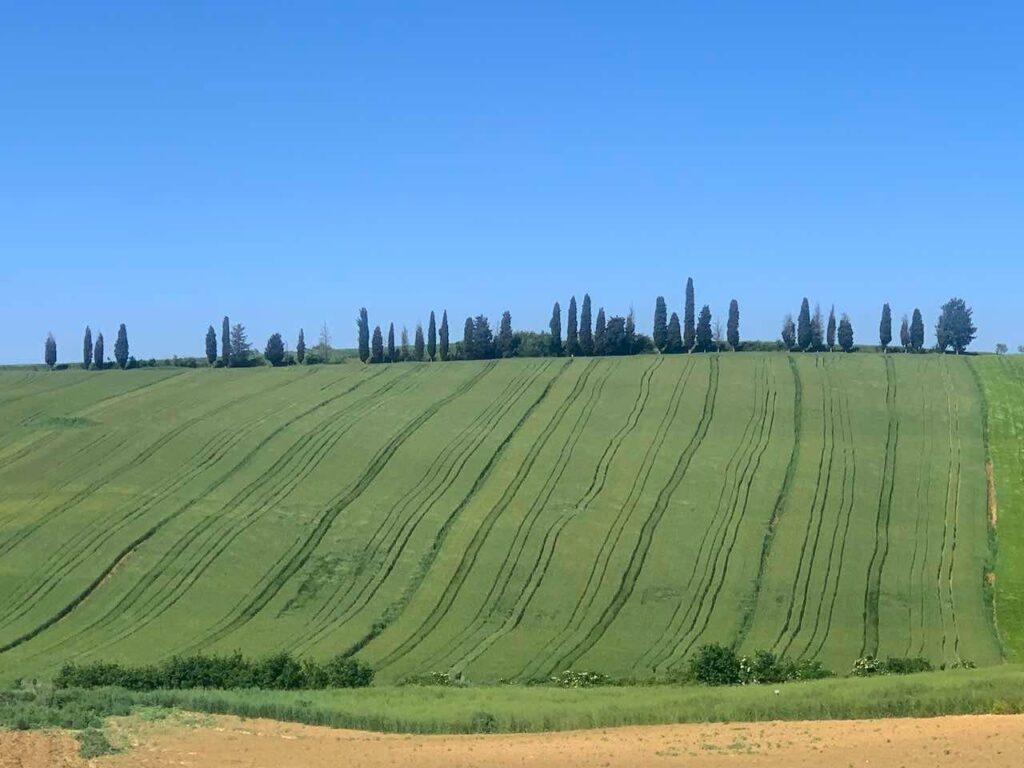
The best way to explore Val d’Orcia in Tuscany is by car. This is road trip country, where every turn brings a view worthy of a Renaissance painting.
I highly recommend renting a car and exploring independently. Driving through Val d’Orcia gives you the freedom to stop at vineyards, scenic overlooks, hidden cafes, and tiny villages whenever you want. Some of my favorite moments came from random roadside stops during my Tuscany road trips.
The most scenic drive in Val d’Orcia is the SP146 road between Pienza and San Quirico d’Orcia, one of the most beautiful countryside drives in Tuscany.
Florence to Val d’Orcia
Driving from Florence to Val d’Orcia takes around 2 to 2.5 hours.
Many travelers combine Val d’Orcia with Florence and Siena on a longer Tuscany itinerary. If you’re spending time in Florence first, check out my 1 Day in Florence Itinerary or 2 Days in Florence Itinerary before heading into the Tuscan countryside.
From Siena
The drive from Siena takes roughly 1 hour.
Siena also makes an excellent base for exploring the Val d’Orcia. For more ideas, read my complete Siena Travel Guide and my guide to the Best Day Trips from Florence, which includes Siena, Tuscany wine regions, and hill towns.
Guided Tours
If you prefer guided experiences, these tours are excellent:
- From Florence: Val d’Orcia Tour with Wine Tasting
- From Siena: Brunello di Montalcino Guided Wine Tour with Lunch
- From Siena: Pienza and Montepulciano Small-Group Tour
- From Rome: Private Day Tour of Tuscany
These tours make exploring easier while including Tuscany’s best bonus: unforgettable food and wine.
Do You Need a Car in Val d’Orcia?
Yes — renting a car is by far the best way to explore Val d’Orcia. While a few villages are connected by regional buses, public transportation between towns is limited and often slow. Many of the region’s most beautiful viewpoints, wineries, scenic drives, countryside hotels, and photo spots are only accessible by car.
Driving through this part of Tuscany is also part of the experience itself. Some of my favorite moments happened spontaneously — stopping along quiet cypress-lined roads, pulling over for panoramic views, or discovering small family-run trattorias hidden in the countryside.
If you prefer not to drive, guided day tours from Florence or Siena are the easiest alternative, but having your own car gives you far more flexibility and freedom to experience the valley at your own pace.
Places to Visit in Val d’Orcia Italy
1. Pienza

If there is one village that perfectly captures the beauty of Val d’Orcia Italy, it is Pienza. Known as the “ideal Renaissance town,” Pienza combines elegant architecture, incredible food, and panoramic views over the rolling hills of Tuscany.
In the mid-15th century, Pope Pius II transformed his birthplace into a harmonious masterpiece of Renaissance urban planning. Walking into Piazza Pio II feels like stepping into a perfectly proportioned painting: the cathedral, the papal palace, and elegant palazzi frame a square that radiates beauty. From the walls, breathtaking views sweep across the Val d’Orcia, a panorama that never fails to stop you in your tracks.
Every time I visit Pienza, I find myself slowing down here — lingering in tiny cheese shops, watching the sunset from the city walls, and wandering flower-filled alleyways.
Pienza is famous for pecorino cheese, romantic streets, and postcard-worthy viewpoints across the landscapes of the Orcia Valley in Tuscany. It’s also one of the best places to explore the valley, for its central location and timeless atmosphere.
For more detailed recommendations, read my Pienza Travel Guide.
Why visit:
- Renaissance architecture
- Pecorino cheese tasting
- Romantic Tuscan atmosphere
- Incredible valley views
Where to stay:
- Hotel San Gregorio – A peaceful countryside-style hotel with panoramic views, a beautiful pool, and easy walking access to Pienza’s historic center.
- Tenuta Santo Pietro – A dreamy luxury estate surrounded by vineyards and olive groves, perfect for a romantic escape in the Tuscan countryside.
- La Saracina – An elegant boutique countryside retreat blending rustic Tuscan charm with stylish modern interiors.
- Hotel Arca di Pienza – A relaxed and affordable stay with sweeping views over the rolling hills of Tuscany.
Tours:
- Pienza and Montepulciano Small-Group Tour from Siena
- Montepulciano, Montalcino, and Pienza from Florence
Pro tip: Stay overnight — Pienza becomes magical after the daytime crowds leave.
2. Montalcino

Montalcino is one of the most famous destinations in Val d’Orcia, Tuscany, known worldwide for Brunello wine. Perched high above the countryside, the town offers spectacular views, medieval charm, and some of Tuscany’s best vineyard experiences.
I loved spending slow afternoons here tasting Brunello wines, exploring ancient stone streets, and enjoying long lunches overlooking vineyards. Even if you’re not a wine lover, Montalcino is one of the absolute must-see places in Tuscany.
Why visit:
- Brunello wine tastings
- Medieval fortress
- Scenic vineyards
- Tuscan food culture
Where to stay:
- Castello Di Velona Resort Thermal SPA & Winery – One of the most luxurious stays in Val d’Orcia Italy, featuring thermal spas, vineyards, and breathtaking valley views.
- Hotel Vecchia Oliviera – A charming boutique hotel near the historic center with a pool overlooking the Tuscan countryside.
- Si Montalcino Hotel – A cozy countryside hotel with spacious gardens and beautiful vineyard scenery.
Tours:
Pro tip: Book winery reservations in advance during summer and harvest season.
3. San Giovanni d’Asso
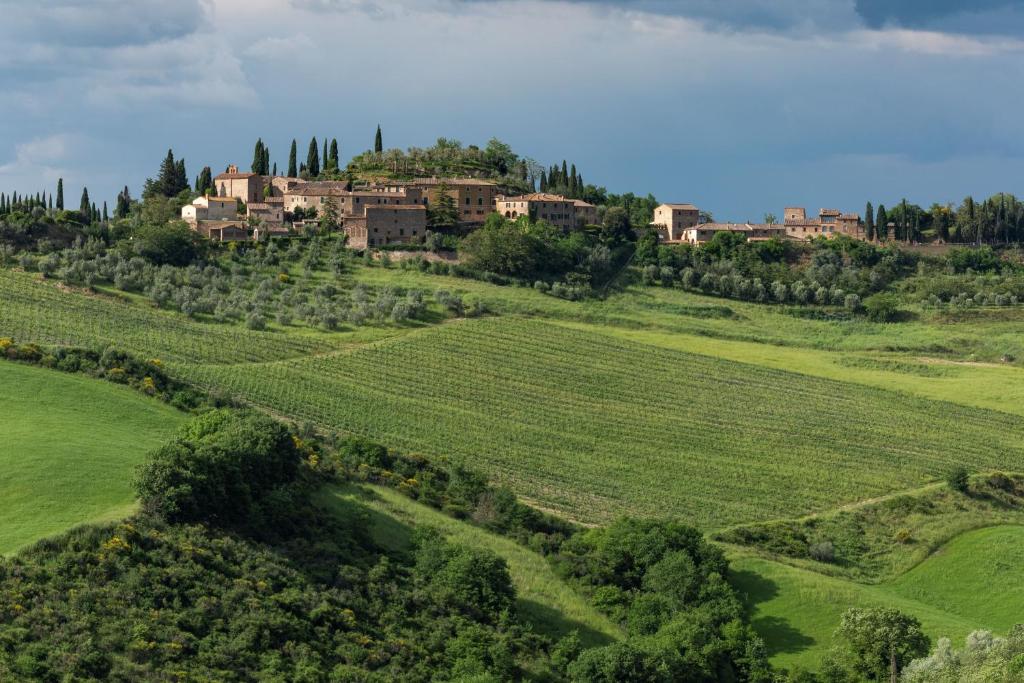
San Giovanni d’Asso is one of the hidden gems of Val d’Orcia. Smaller and quieter than nearby villages, it’s best known for truffles, authentic Tuscan cuisine, and peaceful countryside scenery.
If you love truffles, San Giovanni d’Asso is your paradise. This quiet medieval hamlet near Montalcino is home to the first museum in Italy dedicated to truffles, celebrating the prized white and black varieties found in the surrounding woods. In autumn, the Tartufo Bianco Festival fills the streets with the intoxicating aroma of fresh truffles, and chefs serve dishes that highlight their earthy intensity.
The village itself is small but atmospheric, with stone houses, narrow alleys, and the Castello di San Giovanni d’Asso, which hosts the truffle museum. The castle also overlooks olive groves and rolling hills, making it a charming stop between Pienza and Asciano. Here you’ll find Tuscany at its most authentic—slower, less visited, yet deeply rooted in tradition.
This area is also ideal for exploring the Crete Senesi, a dramatic clay landscape with lunar-like hills, gullies, and winding roads that feel otherworldly. Combine a visit here with nearby truffle hunting tours, and you’ll see why this part of Val d’Orcia is so special.
Autumn is especially magical here thanks to truffle season and seasonal food festivals.
Why visit:
- Truffle hunting
- Authentic local atmosphere
- Peaceful countryside
- Traditional Tuscan food
Where to stay:
- Agriturismo Borgo d’Asso – A peaceful farm stay surrounded by olive groves and quiet Tuscan landscapes.
Tours:
- Truffle hunting tours
- Tuscan culinary experiences
Pro tip: Visit in autumn for white truffle season and seasonal local festivals.
4. Monticchiello

Monticchiello is one of the most photogenic villages in Tuscany. Surrounded by the rolling hills of Tuscany, this peaceful medieval hamlet feels wonderfully timeless.
Tiny, enchanting, and timeless, Monticchiello is one of Val d’Orcia’s most magical hamlets. Encircled by medieval walls and towers, it feels like stepping into another century. The village has fewer than 200 residents, yet its charm lies in its authenticity: laundry flutters from balconies, cats sun themselves on cobblestones, and neighbors greet one another in the piazza.
Monticchiello is also famous for its unique cultural tradition: the Teatro Povero, or “Poor Theatre.” Each summer, the townspeople themselves write, produce, and perform plays in the village square, reflecting on social issues through art and storytelling. It’s a remarkable community effort that has been running for decades.
The views from Monticchiello are nothing short of spectacular. From the ramparts, you can gaze across the “perfect” Val d’Orcia landscape, where golden fields roll toward Pienza in the distance. It’s one of the best vantage points in Tuscany, especially at sunset.
Although small, Monticchiello is perfect for travelers searching for quiet beauty and authentic Tuscan charm.
Why visit:
- Romantic atmosphere
- Scenic Tuscan countryside
- Beautiful photo opportunities
- Peaceful village setting
Where to stay:
- La Casa di Adelina Charming House – A romantic stone guesthouse with rustic interiors and postcard-perfect village views.
- Agriturismo Lunadoro – Peaceful countryside retreat with a pool and spacious apartments.
Pro tip: Visit around sunset for the best light across the Orcia Valley Tuscany landscape.
5. San Quirico d’Orcia
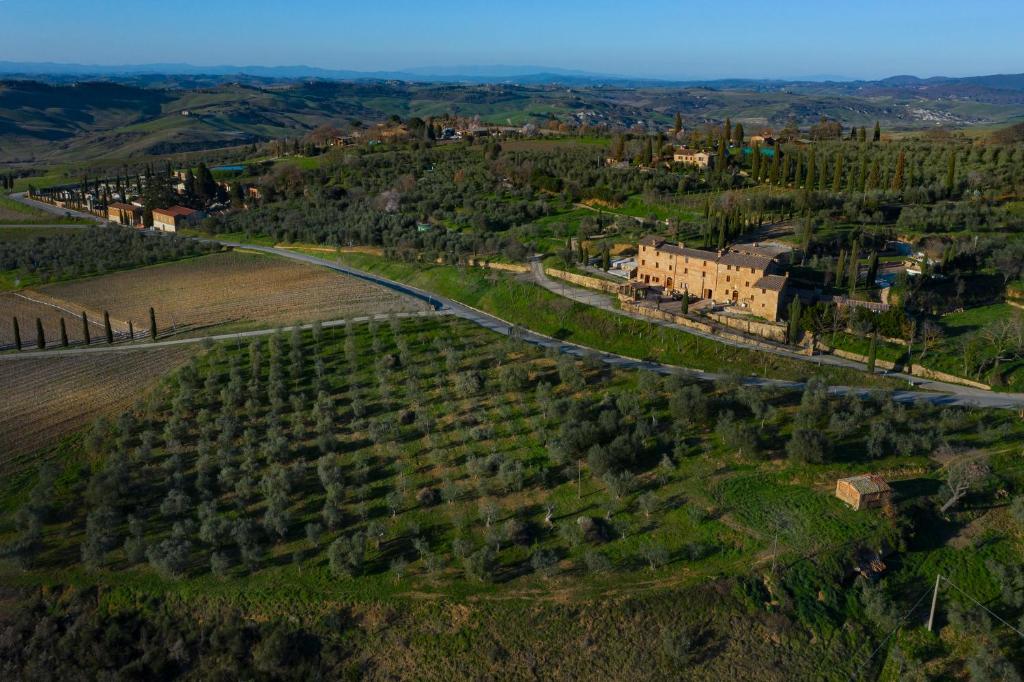
San Quirico d’Orcia is a jewel of the valley, perfectly blending history, gardens, and iconic scenery. Once a key stop along the Via Francigena, the ancient pilgrimage route to Rome, the town still preserves its Romanesque churches and medieval charm. The Collegiata Church of San Quirico is a highlight, with its striking stone portals and mix of architectural styles.
One of the town’s treasures is the Horti Leonini, an elegant 16th-century Renaissance garden with geometric hedges and tranquil paths shaded by centuries-old trees. Strolling here feels like stepping into a living painting.
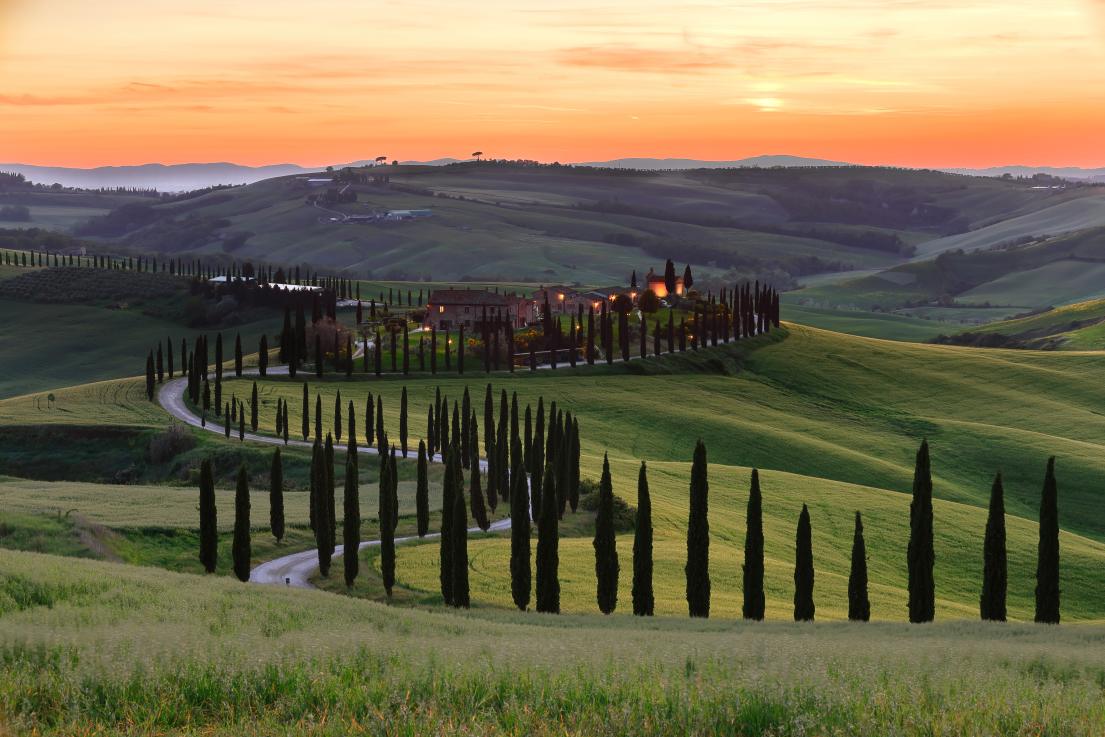
But perhaps San Quirico is most famous for the iconic cypress trees just outside town. Known as the Cipressi di San Quirico, these clusters of trees rising from the rolling hills are among the most photographed sights in Tuscany, embodying the dreamlike allure of Val d’Orcia.
The town also offers cozy wine bars and trattorias where you can savor pici pasta or sip a glass of Brunello. With its blend of history and postcard-perfect landscapes, San Quirico is an essential stop.
Why visit:
- Central location
- Historic Tuscan atmosphere
- Famous photo spots nearby
- Excellent restaurants
Where to stay:
- Palazzo del Capitano Wellness & Relais – A luxurious wellness retreat with a spa, gourmet restaurant, and elegant Tuscan charm.
- Il Miraggio in Val d’Orcia Relais & Spa – An unforgettable countryside resort with one of the most spectacular infinity pool views in Tuscany.
- Wellness Center Casanova – A relaxing spa hotel surrounded by vineyards and the rolling hills of Tuscany.
- Villa Liberty Boutique Hotel – A stylish boutique hotel combining historic architecture with modern comfort in the heart of the village.
Pro tip: Wake up early for empty roads and sunrise photography.
6. Radicofani
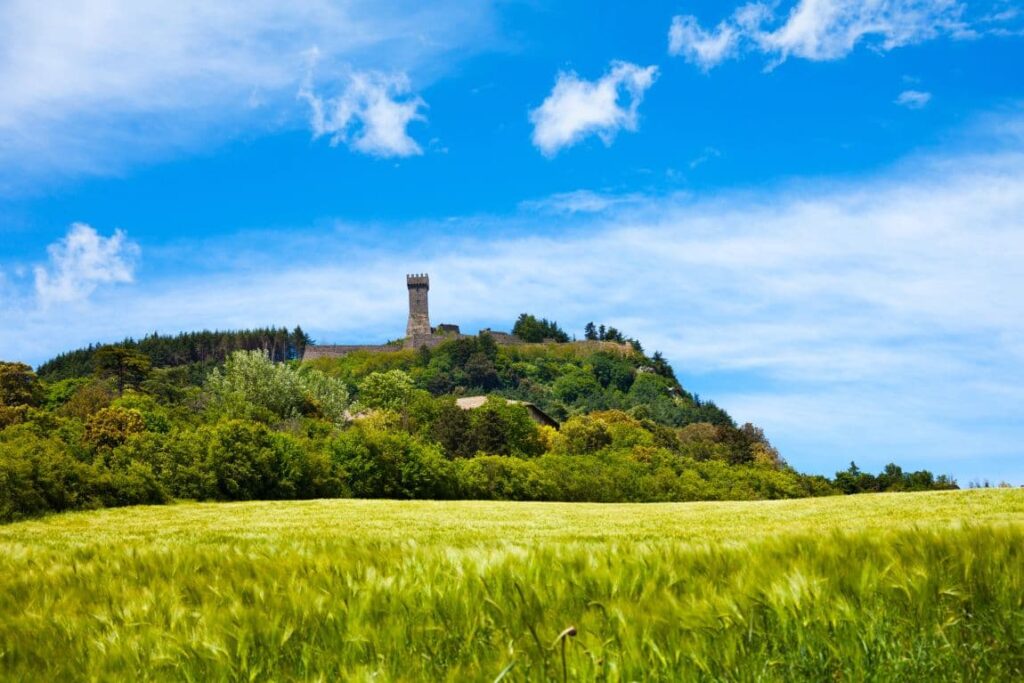
Radicofani feels dramatically different from other villages in southern Tuscany. Rising high above southern Tuscany, this hilltop village is crowned by a massive medieval fortress with breathtaking panoramic views.
Towering over the southern edge of Val d’Orcia, Radicofani is crowned by an imposing fortress that has watched over the valley since the 9th century. The Rocca di Radicofani, perched on a volcanic outcrop, dominates the landscape. Climb its walls, and you’re rewarded with jaw-dropping views that stretch from Monte Amiata to the Apennines and, on clear days, even to Lazio and Umbria.
Radicofani is also steeped in legend. The fortress was once home to Ghino di Tacco, a noble-turned-outlaw immortalized by Dante and Boccaccio. Part Robin Hood, part bandit, he’s remembered for robbing the rich while sparing the poor. Wandering the village’s narrow streets, you’ll find echoes of this medieval past in its stone houses, churches, and artisan shops.
Despite its dramatic history, Radicofani has a quiet charm. It’s less visited than Pienza or Montalcino, which makes it ideal if you crave authenticity and solitude. With its mix of history, mystery, and spectacular vistas, Radicofani feels like Tuscany’s secret stronghold.
Why visit:
- Spectacular fortress views
- Historic medieval atmosphere
- Incredible photography
- Fewer crowds
Where to stay:
- Podere Casano – A peaceful countryside retreat with rustic Tuscan apartments and sweeping valley views.
- Agriturismo La Selvella – Cozy farmhouse with a pool and rustic charm.
Pro tip: Climb to the top of the fortress for one of the best views in Tuscany.
7. Castiglione d’Orcia
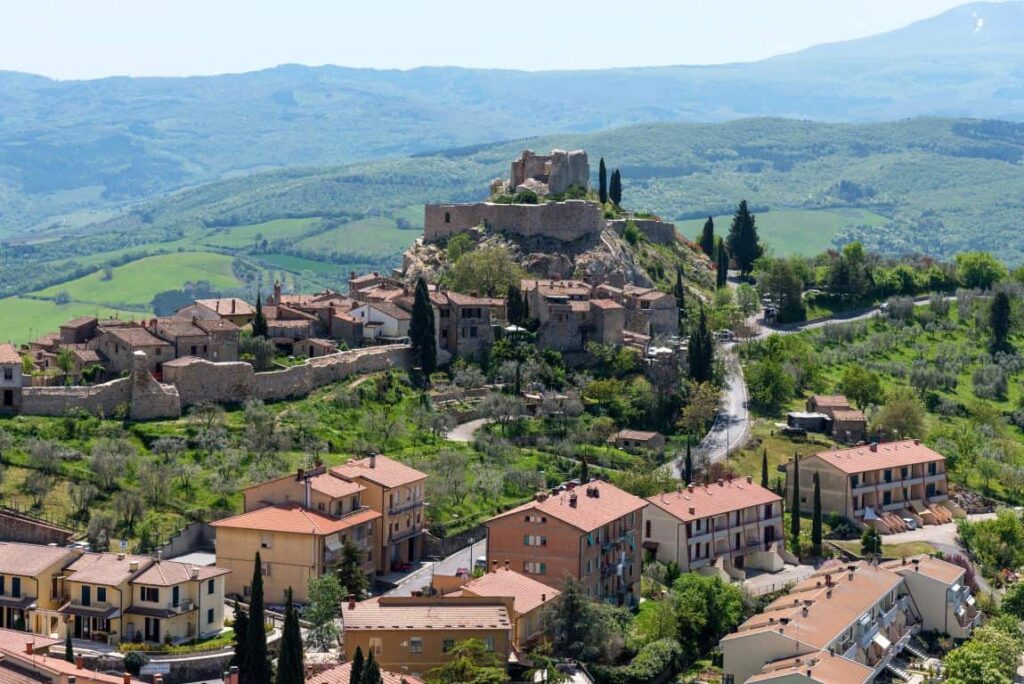
Sitting on a hilltop with a commanding view of the valley, Castiglione d’Orcia is a picturesque medieval town that balances tranquility with history. Its centerpiece is the Rocca a Tentennano, a striking fortress that once controlled the trade routes between Siena and Rome. From its ramparts, the panorama sweeps across the entire Val d’Orcia.
In the town itself, you’ll find cobbled streets, small piazzas, and Romanesque churches. The Church of Santa Maria Maddalena preserves Gothic frescoes, while local trattorias serve hearty Tuscan dishes that taste all the better for being enjoyed in such an authentic setting.
I especially loved how local the village felt. Walking through its narrow streets, you’ll find small cafes, stone houses, and incredible panoramic viewpoints over the rolling hills of Tuscany.
Castiglione is less touristy than neighboring towns, which gives it a wonderfully lived-in feel. It’s the kind of place where you sit in a café, sip an espresso, and watch life unfold slowly. If you’re looking for that sense of Tuscan “slow living,” this is where you’ll find it.
Why visit:
- Authentic Tuscan atmosphere
- Scenic countryside views
- Medieval ruins
- Quiet village life
Where to stay:
- La Locanda in Tuscany – Luxurious yet rustic boutique hotel with an infinity pool and vineyards.
- Agriturismo Poggio al Vento – A charming agriturismo with incredible sunset views across the Orcia Valley Tuscany landscape.
- Agriturismo Grossola – Peaceful farmhouse with sweeping countryside views.
Pro tip: Pair your visit with nearby Bagno Vignoni for a perfect day trip.
8. Bagno Vignoni
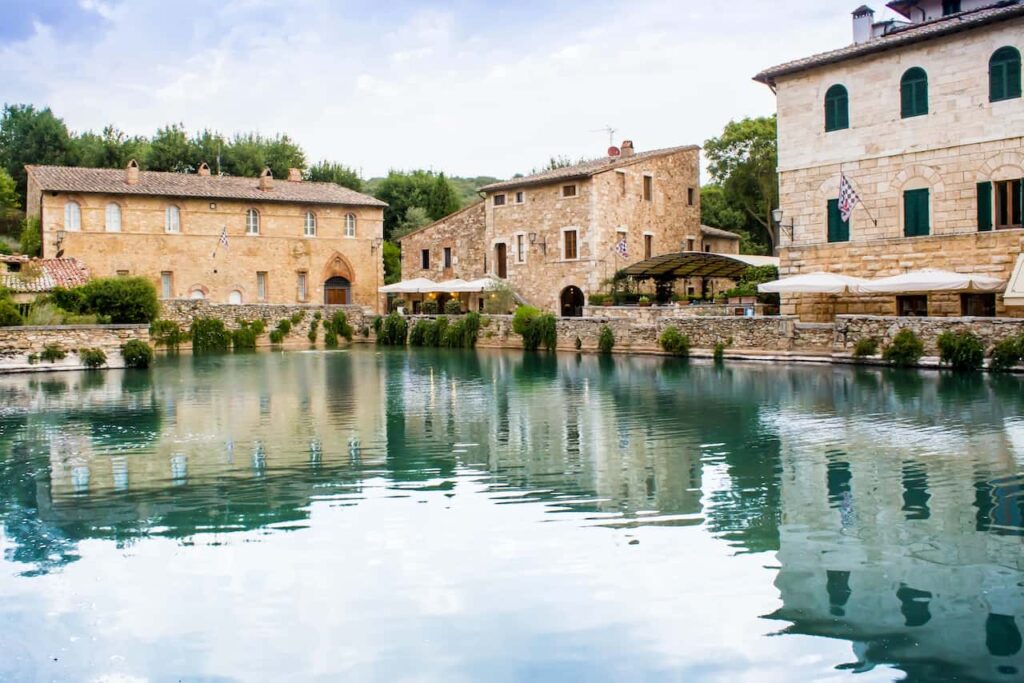
Unlike any other village in Italy, Bagno Vignoni is built around a pool of hot thermal waters in its main square. Instead of a piazza paved with stone, here you’ll find steaming waters once used by saints, popes, and pilgrims. Since Roman times, Bagno VMontepulcianoignoni has been a sanctuary of wellness, and even today, its thermal baths invite relaxation.
The surrounding countryside is dotted with spas and wellness resorts where you can soak in mineral-rich pools while gazing across the hills. Just beyond the town, medieval mills and waterfalls testify to centuries of harnessing the power of these springs.
After days of driving through the Tuscan countryside, Bagno Vignoni felt like the perfect relaxing stop.
Why visit:
- Historic thermal baths
- Unique village square
- Relaxing atmosphere
- Wellness experiences
Where to stay:
- Albergo Le Terme – A historic thermal spa hotel with direct access to Bagno Vignoni’s famous healing waters.
- Hotel La Posta – An elegant wellness hotel with relaxing spa facilities in the heart of the thermal village.
Pro tip: Visit early morning or evening for a quieter experience.
9. Montepulciano

Technically lying between Val d’Orcia and Val di Chiana, Montepulciano is one of Tuscany’s grandest hill towns. Renaissance palaces line its steep streets, leading up to the Piazza Grande, where the cathedral, town hall, and historic palazzi form a monumental stage. The square has starred in films like Twilight: New Moon, but its real magic lies in its centuries of history.
Montepulciano is world-renowned for its Vino Nobile di Montepulciano, a red wine that has been celebrated since the 14th century. Beneath the town’s streets lie vast wine cellars carved into tufa rock, where you can taste vintages surrounded by centuries-old barrels.
I loved wandering its steep medieval streets, discovering hidden wine cellars, and stopping at scenic terraces overlooking Tuscany.
For more tips and recommendations, read my Montepulciano Travel Guide.
Why visit:
- Vino Nobile wine tasting
- Renaissance architecture
- Historic wine cellars
- Beautiful hilltop views
Where to stay:
- Precise Tale Poggio Alla Sala – A luxurious countryside estate with vineyards, spa facilities, and classic Tuscan elegance.
- Villa Svetoni Wine Resort – A refined wine resort offering vineyard views, gourmet dining, and an authentic Tuscany experience.
- Palazzo Carletti – A beautifully restored historic palace with frescoed ceilings and elegant Renaissance charm.
Tours:
- Wine tasting tours
- Day trips from Siena (like tha Pienza and Montepulciano Small-Group Tour) and Florence (like the Val d’Orcia Wine, Brunello Montalcino, and Montepulciano tour)
Pro tip: Explore the underground wine cellars carved beneath the town for a unique Tuscany experience.
Famous Landmarks and Photo Spots in Val d’Orcia
Cipressi di San Quirico d’Orcia
Possibly the most photographed cypress trees in Tuscany, the Cipressi di San Quirico d’Orcia perfectly symbolize the dreamlike beauty of the Tuscan countryside. These iconic circular cypress groves sit among the rolling hills just outside San Quirico d’Orcia and are especially stunning at sunrise and sunset.
Location: Near San Quirico d’Orcia, along the SP146 road between Pienza and San Quirico d’Orcia.
Abbazia di Sant’Antimo

This peaceful Romanesque abbey near Montalcino feels deeply spiritual and timeless. Surrounded by olive groves and Tuscan hills, Abbazia di Sant’Antimo is one of the most beautiful hidden treasures in southern Tuscany.
The silence and scenery here make it one of the most atmospheric places to visit in the region.
Location: About 10 km south of Montalcino, near Castelnuovo dell’Abate.
Bagni San Filippo
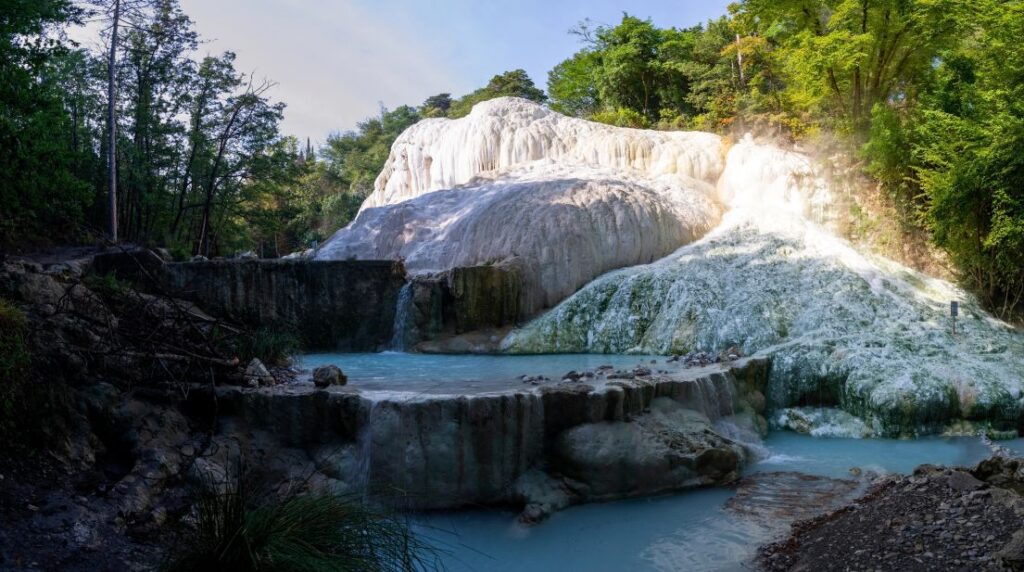
Known for its striking white limestone formations and steaming thermal waters, Bagni San Filippo offers one of Tuscany’s most unique hot spring experiences. The famous “White Whale” calcium formation creates an almost surreal landscape hidden within the forest.
Location: Bagni San Filippo village, near Castiglione d’Orcia and Monte Amiata in southern Tuscany.
The Elysian Fields (Terrapille Road)
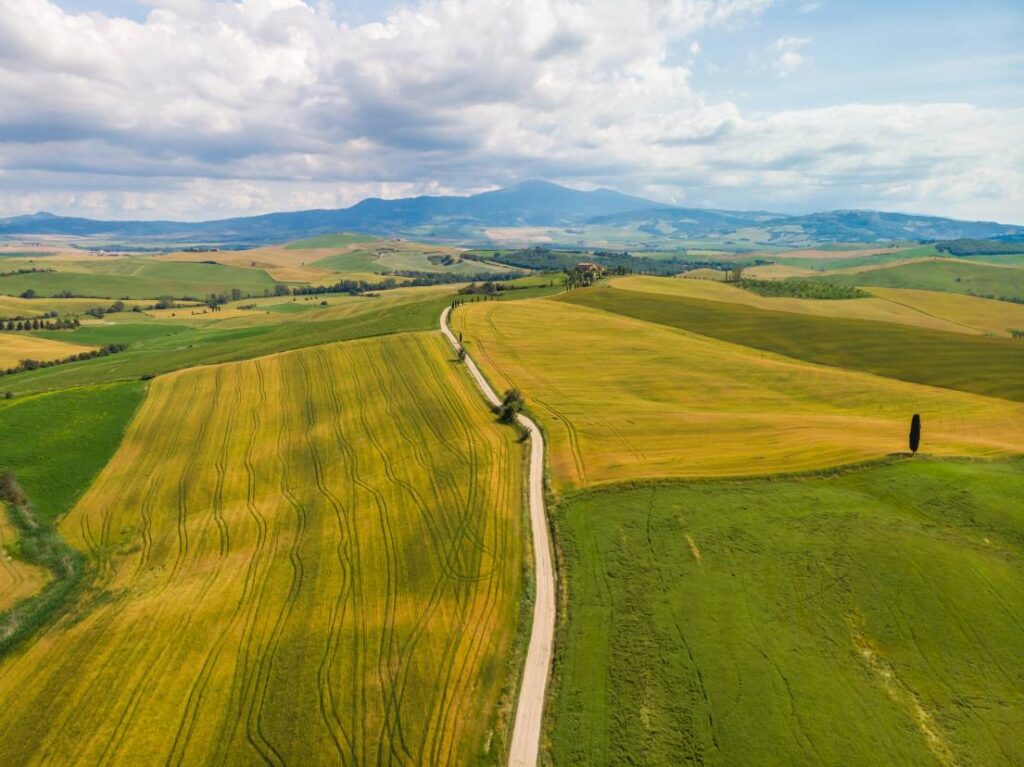
This scenic road became famous after appearing in Gladiator and remains one of the most iconic photography spots in Orcia Valley Tuscany. The sweeping hills, winding dirt roads, and solitary cypress trees perfectly capture the essence of the rolling hills of Tuscany.
Location: Terrapille Road near Pienza, between Pienza and San Quirico d’Orcia.
The Chapel of Vitaleta
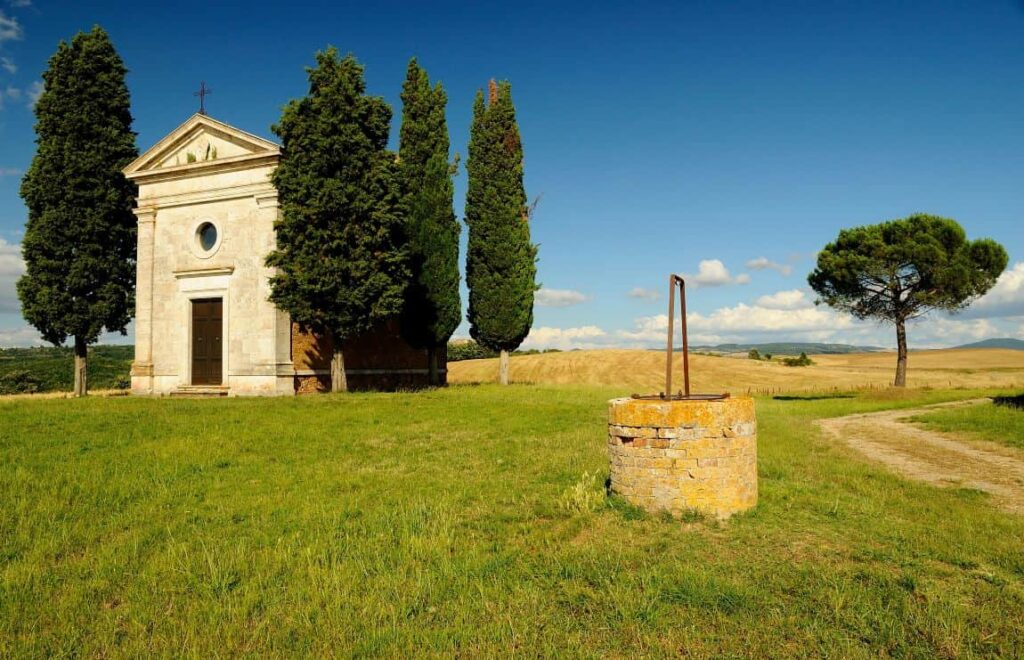
Perhaps the most iconic chapel in Tuscany, the Chapel of Vitaleta sits alone among golden fields and cypress trees in the heart of Val d’Orcia Italy. It’s one of the most photographed landmarks in all of Tuscany and looks especially magical during sunrise and sunset.
Location: Along the SP146 road between Pienza and San Quirico d’Orcia.
Lucciola Bella Nature Reserve
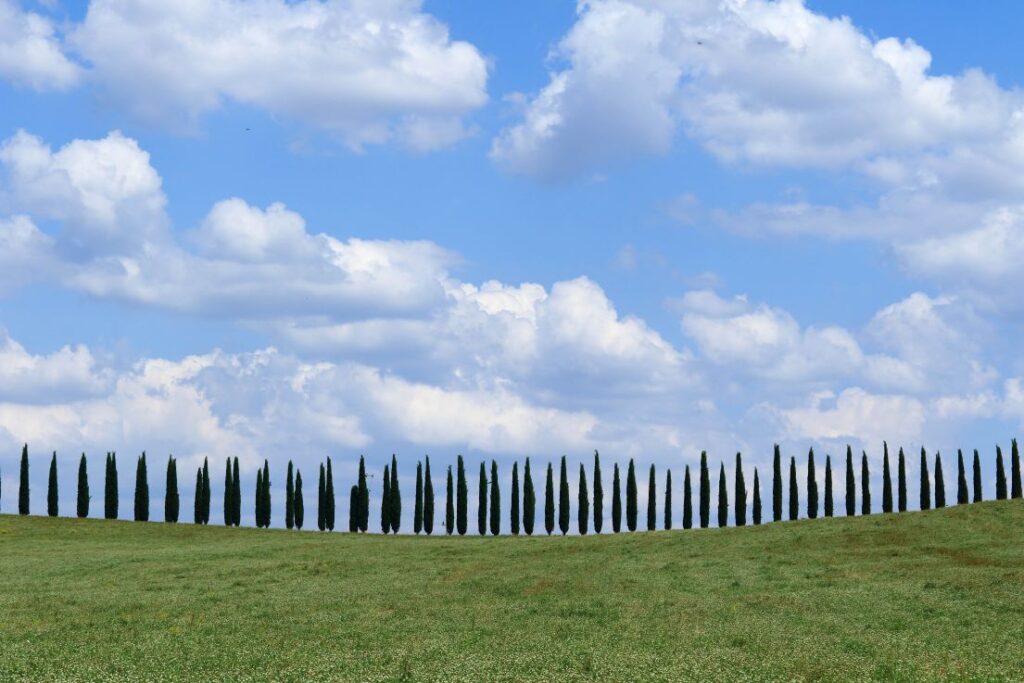
The Lucciola Bella Nature Reserve offers some of the wildest and most untouched landscapes in Val d’Orcia Toscana. Known for its dramatic clay hills, endless panoramas, and cinematic scenery, this area is a dream for photographers and nature lovers.
Location: Near Pienza and the village of Monticchiello in southern Tuscany.
Best Photography Spots in Val d’Orcia
Val d’Orcia is one of the most photogenic regions in Italy, filled with rolling hills, cypress-lined roads, medieval villages, and golden light that seems almost unreal at sunrise and sunset. If you love landscape photography, this part of Tuscany offers endless postcard-perfect viewpoints.
Sunrise and sunset are the most beautiful times to experience Val d’Orcia. Early mornings often bring soft mist rolling across the hills, while evenings create the warm golden light Tuscany is famous for. Photographers especially love the areas around Pienza, San Quirico d’Orcia, Monticchiello, and the Chapel of Vitaleta during golden hour, when the landscape looks almost unreal.
Some of the best photography spots in Val d’Orcia include:
Chapel of Vitaleta
Perhaps the most iconic photography location in Tuscany, the Chapel of Vitaleta is surrounded by cypress trees and rolling golden fields. Sunrise and sunset create especially magical light here.
Cipressi di San Quirico d’Orcia
These famous circular cypress groves are among the most recognizable images of Tuscany and one of the best places for classic Val d’Orcia photography.
Terrapille Road (Gladiator Road)
Made famous by the film Gladiator, this winding road near Pienza perfectly captures the dreamlike beauty of the Tuscan countryside.
Monticchiello Viewpoints
The countryside surrounding Monticchiello offers some of the valley’s most beautiful panoramic views, especially during late summer when the hills glow golden.
Poggio Covili Road
This lesser-known scenic road near San Quirico d’Orcia features rolling hills, isolated cypress trees, and some of the most cinematic landscapes in southern Tuscany.
Photography tip: Sunrise usually offers the softest light and quietest roads, while late afternoon creates the warm golden tones Tuscany is famous for.
Best Things to Do in Val d’Orcia Tuscany
Some of the best things to do in Val d’Orcia include:
- Scenic road trips through Tuscany. Take a road trip along the SP146 between Pienza and San Quirico or the SP53 between San Quirico and Chianciano—roads where beauty never ends.
- Wine tasting in Montalcino and Montepulciano. Join tours like the Brunello Wine Tasting & Lunch in a Tuscan Castle or the Montepulciano Wine Tasting & Lunch in a Typical Winery.
Tuscany’s wine culture is one of the highlights of visiting the region, especially around Montalcino and Montepulciano. Many travelers combine these experiences with day trips from Florence through the Tuscan countryside. - Visiting thermal baths. Bathe in the hot springs of Bagni San Filippo.
- Photography tours
- Truffle hunting
- Staying at agriturismos
- Watching sunset over the Tuscan hills
- Cycling through the countryside. Explore the valley by bike on the Guided E-bike Tour from Pienza.
- Trying traditional Tuscan food. Food is deeply connected to the identity of Val d’Orcia Tuscany, from pecorino cheese to handmade pici pasta and Brunello wine. If you love regional Italian cuisine, you may also enjoy my Tuscany food and wine guides.
- Go on a dairy farm tour with Pecorino tasting in Pienza.
- Take a cooking class—try the Pasta and Tiramisu Class in Montepulciano or the Tuscan Cooking Class in Pienza.
- Exploring medieval villages
- Tour the castles, abbeys, and fortresses—Abbazia di Sant’Antimo, Radicofani fortress, Castello Banfi, Castello di Velona. This is a place where history and pleasure are inseparable.
Val d’Orcia Itinerary
An ideal itinerary would start in Pienza, continue to Montalcino and Bagno Vignoni, wander the backroads to San Quirico, explore the fortress of Radicofani, and end with wine in Montepulciano. Stay in an agriturismo farmhouse or a boutique hotel in Pienza or Montalcino—either way, you’ll wake up to views that look like they’ve been painted.
Many travelers pair Val d’Orcia with Florence and Siena for the ultimate Tuscany itinerary. If you’re exploring the region by car, my Tuscany Road Trip Itinerary shows how to combine Val d’Orcia, Chianti, Siena, San Gimignano, and Florence into one unforgettable journey. Combining Renaissance cities with quiet countryside villages creates one of the most rewarding travel experiences in Italy.
2-Day Val d’Orcia Itinerary
Day 1
- Pienza
- Monticchiello
- San Quirico d’Orcia
- Sunset at Chapel of Vitaleta
Day 2
- Montalcino
- Sant’Antimo Abbey
- Bagno Vignoni
- Montepulciano
4-Day Itinerary
Add:
- Radicofani
- Castiglione d’Orcia
- Bagni San Filippo
- Truffle experiences
Food to Try in Val d’Orcia Italy

Val d’Orcia Toscana is as much about taste as sight. Sip Brunello di Montalcino and Vino Nobile di Montepulciano, two of Italy’s most revered wines. Taste Pecorino di Pienza, a cheese so fragrant it carries the aroma of the wild herbs grazed upon by the sheep. Savor Cinta Senese prosciutto, pici pasta tangled in ragù, rustic ribollita, fresh panzanella, rich salame di cinghiale, and the humble, heartwarming pappa col pomodoro. Every meal here is a story.
Must-try dishes include:
- Pecorino di Pienza
- Brunello wine
- Pici pasta
- Wild boar ragu
- Truffle dishes
- Tuscan steak
- Olive oil
- Ribollita soup
Read more about traditional Tuscan foods in my guide to food and wine in Tuscany
When to Visit Val d’Orcia
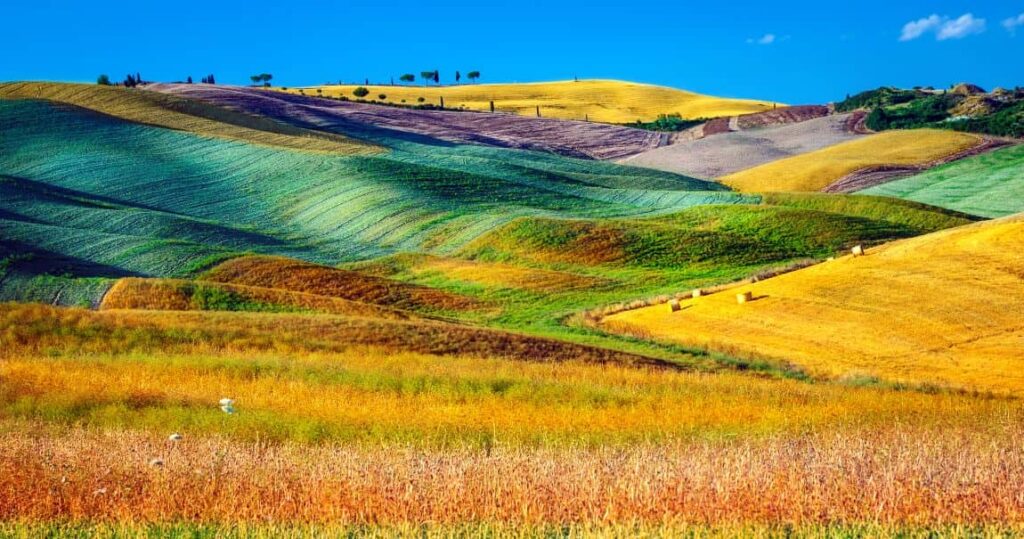
Spring and autumn are the best seasons to visit Val d’Orcia Italy.
Spring brings wildflowers and soft green hills; summer turns the valley golden; autumn paints it with grape harvests and truffle festivals. Winter is misty and quiet, perfect for thermal baths. There’s no wrong season, only different moods of the valley.
Spring
- Green hills
- Wildflowers
- Mild temperatures
Summer
- Golden wheat fields
- Lavender blooms
- Busy but beautiful
Autumn
- Wine harvest season
- Truffles
- Gorgeous warm colors
Winter
- Quiet villages
- Cozy atmosphere
- Fewer tourists
How Long to Spend in Val d’Orcia
I recommend spending at least 3 to 4 days in Val d’Orcia Tuscany. While many travelers visit on day trips, staying longer allows you to slow down and fully appreciate the landscape, food, and atmosphere.
This region isn’t about rushing from attraction to attraction. It’s about lingering over wine at sunset, driving quiet roads through the countryside, and discovering why Val d’Orcia Italy remains one of the most magical places in Tuscany.
Frequently Asked Questions About Val d’Orcia
Is Val d’Orcia worth visiting?
Absolutely. Val d’Orcia is one of the most beautiful regions in Tuscany and one of the best places to experience the classic Italian countryside. With its rolling hills, medieval villages, vineyards, thermal baths, and scenic roads, this UNESCO-listed valley feels like stepping into a Renaissance painting. It’s especially perfect for travelers who love slow travel, photography, wine, and authentic Tuscan culture
How many days do you need in Val d’Orcia?
I recommend spending at least 3 to 4 days in Val d’Orcia Tuscany. While it’s possible to visit on a day trip from Florence or Siena, staying longer allows you to fully enjoy the villages, wineries, scenic drives, and thermal baths at a slower pace. If you love photography, food, and wine, you could easily spend a week exploring the region.
What is the best base in Val d’Orcia?
Pienza and San Quirico d’Orcia are two of the best bases for exploring the region. Pienza offers beautiful Renaissance architecture and central access to the valley, while San Quirico d’Orcia feels quieter and more local. Montalcino is another excellent option if you want to focus on wine experiences and vineyard stays.
Can you visit Val d’Orcia without a car?
Yes, but visiting Val d’Orcia without a car is much more difficult. Public transportation between villages is limited, and many of the region’s best viewpoints, wineries, and countryside roads are inaccessible without driving. I personally highly recommend renting a car because some of the best experiences in Val d’Orcia happen during the drive itself. If you prefer not to drive, guided tours from Florence, Siena, and Rome are great alternatives.
What is the most beautiful village in Val d’Orcia?
Pienza is often considered the most beautiful village in Val d’Orcia, Tuscany, thanks to its Renaissance architecture, panoramic valley views, and romantic atmosphere. However, villages like Monticchiello, Montalcino, San Quirico d’Orcia, and Bagno Vignoni are equally unforgettable in their own unique ways.
When is the best time to visit Val d’Orcia?
Spring and autumn are generally the best times to visit Val d’Orcia Italy. Spring brings green hills, wildflowers, and mild temperatures, while autumn offers wine harvest season, golden landscapes, and truffle festivals. Summer is beautiful but busier and hotter, while winter is peaceful and perfect for thermal baths and quiet countryside escapes.
My Favorite Experience in Val d’Orcia
One of my favorite memories in Val d’Orcia was driving between Pienza and San Quirico d’Orcia just before sunset. The late afternoon light turned the hills golden, cypress trees cast long shadows across the fields, and nearly every curve in the road looked like a painting. I stopped multiple times simply to admire the scenery, and it reminded me why this part of Tuscany feels so timeless. Moments like these are what make this corner of Tuscany unforgettable.
Final Thoughts
Val d’Orcia is a landscape, but also a feeling that seems both eternal and intimate. It is Tuscany distilled into its purest essence: golden fields, medieval villages, Renaissance dreams, and the joy of food and wine shared under the sun. I’ve wandered many parts of Tuscany, but each time I return to Val d’Orcia Italy, it feels like coming home to a dream I never want to wake from.
If you’re planning a larger Tuscany itinerary, I highly recommend combining Val d’Orcia with Florence, Siena, and a few classic Tuscan hill towns. My Florence itineraries, Siena guide, and Best Things to Do in Florence, Best Day Trips from Florence can help you connect everything into one unforgettable Tuscany road trip.
My Go-To Car Rental Company: DISCOVER CAR
I always book rental cars online in advance. Booking a car rental in advance is more money- and time-wise than booking at the airport. I always use Discover Cars. They search international car rental companies and small local car rental agencies to find the best deal for you. Plus, there are no hidden costs, and they offer free cancellation. I always take their full coverage as they offer competitive rates. Check Their Car Rental Prices!
My Go-To Accommodation Platforms:
Booking.com (short stays) and Vrbo (longer stays)
🔗 More Tuscany Guides
Planning your Tuscany trip? Here are some guides worth exploring:
👉 Best Hill Towns in Tuscany – discover San Gimignano, Montepulciano, Pienza, Volterra, etc
👉 Cortona Travel Guide – Etruscan history, hilltop charm, and panoramic views
👉 Arezzo Travel Guide – Renaissance art, lively piazzas, and antique markets
👉 Siena Travel Guide – medieval streets, historic squares, and cultural highlights
👉 Siena Day Trip from Florence – tips for the perfect day between two Tuscan icons
👉 San Gimignano Travel Guide – famous towers, scenic views, and timeless atmosphere
👉 1 Day in Florence Itinerary – see Florence’s essential highlights in one day
👉 2 Days in Florence Itinerary – enjoy a slower, more immersive experience
👉 Florence Things to Do – top attractions, landmarks, and local experiences
👉 Florence Best Day Trips – explore Pisa, Siena, Chianti, and more