Best Places to Visit in Tuscany: 35 Beautiful Towns & Hidden Gems

If there’s one region in Italy that never stops surprising me, it’s Tuscany. I’ve been traveling here for years — and I keep coming back. On every possible occasion, I rent a car and just go. No fixed itinerary, no tour buses, just winding roads lined with cypress trees, the smell of wild rosemary drifting through the windows, and the ever-present promise of a great glass of Chianti somewhere around the next bend.
Tuscany is, without question, one of the most beautiful places on Earth.
Over time, I’ve written extensively about this region — from deep-dive travel guides to Florence, to dedicated guides for Siena, San Gimignano, Cortona, Arezzo, Pienza, Montepulciano, and Val d’Orcia. I’ve even put together a guide on where to stay in Tuscany and a full breakdown of what to eat in Tuscany. So when people ask me: “What are the best places to visit in Tuscany?” — I have a lot to say.
This guide to the best places in Tuscany covers everything worth seeing: stunning landscapes, iconic cities, medieval hill towns, natural hot springs, charming villages, and gorgeous beaches. Whether it’s your first time or your fifth, there is always something new to discover.
Let’s get into it: from Renaissance masterpieces to rolling vineyards, these are the best places to see in Tuscany for first-time and returning visitors alike.
Best Places to See in Tuscany Countryside
Before we get to the cities and towns, let’s talk about the landscapes. Some of the best places to visit in Tuscany aren’t cities at all — they’re the rolling landscapes, vineyards, and valleys that define the region. Tuscany’s countryside is an attraction in its own right. These are the areas that will make you pull over the car just to breathe it all in.
1. Val d’Orcia

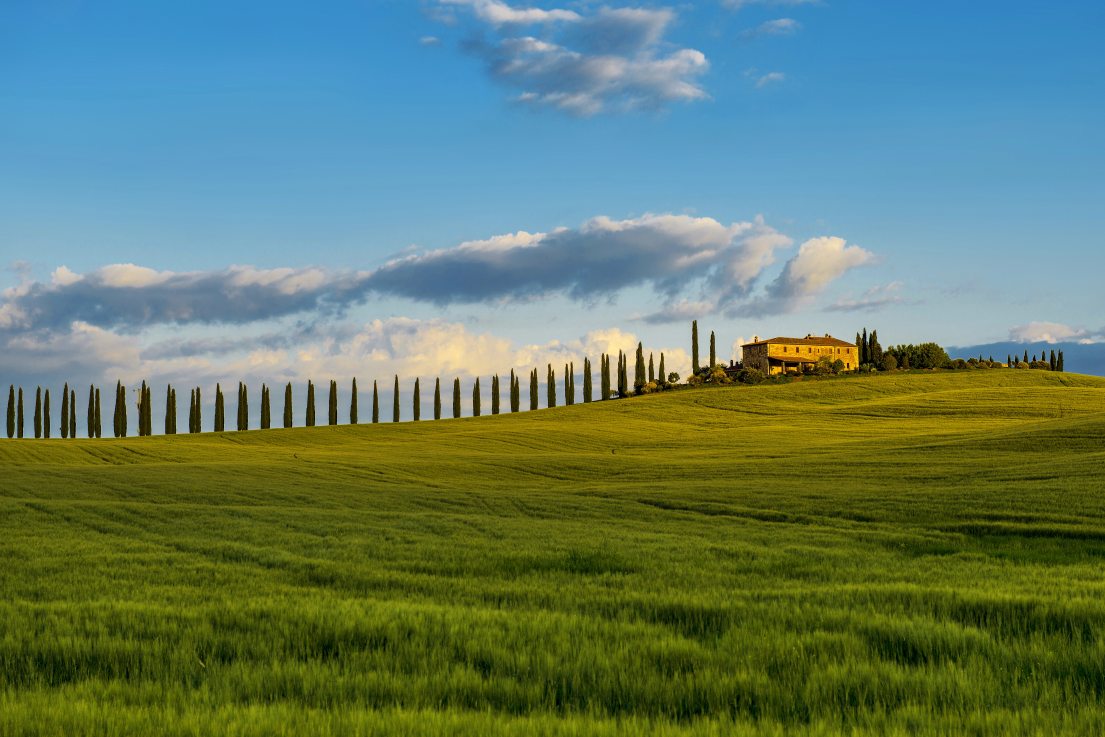
There’s a reason Val d’Orcia is a UNESCO World Heritage Site — and the moment you drive into it, you’ll understand. This sweeping valley in southern Tuscany is the stuff of paintings: rolling hills crowned with lone farmhouses, rows of cypress trees standing like sentinels, fields that shift from vivid green to gold depending on the season. It’s the most iconic landscape in all of Tuscany, and arguably one of the most beautiful places in the world.
The valley sits between Siena and Monte Amiata, and it’s easily explored by car — which is exactly how I’d recommend doing it. Drive south from Siena on the Via Cassia (SR2) and the valley opens up beautifully around Buonconvento. For accommodation, Adler Thermae in Bagno Vignoni is a stunning spa resort right in the heart of the valley — absolute bliss after a long day behind the wheel. My honest tip: go in late April or May when the hills are electric green and scattered with red poppies, or come back in October for that golden harvest light that makes everything look like an oil painting.
👉 I’ve written a full Val d’Orcia travel guide with all my favorite spots, drives, and hidden corners — don’t miss it before you go.
2. Chianti
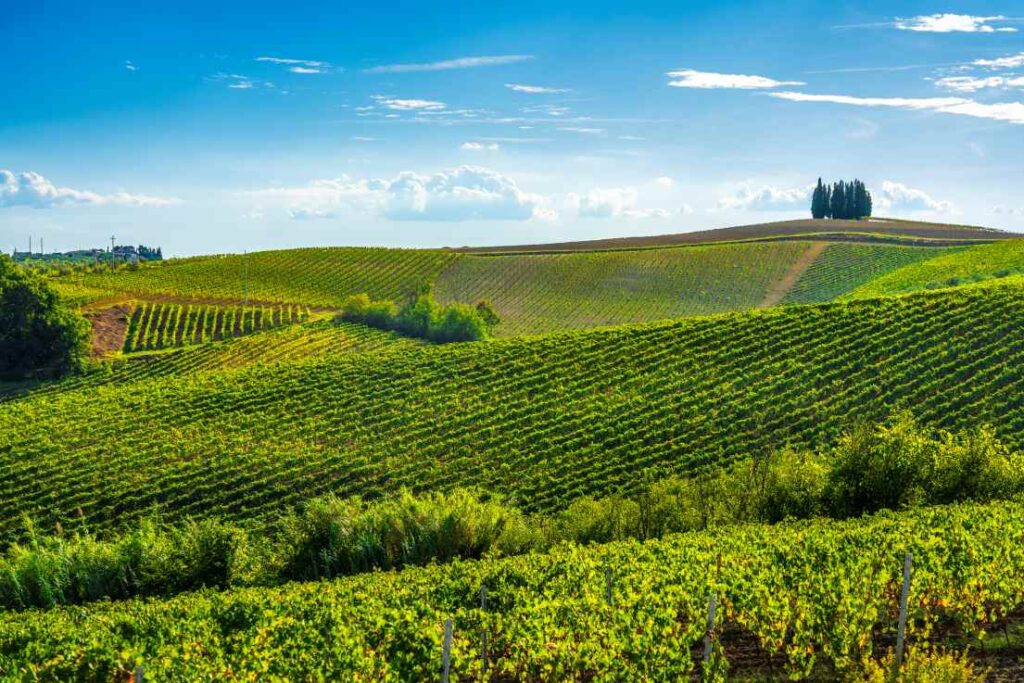
Ask anyone what Tuscany looks like in their imagination, and they’re probably picturing Chianti. This is the heartland — vine-draped hillsides, ancient stone farmhouses converted into elegant agriturismi, medieval castles rising above terracotta rooftops. The Chiantigiana road (SR222) snaking between Florence and Siena is one of the great scenic drives of Italy, and the entire area is best savored slowly, glass of Sangiovese in hand. Chianti is also a world unto itself — there are entire villages, markets, and traditions here that most tourists never encounter because they rush past on the autostrada.
Drive the SR222 south from Florence, and the scenery begins almost immediately; it’s one of those roads where you’ll find yourself pulling over every twenty minutes because the view has changed again, and it’s somehow even better than before. Badia a Coltibuono, a restored 11th-century abbey turned agriturismo and winery, is one of my favorite places to stay in the whole region. And if you’re buying wine, go straight to the source — a bottle of Chianti Classico Gran Selezione from the winery cellar is significantly cheaper and often far superior to what you’ll find in shops.
Driving through Val d’Orcia and Chianti remains one of the best places to go in Tuscany if you want classic postcard scenery and unforgettable road trips. For a wider adventure through the region, check out my self-drive Tuscany itinerary, which combines Florence, Siena, Chianti, and Val d’Orcia.
3. Crete Senesi

Just south of Siena, the landscape shifts into something otherworldly. The Crete Senesi — literally “Sienese clays” — is a surreal, almost lunar terrain of pale grey hills, eroded ravines called biancane, and vast open fields that feel endless under a wide Tuscan sky. It’s less visited than the Chianti hills or Val d’Orcia, and all the more beautiful for it.
This is the Tuscany that photographers dream about: empty roads cutting through bare ridgelines, isolated farmsteads silhouetted at dawn, sheep grazing in absolute silence. Head southeast from Siena on the SP438 toward Asciano, and the landscape transforms within minutes of leaving the city. Tenuta di Spannocchia, a working organic farm and historic estate near Sovicille, offers beautifully rustic accommodation. Make Asciano your base if you can — it has a lovely little Etruscan museum and a good trattoria on the main square where you’ll probably be the only foreigner in the room.
For many travelers, this countryside route is the single best place to visit Tuscany for iconic landscapes and wine tasting.
Best Cities to Visit in Tuscany
Tuscany’s cities are as spectacular as its countryside — layered with history, art, and some of the finest food in Italy.
The following cities are the best cities to visit in Tuscany, each offering its own mix of art, history, food, and atmosphere. These are the ones worth visiting.
4. Florence — The Capital of Tuscany
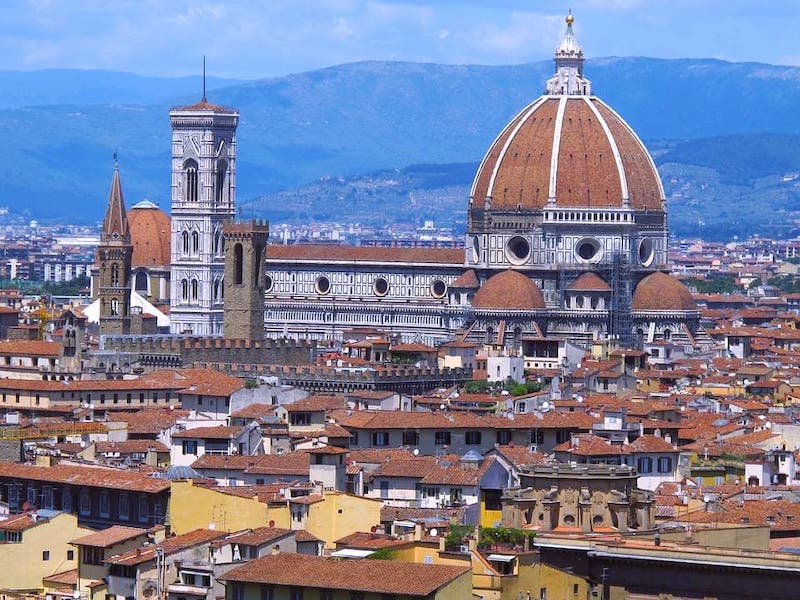
When people ask me what to do in Tuscany, I always tell them to start with Florence — it’s one of the true cultural highlights of Italy.
Florence is the kind of city that overwhelms you in the best possible way. The sheer density of art, architecture, and culture crammed into its medieval streets is staggering — this is where the Renaissance was born, and it still shows on every corner. From Brunelleschi’s Duomo to Michelangelo’s David, from the Uffizi’s corridors to the Oltrarno neighborhood where real Florentines actually live — Florence rewards every hour you give it.
I’ve written about Florence extensively, and I’ll keep saying it: don’t try to do it all in one day. Slow down. Eat a bistecca at a proper trattoria. Climb to Piazzale Michelangelo at dusk. Drink a Negroni at a bar that’s been open since 1920. Florence has its own international airport (Peretola) and high-speed rail connections to Rome, Milan, and Venice, so getting here is easy. For accommodation, Hotel Lungarno, right on the Arno, is wonderfully positioned and has real character; if you’re celebrating something, Portrait Firenze is exceptional. Just make sure you book your Uffizi and Accademia tickets weeks in advance — the lines without reservations in summer are genuinely brutal.
👉 Check out my guides to the best things to do in Florence, how to spend one day in Florence, and two days in Florence, and what food to try in Florence, before you visit — they’ll save you a lot of time and help you eat extremely well in the capital city of Tuscany.
5. Siena

If Florence is the art capital, Siena is the soul. Medieval, proud, and fiercely independent, Siena is unlike anywhere else in Tuscany — or Italy, for that matter. Its Gothic Cathedral is jaw-dropping, the fan-shaped Piazza del Campo is among the most beautiful public spaces in Europe, and the neighborhoods (contrade) that divide the city have maintained their distinct identities for centuries. Twice a year, they settle old scores in the Palio horse race — one of the most dramatic events I’ve ever witnessed in my life.
Siena is wonderfully walkable, with far fewer tourists than Florence and a genuine local life that hasn’t been entirely swallowed by tourism. You can reach it by regular bus or train from Florence in about 1.5 hours, or by car on the superstrada — easy and fast. Grand Hotel Continental Siena is magnificently placed in a 17th-century palazzo just steps from the Campo. My strong advice: Stay at least two nights. The city transforms completely after the day-trippers leave, and the evening passeggiata around the Campo — the whole city out walking, talking, arguing — is something you won’t want to miss.
👉 I’ve put together a detailed Siena travel guide covering everything from the Palio to the best places to eat — it’s worth a read before you go to one of the most beautiful cities in Tuscany.
6. Lucca
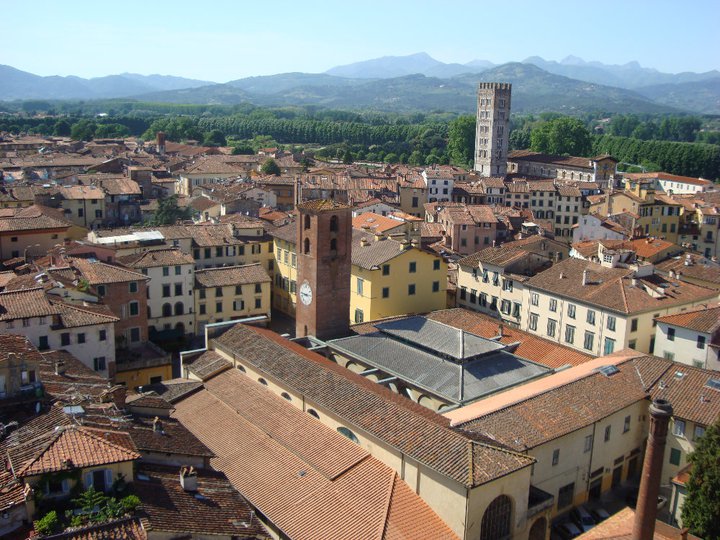
Lucca is one of my favorite cities in Tuscany, and I think it’s criminally underrated. Encircled by a perfectly preserved Renaissance wall wide enough to cycle along the top, it has a charming, relaxed energy that the bigger cities can’t always match. The historic center is traffic-free, the streets are genuinely medieval, and the food scene is quietly excellent. It’s also blessedly free of the overwhelming crowds you’ll find in Florence or Pisa — Lucca feels like a city that tourists visit rather than overrun, and that makes all the difference.
Frequent trains from Florence (about 1.5 hours) and Pisa (30 minutes) make it easy to reach; the station sits just outside the city walls. Palazzo Alexander is a charming boutique hotel right in the historic center — elegant without being stuffy. My favorite thing to do in Lucca is rent a bike and cycle the full loop along the top of the walls: it’s only 4km, it takes about half an hour, and it’s the most enjoyable ride you’ll do in all of Tuscany.
7. Pisa

Yes, there’s the Tower — and yes, it really is leaning, and yes, you really should see it. But Pisa is much more than its most famous resident. The Campo dei Miracoli, the grassy square where the Tower, Cathedral, and Baptistery all stand together, is genuinely one of the great monumental ensembles in the world. And Pisa itself — a university city with a lively Arno riverfront and real student energy — deserves more than the hour most people give it.
The city has its own international airport, making it a natural entry point to Tuscany, and regular trains connect it to Florence (under an hour) and Lucca (30 minutes) — which also makes Pisa one of the best day trips from Florence by train, easy to do without a car and very satisfying to pull off in a single afternoon. Hotel Pisa Tower is a comfortable choice for a night, well-positioned for the major sights. Climb the Tower early in the morning — book online in advance — when there are far fewer people jostling for the same photographs, and the views over the city are absolutely worth the slightly vertiginous experience.
8. Arezzo

Arezzo is the kind of city that rewards those who go looking. It doesn’t shout its charms — it whispers them. But what charms they are: Piero della Francesca’s extraordinary frescoes in the Basilica of San Francesco, a soaring Gothic cathedral, a magnificent sloping main square where one of Italy’s finest antique fairs takes place on the first weekend of every month, and some of the best bistecca in the region. I wrote a full guide to Arezzo precisely because I felt it wasn’t getting the attention it deserved.
Regular trains from Florence take about an hour; by car, Arezzo sits neatly on the A1 autostrada. Hotel Continentale has an old-world atmosphere in a great central location. If you’re visiting on the first antique fair weekend of the month, book accommodation weeks in advance — the fair draws serious collectors from across Europe, and the town fills up completely.
👉 Read my full Arezzo travel guide for the complete picture, including which frescoes not to miss and where to eat well.
Most Beautiful Hilltop Towns to Visit in Tuscany
If you’re searching for the best places to visit in Tuscany, the medieval hill towns should be at the very top of your list. This is where Tuscany truly earns its reputation.
The hilltop towns — perched on ridges, wrapped in medieval walls, gazing out over valley after valley — are among the most extraordinary places in Italy. Medieval towns like San Gimignano, Pienza, and Montepulciano are among the must see in Tuscany destinations thanks to their history, architecture, and incredible views.
If you’re wondering what to see in Tuscany, these hilltop towns should absolutely be part of your itinerary.
9. San Gimignano

San Gimignano is the most dramatic silhouette in Tuscany. Fourteen medieval towers rise above its skyline — the remains of a once fiercely competitive building culture where wealthy families literally tried to outdo each other into the sky. From a distance, especially on a misty morning, it looks like a scene from a fairy tale. Up close, inside those walls, it’s every bit as enchanting.
Yes, it gets crowded in summer — but arrive early or stay late and you’ll find moments of genuine magic in its narrow lanes and sun-filled piazzas. Buses run from Siena (about an hour) or Florence (about 1.5 hours with a change in Poggibonsi), though by car it is much easier from either city. Relais Santa Chiara, just outside the city walls, has lovely rooms and a pool with tower views that you’ll want to sit beside for hours. Spend the night if you possibly can — the crowds thin dramatically after 5 pm, and watching the town glow golden at sunset from inside the walls is the kind of thing you don’t forget.
👉 My full San Gimignano travel guide has everything you need to plan your visit well.
10. Montepulciano
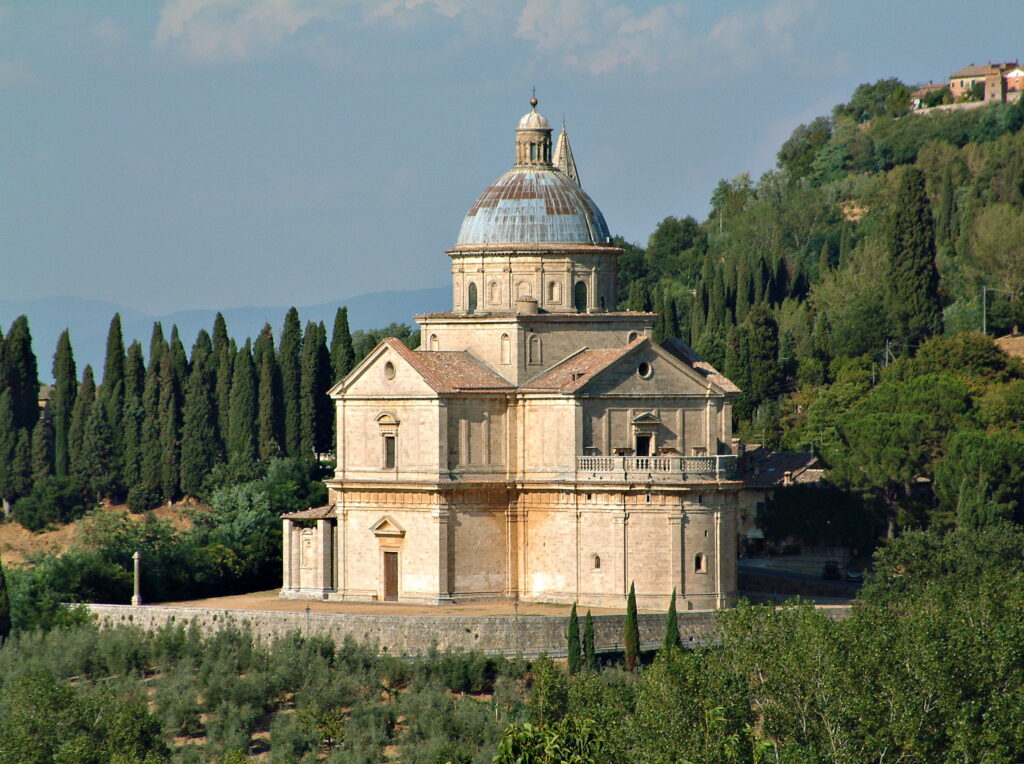
If you love wine — and in Tuscany, who doesn’t — Montepulciano needs to be on your list. This handsome Renaissance hill town produces Vino Nobile di Montepulciano, one of Tuscany’s great reds, and the main street is lined with enotecas where you can taste your way through a very pleasant afternoon. But it’s not just about the wine. The townscape is magnificent, with a cathedral, graceful piazzas, and sweeping views across the Val d’Orcia below that alone justify the drive.
There’s no direct train; buses run from Chiusi or Montepulciano Stazione, but a car really is the way to go here. Locanda di San Francesco is a lovely boutique hotel set right on the beautiful piazza di San Francesco — the views from the terrace over the Val d’Orcia are reason enough to book it. Before you leave, walk down to the Tempio di San Biagio at the base of the hill. It’s one of the finest Renaissance churches in Italy and is almost always empty, which makes the experience of standing inside it quietly extraordinary.
👉 See my detailed Montepulciano travel guide for restaurant picks, wine recommendations, and where to taste before you buy.
11. Pienza

Pienza is a Renaissance utopia brought to life — a small, perfectly planned “ideal city” commissioned by Pope Pius II in the 15th century, built essentially from scratch on a hill above the Val d’Orcia. It’s tiny (you can walk end to end in about ten minutes), but every inch of it is beautiful. The cathedral, the Palazzo Piccolomini, the main piazza — all arranged in elegant, harmonious proportion that feels more like a stage set than an actual town.
It’s also famous for its pecorino cheese, which hangs in shop windows and gets sold in thick wedges at the market — do not leave without buying some. Buses run from Montepulciano and Siena but are infrequent, so a car is really the practical choice. Il Chiostro di Pienza, a converted convent, has beautiful rooms and one of the best views in the Val d’Orcia. Come on a Sunday morning if you can — locals fill the main square for coffee, a small market appears, and the town feels genuinely lived-in rather than preserved in amber.
👉 My Pienza travel guide covers the best cheese shops, where to eat, and exactly what to see.
12. Cortona

Cortona climbs steeply above the broad valley that stretches toward Lake Trasimeno, and the climb is absolutely worth it. This is one of Tuscany’s oldest towns, with Etruscan roots that predate Rome, and the view from the upper terraces is simply stunning. It became internationally known through Frances Mayes’s Under the Tuscan Sun, which brought a flood of visitors — though somehow Cortona has kept its character intact.
The Museo Diocesano is world-class, with works by Fra Angelico and Pietro Lorenzetti. Trains stop at Camucia-Cortona station; the town is a short taxi ride or bus up the hill, and by car it’s about 30 minutes from Arezzo. Il Falconiere, a 17th-century estate with a Michelin-starred restaurant and a gorgeous pool, is one of the best hotels in southern Tuscany. Make the steep walk up to the Fortezza Medicea at the very top of the town — the panorama takes in Lake Trasimeno, the Apennines, and half of Umbria, and on a clear morning it’s one of the great views in all of Italy.
👉 Everything you need is in my full Cortona travel guide.
13. Volterra

Volterra stands alone — perched on a high ridge above deep ravine valleys, windswept and ancient, with an atmosphere unlike anywhere else in Tuscany. It’s one of the great Etruscan cities, and the Guarnacci Museum holds one of the finest collections of Etruscan artifacts in Italy. But even if ancient history isn’t your passion, Volterra gets under your skin with its dark stone streets, dramatic shifting light, and the eerie silence of the balze — the eroded cliffs that have been slowly swallowing the edges of the town for centuries.
It’s best reached by car, though buses run from Siena and Pisa if you plan well ahead. Villa Rioddi, a restored historic estate just outside the city walls, is elegant and atmospheric with beautiful grounds — a wonderful place to come back to after a day of exploring. While you’re here, buy something in locally crafted alabaster — Volterra has been a center of alabaster carving since Etruscan times, and the craftspeople working here today are remarkable. It’s the kind of place where you buy a piece and then spend the next decade proud that you have it.
14. Colle Val d’Elsa
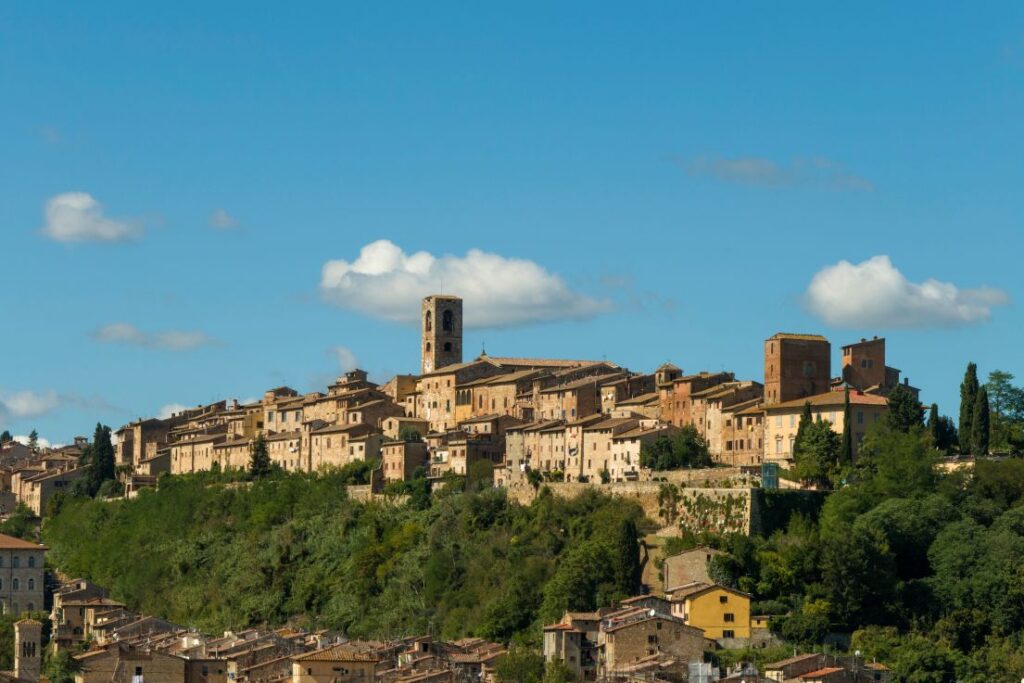
Colle Val d’Elsa doesn’t make most tourists’ lists, which is exactly why I love it. Split into two parts — the lower modern town and the medieval upper Colle Alta — it rewards those who make the short climb, whether on foot or by the small connecting bus. The upper town is well-preserved and genuinely unspoiled, home to the birthplace of Arnolfo di Cambio, the architect who designed Florence’s cathedral and Palazzo della Signoria. It’s also the crystal capital of Italy, with a long tradition of fine glasswork that you’ll find in ateliers along the main street.
It sits between Siena and Poggibonsi on the SR68, accessible by bus or easily by car. Hotel La Vecchia Cartiera, in a converted paper mill, is charming and well-priced. Walk the full length of the upper town along its single main street — it only takes a few minutes, but you’ll feel like you have an entire medieval city entirely to yourself, which in summer is a rare and rather wonderful thing.
15. Sorano
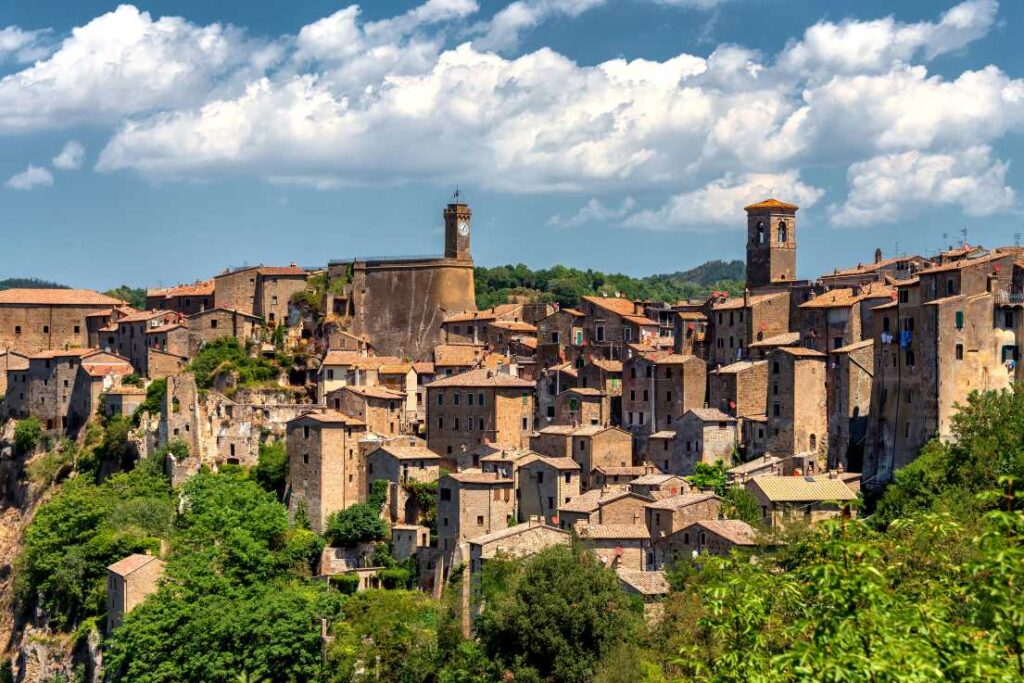
Few people make it to Sorano, and that is a genuine shame. This dramatically sited small town in the far south of Tuscany is carved into a tufa cliff and has one of the most atmospheric settings I’ve encountered in years of traveling the region. It has the same dark, brooding character as nearby Pitigliano, with ancient cave dwellings, a medieval fortress rising from the rock, and the extraordinary Vie Cave — Etruscan roads cut deep into the tufa that once connected this area’s ancient settlements.
It’s remote and best reached by car; Manciano is the nearest town with bus connections. Hotel della Fortezza, set in the medieval fortress itself, is an unforgettable and wonderfully eccentric choice for a night. Combine Sorano with Pitigliano and Sovana for a full day exploring this magical “Tufa Triangle” — three dramatically different but equally fascinating stops that make for one of the best day trips in southern Tuscany.
Best Hot Springs and Spas in Tuscany
Tuscany is a volcanic region, and the natural hot springs scattered across the region are among its great, slightly secret pleasures. Whether you prefer a wild outdoor pool or a full luxury spa experience, there’s something here for every kind of traveler.
16. Terme di Saturnia
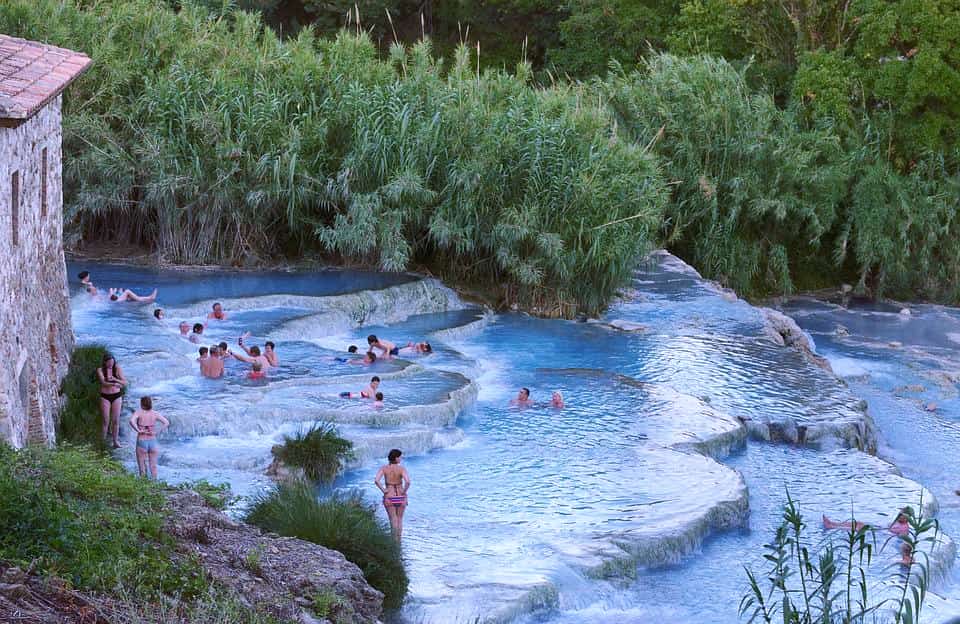
Terme di Saturnia is the one everyone talks about — and for good reason. The naturally heated sulfurous water (a constant, perfect 37°C year-round) spills from the main spring into a series of cascading pools surrounded by beautiful Maremma countryside. There’s a free public waterfall pool beside the road that is genuinely spectacular, and a full luxury spa hotel on site for those who want to stay longer and go deeper into the thermal experience.
It gets crowded at weekends, especially in summer, so if you can go midweek in the cooler months, do it. Terme di Saturnia Spa & Golf Resort, right at the springs, is the ultimate indulgence. A car is essential — Saturnia sits in the Maremma hills, about 30 minutes from Manciano. Go on a weekday morning in October or November, and you may find the waterfall pools almost entirely to yourself, steam rising into cold air over water the color of pale jade.
17. Bagni di San Filippo
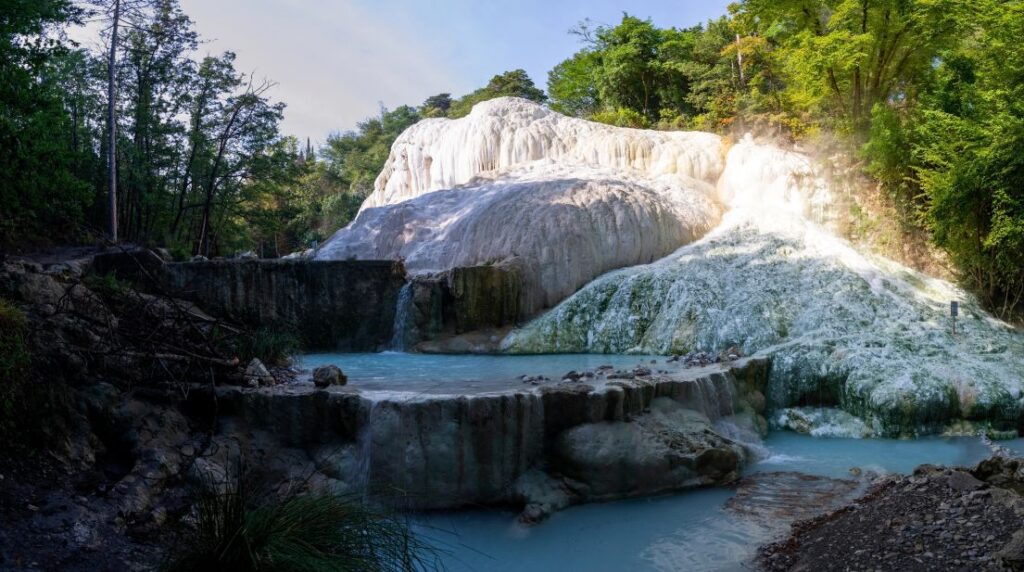
Bagni di San Filippo is the wild, romantic alternative to Saturnia. The hot spring water flows through a forested valley and creates extraordinary white calcium carbonate formations along the way — natural sculptures that look like something from another planet, all bleached white and strange and beautiful. The water is free to use in the outdoor pools, and the setting, especially in autumn when the surrounding forest is turning, is genuinely breathtaking.
The springs are in the hills between Monte Amiata and Val d’Orcia, about 40 minutes by car from Pienza. Terme San Filippo Hotel & Spa has a private thermal pool and a good range of treatments if you want to stay. Follow the steam upstream through the forest to find quieter, smaller pools tucked away from the main bathing area — a little exploration is well rewarded.
18. Bagno Vignoni
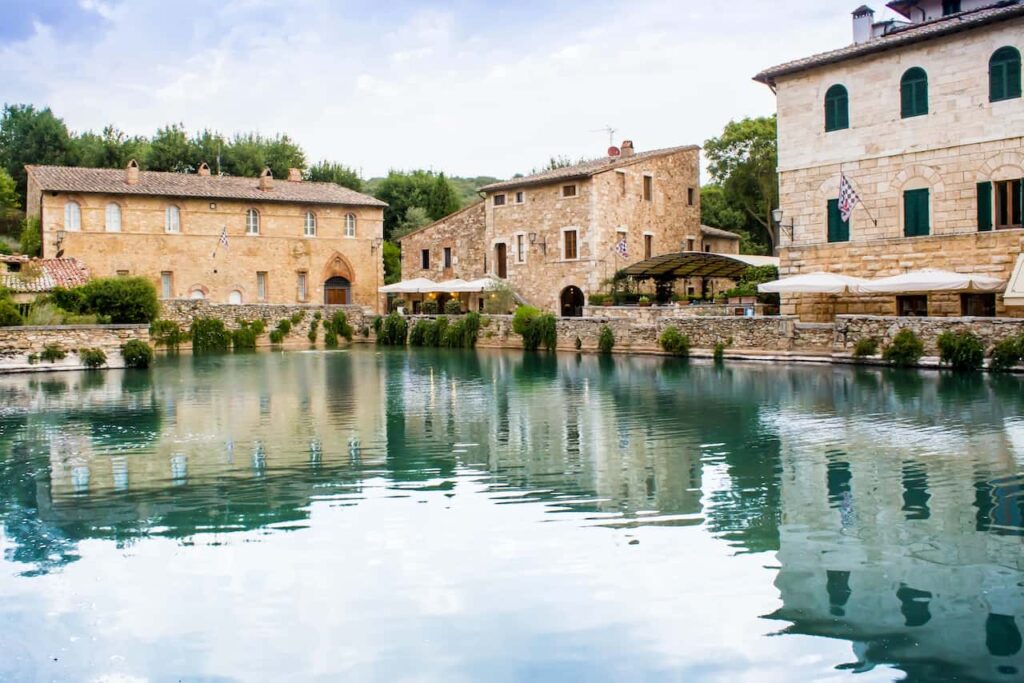
Bagno Vignoni is one of the strangest and most beautiful villages in Tuscany. Its central piazza isn’t a piazza at all — it’s a large thermal pool, built in the Renaissance, which steams and shimmers in the middle of the village like something from a fever dream. You can’t swim in the historic main pool, but there are thermal baths nearby, and the village itself is so remarkably preserved and so genuinely unusual that wandering it feels completely surreal even after multiple visits.
It’s in the Val d’Orcia, a short drive from San Quirico d’Orcia, and best reached by car. Adler Thermae is one of the finest spa resorts in all of Tuscany — right here in the village, and worth every euro. Arrive early on a cold morning when the steam rises in dense clouds over the historic pool, and there is almost no one else around. That image will stay with you for a very long time.
19. Chianciano Terme
Chianciano Terme is a proper spa town in the old Italian tradition — a well-established wellness resort with a long history of therapeutic thermal treatments that draws Italians rather than foreign tourists. It doesn’t have the wild drama of Saturnia or the strangeness of Bagno Vignoni, but it has real thermal infrastructure, modern spa facilities, and a relaxed, slightly old-fashioned resort feel that has its own particular charm. It’s also an excellent base for exploring Montepulciano and the Val d’Orcia, and the combination of sightseeing by day and thermal pools in the evening is very appealing.
Trains stop at Chiusi-Chianciano Terme station, and it’s easy by car from Siena or Cortona. Grand Hotel Excelsior has old-school elegance and direct access to the thermal waters. The Parco Acqua Santa has a lovely public thermal pool that offers great value compared to the hotel spas — a good option if you want to dip in without the full commitment.
20. Montecatini Terme
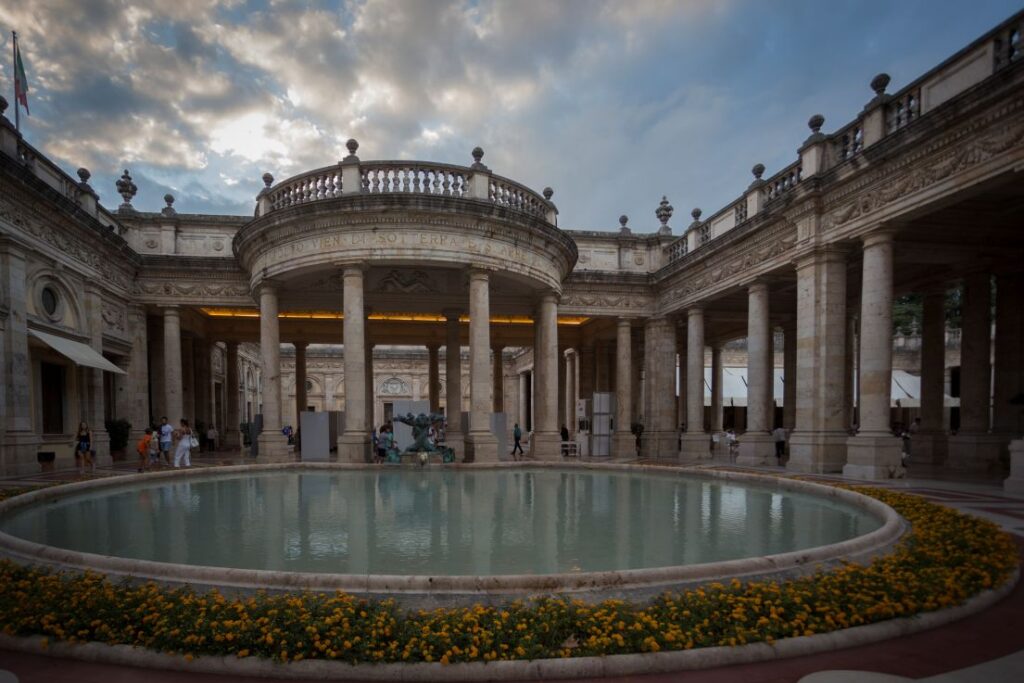
Montecatini Terme is the grande dame of Tuscan spa towns. Established as a thermal resort in the 18th century, it is all Belle Époque splendor: grand pump rooms, manicured parks, and hotels with marble lobbies that feel as though they’ve barely changed since 1910. It’s elegant, slightly theatrical, and enormously popular with Italian and European visitors who come for genuine thermal cures rather than the Instagram moment.
Well connected by rail from Florence (about 50 minutes) and Lucca, it’s one of the easier spa destinations to reach without a car. Grand Hotel & La Pace is the quintessential Montecatini experience — grand, old-world, and rather wonderful. Take the funicular up to Montecatini Alto, the medieval hilltop village perched above the spa town — it’s completely different in character, has excellent restaurants, and the views over the Tuscan plain are a lovely reward for making the short climb.
Best Villages to Visit in Tuscany
Beyond the famous towns, Tuscany is dotted with small villages of extraordinary character. These are the places I find myself returning to most — quieter, more authentic, and often more personally rewarding than the bigger stops.
21. Monteriggioni

Monteriggioni is a medieval dream made real: a perfectly circular walled village rising from a low hill in the Val d’Elsa, so intact that it looks like a film set — or a passage from Dante, who compared the giants he encountered in the Inferno to the towers along its walls. Today, 14 of those towers still stand. It takes about 20 minutes to walk the complete circuit of the village, and it’s among the most photogenic spots in all of Tuscany.
About 15km north of Siena, it’s easy by car and accessible by bus from Siena. Hotel Monteriggioni, inside the walls, is delightfully atmospheric. Visit at dusk when the day-trippers have left, and the walls glow in the evening light, then stay for dinner at one of the small restaurants inside the walls — it’s a simple but genuinely lovely evening.
22. Pitigliano
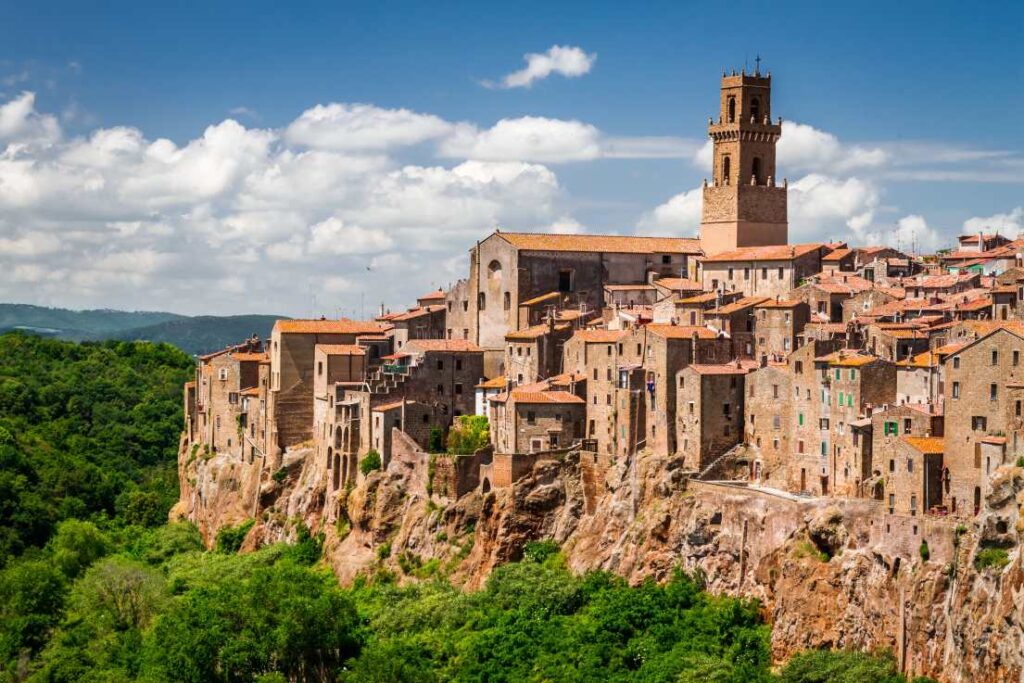
Pitigliano is a place that makes you gasp the first time you see it. The town literally emerges from a sheer tufa cliff — its buildings growing out of the rock so organically that it’s genuinely hard to tell where geology ends, and architecture begins. Known historically as “Little Jerusalem” for its once-thriving Jewish community, Pitigliano has a fascinating cultural layer beneath its spectacular, dramatic setting that most visitors don’t take time to explore.
Remote but reachable by bus from Grosseto, it’s much more practical by car. Il Tufo Rosa, a small hotel in the historic center, is charming and well-run. Don’t miss the underground Jewish ghetto and the small synagogue — a surprisingly moving and historically rich experience that adds real depth to what might otherwise be just a very photogenic stop.
23. Certaldo Alto
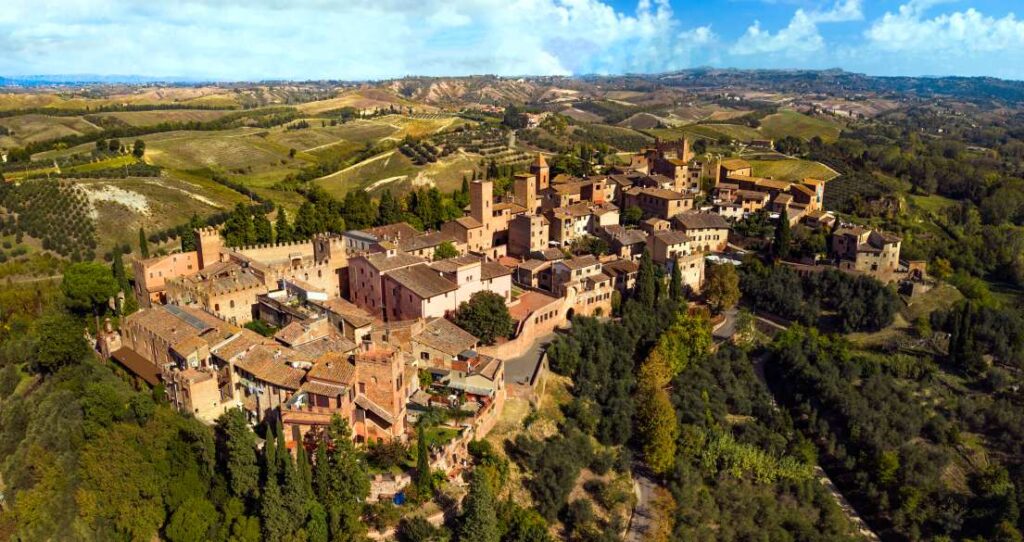
Certaldo is Boccaccio’s town — the birthplace of the author of the Decameron — and the upper medieval village, Certaldo Alto, reached by funicular from the modern lower town, is a genuine gem. Red brick buildings, a beautifully preserved medieval street, a quiet atmosphere even in the height of summer — it’s a wonderful, low-key detour if you’re traveling between Siena and Florence.
Trains run from both cities to Certaldo station, with the funicular connecting up to the top. Osteria del Vicario, a converted convent in Certaldo Alto, has beautiful, simple rooms and a garden restaurant that I’d recommend making time for. If you can visit in late July, the Mercantia medieval street festival is one of the best events in the Tuscan calendar.
24. Greve in Chianti
Greve in Chianti is the unofficial capital of the Chianti wine region and a genuinely lovely small town built around an irregularly shaped piazza lined with arcaded buildings — one of the most charming market squares in rural Tuscany. Enoteca Falorni, housed in an ancient cellar beneath the square, is a proper wine lover’s paradise where you can taste through a staggering range of local producers with a very small investment.
Regular buses run from Florence; by car it’s on the Chiantigiana road between Florence and Siena. Villa Bordoni, a converted farmhouse in the surrounding hills, is elegantly done with a beautiful pool. If you can time your visit for the September wine festival, do it — the whole town becomes one very convivial outdoor tasting room.
25. Montefioralle
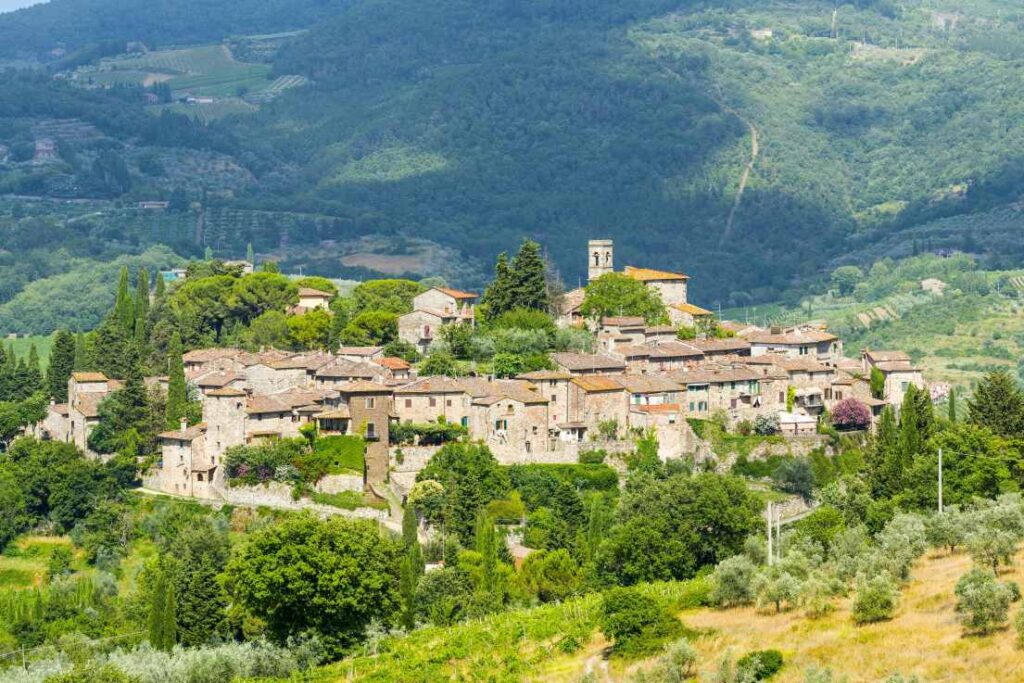
Just above Greve in Chianti, Montefioralle is one of the smallest and most perfectly preserved medieval villages in Tuscany. A single circular road loops around the entire village — that’s essentially all there is. A handful of stone houses, a small church, a vine-covered terrace with views that make you understand why anyone would ever have built here. It’s tiny, it’s quiet, and it’s extraordinarily beautiful. Amerigo Vespucci — the explorer who gave his name to America — came from a family rooted here. Walk up from Greve through the vines, as the path is as lovely as the village itself, and the arrival feels genuinely earned.
26. Panzano in Chianti
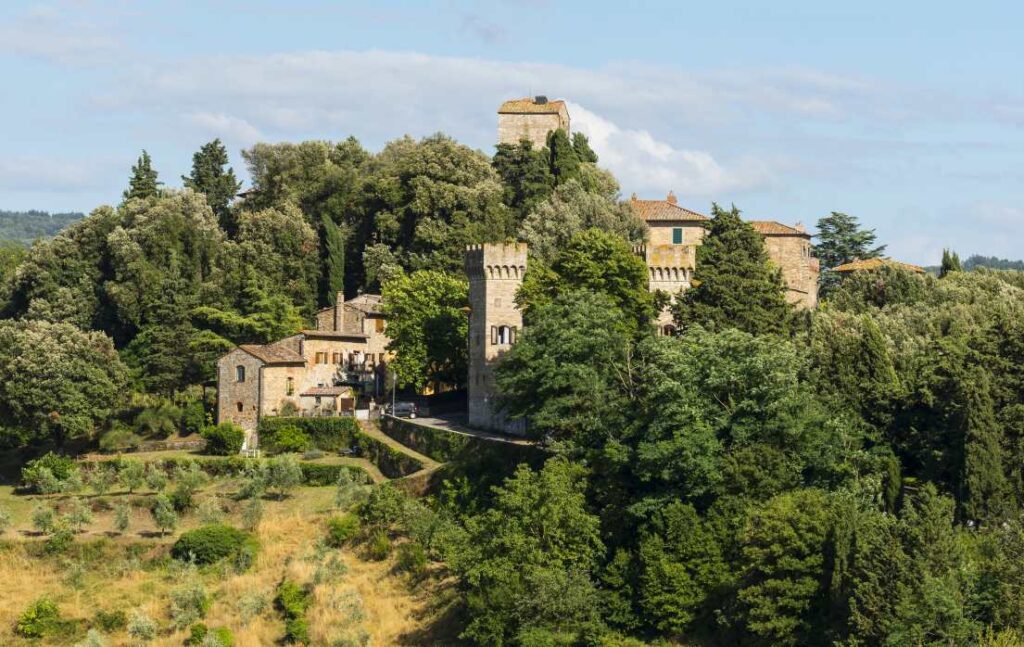
Panzano is perhaps best known as the home of Dario Cecchini — Italy’s most famous butcher, a magnificent theatrical character who recites Dante while selling some of the finest bistecca fiorentina you’ll ever eat. But the village itself, sitting on a ridge above the Conca d’Oro valley, is beautiful in its own right. On the Chiantigiana road between Greve and Castellina, it’s an easy car stop. Villa le Barone, a 15th-century noble family villa, is a wonderfully romantic and characterful place to stay. Book lunch at Cecchini’s restaurant Solociccia — it’s a set menu, it’s theatrical, it’s relentlessly carnivorous, and it’s one of the most genuinely memorable meals I’ve had anywhere in Tuscany.
27. Radda in Chianti
Radda is one of the three towns that historically form the heart of Chianti Classico (alongside Gaiole and Castellina), and it has a wonderful, lived-in authenticity. The medieval walls are largely intact, the main street is lined with wine shops and good restaurants, and the surrounding countryside — a beautiful patchwork of vines, olive groves, and oak forest — is some of the most beautiful in the entire region.
By car on the SR429 between Siena and Poggibonsi; bus connections are available from Siena if needed. Relais Vignale is a classic Chianti hotel with beautiful rooms and a wine cellar that takes the concept seriously. Walk or drive to Badia a Coltibuono for wine tasting in a genuinely historic setting — an 11th-century abbey producing wines that would make a monk weep with joy.
28. Monticchiello

Monticchiello is a tiny walled village perched on a ridge above the Val d’Orcia — and it may be the most peacefully beautiful place I’ve ever simply sat still. The population numbers just a few hundred, the medieval walls are almost entirely intact, and the views from the main gate over the valley below are extraordinary. Every August, the villagers perform the Teatro Povero, a community theater event they’ve been staging since 1967, telling stories of their own village’s history. It’s entirely in Italian, but the atmosphere is entirely worth it. A short drive from Pienza, with no public transport, L’Olmo is a charming countryside B&B just outside the village.
29. Montalcino

Montalcino sits high on a hill in southern Tuscany, commanding extraordinary views in every direction and producing one of Italy’s greatest red wines: Brunello di Montalcino. The town itself is small and quietly handsome, dominated by a 14th-century fortress that doubles as one of the region’s best wine shops — you can taste a remarkable range of local producers inside the castle walls, which is a concept I fully support.
A bus runs from Siena in about 1.5 hours, though a car gives you much more flexibility. Castello Banfi Il Borgo, on a stunning wine estate below the town, is one of the great Tuscany accommodation experiences. Visit the Fortezza for tasting and buy a few bottles to take home — the prices at source are considerably friendlier than what you’ll pay abroad.
Best Beach Places to Visit in Tuscany
The Tuscan coast is often overlooked, but it includes some of the best places to go in Tuscany for beaches, seafood, and nature. From elegant Belle Époque beach resorts to wild protected Maremma shores to the jewel of Elba Island, the Tuscan coast offers something for every kind of beach lover.
30. Viareggio
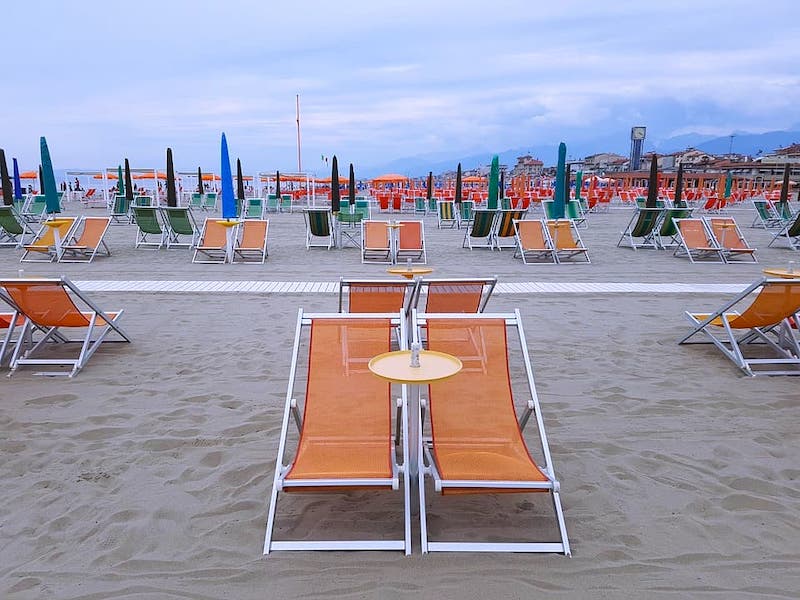
Viareggio is the grande dame of Tuscan beach resorts — a proper seaside city with Art Nouveau architecture along its seafront promenade, a carnival tradition that gives Venice genuine competition, and some of the best seafood restaurants on the Tyrrhenian coast. It has a faded glamour that I find rather wonderful, and the long sandy beach is well-organized and genuinely pleasant.
Regular trains run from Pisa (20 minutes), Lucca (30 minutes), and Florence (1.5 hours). Grand Hotel Royal is the classic seafront choice, old-school and elegant. Skip the tourist restaurants on the main drag and head to the backstreets near the port for the freshest seafood — the locals know where to go, and the prices reflect that.
31. Maremma Coast
The Maremma coast is one of the last genuinely wild stretches of shoreline in central Italy, and the beaches here are among the most beautiful in Tuscany. The Parco Regionale della Maremma protects a long, undeveloped strip of pine-backed dunes where the sand is pale, the water is clear, and the crowds are blessedly absent.
Cala di Forno and Marina di Alberese are the standout beaches — reached only on foot or by shuttle, which keeps the atmosphere peacefully unspoiled. Further south, the shores around Capalbio have a wilder, more windswept beauty. The park entrance is at Alberese, best reached by car from Grosseto. For accommodation, L’Andana is a beautiful resort in a historic Medici estate near Castiglione della Pescaia — elegant, well-positioned, and with an excellent restaurant that makes returning each evening a pleasure in itself.
32. Elba Island
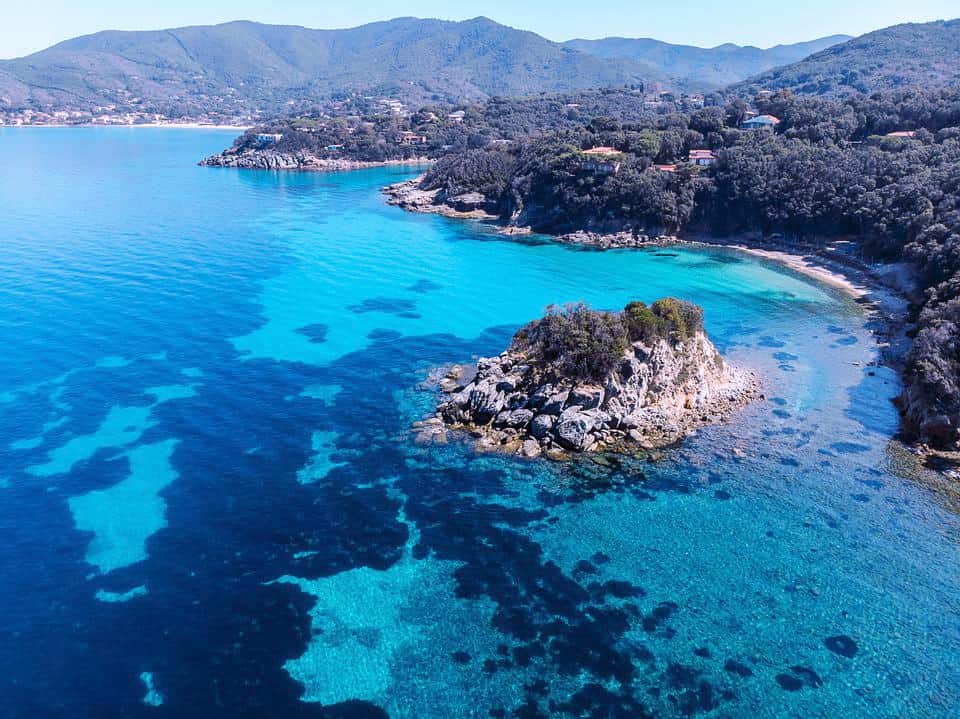
Elba is Napoleon’s island — the place of his first exile — and one of Italy’s most beautiful. A one-hour ferry from Piombino (Toremar or Moby Lines run car ferries to Portoferraio) brings you to an island of dramatic granite mountains dropping to turquoise bays, excellent seafood, local wines, and a pace of life that feels genuinely unhurried in the best possible way. The beaches are among the cleanest and most beautiful in Italy, and the island is large enough to explore for several days without running out of things to discover.
Hermitage Hotel on Biodola Bay is a long-established resort with lovely beach access. Rent a scooter and explore the quieter eastern end of the island — fewer tourists, incredible views, and the beautiful granite beaches of Capo Sant’Andrea, which on a calm September morning look more like the Greek islands than mainland Italy.
Hidden Gems and Unique Places in Tuscany
Between the Renaissance cities, vineyard-covered hills, medieval villages, and thermal springs, there are endless things to see in Tuscany, no matter how long your trip lasts. So, here are a few more places to visit in Tuscany, Italy,
33. San Miniato
San Miniato sits on three hills between Florence and Pisa, and most people drive past it without stopping — which means most people are missing something special. The town is most famous for its white truffles, and rightly so.
In November, the Mostra Mercato del Tartufo Bianco draws food lovers from across Europe. But you don’t have to wait for the market — truffle hunting experiences can be booked year-round in the surrounding hills, where local hunters and their dogs work the oak forests in the early morning. It’s one of the most memorable things you can do in Tuscany. Trains from Florence and Pisa stop at San Miniato-Fucecchio station, with a bus up to the town. Miravalle, a small hotel on the main square, is a comfortable and well-placed base.
34. La Verna Sanctuary
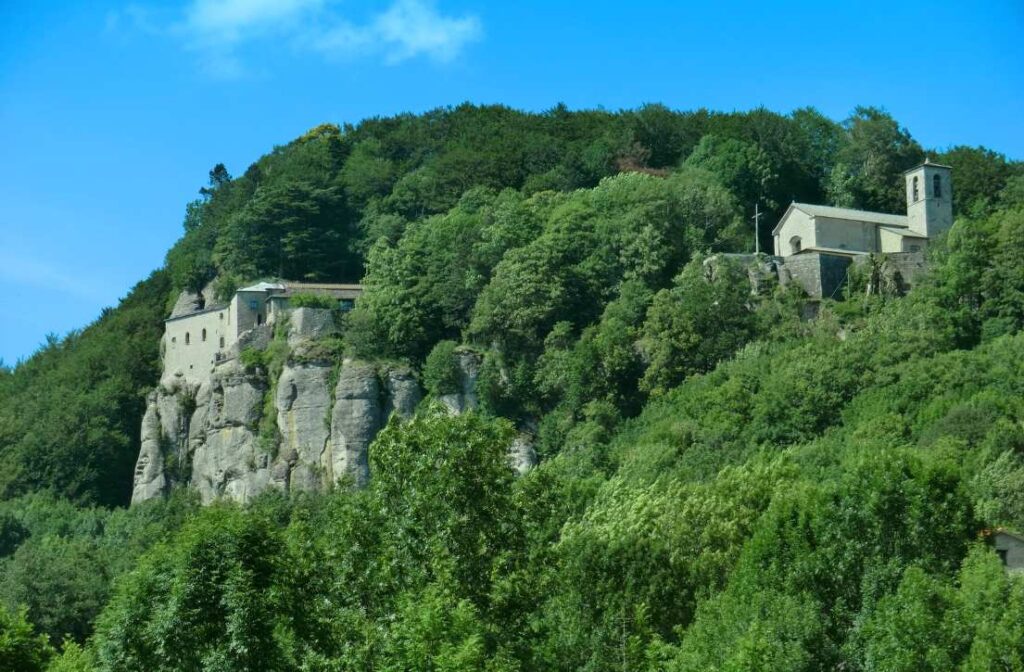
La Verna is a place of extraordinary spiritual atmosphere. Perched on a rocky, forested cliff in the Casentino hills east of Arezzo, this Franciscan sanctuary is where St. Francis received the stigmata in 1224, and it has been a place of pilgrimage ever since. The setting is breathtaking — ancient forest, medieval stone buildings, and a silence so deep it feels almost physical.
By car, it takes about an hour from Arezzo; no direct public transport. You can actually stay at the monastery itself, in simple rooms, eating meals with the friars — it’s an experience unlike any hotel, and I found it genuinely moving. Arrive early in the morning when mist fills the forest below the cliff, and the whole place looks like something from a medieval illuminated manuscript.
35. Massa Marittima
Massa Marittima is one of the most underrated medieval towns in Tuscany, and I’ll keep saying it until more people listen. Its Cathedral rises dramatically above a sloping Gothic piazza in the lower town with a scale and ambition that feels startlingly grand for such a small place — and it’s almost always uncrowded, which makes the experience of sitting in front of it quietly miraculous. The upper town has a fortress and a museum of sacred art; the whole place has a quiet, dignified character that I find very appealing. It also serves as the gateway to the Colline Metallifere — rolling old mining hills with a landscape unlike anything else in the region.
By car from Grosseto (about 45 minutes) or Siena (about an hour); infrequent buses run too. Agriturismo Tenuta il Cicalino, a small working estate outside the town, is peaceful and well-run. Don’t miss the Museo della Miniera — a genuine old mining tunnel beneath the town that brings the area’s industrial history vividly to life in a way that even non-history people tend to find fascinating.
FAQs About Visiting Tuscany
What is the most beautiful part of Tuscany?
Many travelers consider Val d’Orcia the most beautiful part of Tuscany thanks to its rolling hills, cypress-lined roads, vineyards, and picturesque hill towns like Pienza and Montalcino. Chianti, the Crete Senesi, and the Tuscan coast are also incredibly scenic.
What are the best towns in Tuscany?
Some of the best towns to visit in Tuscany include Siena, San Gimignano, Montepulciano, Pienza, Cortona, Lucca, and Montalcino. Each offers a different mix of history, food, wine, architecture, and countryside views.
How many days do you need in Tuscany?
A minimum of 5–7 days is ideal for exploring Tuscany properly. Two weeks allow enough time to combine major cities, hill towns, wine regions, beaches, and scenic countryside drives without rushing.
Is Tuscany better with a car?
Yes. Tuscany is best explored by car. While trains connect major cities like Florence, Pisa, and Siena, many of the region’s most beautiful villages, wineries, and countryside viewpoints are only easily accessible by road.
What is the best month to visit Tuscany?
The best months to visit Tuscany are May, June, September, and October. These months offer warm weather, beautiful landscapes, wine harvest season, and fewer crowds compared to the peak summer months of July and August.
Practical Tips for Getting Around Tuscany
I’ve said it before, and I’ll say it again: rent a car. It is, without question, the single best decision you can make when planning a trip to Tuscany. Trains and buses will get you to the main cities — Florence, Siena, Pisa, Arezzo — but the real Tuscany, the version that takes your breath away, is out on the back roads. The SR2 south of Siena rolling through the Val d’Orcia. The Chiantigiana winds between Florence and Siena through the vineyards. The gravel tracks that lead to isolated farmhouses, small wineries, and viewpoints that don’t have a name on any map. None of that is accessible without wheels.
As for when to go: April through June and September through October are the sweet spots — warm enough to be comfortable, not so hot that you’re wilting, and meaningfully less crowded than July and August. Two weeks gives you enough time to cover the highlights at a reasonable pace; three weeks lets you go deeper and slower, which is always more rewarding.
After years of traveling through Italy, I still believe the best places to visit in Tuscany offer the perfect mix of food, scenery, history, and slow travel. Book accommodation early — this cannot be overstated. The good agriturismi in Val d’Orcia and Chianti fill up months in advance for summer, and the best small hotels in the hill towns go quickly too. And whatever you do, don’t rush your meals. Tuscany has some of the finest food in Italy, and a long lunch at a farmhouse table with a view over the hills is one of the great pleasures of travel anywhere in the world.
Whether you love food, art, wine, beaches, or scenic drives, these are truly the best places to visit in Tuscany for an unforgettable Italian adventure.
Happy travels — and feel free to reach out with questions. Tuscany is endlessly worth exploring, and I genuinely never get tired of talking about it.
🔗 More Tuscany Guides
If you’re planning a trip through Tuscany, these detailed travel guides will help you explore the region more deeply:
👉 Things to Do in Val d’Orcia Guide – villages, wineries, and scenic countryside
👉 Things to Do in Siena Guide – medieval streets, landmarks, and local food
👉 Things to Do in San Gimignano Guide – towers, viewpoints, and historic lanes
👉 Things to Do in Cortona Guide – Etruscan history and Tuscan charm
👉 Things to Do in Arezzo Guide – Renaissance art and antique markets
👉 Things to Do in Pienza Guide – pecorino cheese and Val d’Orcia views
👉 Things to Do in Montepulciano Guide – wine tasting and hilltop scenery
👉 Where to Stay in Tuscany Guide – villas, agriturismi, and hotels
👉 What to Eat in Tuscany Guide – bistecca, pasta, truffles, and wine
My Go-To Car Rental Company: DISCOVER CAR
I always book rental cars online in advance. Booking a car rental in advance is more money- and time-wise than booking at the airport. I always use Discover Cars. They search international car rental companies and small local car rental agencies to find the best deal for you. Plus, there are no hidden costs, and they offer free cancellation. I always take their full coverage as they offer competitive rates. Check Their Car Rental Prices!
My Go-To Accommodation Platforms:
Booking.com (short stays) and Vrbo (longer stays)